


The Go-Bag Won't Save Your Pet. Training Will.
A packed emergency kit is the easy part. The pets who evacuate safely are the ones taught to load into a carrier, come when called, and stay calm on cue before disaster ever hits. A vet-backed evacuation plan.

Affiliate disclosure. This article contains affiliate links. We may earn a small commission if you buy through a link, at no extra cost to you. How we handle recommendations.
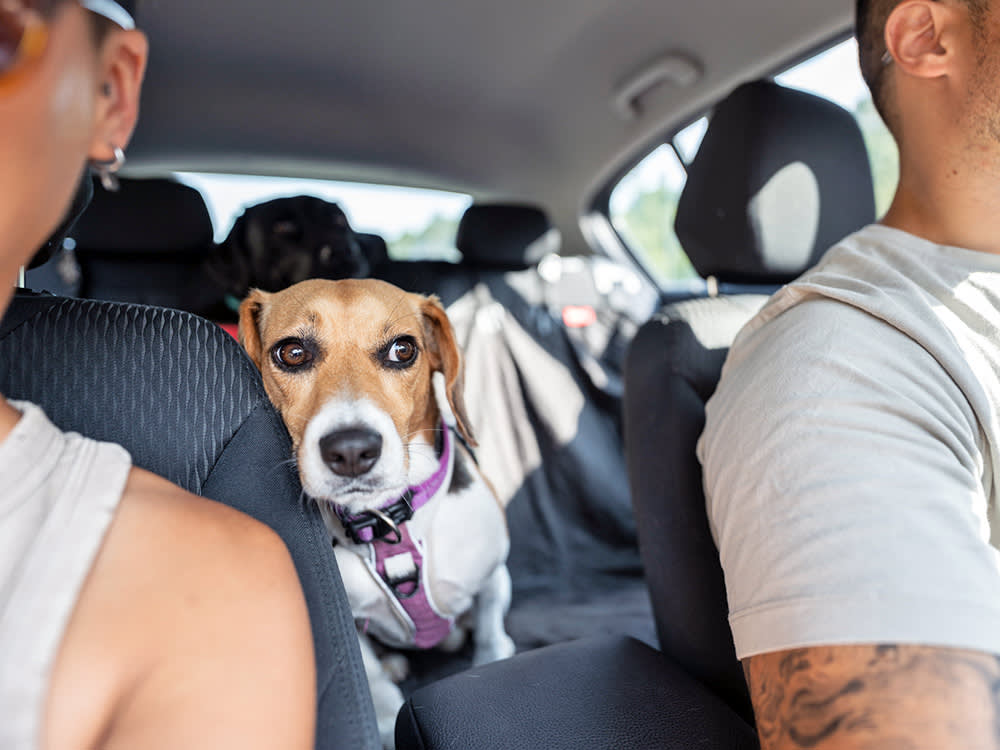
Every emergency-preparedness article tells you to pack a go-bag, and you should. But a bag of supplies is the part you can do in an afternoon. It is not what determines whether your pet actually makes it out with you. When the wildfires tore through Los Angeles in January 2025 and forced nearly 200,000 people to evacuate, the videos that circulated online showed the same hard truth over and over: even calm, well-loved pets bolt when everything goes sideways.
So this guide flips the usual order. We’ll start with the thing most checklists bury at the bottom, the training that turns “go time” from chaos into a rehearsed routine, and then cover the gear, the bag, and how to help your pet recover once you’re safe.
Evacuation is a skill you teach in advance
You can’t train your way out of every panic, but you can dramatically raise the odds that your pet cooperates when seconds count. This is more involved than teaching a party trick; it’s a small set of behaviors that keep a frightened animal safe and movable.
The pets who evacuate well are the ones who practiced the pieces when nothing was wrong. Getting into a carrier, walking on a leash, coming when called, and settling on a cue, those are the skills that hold up under stress, and they only hold up if they’re already second nature.
Four behaviors do most of the work:
Carrier and leash comfort. Well before you ever need it, make the carrier a good place to be. Reward your pet for choosing to walk in on their own, so the carrier means treats and calm, not a trip to the vet. The same goes for the leash.
Crate training. A pet who’s comfortable in a crate is far easier to transport safely in an emergency. Fold crate time into normal daily life so it’s familiar, not a punishment sprung on them in a crisis.
Reliable recall. Teach your pet to come when called, every time. In an evacuation, being able to call your pet to you quickly can be the difference between leaving together and leaving without them.
An emergency cue. Pick a specific word or sound, “let’s go,” a particular whistle, and condition your pet to respond to it calmly as the signal that it’s time to move. It becomes a shortcut past the confusion.
Once the individual pieces are solid, run a drill. Rehearse the whole sequence: pack the go-bag, get your pet into the car, and drive a short loop, so it feels routine rather than terrifying when it’s real.
Secure them, then protect them
No amount of training replaces physical containment. During an evacuation, a truly escape-proof harness, leash, and carrier are non-negotiable, because even a perfectly trained pet can spook and run. Beyond that, a few pieces of protective gear are worth having depending on your conditions.
A first-aid kit. A pet-specific kit is ideal, ideally one with vet-approved over-the-counter items. In a pinch you can assemble your own from what’s at home, minus any human medications, which can be dangerous for pets. Include the basics: gauze, bandages, antiseptic wipes, tweezers, and styptic powder to stop minor bleeding.
Respiratory protection. If you live somewhere fire-prone, a pet-designed respirator can shield against smoke and debris. Do not try to rework a human mask to fit your pet. If you don’t have a proper one, the better move is to keep your pet indoors and, in smoky air, gently hold a damp cloth over their nose and mouth to reduce what they breathe in.
Paw protection. Booties or a thick layer of paw wax guard against hot pavement, sharp debris, and toxic residue underfoot.
Reflective gear. Reflective vests, LED collars, or glow sticks make your pet visible if you’re moving in the dark or in chaotic conditions.
And one hard rule: never leave your pet alone in the car. Extreme heat and cold are already dangerous in ordinary times, and the stress of an evacuation makes a panicked, overheating, or escape-attempting pet far more likely.
Pack the go-bag
Now the supplies. Alongside the protective gear above, your pet’s go-bag should hold:
- Three to seven days of food, rotated every couple of months so it stays fresh
- At least a week of bottled water per pet, replaced on the same schedule
- Collapsible bowls
- Treats
- A pet first-aid kit
- A copy of medical records and ID
- Cat litter and a pan
- Poop bags
- Sanitation supplies like grooming wipes
- A can opener for wet food
- Spare leashes, harnesses, carriers, and crates
Then add the calming layer. Bring familiar comfort items, a favorite toy, a blanket, an unwashed piece of your own clothing, since your scent settles an anxious animal fast. Calming pheromone products help too, like Adaptil for dogs or Feliway for cats, and CBD can be a good option, especially for a pet who already uses it for anxiety. If your pet runs very anxious, talk to your vet ahead of time about anxiety medication for high-stress situations.
Stay calm, because they’re reading you
Dogs and cats are exquisitely tuned to our emotions, stress most of all. The most powerful calming tool you have during an evacuation is your own composure. Keep your voice low and your movements unhurried where you can. Plenty will be outside your control, wind, smoke, noise can rattle a pet no matter how steady you are, but your calm gives them an anchor.
The days after matter too
Getting out is only half of it. In the hours and days following an evacuation, expect some fallout: heightened separation anxiety, disrupted sleep, a smaller appetite. If you’re sheltering somewhere unfamiliar, you may also see housetraining slip or stress behaviors like pacing and barking.
Be patient as your pet decompresses. Rebuild routine as quickly as you reasonably can, and layer in positive, high-value enrichment like lick mats or puzzle feeders to give them something good to focus on. Most of this is normal. But some symptoms aren’t: if your pet has prolonged distress with vomiting, diarrhea, or persistent coughing or hacking, contact a vet right away.
The one preventive step above all
If you do nothing else on this list, do this: microchip your pet and keep the registration current.
When a pet goes missing in a disaster, a microchip with up-to-date contact information is the thing that most often reunites them with their family. Collars come off, tags get lost, but a chip stays. It is genuinely the most important single step you can take.
Should your pet go missing anyway, move fast. Alert local shelters and rescues, and post on community platforms with a recent photo and a clear, shareable flyer. Preparation won’t remove every risk, but it turns a worst-case moment from pure panic into something you and your pet have, in a sense, already practiced.
Common questions
What's the single most important thing for getting a lost pet back?
A microchip with current contact information. It's the one preventive step that matters most for reunification if your pet bolts during a crisis. Make sure the registration details are up to date, not tied to an old phone number or address.
What should I do if my pet runs off during an evacuation?
Alert local shelters and rescues right away, and post on neighborhood platforms like Facebook groups and Nextdoor with a recent photo. A simple flyer with a large photo, the words 'lost dog' or 'lost cat' on top, and your name and phone number is easy for others to share across their networks.
Not a substitute for your vet. Our guidance is educational. For urgent symptoms, contact a vet or emergency clinic right away. Editorial standards
Dr. Nair is a veterinarian focused on diet and feeding. She covers everyday nutrition, treats, and the many "can they eat this?" questions owners ask, grounding each answer in what is actually safe and sensible for dogs and cats.
Meet our experts ↗Keep reading
 Health & WellnessThe Flea Product That Sends Cats to the ER: Advantage vs. AdvantixDr. Lena Park · 7 min
 Health & WellnessA Rabid Bat Turned Up in Pasadena. The Fix Is Almost Boring.Dr. Ravi Mehta · 5 min
 Health & Wellness'Just a Quick Walk' Can Give Your Dog Heatstroke. Here's the Playbook.Dr. Priya Nair · 9 min
 Health & WellnessThe Pain Cream in Your Medicine Cabinet Can Kill a Cat Who Never Touched ItDr. Ravi Mehta · 4 min
 Health & WellnessWhen a Hurricane Comes, the Deadly Mistake Is Having Nowhere to Put Your PetDr. Ravi Mehta · 6 min
 Health & WellnessYour Hair Treatment Can Kill Your Cat. The Bottle Isn't the Problem.Dr. Nina Kohl · 8 min