


The Pet Emergency You Can Actually Prepare For Is the Paperwork One
Most pet emergencies can't be prevented. But the delays, dead ends, and impossible decisions around them often can. Six things to set up now, especially before you travel, so a crisis doesn't hit a wall.

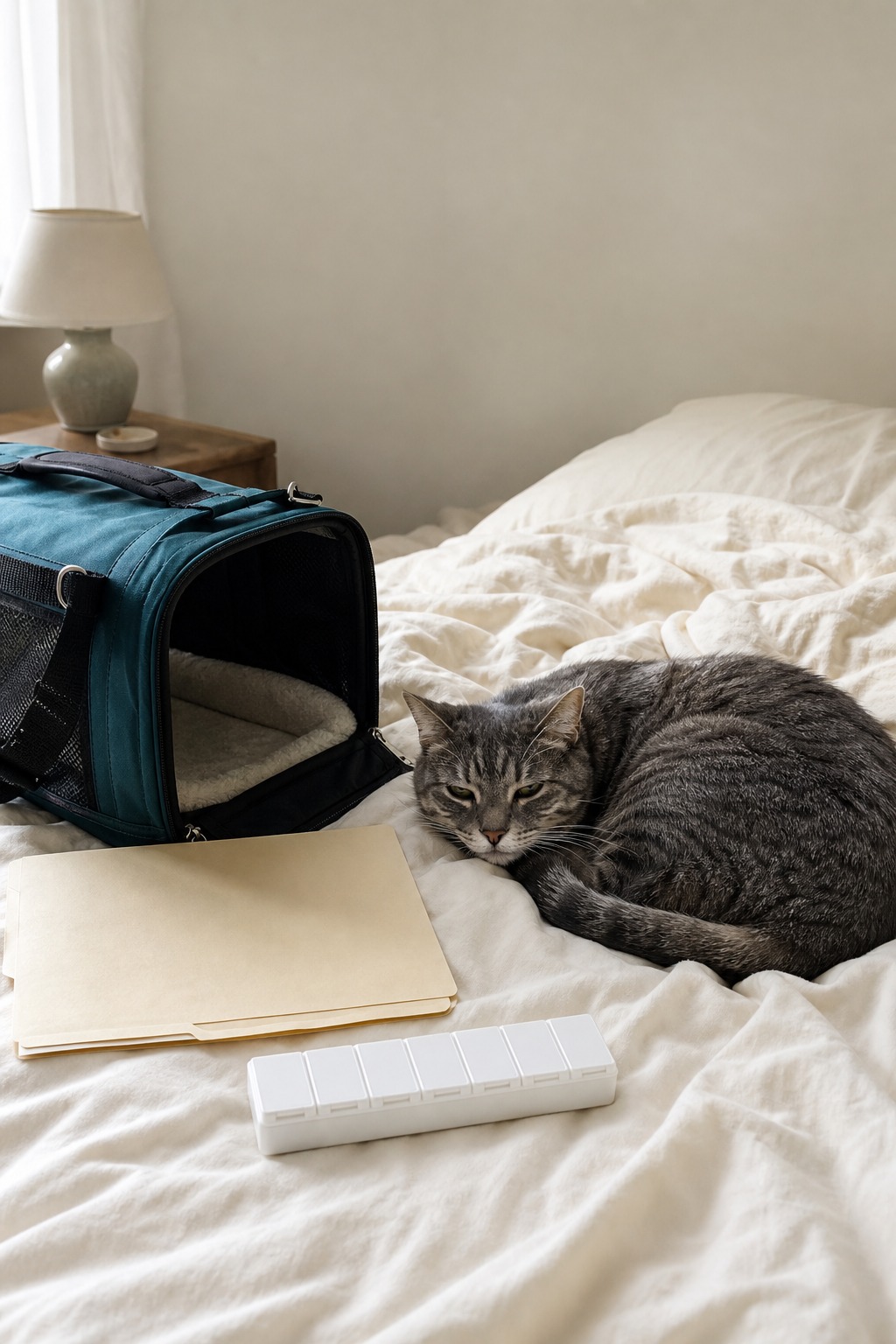
Emergency vets spend a lot of their time watching preventable delays make a bad night worse. Not the emergency itself, which usually can’t be helped, but the scramble around it: the missing records, the sitter who can’t authorize treatment, the medication that ran out at the worst possible moment. Very little of that has to happen. A handful of unglamorous tasks, done while your pet is perfectly healthy, can shave crucial time and heartache off a future crisis. Here are six, most of them things you can knock out this week.
The animals I worry about least are the ones whose owners did the boring prep. When the records are ready, payment is pre-cleared, and someone has the authority to say yes, we stop losing time to logistics and start treating the patient. That head start is worth more than people realize.
1. Keep your pet’s records in one grab-and-go place
Assemble a single file with copies of your pet’s medical records, imaging, and diagnostic results. When a hospital your pet has never visited can see the full picture in a minute, they treat faster and smarter, and that matters enormously if your animal has an ongoing condition like kidney disease, cancer, or anything with a long backstory. Keep a copy of vaccination records in there, too. Proof of a current rabies vaccine trips people up constantly, especially when they need a last-minute travel health certificate, and an emergency hospital generally can’t just vaccinate on the spot, since most don’t stock vaccines and that’s a job for your regular vet.
2. Write down your wishes before someone has to guess them
Put an advance directive in place for your pet’s care, particularly if you live with a senior animal, or one managing a chronic condition. Talk through your wishes and your limits with your regular vet, your family, and anyone who watches your pet, so that if you can’t be reached, the people making decisions aren’t doing it blind. Few things are harder to witness than a caretaker forced to weigh an impossible choice, including whether to end suffering, with no idea what you would have wanted.
3. Pre-authorize payment, especially before you leave town
This one saves people from genuine anguish. Emergency care can climb into the thousands quickly, a pet hit by a car can have an excellent outcome and still run up a large stabilization bill, and hospitals generally won’t extend credit to someone they’ve never met. If your pet is staying with a sitter, a boarding facility, or family while you travel, don’t leave them holding that burden. Stop by your regular vet and a local emergency clinic beforehand and sign a payment release, keeping a card on file with your authorization and, if you like, setting limits on the level of care you’d approve. It turns a frantic, unreachable-owner situation into a simple, pre-cleared yes.
4. Stay ahead of medication refills
Don’t let a prescription run dry right as your vet closes for the weekend or you head out of town. Here’s the part many people don’t know: an emergency hospital legally can’t just refill a medication without examining your pet first, which means an exam fee for what you thought was a simple top-up. It isn’t the ER being difficult; a hospital can’t act as a dispensing pharmacy, and approving a refill without an exam puts a veterinarian’s license on the line, no matter how routine the drug. Build the habit of reordering when a bottle hits about three-quarters empty. And if you fill a stable, long-term medication at a human pharmacy, something like eye drops for a chronic condition or phenobarbital for seizures, ask your vet to add an extra refill to the written prescription so you’re never caught short.
5. Know your nearest 24-hour ER before you need it
Program the number and address of the closest emergency and after-hours vet into your phone today, and note a backup in case the first is at capacity. Emergencies almost never respect office hours, and the middle of one is a miserable time to be searching. Two minutes now buys you a clear head later.
6. Keep the identification and the money question settled
Make sure your pet’s microchip is registered and the contact details are current, because a pet who slips away during a chaotic emergency is far more likely to come home when the chip actually points to a working phone number. And decide, in advance, how you’d handle a large, sudden bill, whether that’s pet insurance, a dedicated emergency fund, or a credit line you keep for the purpose. Money is the factor most likely to force a rushed, painful decision in the moment, and it’s one of the easiest to plan around before the moment arrives.
None of these six tasks will stop an emergency from happening. What they do is clear the obstacles that turn an emergency into a disaster, so that when something goes wrong, the only thing standing between your pet and help is the medicine, not the paperwork.
Not a substitute for your vet. Our guidance is educational. For urgent symptoms, contact a vet or emergency clinic right away. Editorial standards
Dr. Nair is a veterinarian focused on diet and feeding. She covers everyday nutrition, treats, and the many "can they eat this?" questions owners ask, grounding each answer in what is actually safe and sensible for dogs and cats.
Meet our experts ↗Keep reading
 Health & WellnessWhen the Vet Says It's Serious: How to Make a Choice You Can Live WithDr. Lena Park · 7 min
 Health & WellnessA Rabid Bat Turned Up in Pasadena. The Fix Is Almost Boring.Dr. Ravi Mehta · 5 min
 Health & Wellness'You'll Just Know' Is the Cruelest Advice in Pet Care. Ask These 12 Questions Instead.Dr. Lena Park · 10 min
 Health & Wellness'Just a Quick Walk' Can Give Your Dog Heatstroke. Here's the Playbook.Dr. Priya Nair · 9 min
 Health & WellnessMost Cat Colds Are Harmless. Learn the One Kind That Isn't.Dr. Mara Chen · 7 min
 Health & WellnessMichigan's 'Mystery Dog Illness' Was Parvo All Along. The Test Was the Liar.Dr. Lena Park · 7 min