


When the Vet Says It's Serious: How to Make a Choice You Can Live With
A frightening diagnosis for your pet forces decisions under stress, often about money, time, and quality of life. Here's a calmer way to think it through, including a vet-designed scoring tool that takes some of the guesswork out.

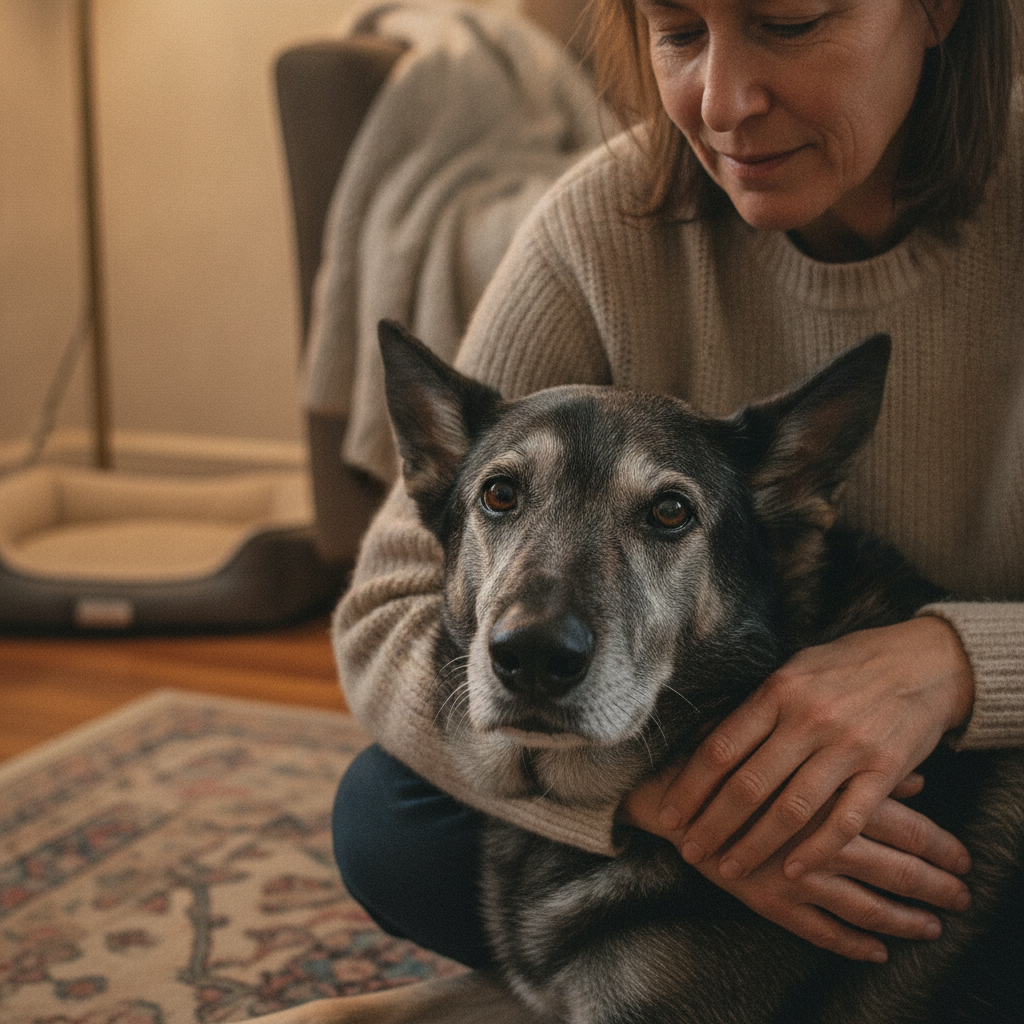
Most of us live a little afraid of the moment: the pause in the vet’s voice, the careful way they choose their words, the sense that something is seriously wrong with an animal we love. Given how short our pets’ lives are, that moment comes for most of us eventually. It is one of the hardest parts of loving them.
When it arrives, it rarely feels like a clean choice between right and wrong. It feels like a fog of options, costs, and what-ifs, made under stress. So the goal of this piece is not to tell you what to decide, no one can do that but you. It is to give you a steadier way to think, so that whatever you choose, it is a choice you can look back on and live with.
First, sort urgency from strategy
Before anything else, figure out how much time you actually have. If your pet is in distress and emergency treatment or surgery could help, you may not get the time to weigh every angle, and your vet can tell you how immediately you need to decide. Ask directly: does this have to happen now, or do we have hours or days? If you are alone, take a breath and call someone. Saying the situation out loud, even to a friend who can’t fix it, often clears the fog enough to think.
Everything that follows assumes you have at least a little time to plan. When you do, use it.
Get the best information you can
Write it down. People remember only a sliver of what a doctor tells them, and it is no different at the vet, especially through a haze of worry. Take notes, or ask your vet to write down their recommendations. For follow-ups or specialist visits, bring a written list of questions. The act of writing your fears down can also stop them from looping endlessly in your head.
Consider a specialist. Your regular vet is a skilled generalist. For a condition that falls under oncology, internal medicine, orthopedics, or another specialty, a board-certified specialist brings both deeper training and the experience of having treated many animals with the same problem. They also stay current with each other on research, sometimes before it’s published, and can offer more advanced options. You may choose not to pursue those, but you’ll be deciding with the fullest picture. If you make an appointment, tell your regular vet and have your pet’s file, including any imaging and lab results, sent over ahead of time.
Research carefully. It’s natural to search online, but the quality swings from excellent to actively wrong. Lean on veterinary-run resources like Veterinary Partner, maintained by the Veterinary Information Network. Online communities of people facing the same diagnosis can be a real source of comfort, just remember every animal is an individual, and another pet’s response won’t predict yours. Anything meaningful you find, write down and bring to your vet.
Be skeptical of miracle cures. When our animals are in danger, we’re vulnerable, and plenty of companies know it, selling supplements that promise to fix a sick pet almost overnight. Most won’t help, and some can harm. Real integrative care treats the individual animal, not a testimonial. Run anything past your vet before you buy.
Weigh quality of life, not just what’s possible
This is where owners get stuck, because “is this treatment worth it?” quietly becomes “what kind of life will my pet actually have?” Two ideas help.
First, consider your pet’s perspective, not yours. A recommendation that sounds drastic to us, a leg amputation, removing an eye, is often far less of a crisis for the animal. Freed from a painful body part and indifferent to how they look, most pets adjust remarkably fast and go on to excellent lives as a “tripawd” or with one eye. We grieve the change more than they do.
Second, and this is the tool I wish every owner knew about, you don’t have to rely on gut feeling alone.
What newer resources add: a scale for a feeling
Veterinary oncologist Dr. Alice Villalobos developed a simple, widely used framework called the HHHHHMM Quality of Life Scale, and it takes some of the agony of guessing out of the process. You score seven areas from 1 to 10:
- Hurt (is pain well controlled?)
- Hunger (is your pet eating enough?)
- Hydration
- Hygiene (can they stay clean and comfortable?)
- Happiness (do they still enjoy things?)
- Mobility (can they move well enough for their needs?)
- More good days than bad
A score above 5 in each category, or a total above 35 out of 70, suggests that quality of life is still acceptable and that continuing care makes sense. Used week to week, it turns a vague, frightening question into something you can actually observe and track, and it gives families a shared language instead of a stalemate. Veterinary hospice and palliative care teams use this kind of scoring to shape a comfort-focused plan, and, when the time comes, to recognize it.
Families often feel paralyzed because the decision seems too big to hold. A quality-of-life scale breaks it into pieces you can actually see. When someone tells me the good days now clearly outnumber the bad, or that they don’t, we’re no longer guessing together. We’re looking at the same picture.
Make room for the real world, and for joy
Money is a real and painful factor for many families, and weighing the cost of care against the odds is genuinely stressful, more so when relatives disagree. Even without money as an issue, we often decide without all the facts, because vets aren’t psychic, they’re working from what testing can reveal and offering options for more. Both you and your vet are making the best call possible with the information available. That is not failure. That is how these decisions work.
And whatever the timeline, plan for good moments. A “bucket list” is a real coping strategy, and it keeps your attention on the love rather than the fear. Even if your pet’s time is measured in hours, you can offer a favorite meal and let people say goodbye. With more time, revisit favorite places and people, take the special hike, or just drive slowly past the neighborhoods they love.
Finally, trust yourself
Maybe that’s the most important thing here: no one on earth is more invested in this animal than you are, which is exactly what makes you their fiercest advocate. Guilt is common as the choices pile up, but your bond grew out of love, not guilt, and your pet leans on you without reservation. Trust yourself back.
And know that countless others have stood exactly where you’re standing. As the writer Irving Townsend put it in Separate Lifetimes, “We who choose to surround ourselves with lives even more temporary than our own live within a fragile circle… we would still live no other way.”
This is a tender subject. If you’re facing a difficult diagnosis or the loss of a pet and are struggling, please lean on the people around you, and know that pet-loss support resources exist if you’d like them.
References
- Villalobos, A. E. “Quality of Life Scale (The HHHHHMM Scale).” International Association for Animal Hospice and Palliative Care. https://www.iaahpc.org/
- Veterinary Partner, Veterinary Information Network. “Assessing Quality of Life and Euthanasia in Companion Animals.” https://veterinarypartner.vin.com/
- American Animal Hospital Association / IAAHPC. “End-of-Life Care Guidelines.” https://www.aaha.org/
- American College of Veterinary Internal Medicine. “Finding a veterinary specialist.” https://www.acvim.org/
Common questions
Should I get a second opinion or see a specialist?
Often, yes. Board-certified specialists in areas like oncology or internal medicine have deeper experience with specific conditions and access to newer treatments and research. Ask your regular vet for a referral and have your pet's records, including X-rays, sent over. Even if you don't pursue advanced treatment, you'll decide with better information.
Where can I research my pet's diagnosis without falling for scams?
Stick to trustworthy, veterinary-run sources like Veterinary Partner, and bring what you read to your vet rather than acting on it alone. Be wary of any product promising a fast 'cure,' and never buy a supplement for a sick pet without your vet's okay.
Not a substitute for your vet. Our guidance is educational. For urgent symptoms, contact a vet or emergency clinic right away. Editorial standards
Dr. Park is a board-certified emergency and critical care specialist. She reviews our health and safety content for clinical accuracy and contributes guides on recognising urgent conditions. Her focus is helping owners act quickly and correctly when it matters most.
Meet our experts ↗Keep reading
 Health & WellnessThe Pet Emergency You Can Actually Prepare For Is the Paperwork OneDr. Priya Nair · 6 min
 Health & Wellness'You'll Just Know' Is the Cruelest Advice in Pet Care. Ask These 12 Questions Instead.Dr. Lena Park · 10 min
 Health & WellnessPet Insurance Isn't Health Insurance. It's a Loan You Make to Your Vet.Claire Sutton · 9 min
 Health & Wellness'Just a Quick Walk' Can Give Your Dog Heatstroke. Here's the Playbook.Dr. Priya Nair · 9 min
 Health & WellnessA Warm, Dry Nose Tells You Nothing. Here's How to Actually Know Your Dog Has a Fever.Dr. Priya Nair · 6 min
 Health & WellnessYour Dog's Poop Is a Daily Health Report. Here's How to Read ItDr. Lena Park · 8 min