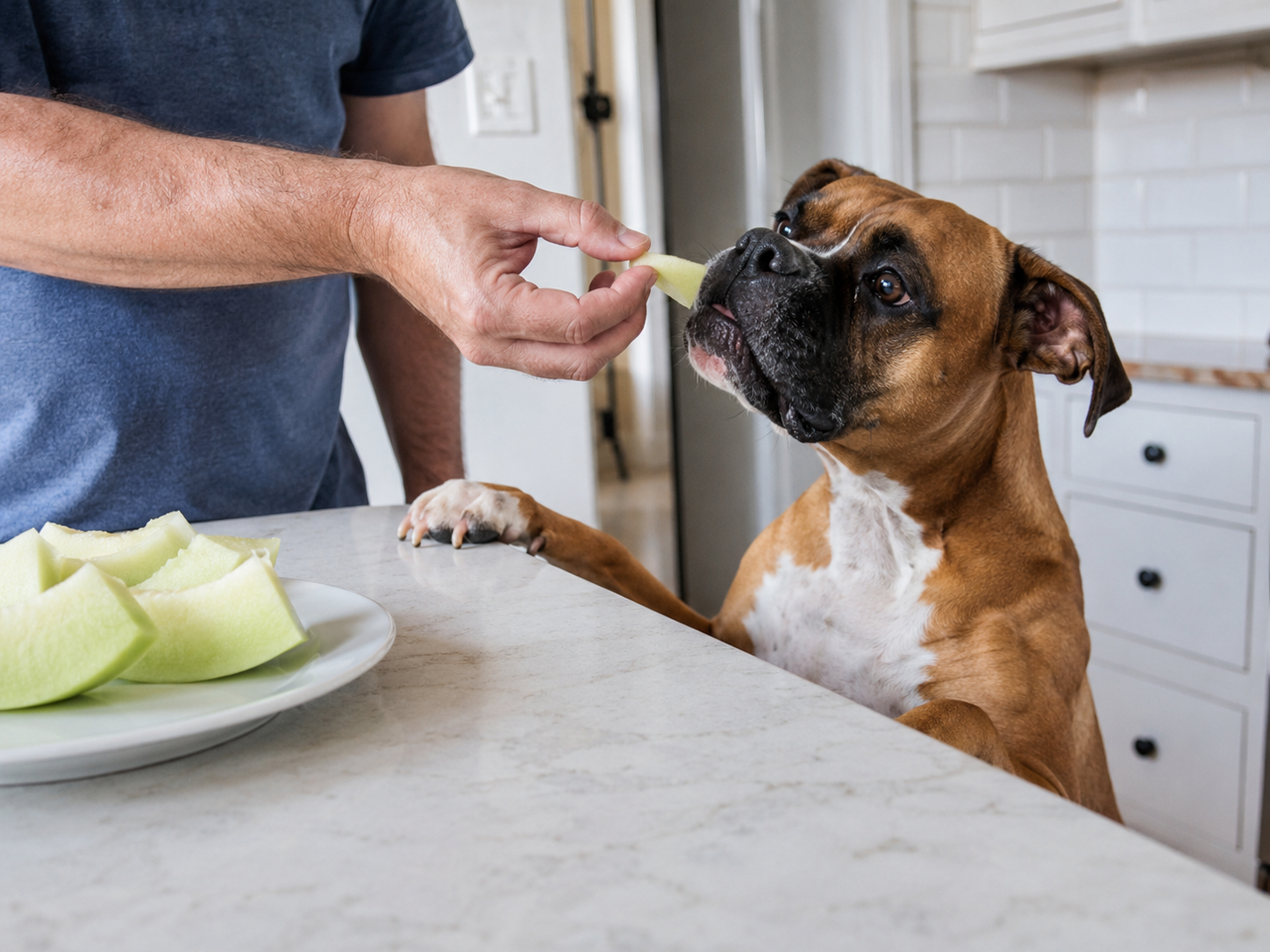

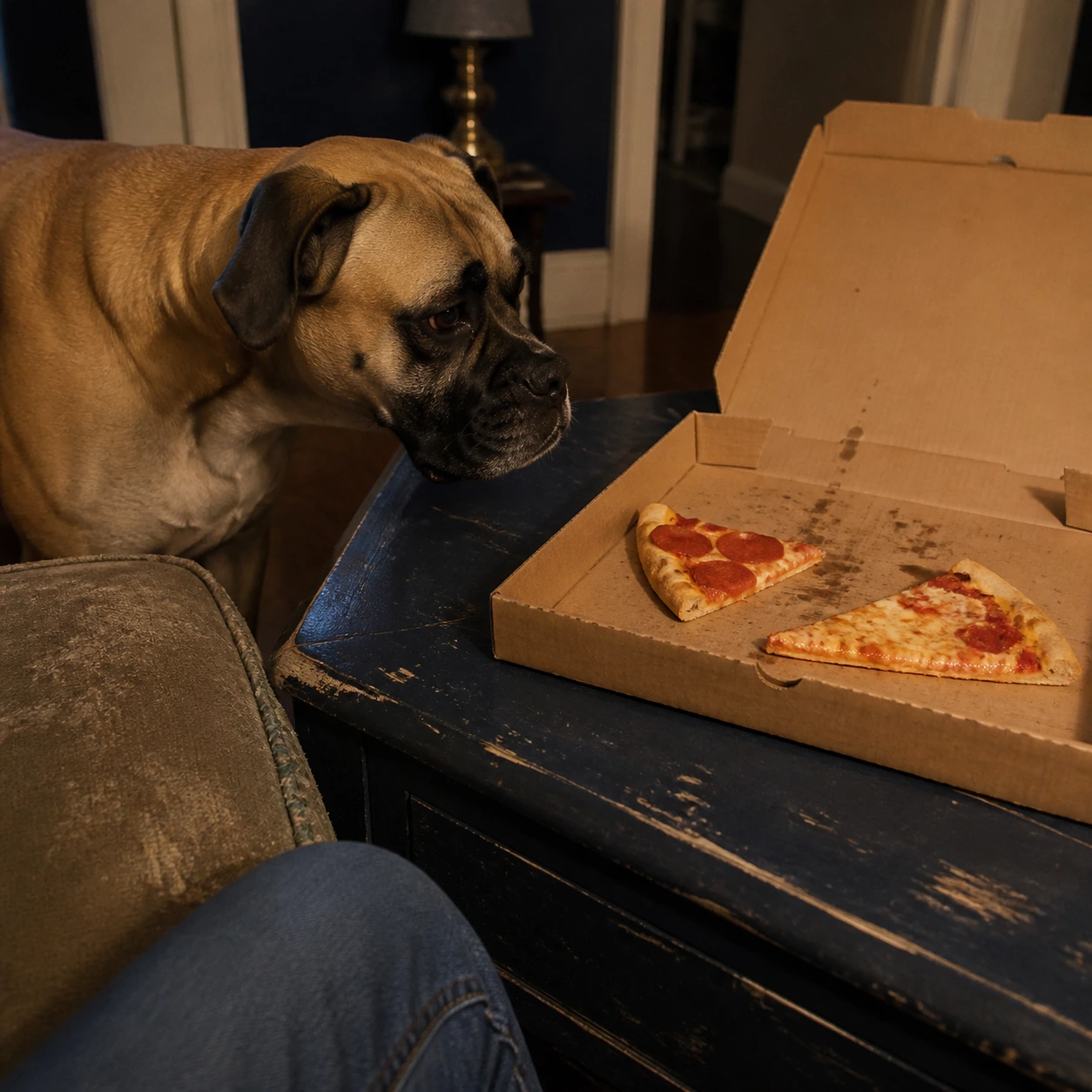
Let’s get the honest part out of the way first: if your dog snags a slice of pepperoni off your pizza tonight, they will almost certainly be fine. A healthy adult dog can absorb one small greasy mistake. Every vet knows it, and pretending otherwise just makes people tune out the real warning.
Here’s the real warning. Pepperoni is one of the worst possible foods to turn into a ritual, because it’s engineered to be exactly what a dog’s body handles poorly: dense fat, heavy salt, and a spice blend with genuinely toxic members. “One slice won’t hurt him” is true tonight and false as a lifestyle. The damage pepperoni does is cumulative, and the pizza-night begging routine is how it accumulates.
What’s actually in a slice
Pepperoni is a cured sausage, which means it’s built from three things dogs shouldn’t have much of, plus preservatives.
Fat, first and foremost. Pepperoni is exceptionally fatty, and dietary fat is the classic trigger for three problems in dogs: immediate GI upset, long-term weight gain, and pancreatitis, a painful and potentially life-threatening inflammation of the pancreas that rich, fatty foods are known to set off. Pancreatitis symptoms, vomiting, diarrhea, pain, lethargy, often add up to an emergency visit.
Salt, by design. Curing means salt, and pepperoni carries a lot: roughly 440 milligrams of sodium per ounce, with even a single small slice holding real weight relative to a dog’s needs. For scale, common veterinary guidance puts a mid-size dog’s daily sodium allowance in the low hundreds of milligrams. Dogs are more sensitive to salt overload than we are; excess brings dehydration and elevated blood pressure, and at extreme intakes, sodium poisoning, which is a true emergency.
Spices, the hidden hazard. The flavor blend typically includes garlic powder, paprika, and fennel, and garlic is the problem child: it damages dogs’ red blood cells and can cause anemia. Powdered garlic is more concentrated than fresh, so “just seasoning” isn’t reassuring here.
Preservatives. Nitrates and nitrites keep cured meats shelf-stable and can harm dogs in large quantities.
Why the habit is the real patient
None of those ingredients does its worst damage in one sitting. That’s the trap. The harms pepperoni specializes in are the slow ones:
Obesity. Dogs are already in the middle of a well-documented obesity epidemic, and calorie-dense, delicious, salty fat is precisely how a lean dog becomes an overweight one. Obesity then opens the door to diabetes, arthritis, and heart disease.
Heart strain. The combined salt-and-fat load contributes to cardiac problems over time, and dogs with heart trouble live shorter, more limited lives.
Pancreatitis, the repeat offender. Some dogs get away with fatty indiscretions for years, then one rich meal tips them over. Prior fatty-food habits are a running head start toward that day.
“The pepperoni cases that worry me are never the dog who stole a slice once,” says Dr. Lena Park. “They’re the dogs who’ve been the designated crust-and-pepperoni cleanup crew every Friday for three years. The body keeps score on that arrangement, and the bill tends to arrive as pancreatitis or a weight problem we then spend a year undoing.”
The ritual is also a training problem wearing a health-problem costume. A dog rewarded weekly at pizza time becomes a professional pizza-night beggar, which makes the habit harder to break for everyone at the table, kids especially.
When the theft happens anyway
Dogs don’t consult us, so here’s the incident protocol. A very small amount in a healthy adult dog: no alarm, just observation. Be more cautious with puppies, seniors, and dogs with underlying conditions, for whom even small amounts carry more risk.
Watch for:
- Vomiting or diarrhea
- Increased thirst or urination
- Lethargy
- Loss of appetite
- Signs of abdominal pain: crying, restlessness, reluctance to move
If your dog ate a lot, or shows any of those signs, contact your vet promptly. And note the pizza multiplier: a slice of pepperoni pizza adds cheese, grease, and frequently garlic in the sauce or crust, so pizza thefts deserve a lower threshold for calling.
What to hand over instead
The begging pressure is real, so have an answer ready that isn’t pepperoni:
- Plain cooked meats, unseasoned chicken, turkey, or lean beef, deliver the meaty payoff without the salt mine.
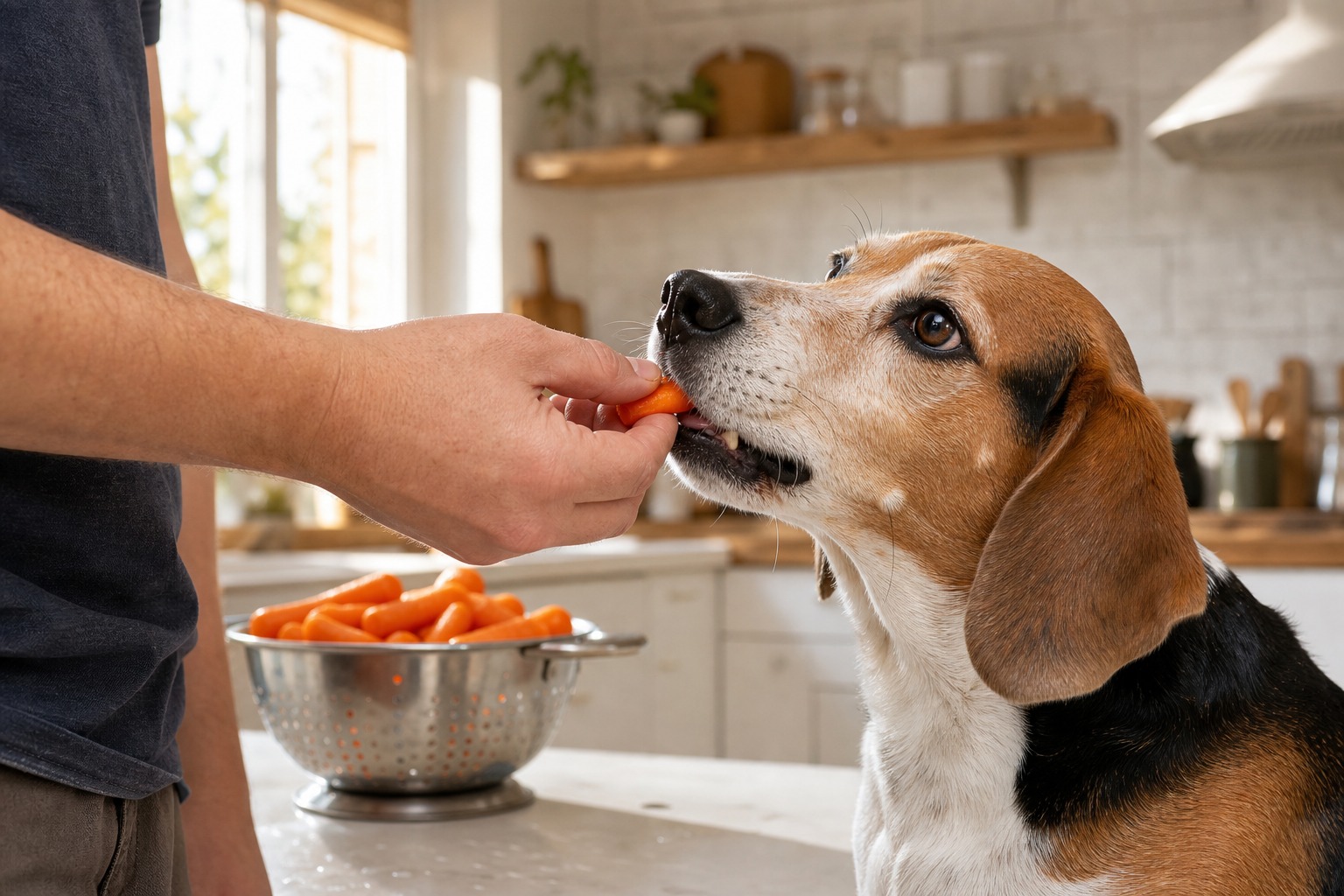
- Crunchy fruits and vegetables, carrots, apple slices, cucumber, scratch the snack itch at a fraction of the calories.
- Limited-ingredient commercial treats built for dogs solve the problem the way it should be solved.
Keeping human junk food out of the dog is one of the cheapest, highest-return health decisions available to any pet owner. Pepperoni just happens to be a particularly pure test of it.
What newer research adds
Two updates sharpen the classic advice. First, the sodium picture got more nuanced: research has pushed back on the idea that healthy dogs develop blood-pressure problems from dietary salt the way humans do, with studies showing healthy dogs regulate varied salt intakes reasonably well. The catch is the word healthy. For dogs with kidney disease or heart conditions, sodium restriction remains standard veterinary practice, and acute salt overload remains dangerous for every dog. Cured meats sit in the worst quadrant either way: maximum sodium, bundled with maximum fat.
Second, the human-nutrition world’s verdict on processed meats has continued to harden, with the WHO’s classification of processed meat as a carcinogen and mounting cardiovascular data. Dogs aren’t small humans, and the canine evidence is thinner, but the direction of travel in nutrition science, for every species studied, is that cured, processed meats belong at the edge of the diet, not the center. For a dog, whose entire treat budget is 10 percent of calories, that edge is effectively zero.
References
- Merck Veterinary Manual: Salt Toxicosis in Animals
- Journal of Small Animal Practice: Diagnosis of Pancreatitis in Dogs and Cats (Xenoulis, 2015)
- Merck Veterinary Manual: Garlic and Onion (Allium spp) Toxicosis in Animals
- Preventive Veterinary Medicine: Dog Obesity: Veterinary Practices’ and Owners’ Opinions on Cause and Management (Bland et al., 2010)
- USDA FoodData Central: Pepperoni, beef and pork, sliced
- WHO / IARC: Q&A on the carcinogenicity of the consumption of red meat and processed meat