


Parmesan Won't Poison Your Dog. The Salt Math Will.
Parmesan is one of the safer cheeses to share with a dog, but only if you respect the sodium. Here's the by-weight math, who should never get any, and the seasonings that turn a treat into a vet visit.

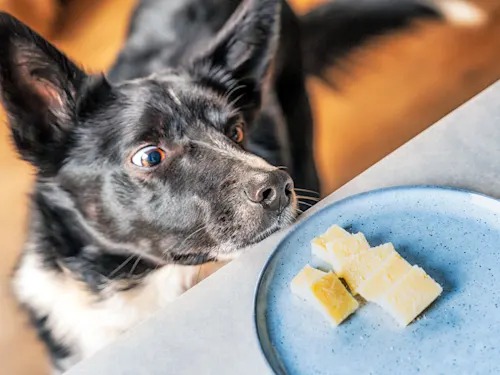
Ask most people whether cheese is bad for dogs and you will hear a confident yes or an equally confident no. Both are wrong, because cheese is not one question. It is a sliding scale, and where a particular cheese lands depends almost entirely on two numbers: how much salt it carries and how much fat. Parmesan happens to sit in an unusual spot on that scale, which is exactly why it causes so much confusion.
Here is the short version. Parmesan is one of the safer cheeses to hand a dog, not one of the more dangerous ones. It is aged so long that most of the lactose is gone, so the upset-stomach problem that plagues softer cheeses is smaller. What Parmesan trades for that is concentration. Everything gets denser as the cheese ages, including the sodium and the calories. So the risk with Parmesan is not a mystery toxin. It is arithmetic, and the arithmetic turns on your dog’s body weight.
Why Parmesan is low-lactose but high-stakes
Real Parmesan, the Parmigiano-Reggiano kind, is a hard cow’s-milk cheese aged for months or years. That long aging does two useful things for a dog. It drops the lactose to very low levels, which is why a lactose-sensitive dog often tolerates a nibble of Parmesan better than a bite of fresh mozzarella. And it builds the nutty, crystalline flavor that makes even a whisper of it irresistible to a food-motivated dog.
Authentic Parmesan is made of exactly three things: milk, salt, and rennet. The trouble is that aging concentrates the salt right along with the flavor. Parmesan is naturally high in sodium and calorie-dense for its size, so a small volume packs a real sodium punch. Pre-grated tubs make this worse by adding anti-caking agents and, often, extra salt.
That combination, low lactose but high sodium and fat, is what makes Parmesan a “garnish, not a snack” food for dogs. A dusting is fine. A handful is a problem.
Parmesan isn’t dangerous the way chocolate or grapes are, so I don’t want people panicking over a dropped shred. What I do want them doing is treating it like the salty, rich food it is. Scale the amount to the dog’s size, and if the dog has any heart, kidney, or pancreas history, it comes off the menu completely.
The by-weight math: how much is actually safe
The single most useful thing you can do is stop thinking in “a little bit” and start thinking by weight. Start conservatively, offer it no more than once or twice a week, and only work up if your dog tolerates it well.
- Toy, under 10 pounds: a few grated strands, at most an eighth of a teaspoon.
- Small, 11 to 20 pounds: up to a quarter teaspoon.
- Medium, 21 to 50 pounds: a quarter to a half teaspoon.
- Large, over 50 pounds: up to a teaspoon.
A helpful rule of thumb underneath those numbers: a light pinch of finely grated Parmesan per 20 to 30 pounds of body weight is about the ceiling. Notice how small even the “large dog” portion is. That is the point. Parmesan works as a flavor accent, not a food group.
Two more habits keep it safe. First, if the Parmesan is part of a meal, cut back on other salty foods that day and always leave fresh water out. Second, give any new food a 24-to-48-hour window before repeating it, so you can see how your dog’s stomach and skin respond before it becomes a routine.
Where a pinch of Parmesan actually earns its place
Used deliberately, a tiny bit of Parmesan is genuinely useful, which is more than you can say for most people-food handouts.
- Appetite jump-start. A whisper of Parmesan over dinner can wake up a picky or recovering eater who is turning their nose up at plain kibble.
- Medication cover. A light sprinkle around a pill pocket, or over food that hides a dose, can disguise a bitter tablet well enough to get it down without a fight.
- High-value training cue. A couple of feathery strands can serve as the extra-special reward you save for the hardest asks, like a rock-solid recall.
The real risks, ranked honestly
Most of the danger around Parmesan is not the Parmesan.
The genuine hazard is anything mixed into it. Garlic and onion, whether powdered into a seasoning blend or baked into a flavored shaker cheese, are toxic to dogs and damage red blood cells. This is a far bigger deal than the cheese itself, so read the label and never share seasoned Parmesan. The hard rind is a separate problem: it does not digest well and can lodge as a choking hazard or a gut blockage, so it goes in the trash, not the dog bowl.
After that, it is the sodium and fat math catching up. Too much salt can make a dog drink and urinate excessively and, at higher doses, stress the heart and kidneys. Too much fat can trigger pancreatitis, and the extra calories quietly pile on weight over time. A lactose-sensitive dog may still react even to low-lactose Parmesan with gas or loose stool.
Skip Parmesan entirely, no sprinkle at all, if your dog has a history of pancreatitis, obesity, high blood lipids, high blood pressure, or heart or kidney disease. And if your dog is on a prescription cardiac, renal, or ultra-low-fat diet, do not use it as a topper without asking your vet, because even a small amount can undo the point of the diet.
Call your vet if your dog develops vomiting, diarrhea, excessive thirst or urination, lethargy, belly pain, or a drop in appetite after eating Parmesan, especially if they got into a large amount or a seasoned kind.
Better cheeses, and better-than-cheese options
If you like the idea of a cheesy reward but want a gentler one, a few cheeses are milder and lower in sodium than Parmesan. Still tiny amounts only.
- Low-fat cottage cheese (1 to 2 percent milkfat) is easy on digestion and great for hiding pills.
- Part-skim mozzarella or plain ricotta is low-salt, mild, and simple to pinch into pea-sized bites.
- A dab of plain cream cheese grips a pill well, though it is rich, so skip it for weight-managed or pancreatitis-prone dogs.
- Plain goat cheese is sometimes easier to tolerate than cow’s milk, but it is still dairy, so use it sparingly.
Steer clear of blue cheeses, high-salt cheeses like feta and halloumi, and anything flavored with garlic, onion, chives, pepper flakes, or sweeteners.
And you can skip dairy altogether. A spoon of plain pumpkin, a few crumbs of freeze-dried meat, a splash of low-sodium bone broth, or a pinch of boiled chicken breast or baked white fish all deliver the “special treat” payoff without the salt load.
What’s new since this was written
The wider conversation about salt and dogs has tightened up, and it is worth folding in. The ASPCA Animal Poison Control Center continues to field calls about salt toxicosis from dogs eating very salty human foods, and its guidance is consistent: the danger scales with how much sodium a dog takes in relative to their size, which is exactly why the by-weight approach above matters more than any single “safe” label. A stray shred of Parmesan is a non-event; a dog who cleans out an open tub of shaker cheese is a reason to call.
The other update is about the flavored and pre-grated products crowding grocery shelves. More of them now carry garlic, onion, or “Italian herb” blends baked right in, and those additives, not the cheese, are what land dogs at the vet. The safest move today is to grate from a plain wedge yourself, so you know the ingredient list is just milk, salt, and rennet.
Bottom line
For a healthy dog, a tiny, occasional pinch of plain Parmesan is a legitimately handy tool for tempting a picky eater, rewarding hard training, or sneaking in a pill. It is not toxic. But it is salty and calorie-dense, so the amount has to match the dog, and the seasonings have to be nowhere near it. If your dog has heart, kidney, or pancreatic disease, is overweight, or shows any sign of dairy intolerance, leave Parmesan out entirely and reach for one of the gentler options instead. When in doubt, ask your vet before it becomes a habit.
References
- ASPCA Animal Poison Control Center. “People Foods to Avoid Feeding Your Pets.” ASPCA. https://www.aspca.org/pet-care/animal-poison-control/people-foods-avoid-feeding-your-pets
- Merck Veterinary Manual. “Salt Toxicity in Animals.” https://www.merckvetmanual.com/toxicology/salt-toxicity/salt-toxicity-in-animals
- U.S. Food and Drug Administration. “Sodium in Your Diet.” https://www.fda.gov/food/nutrition-education-resources-materials/sodium-your-diet
This article covers a nutrition and safety topic. If your dog has a diagnosed heart, kidney, or pancreatic condition, follow your veterinarian’s dietary guidance over any general rule of thumb.
Common questions
How much Parmesan is safe for my dog?
Think in pinches, not spoonfuls. A rough ceiling is a light pinch of finely grated Parmesan per 20 to 30 pounds of body weight, no more than once or twice a week. A toy dog under 10 pounds should get little more than a few strands.
What kind of Parmesan should I avoid giving my dog?
Anything seasoned with garlic or onion, pre-grated shakers with long additive lists, and the hard rind, which is a choking and blockage risk. Garlic and onion are the real danger here, not the cheese.
Is Parmesan safe for a dog with pancreatitis?
No. Parmesan is calorie-dense and fatty, and fat is a known trigger for pancreatitis flare-ups. Dogs with a history of pancreatitis, obesity, high blood lipids, or heart and kidney disease should not get Parmesan at all.
Not a substitute for your vet. Our guidance is educational. For urgent symptoms, contact a vet or emergency clinic right away. Editorial standards
Dr. Nair is a veterinarian focused on diet and feeding. She covers everyday nutrition, treats, and the many "can they eat this?" questions owners ask, grounding each answer in what is actually safe and sensible for dogs and cats.
Meet our experts ↗Keep reading
 FoodBaked Sourdough Is a Fine Dog Snack. Raw Dough Is a 911 Call.Dr. Amara Solis · 6 min
 FoodSalmon Is Great for Your Dog. Raw Salmon Can Kill Them.Dr. Ravi Mehta · 7 min
 Health & WellnessSalmonella Got Into These Dog Biscuits. Here's How to Check Your Bag.Dr. Priya Nair · 4 min
 Food10 Human Superfoods for Dogs: The Prep Matters More Than the ProduceDr. Ravi Mehta · 8 min
 Health & WellnessThe Dog Treat Recall Where Nobody Got Sick, and Why That's the Good NewsDr. Priya Nair · 3 min
 FoodOne Tater Tot Won't Kill Your Dog. The Fifth One Might Ruin Your Night.Dr. Ravi Mehta · 5 min