


Outdoor Cats Die Years Younger. The Data Is Worse Than You Think.
The indoor-outdoor debate usually gets argued on the birds' behalf. A sweeping research review flips the script: the strongest reason to keep your cat in may be the most selfish one, your cat's own lifespan.

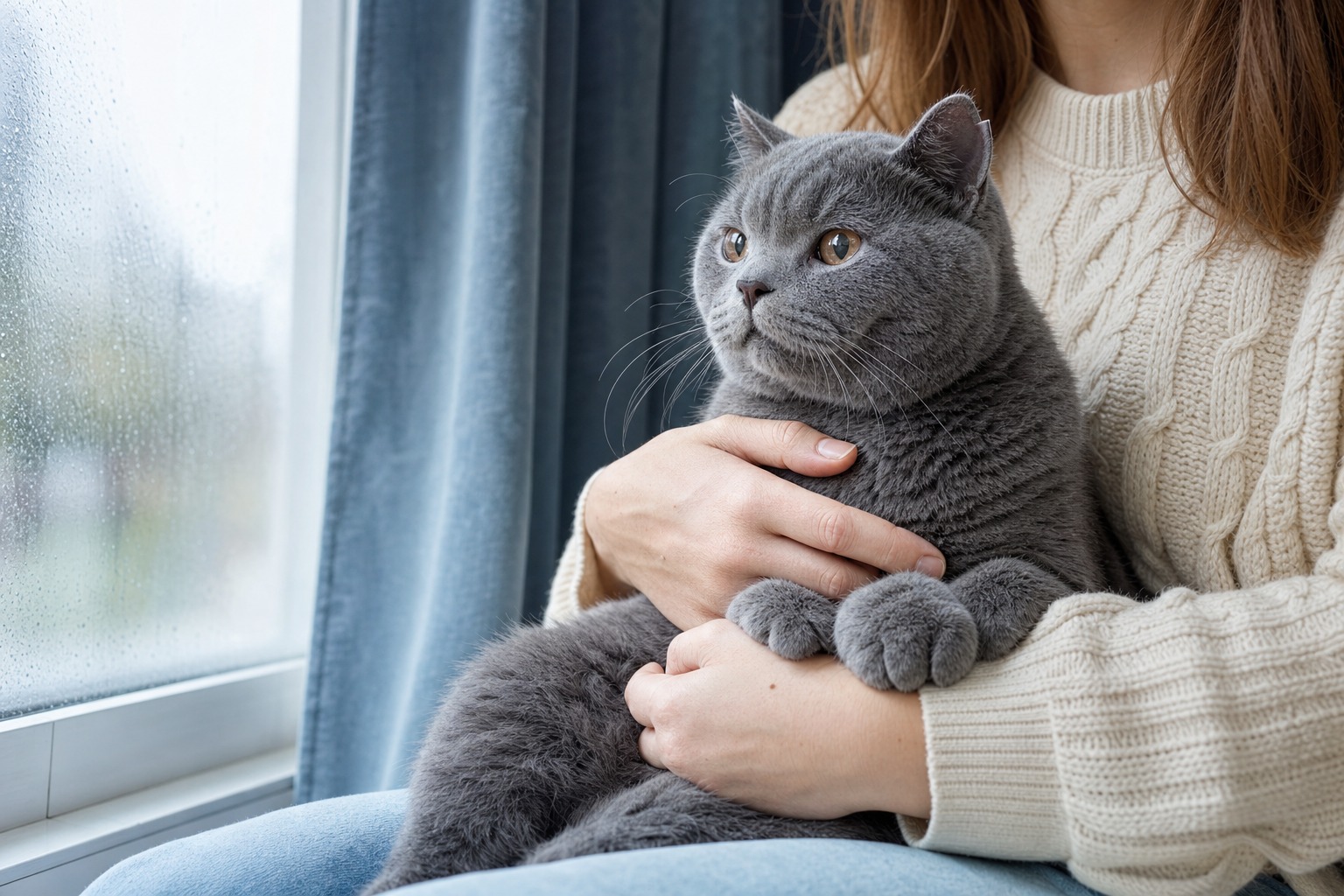
For years, the argument for keeping cats indoors has been made mostly on behalf of songbirds. It is a real argument, and free-roaming cats do enormous damage to wildlife. But it also lets cat owners feel like the ask is a sacrifice, giving up their cat’s freedom for someone else’s benefit. A large research review reframes the whole thing. The most compelling reason to keep your cat inside turns out to be the selfish one: outdoor cats simply do not live as long, and the gap is stark.
What the review found
Researchers at Australia’s Murdoch University conducted a research review, a synthesis that pools and weighs thousands of individual studies to reach a broad conclusion, focused on how long outdoor cats actually live. After working through more than 2,000 papers, they landed on a blunt finding: compared with their indoor-only counterparts, cats allowed outside tended to die years prematurely, living only about 70 to 80 percent as long. The work was published in the journal Global Ecology and Conservation.
The leading killer was trauma, meaning car strikes, fights, and falls. The exact toll varied country to country, but the numbers are sobering. In Canada, 38.3 percent of sudden, unexpected cat deaths traced back to trauma. In the U.S., a staggering 87.1 percent came down to being struck on the road. The cats getting hurt skewed young, under five years old, and disproportionately male, the very cats owners assume are fast and streetwise enough to be fine.
The review also found a natural experiment hiding in the data. In places where indoor life is the cultural norm, trauma deaths plummet. Japan, where three-quarters or more of cats live strictly indoors, lost only about 1.3 percent of cats to poisoning or injury.
The dangers that don’t make headlines
Beyond traffic, outdoor cats are prey. The review catalogued a long list of predators taking cats and kittens: coyotes in North America, red foxes across the U.K. and Switzerland, and a mix of wolves, badgers, and pine martens on the European continent. It is a risk that is genuinely hard to quantify, because it so often happens with no one watching. Roaming cats also pick up infections and parasites through unsupervised contact with strays and wildlife.
A few dangers, the review noted, are roughly equal indoors and out, which is worth being honest about. Poisoning is one: outdoor cats eat things they find, but bored indoor cats chew toxic houseplants, lap up cleaners, and get into medications. Human cruelty is another, striking both wandering cats and cats in individual homes. The difference is control. The problems indoor cats face, like weight gain, diabetes, and boredom-driven behavior issues, have straightforward fixes: enrichment, exercise, and a proper diet. The dangers that stalk an outdoor cat mostly cannot be managed at all.
When people picture the risk to an outdoor cat, they picture a car, and that is real. But the quieter risks are what change my recommendation. A speeding car is one bad second. Parasites, infectious disease, and slow poisoning are the ones I see shorten a cat’s life without anyone ever seeing the moment it happened.
What’s new: the bird-flu wrinkle
Since this review circulated, a fresh and urgent reason to keep cats in has emerged: highly pathogenic avian influenza, the H5N1 “bird flu” strain. Outdoor cats that hunt birds or scavenge, and cats fed raw poultry or unpasteurized milk, have been infected, and the illness in cats has frequently been severe or fatal. Public-health and veterinary groups have specifically urged owners to keep cats indoors and away from raw poultry products as the virus spread through wild birds and dairy herds. For a hunting cat, the outdoors is no longer just a traffic risk; it is a disease exposure.
Keeping an indoor cat happy, not bored
None of this means confining your cat to a beige apartment and hoping for the best. The humane version of “indoors” is an enriched indoors. A window perch turns bird-watching into a daily show. A catio, an enclosed patio your cat can access safely, delivers fresh air and stimulation with none of the traffic or predators. Many cats can be trained to walk in a harness for supervised outdoor time. Puzzle feeders, climbing furniture, and a few minutes of real play a day handle the weight and boredom problems that indoor life can create.
The review’s authors kept returning to one theme: the owner is the biggest variable in a cat’s fate, and indoor risks are the ones an owner can actually design away. They also noted a nice side effect. People with indoor cats often report closer, more satisfying bonds with them. Keeping your cat home, it turns out, may be good for both of you, and the birds outside your window will not complain either.
References
- Legge, S. et al. “The lives and deaths of pet cats: a review of survival and mortality.” Global Ecology and Conservation, Murdoch University, 2026.
- U.S. Centers for Disease Control and Prevention. “H5 Bird Flu in Cats.” cdc.gov/bird-flu/animals/cats.html
- American Veterinary Medical Association. “Keeping Cats Indoors.” avma.org
- Loyd, K. A. et al. “Quantifying free-roaming domestic cat predation and risk behaviors using animal-borne video cameras.” Biological Conservation.
This piece touches on cat health and safety; talk with your veterinarian about the right setup for your individual cat.
Not a substitute for your vet. Our guidance is educational. For urgent symptoms, contact a vet or emergency clinic right away. Editorial standards
Dr. Nair is a veterinarian focused on diet and feeding. She covers everyday nutrition, treats, and the many "can they eat this?" questions owners ask, grounding each answer in what is actually safe and sensible for dogs and cats.
Meet our experts ↗Keep reading
 Health & Wellness7 Ways to Help the Stray Cats on Your Street Survive WinterDr. Priya Nair · 7 min
 Health & WellnessFoxtails Aren't Just a Dog Problem. For Cats They Can Be Deadly.Dr. Amara Solis · 5 min
 Health & WellnessThe 'Stray Cat Telegraph' Is Nonsense. It Still Beats Standing on the Porch Yelling.Dr. Nina Kohl · 7 min
 Health & WellnessYour Cat vs. the Christmas Tree: The Climbing Isn't the Real DangerDr. Ravi Mehta · 6 min
 Health & WellnessYour Indoor Cat Will Never Get Out. Until the Night She Does.Dr. Amara Solis · 6 min
 TrainingThat 'Come Here' Cat Video Works. Your Own Voice Works Better.Dr. Lena Park · 7 min