
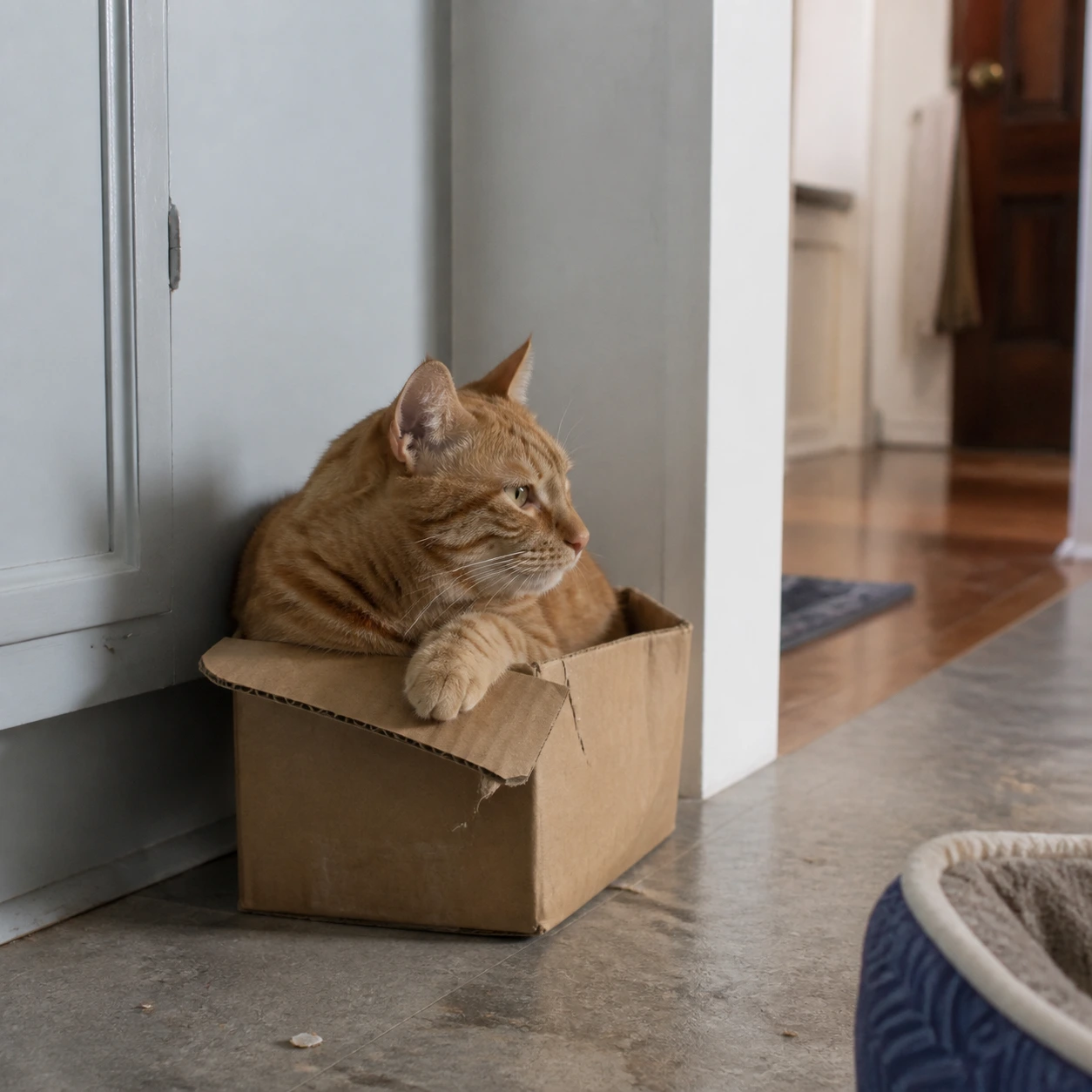
The following was dictated to us at 6:14 a.m. by the household cat, who sat down in a freshly emptied shipping box and refused all further interviews.
You came on a Tuesday with tape on your face, addressed to the human, but meant for this place. She took out her slippers. She flattened your friend. But you, perfect vessel, I chose to defend.
They gave me a bed that cost eighty-nine dollars, memory foam, they said, fit for royals and scholars. It sits in the corner, unslept-in, unloved, while I fold myself into you, snug as a glove.
Four walls and a floor, not a feature to spare, no zipper, no cushion, no ergonomic chair, and that is the genius the humans can’t see: you ask for exactly what’s given, like me.
From here I survey both the hallway and bowl. From here I am hidden. From here I’m in control. The dog cannot follow. The vacuum won’t dare. A box is a fortress disguised as nowhere.
So flatten the others, recycle the rest, but lay not a finger on this one, my nest, for I have decided, and cats don’t repeal — a pause — she has spotted the tape — end of spiel.
The science behind the devotion
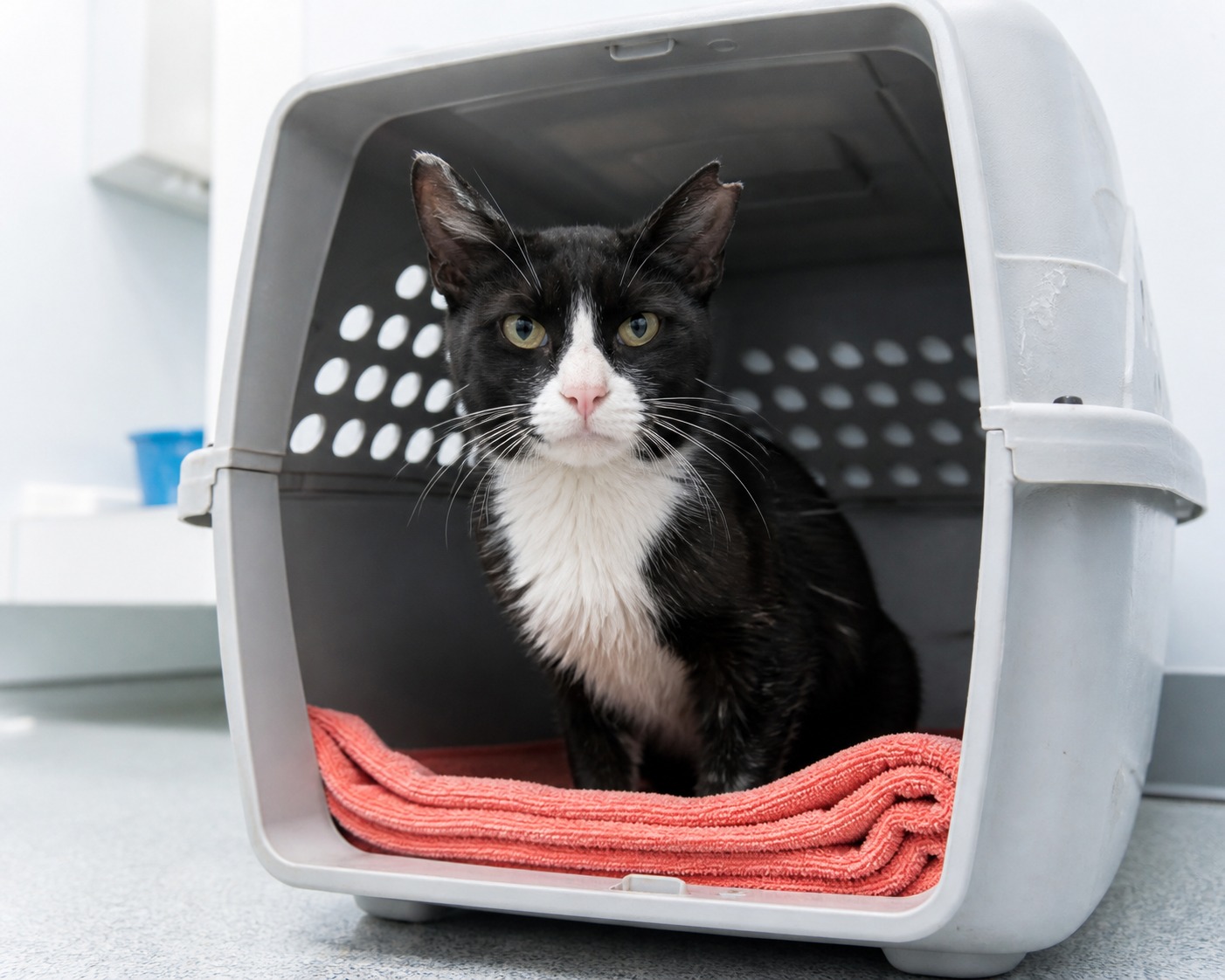
The poet upstairs is not being dramatic, or at least not only dramatic. Research backs the box habit. A 2014 study in Applied Animal Behaviour Science gave hiding boxes to newly arrived shelter cats and found they recovered from stress measurably faster than cats without one, and a 2019 randomized trial in PLOS ONE reached a similar conclusion: a simple box gives a cat a hiding spot, and a hiding spot lowers stress.
A box is also a windbreak-free warm spot, a concealed lookout, and a defensible space with one entrance, which is roughly everything a small ambush predator wants from real estate. So before you break down the next delivery box, consider leaving it out for a week. It is the cheapest enrichment your cat will ever love, and they will love it more than the bed.