


A Cat's Nervous System Sends Three Kinds of Signal. How to Read Them
You cannot diagnose a cat's brain or spine at home, but you can localize the problem and know which signs are a same-hour emergency. A vet's guide to reading feline neurological signs and triaging them fast.

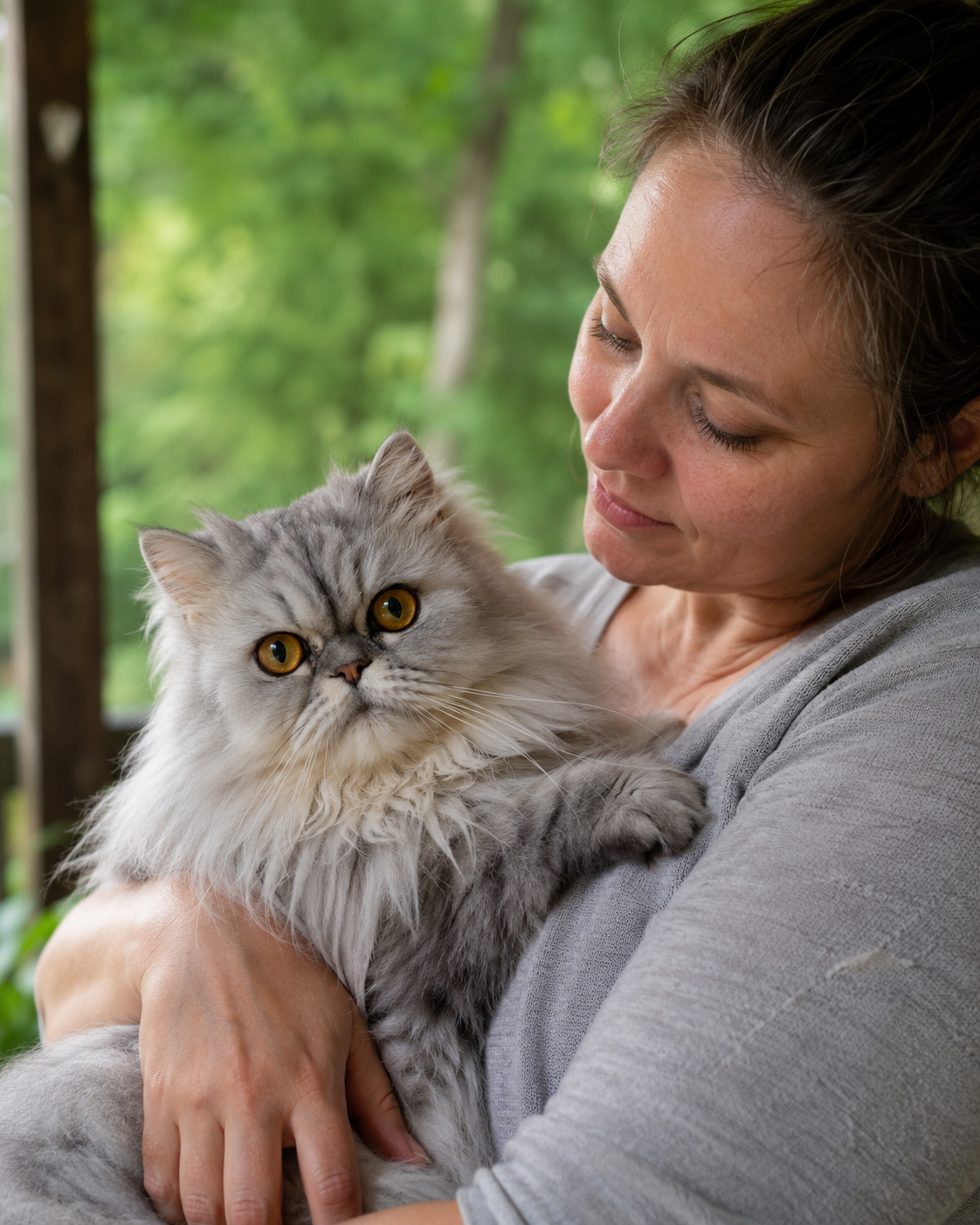
When a cat suddenly does something that seems outside their control, freezing and staring at nothing, tipping over, twitching, or convulsing, the instinct is to reach for a diagnosis. Resist it. The single most important thing to understand about feline neurological problems is that you cannot name the disease from the couch, because wildly different conditions produce the exact same outward sign. A wobbling cat could have an ear infection, a brain tumor, or a condition they were born with. A staring cat could be seizing, going senile, or simply unwell in a way that has not localized yet.
So this article is not a checklist for playing amateur neurologist. It is built around what you can actually do, which is the same first move a veterinary neurologist makes: figure out roughly where in the nervous system the trouble lives, and how fast you need to move. Get those two things right and you will hand your vet the two most useful pieces of information there are.
Start with where, not what
A neurological disorder is any problem in the brain, spinal cord, or nerves. Almost every sign a cat shows points, at least loosely, to one of three regions. Learning to sort what you are seeing into these buckets is more useful than memorizing disease names, because it tells you which system is failing and how urgent it is.
The balance system. Signs: a sudden head tilt, falling or rolling to one side, a drunken stagger, and nystagmus, the rapid flicking eye movements that look like your cat is watching an invisible tennis match. These point to the vestibular system, which governs balance and lives partly in the inner ear and partly in the brainstem.
The thinking brain. Signs: seizures, walking in tight circles, pressing the head into a wall or corner, blindness that comes on without an eye injury, and dramatic personality or awareness changes, from blank unresponsiveness to disorientation. These point to the forebrain, the part that handles consciousness, behavior, and vision processing.
The spine and nerves. Signs: weakness or dragging in the back legs, reluctance or inability to jump, an unsteady rear end while the head and face look normal, and loss of bladder or bowel control. These point below the head, to the spinal cord and peripheral nerves.
You will not always get a clean answer, and some conditions hit more than one region. That is fine. Even a rough read, “this looks like a balance problem” versus “this is a spine problem,” changes what your vet checks first.
Then triage: what is a call-now emergency
The old advice, “any neurological sign means see a vet right away,” is true but not precise enough to act on at 2 a.m. Here is the sharper version.
Treat these as true emergencies, meaning call an emergency vet immediately, do not wait for morning:
- A seizure that lasts longer than five minutes. This is status epilepticus, and it can cause permanent brain injury or death without prompt injectable medication to stop it.
- Two or more separate seizures within 24 hours (cluster seizures), or seizures that repeat without the cat fully waking up in between.
- Head pressing, the act of pushing the head persistently against a wall or furniture. It is a classic sign of serious forebrain disease and is never normal.
- Sudden collapse, unresponsiveness, or an inability to stand at all.
Treat these as same-day or next-morning urgent visits: a first-ever brief seizure that stops on its own, a new head tilt, a new wobble or circling, dragging a limb, or sudden blindness.
Treat these as a soon appointment, especially in a senior cat: gradually developing disorientation, night-time yowling, staring, house soiling, or a slow change in sleep and grooming, which often signal age-related cognitive decline rather than a crisis.
Whatever tier you land in, film it if you safely can. A thirty-second phone video of the actual episode is worth more than any description, because seizures and vestibular episodes are often over before you reach the clinic.
What causes it, and the conditions behind each region
The nervous system can be disrupted from many directions: head or spinal trauma, infection (bacterial, viral, fungal, or parasitic), inflammation, degeneration, congenital problems present from birth, and cancer.
The same outward sign can have very different roots, which is the whole reason these cases need a real workup rather than a guess. When an owner can tell me the signs pointed to balance, or to the spine, and hand me a video, we skip a lot of guesswork and get to the right test faster.
Here is how the common feline conditions map onto the three regions above.
Balance-system conditions
Vestibular disease is the headline here. The most common feline causes are inner ear infections and nasopharyngeal polyps, but tumors, inflammation, and trauma can all disrupt balance, and sometimes no cause is ever found. Expect a head tilt, loss of coordination, and nystagmus. Treatment targets the cause when there is one, an ear infection cleared, a polyp removed, and otherwise leans on supportive care, including anti-nausea medication and steps to keep an unsteady cat from falling and hurting itself.
Thinking-brain conditions
Epilepsy. Vets usually mean primary (idiopathic) epilepsy, recurring seizures with no identifiable cause, which is less common in cats than in dogs. Seizures may be generalized (full-body convulsions with a brief loss of consciousness, sometimes with drooling and loss of bladder or bowel control) or focal (subtler, often twitching confined to the face or one limb). Because idiopathic epilepsy is a diagnosis of exclusion, vets first rule out known causes with blood work and neurological imaging. It is then managed medically, typically with daily oral medication and periodic blood work, and many cats are well controlled.
Brain tumors. One of the “known causes” behind new seizures. The three most common in cats, in order, are meningiomas, lymphoma, and pituitary tumors. Meningiomas alone make up more than half of feline brain tumors; they grow slowly and are usually benign but cause trouble by pressing on the brain, producing seizures, circling, a wobbly walk, behavior change, and blindness. Owners often assume nothing can be done, which is wrong. Cats with meningiomas frequently do well with surgical removal, and radiation, chemotherapy, seizure medication, and steroids all have roles.
Meningitis and encephalitis. Inflammation of the membranes around the brain (meningitis), the brain itself (encephalitis), or both (meningoencephalitis). Cats can develop it from bacterial, viral, fungal, or parasitic infection, with feline infectious peritonitis (FIP) the most common cause; it can also be immune-mediated or have no detectable cause. Signs include seizures, blindness, neck pain, a dull mental state, a wobbly walk, and fever. Treatment follows the cause: antibiotics or antifungals for infection, steroids for immune-mediated disease, and supportive care.
Feline cognitive dysfunction (cat dementia). A common age-related change in seniors. The aging brain shrinks and accumulates protein deposits that impair communication between cells. The result goes beyond ordinary slowing: disorientation, restlessness, blank staring, ignoring people and other pets, house soiling, more vocalizing, and shifts in sleep, eating, and grooming. It is managed, not cured, with medication, supplements, enrichment, and environmental changes. This is the region-two condition owners most often dismiss as “just getting old,” which is exactly why it belongs on the list.
Spine-and-nerve conditions
Spinal problems. Intervertebral disc disease, where the soft center of a disc hardens, shifts, and presses on the cord, can stem from degeneration or trauma and is less common in cats than dogs. Spinal disease can also follow bacterial or viral infection, including FIP. Expect pain, hind-limb weakness, refusal to jump, dragging of the back legs, and loss of bladder or bowel control. Treatment ranges from pain control, anti-inflammatories, and strict rest to surgery for some disc cases.
Conditions that sit in their own category
Cerebellar hypoplasia affects coordination from kittenhood. If a pregnant cat or newborn kitten catches panleukopenia (feline distemper), the kitten’s cerebellum may not fully develop, producing a lifelong wobbly gait, exaggerated limb movements, and head and body tremors that appear as the kitten starts to move.
“Cerebellar hypoplasia can’t be cured, and it doesn’t have to be for these cats to live wonderfully,” Dr. Mehta says. “Keep them indoors, cat-proof the home so a stumble does not become an injury, and most live full, affectionate lives, just a little clumsy.”
Feline hyperesthesia syndrome makes the skin along the back hypersensitive and twitchy. The cause is unknown; leading theories call it a form of maladaptive pain or a compulsive behavior disorder. Episodes bring rippling muscle spasms, frantic tail chasing, intense overgrooming sometimes to the point of self-injury, vocalizing, and sudden bolting. No treatment works reliably; stress reduction is standard, and some cats improve on medication.
What happens at the vet
“My starting point is a thorough history, a hands-on physical, and a neuro workup to test reflexes,” Dr. Mehta explains. “Blood work tells me whether there is an obvious infection, though not always which one. From there I often refer to a veterinary neurologist for a complete workup.”
That workup frequently means collecting cerebrospinal fluid to look for organisms or abnormal cells, plus an MRI, both under anesthesia. Your localization and your video shorten this path considerably.
One safety note that applies before any of this: if you encounter an unfamiliar cat showing neurological signs, especially one with unknown vaccination history, do not handle it. Rabies is a neurological disease that is contagious and deadly. Keep your distance and call animal control.
The bottom line
You do not need to name your cat’s neurological condition, and you cannot from home. You need to do two things well: notice where the signs point, toward balance, the thinking brain, or the spine, and recognize the handful that mean call now, above all a seizure over five minutes, seizures that cluster or repeat without recovery, and head pressing. Bring that read and a video to your vet, and you have done the most valuable part of the job.
References
- Charalambous, Marios, et al. “ACVIM Consensus Statement on the Management of Status Epilepticus and Cluster Seizures in Dogs and Cats.” Journal of Veterinary Internal Medicine, 2024. https://onlinelibrary.wiley.com/doi/10.1111/jvim.16928
- Pakozdy, A., et al. “Epilepsy in Cats: Theory and Practice.” Journal of Veterinary Internal Medicine, vol. 28, no. 2, 2014, pp. 255 to 263. https://doi.org/10.1111/jvim.12297
- Troxel, M. T., et al. “Feline Intracranial Neoplasia: Retrospective Review of 160 Cases (1985 to 2001).” Journal of Veterinary Internal Medicine, vol. 17, no. 6, 2003, pp. 850 to 859. https://doi.org/10.1111/j.1939-1676.2003.tb02525.x
- “Seizures and Epilepsy in Cats.” VCA Animal Hospitals. https://vcahospitals.com/know-your-pet/seizures-and-epilepsy-in-cats
- Callanan, John J. “Meningitis, Encephalitis, and Encephalomyelitis in Animals.” Merck Veterinary Manual. https://www.merckvetmanual.com/nervous-system/meningitis-encephalitis-and-encephalomyelitis/meningitis-encephalitis-and-encephalomyelitis-in-animals
Common questions
Can I tell what is wrong with my cat's brain at home?
No, and you should not try. Very different conditions produce identical outward signs. What you can usefully do is notice where the signs point, whether toward balance, the thinking brain, or the spine, and film an episode. That observation plus video is what speeds up a real diagnosis at the clinic.
Are neurological problems in cats treatable?
Many are. It depends entirely on the cause and ranges from daily seizure medication and antibiotics or antifungals for infections to surgery for some tumors and disc problems, plus supportive care. Some conditions, such as cerebellar hypoplasia, are not curable but are fully compatible with a happy life.
Not a substitute for your vet. Our guidance is educational. For urgent symptoms, contact a vet or emergency clinic right away. Editorial standards
Dr. Mehta is a board-certified veterinary nutritionist who evaluates pet food formulations, ingredient quality, and the science behind dietary trends. He writes and reviews all nutrition content at The Pet Times, including our food rankings and feeding guides.
Meet our experts ↗Keep reading
 Health & WellnessBlood From Your Cat's Rear: Wait-and-See, or Drive Now?Dr. Lena Park · 6 min
 Health & WellnessWhy Does My Cat Snore? When It's Adorable and When to Call the VetTom Hadley · 7 min
 Health & WellnessYour Cat Probably Doesn't Have a UTI. What Litter-Box Trouble Usually MeansDr. Priya Nair · 5 min
 Health & WellnessThat Scaly Patch on Your Cat Could Be Yours NextDr. Nina Kohl · 7 min
 Health & WellnessYour Male Cat Isn't Being Spiteful. He's Leaving You a Note.Dr. Mara Chen · 7 min
 FoodYour Cat's 'I'm Starving' Act Is Fake. A Skipped Meal Isn't.Dr. Lena Park · 6 min