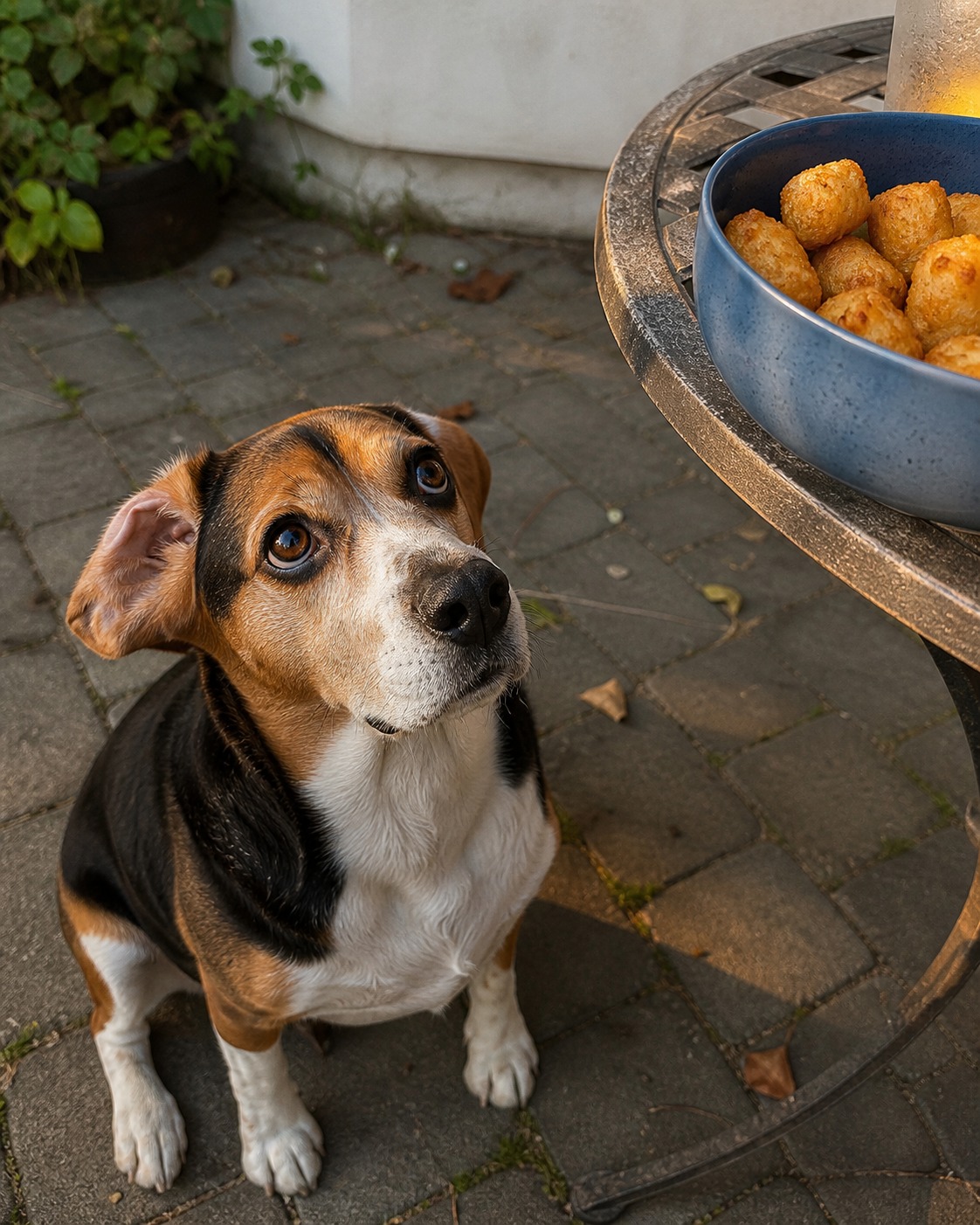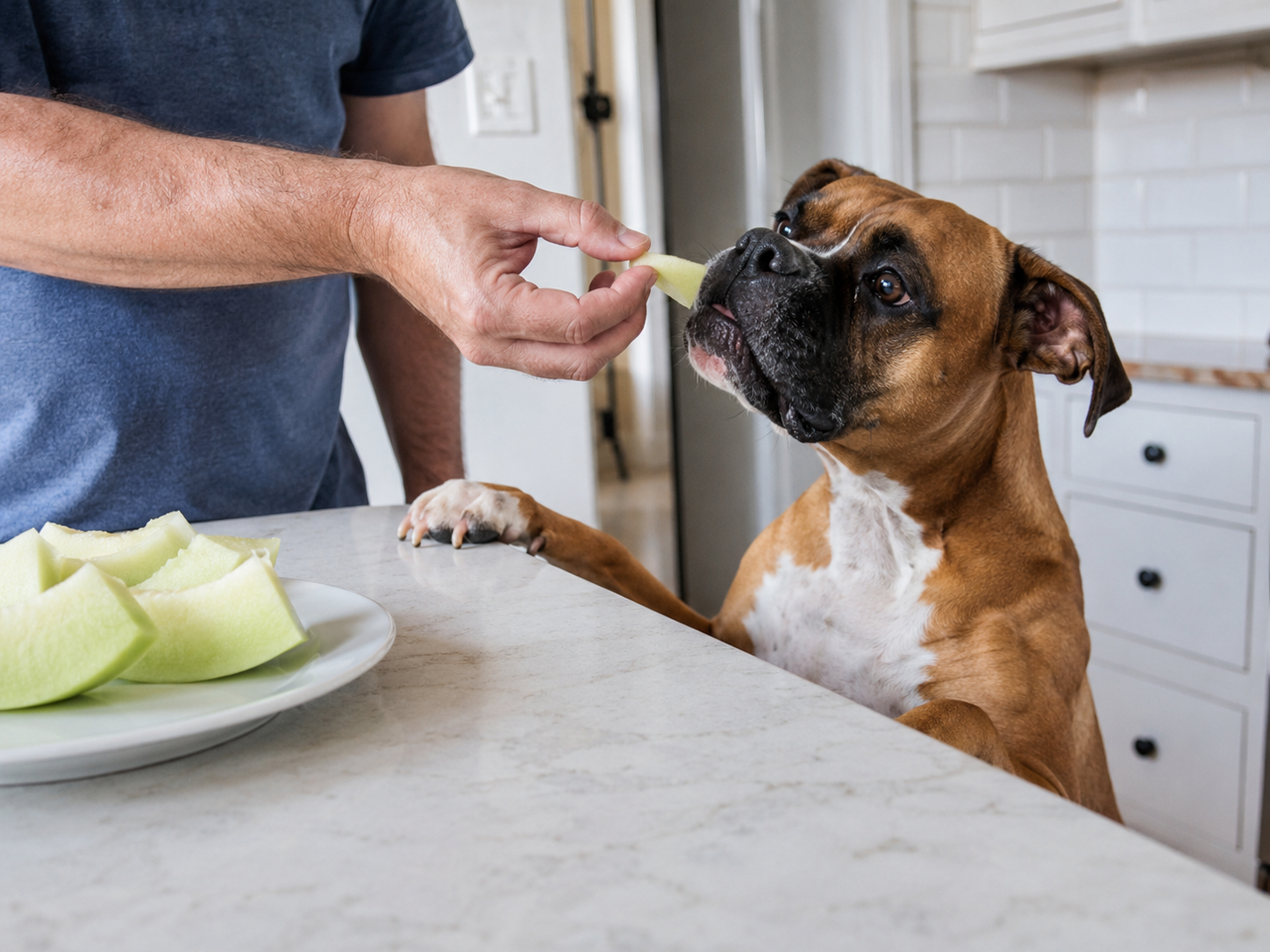

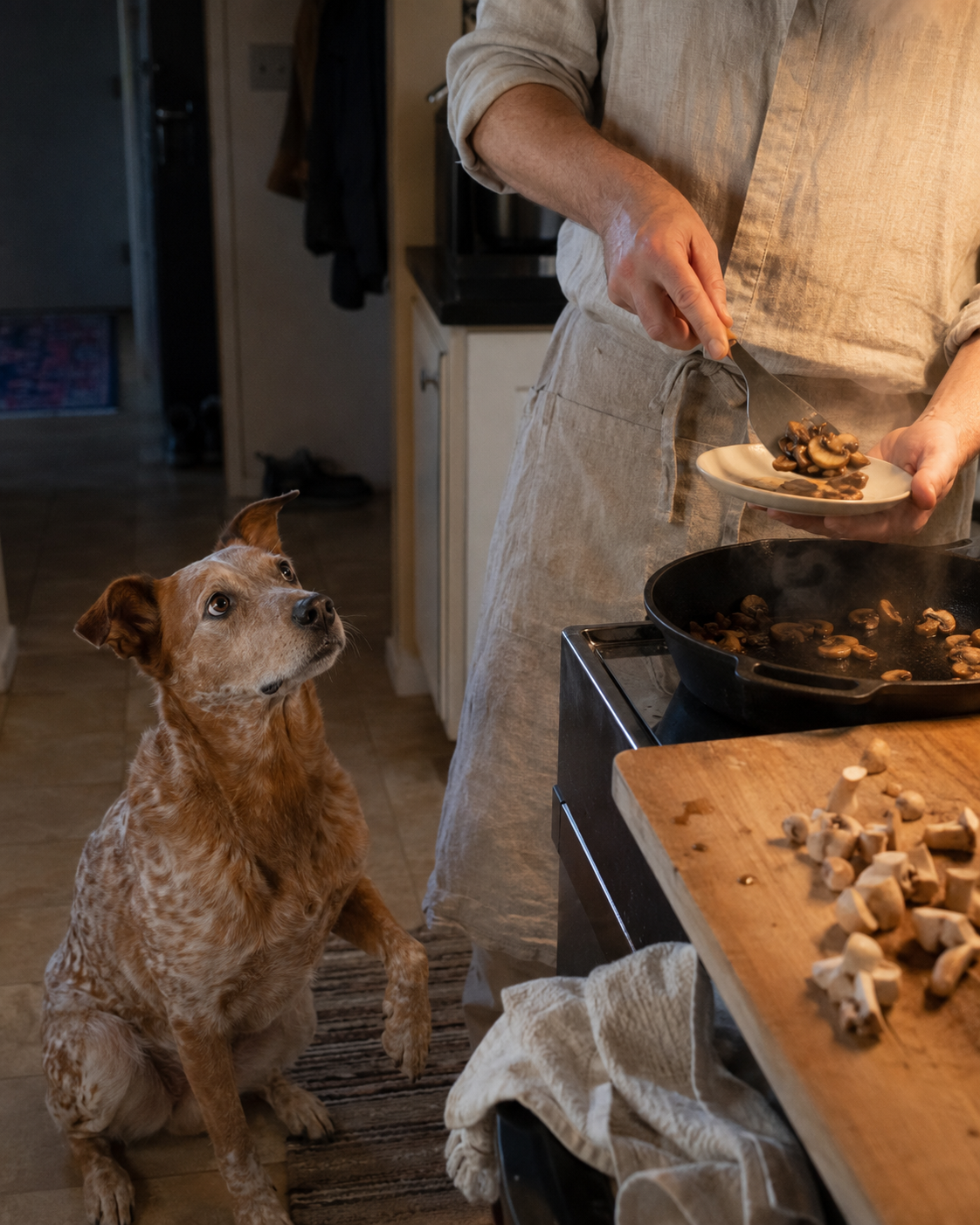
Here’s a rule that will save you a hundred label-checks: if a mushroom is sold for humans to eat, it’s safe for your dog too. White buttons, creminis, portobellos, shiitakes, oysters, chanterelles, morels from the store, all fine. The mushroom is not the problem.
The problem is everything we do to mushrooms, and everywhere else dogs find them. A mushroom rarely arrives in a dog’s bowl plain. It arrives sautéed in butter, drowning in garlic cream sauce, or scattered across a pizza, and that supporting cast is where the trouble lives. Meanwhile, the genuinely dangerous mushrooms aren’t in your kitchen at all. They’re in your yard.
Sort those three settings apart, store, skillet, and lawn, and the whole mushroom question gets simple.
The store: a quietly excellent dog snack
Mushrooms have earned their superfood reputation with an unusual resume. They’re technically fungi that grow on decomposing material, which sounds unappetizing until you remember they’re one of the few foods that light up umami taste receptors. There are more than 2,000 known varieties worldwide, and the common edible kinds sold in the U.S. are low in fat and calories while carrying real nutrition:
-
Gut support. Mushrooms aren’t fiber heavyweights compared to vegetables, but they offer a distinctive combination of fiber and polysaccharides that feed the beneficial bacteria in a dog’s microbiome.
-
Minerals. Potassium, selenium, and phosphorus, all involved in normal biological function across the body.
-
B vitamins, sometimes D. Mushrooms are rich in B vitamins, and depending on how they were grown, some carry vitamin D as well. Commercial dog food already covers these needs, so think of mushrooms as a bonus, not a supplement.
-
Bioactive compounds. A long and actively researched list of compounds with possible antioxidant, antimicrobial, and anti-cancer properties, which is why mushrooms keep showing up in traditional medicine and modern studies alike.
The skillet: where a safe food goes wrong
Now the catch. Most mushroom dishes are engineered for human pleasure, which means butter, cheese, cream, salt, garlic, and onion. Garlic and onion are outright toxic to dogs. The high-fat ingredients aren’t toxic, but they’re the classic trigger for digestive upset, and rich, fatty meals are a known risk factor for pancreatitis.
The fix costs you nothing: when you’re cooking mushrooms, set aside a few plain, cooked pieces for your dog before the seasoning goes in. Plain and simple preparations are the whole game. If a mushroom dish is already sauced, it’s yours, not theirs.
“When a dog gets sick after mushrooms from the kitchen, the mushroom is almost never the culprit. It’s the garlic, the salt, or the fat it was cooked in,” says Dr. Mara Chen. “Pull a few pieces out of the pan before you build the dish, and you’ve got a perfectly good training treat.”
Portion-wise, mushrooms follow the same rule as every snack: all treats combined should stay under 10 percent of your dog’s diet, with the rest coming from a complete and balanced dog food. That balance is what protects dogs from both weight gain and nutrient deficiencies. Introduce mushrooms like any new food, with a small taste first and a day of watching for any reaction, and check with your vet if your dog has pre-existing health problems.
The lawn: the only mushrooms that should scare you
Everything above applies to mushrooms humans buy. Mushrooms that appear in your yard or along your walking route are a different universe, and the rule flips completely: no wild mushroom, ever.
The danger isn’t just that some wild mushrooms are toxic. It’s that toxic species can look nearly identical to edible ones, and dogs don’t discriminate; plenty will taste-test anything sprouting from the lawn. Amanita species, the infamous death caps, cause vomiting, diarrhea, sedation, and neurologic signs that can progress to fatal liver or kidney failure. The gyromitra, or false morel, still gets described as edible in some foraging sources, but it has well-documented toxicity even when cooked and belongs on the never list.
A particularly cruel feature of the worst mushroom poisonings is a false-recovery window, where a dog seems to improve while organ damage is progressing quietly. That’s why you should never wait out symptoms after a wild mushroom snack.
Your protocol: patrol the yard and remove mushrooms wherever your dog roams unsupervised, especially in damp weather when they pop up overnight. On walks, steer clear. If your dog eats one, sweep what you safely can out of their mouth and go straight to a vet. Bring a photo or a piece of the mushroom; the North American Mycological Association can help with identification, and knowing the species can shape treatment.
And a note for the current moment: psilocybin mushrooms are having a mainstream resurgence with people, which means more of them in homes. For dogs, they’re strictly toxic. A tripping dog isn’t a funny story; hallucinations put dogs into a panicked state where they can seriously injure themselves, and larger exposures can cause dangerous body temperatures, high blood pressure, seizures, or coma.
What newer research adds
The most interesting recent development is that mushrooms are moving from the dog bowl into the dog pharmacy. Functional mushroom supplements for pets, especially turkey tail, reishi, and lion’s mane, have become a fast-growing category, and there’s now real, if early, science behind some of it. A University of Pennsylvania trial found that a turkey tail extract, polysaccharopeptide, delayed metastasis and extended survival in dogs with hemangiosarcoma, an aggressive cancer. A 2024 study reported that reishi supplementation improved immune markers in healthy adult dogs, and a 2022 canine study found lion’s mane shifted gut bacteria in a favorable direction.
None of this means you should dose your dog with mushroom powders on your own. Supplements are unregulated compared to drugs, doses in studies are specific, and a dog with cancer or immune issues needs a vet steering. But it does mean the “mushrooms as superfood” framing is getting genuine scientific attention on the veterinary side, and it’s a reasonable topic to raise with your vet if your dog has a condition where immune support is on the table.
References
- Veterinary Partner: Mushroom Poisoning in Dogs and Cats
- DVM360: Toxicology Brief: Mushroom Poisoning in Dogs
- StatPearls: Gyromitra Mushroom Toxicity
- Harvard T.H. Chan School of Public Health: Mushrooms
- International Journal of Microbiology: Edible Mushrooms: Improving Human Health and Promoting Quality Life
- Molecules: Bioactivities and Health Benefits of Mushrooms Mainly from China
- Evidence-Based Complementary and Alternative Medicine: Single-Agent Polysaccharopeptide Delays Metastases and Improves Survival in Naturally Occurring Hemangiosarcoma
- North American Mycological Association: Mushroom Poisoning Resources