


An App Says It Can Translate Your Cat's Meows. We're Not Sure That's the Point.
MeowTalk claims to turn your cat's yowls into English, and it's had 20 million downloads. The accuracy is shakier than the marketing suggests, but the app might still be doing your cat a favor.

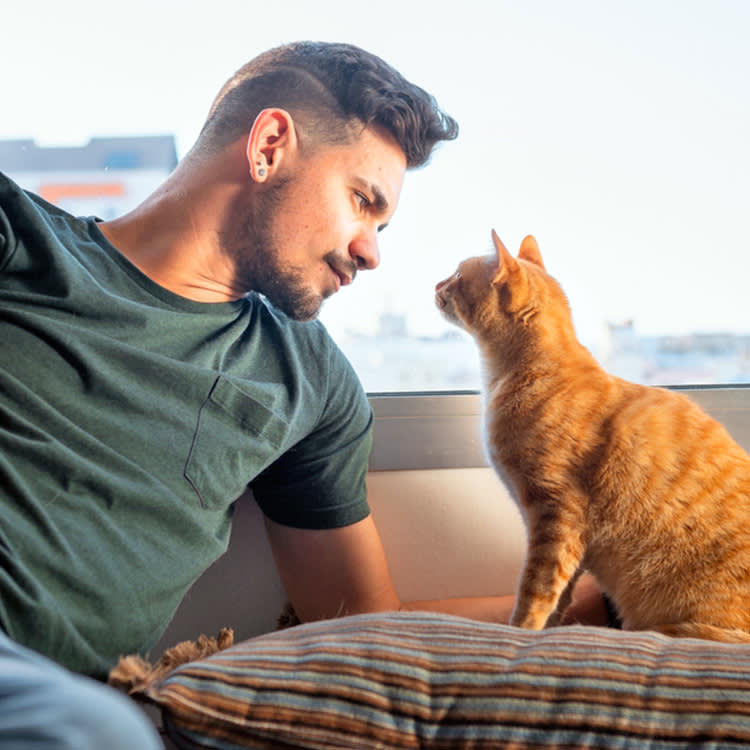
If you live with a cat, you have played this guessing game: the animal plants itself in front of you, opens its mouth, and delivers a yowl of such operatic urgency that you assume something is very wrong. Usually it just wants dinner. An app called MeowTalk promises to close that gap, recording your cat’s vocalizations and spitting back a human phrase, so that the bloodcurdling scream in your face resolves, helpfully, to “Feed me.”
It is a charming idea, and a wildly popular one. It is also, on close inspection, not quite doing what it says. Which turns out to be a more interesting story than “the app works” or “the app is nonsense.”
How MeowTalk works
MeowTalk is a free app built by computer scientists at the software company Akvelon, spearheaded by Sergei Dreizin and Mark Boyes. It records your cat’s sounds and tells you what it thinks they mean, and it improves through feedback: users rate whether each translation felt accurate, and those ratings are fed back to sharpen the model. The founders frame the mission grandly, as a way to help cat owners understand their cats’ needs and build stronger bonds using science and AI. Dreizin has argued to National Geographic that cats do have a kind of vocabulary, and that you will understand yours far better simply by paying closer attention.
The technology rests on real research. The app launched in 2020, growing out of a 2019 study that analyzed the meows of 21 cats in three situations, waiting for food, being brushed, and left alone in an unfamiliar place, and used that data to sort meows into types.
The accuracy question is messier than the ads
Here is where the marketing and the reality part ways. A 2021 study, and glowing coverage from outlets like The New York Times, put MeowTalk’s accuracy at around 90 percent. But one of the people connected to the project later told Slate that the app’s average accuracy is closer to 70 percent, with one striking exception: purring, which he pegged at essentially 99.9 percent.
You might think purring would be the easy case, the one sound that obviously means “happy.” It isn’t, and that is the crux of why translating a cat is so hard.
People treat the purr like a smile, but it’s closer to a hum a cat makes to soothe itself, and that can happen when it’s content, when it’s frightened, when it’s in pain, or when it’s begging for dinner. A device can tell you a cat is purring. It can’t reliably tell you why, and the why is the entire message.
That is the limit no app has cracked. A purr can be triggered by distress, by injury, or by hunger just as easily as by contentment. A cat may purr to greet a friend or purr in anticipation of a meal. The sound is real; the meaning lives in the context, and context is exactly what a microphone misses.
Maybe translation was never the useful part
So should you delete it? Not necessarily, because the app may be helping in a way its makers didn’t advertise. Even skeptics in the field concede that whether or not the translations are accurate, an app like this gets owners to actually listen to their cats and tune into their needs, and that attention is worth something on its own. A cat that feels heard is being watched more closely, and a closely watched cat is a healthier one.
It also helps to remember that cats simply vary. Some are chatterboxes and some are nearly silent, and certain breeds, Siamese famously among them, are known for being talkative. What one person calls excessive meowing another person calls a delightfully conversational cat. An app can’t settle that; only knowing your individual cat can.
What’s new since this was written
MeowTalk has grown into a genuine phenomenon, with more than 20 million downloads since its 2020 launch and a self-description as the world’s leading AI-powered cat translator. Under the hood, it now sorts feline sounds into roughly 11 general meow intents, using a model originally trained on cat vocalizations that veterinarians collected and labeled during research, and continuously retrained on a dataset of over 260 million cat sounds gathered since. It is still free to download, though you hit a paywall quickly if you want to do much beyond setting up your cat’s profile.
The honest verdict from the people who study this stuff has not really changed: treat it as entertainment, not a medical device. Its most useful feature may be the least flashy one, its ability to learn an individual cat over time, which is really just a high-tech version of the oldest advice in cat ownership. Pay attention to your specific animal, and you will understand it better than any app can. If MeowTalk nudges you to do that, the screaming was worth recording.
Dr. Nair is a veterinarian focused on diet and feeding. She covers everyday nutrition, treats, and the many "can they eat this?" questions owners ask, grounding each answer in what is actually safe and sensible for dogs and cats.
Meet our experts ↗Keep reading
 Product PicksShould You Put a Camera on Your Cat? A Weight-First Buyer's GuideJames Okafor · 7 min
 Product PicksThe Self-Cleaning Litter Box That Actually Wins Cats OverSasha Ford · 5 min
 Product PicksI Doubted a $30 Plastic Box Could Beat Litter Smell. It Did.Tom Hadley · 4 min
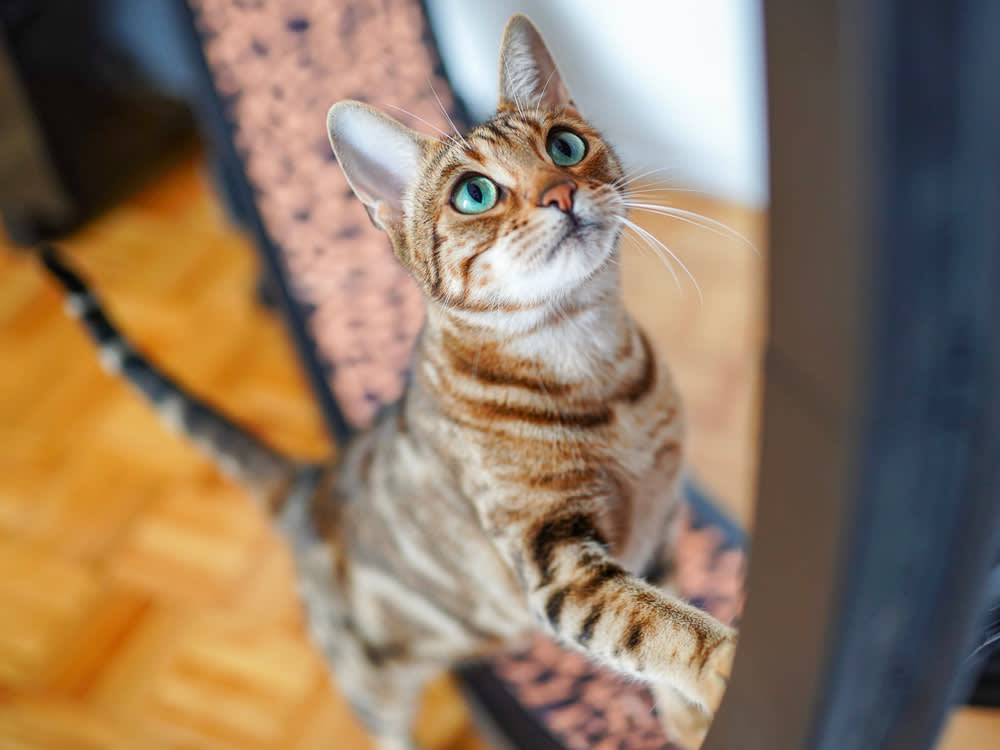 Product Picks9 Electronic Cat Toys That Beat Boredom While You're OutDr. Mara Chen · 6 min
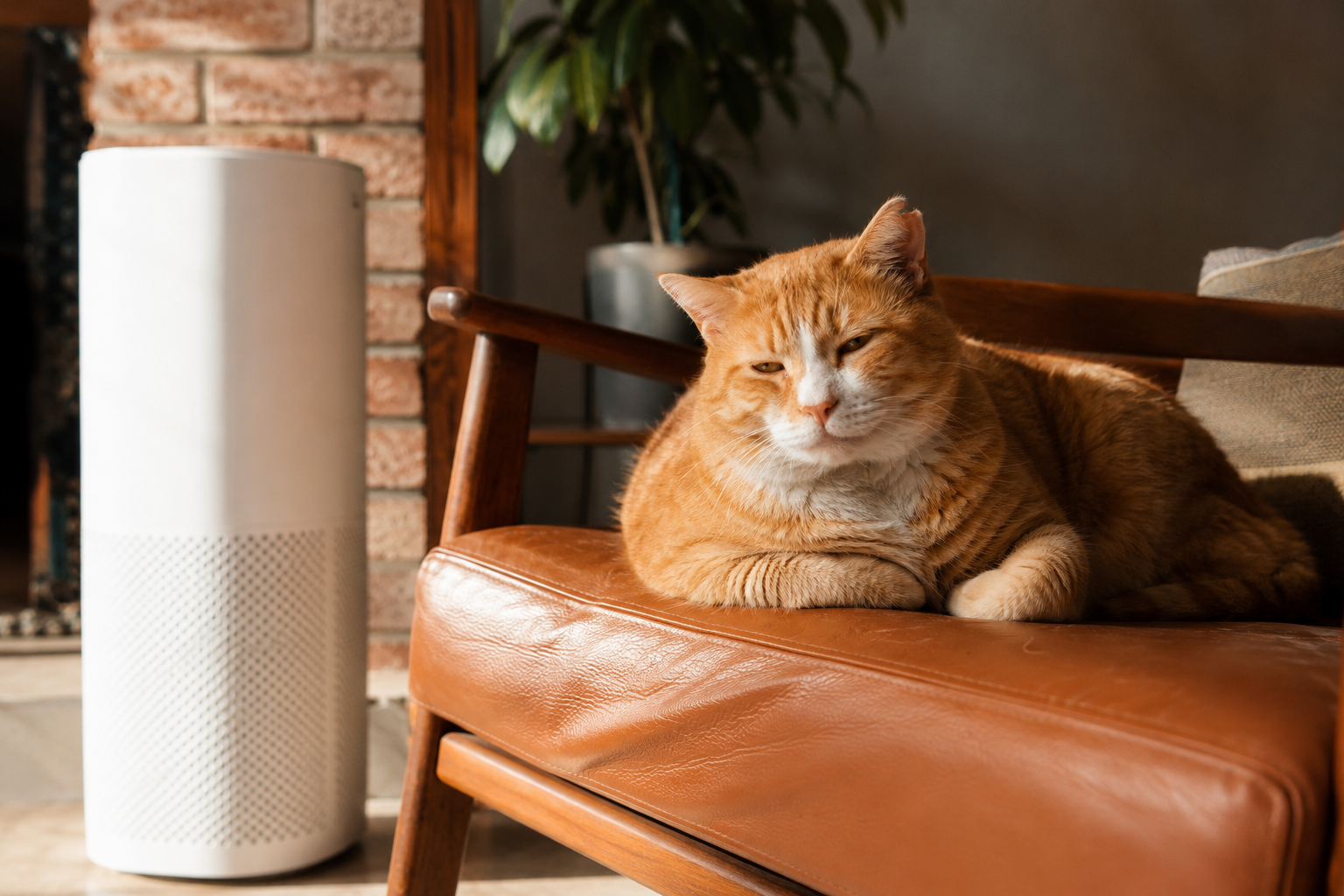 Product PicksHow to Actually Buy an Air Purifier for a Pet Home (Plus 7 We'd Pick)James Okafor · 8 min
 LivingYour Dog Can Now Call You. It Costs $105 and a Monthly Data Plan.James Okafor · 4 min