


Should You Put a Camera on Your Cat? A Weight-First Buyer's Guide
A collar camera is a diagnostic tool, not a gadget. Here is the weight math that decides whether your cat can wear one, when it is actually worth it, and the models that pass.

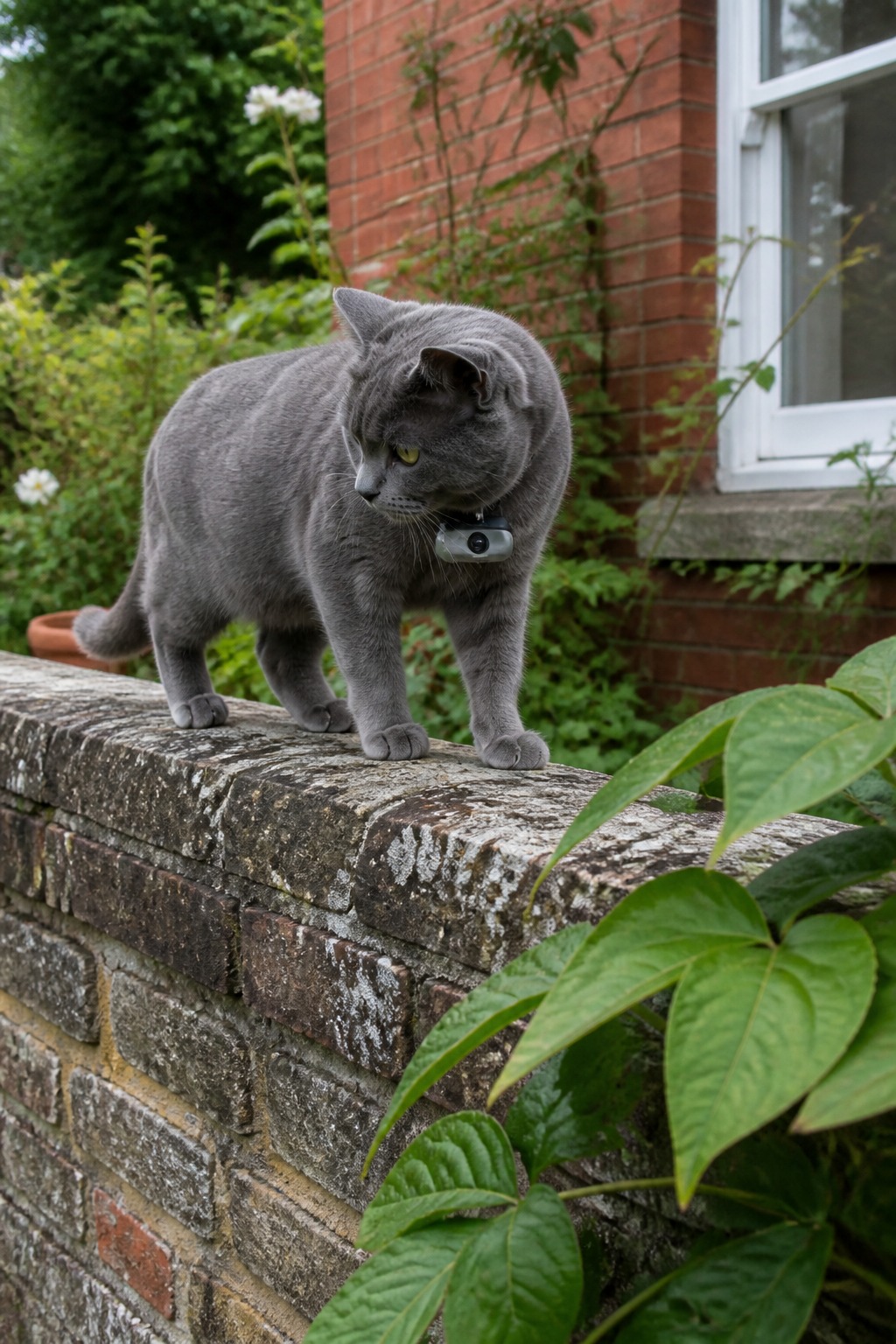
Before you buy your cat a camera, weigh your cat. That sounds flippant, but it is the single number that decides whether any of this is a good idea, and almost every roundup skips it. A collar camera is not a fun accessory you strap on for the afternoon. It is a small, battery-heavy object that hangs from your cat’s throat, and the difference between an enrichment tool and a welfare problem comes down to grams.
So this guide runs backward from the way most do. We start with whether your cat should wear one at all, then get to the short list of situations where a camera genuinely earns its keep, and only then to the models worth your money. The gadgets are the easy part.
The weight math nobody mentions
Cats are not small dogs. A sturdy Labrador can shrug off a few ounces at the collar; a seven-pound cat cannot. A useful rule of thumb borrowed from harness and collar fitting is to keep everything a cat wears around the neck under roughly two percent of their body weight. For a ten-pound cat, that is about three ounces total, and that budget has to cover the collar, the buckle, and the camera together.
That is why the camera’s own weight is the first spec to check, not the resolution. A camera listed at 0.77 ounces sounds trivial until you add a collar and realize a chunkier unit can push a small cat past comfortable. Weigh the entire assembled rig on a kitchen scale before it ever goes on your cat, and watch how your cat carries their head once it is on. A cat who suddenly holds their neck low, shakes, or freezes and refuses to move is telling you the rig is too much.
“Comfort is not a nice-to-have here, it is the whole ballgame,” says Dr. Priya Nair, a feline behavior consultant who advises Pet Times. “These cameras can be bulky, and they are absolutely not something to leave on all day. Make it clear to your cat, by taking it off the instant they seem bothered, that the camera comes with an exit.”
When a camera is actually worth it
Strip away the novelty and there are really three situations where footage tells you something you could not otherwise learn.
The first is the mystery-eater. If your cat keeps turning up with an upset stomach and you cannot find the source, a camera can catch them raiding a houseplant, a trash can, or a neighbor’s offering during supervised catio time. The footage turns “something is making my cat sick” into a specific, fixable culprit.
The second is the escape artist. A cat who keeps getting out, and you cannot figure out how, will often reveal the exact gap, window, or door-dash on camera. That is genuinely useful information for cat-proofing a home.
The third, and the one most people are honest about, is curiosity. A cat’s-eye view of an ordinary afternoon is often funnier and stranger than you expect, and there is nothing wrong with that as long as the rig is comfortable and comes off when the show is over.
“I put a camera on my own cat purely to see his day from his side,” Dr. Nair admits. “It was entertaining, but the version I actually recommend to clients is the diagnostic one. When a cat has a puzzle we can’t solve any other way, the footage can be the thing that cracks it.”
Note what is not on that list: monitoring an outdoor cat’s roaming. The camera is a window into behavior, not a permission slip.
“Some people use these to keep tabs on outdoor cats, and I can’t endorse letting a cat roam unsupervised,” Dr. Nair says. “A camera does not make the outdoors safe. It just records it.”
The models worth considering
Every camera below shoots 1080p through a wide-angle lens with enough storage for a normal outing, so resolution is not the deciding factor. Weight, mounting, and battery life are.
Mr. Petcam, for the night owl
Founded in 2010, Mr. Petcam has spent close to 15 years refining a single product, and it shows in the details. This one adds night vision and a motion sensor to the standard 1080p and wide-angle lens, which makes it the pick for a cat whose most interesting activity happens after dark. It ships with a 16 GB card that holds about an hour of footage and accepts cards up to 32 GB. The latching mechanism is the best on this list, and the unit is light enough to clear the weight budget for most adult cats. If your cat’s mysteries are nocturnal, start here.
Kestanlora neck-mounted, the featherweight
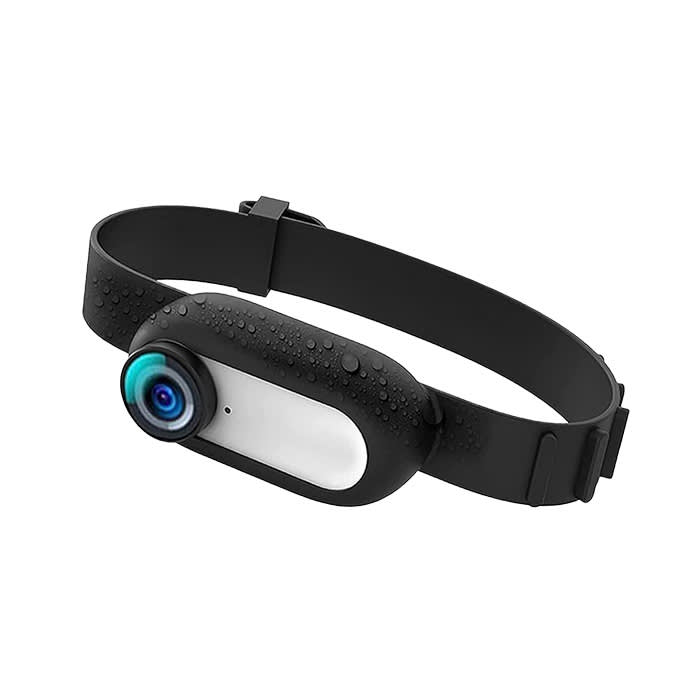
At just 0.77 ounces, this is the lightest option here, and for a small cat that number matters more than any feature. It carries the same 1080p and wide-angle lens as the others, plus a rear screen you can actually watch playback on. One reviewer noted it was less bulky than the AirTag collar their cat already wore, which is a useful real-world benchmark. The one catch is that it does not include a micro SD card, so budget a few extra dollars for one. This is the model to reach for when the weight budget is tight.
Kestanlora hanging design, for adjustable angles
Mechanically similar to the neck-mounted Kestanlora, with the same 1080p, wide-angle lens, and rear screen, this version hangs from the collar rather than sitting flat against the throat. The tradeoff is real: the hanging design swings, which some cats dislike, but reviewers say it captures more varied and adjustable angles because it moves with the cat. Try it if the flat-mount version rides awkwardly on your particular cat, and skip it for a cat who is fussy about anything dangling.
How to choose between them
Match the camera to the cat, not the spec sheet. A small cat gets the lightest unit, full stop. A cat whose adventures happen at night gets the Mr. Petcam for its night vision. A cat who tends to disappear for long stretches benefits from the longest battery life you can find. And any cat gets the flat mount before the hanging one, since it is the less intrusive of the two designs.
Fitting and first use
Charge the camera fully and confirm it is recording before it goes anywhere near your cat. Fit the collar properly, snug enough not to slip over the head but loose enough for the classic two-finger gap, and mount the camera so it cannot swing into your cat’s legs. Then do a supervised trial run: put the rig on while you are home and watching, and see whether your cat tolerates it before you ever leave them alone in it.
“Breakaway collar, every single time,” Dr. Nair stresses. “If the camera catches on a branch or a fence while your cat is moving, the collar has to release so your cat can walk away from it. A fixed collar with a camera on it is a snag hazard, not a safety feature.”
The category has moved on
These early camera-only models still work, but the market has shifted toward combination devices that pair a camera with GPS tracking, so owners get both the cat’s-eye video and a map of where the cat actually went. For supervised outdoor or catio time, that pairing is more useful than video alone, because location data answers the “where” that footage often cannot.
What has not changed is the fundamentals. Battery weight and bulk are still the limiting factors for a cat’s neck, breakaway collars are still non-negotiable, and a microchip plus a proper ID tag is still the only thing that reliably brings a lost cat home. Treat a camera as a curiosity and diagnostic tool, never as your cat’s identification or their ticket outdoors.
References
- American Association of Feline Practitioners. “Collar and Identification Recommendations for Cats.” catvets.com.
- American Veterinary Medical Association. “Microchipping of Animals.” avma.org.
Common questions
How much can a cat safely carry around their neck?
A common guideline is that a collar and anything attached to it should stay under about two percent of a cat's body weight. For a ten-pound cat that is roughly three ounces, so a sub-one-ounce camera on a lightweight breakaway collar is the target. Weigh the whole rig, not just the camera.
Can I put a GoPro on my cat?
No. Even the smallest GoPro weighs several ounces, which is far too heavy for a cat's neck. GoPros are built for helmets and chest mounts on people, not for a seven-pound animal.
How do I attach a camera to my cat's collar or harness?
Follow the camera's own mounting instructions, and always mount it on a breakaway collar so the whole thing releases if it snags. A harness distributes weight better than a collar but is harder to keep a camera stable on.
Are collars a good idea for cats?
Only breakaway collars, with or without a camera, so a caught cat can free themselves. A collar is never a substitute for a microchip, which is the only permanent, reliable ID.
James Okafor covers rescue, adoption, and the causes shaping animal welfare. His work follows the people and organisations working to give more pets a home, and the issues owners and advocates care about most.
Meet our experts ↗Keep reading
 Product Picks9 Electronic Cat Toys That Beat Boredom While You're OutDr. Mara Chen · 6 min
 Product PicksA Cat DNA Test Won't Tell You What Your Cat Is. That's Not the Reason to Buy One.Dr. Mara Chen · 7 min
 Product PicksI Doubted a $30 Plastic Box Could Beat Litter Smell. It Did.Tom Hadley · 4 min
 LivingThe 'AI Cat Utopia' That Actually Ran on PeopleJordan Ellis · 6 min
 Product PicksThe Litter Box Is the Cheap Part: A Vet-Backed Guide to Getting It RightDr. Lena Park · 5 min
 Product PicksMost Cats Don't Need a Diaper. If Yours Does, Match It to the ProblemSara Lim · 6 min