


The Marrow Bone Trap: Why That Ring Shape Lands Dogs in the ER
The danger of a marrow bone isn't the marrow, it's the hole. An ER vet explains why a ring-shaped bone wedges around a dog's jaw, what removal actually involves, and the chews that carry the same risk without it.

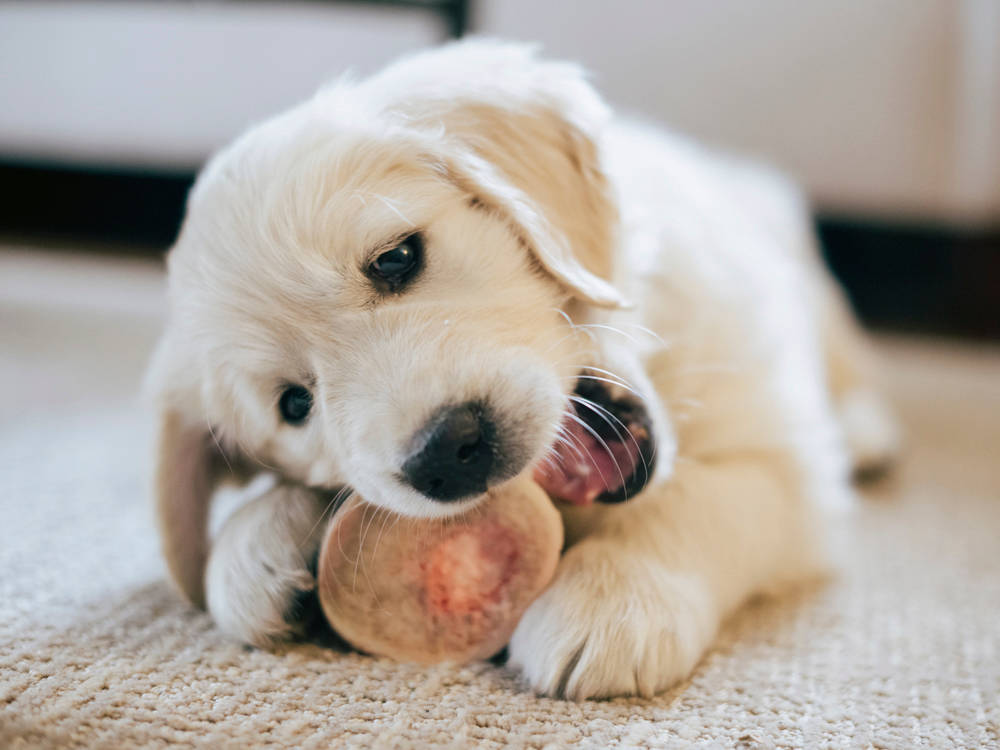
Most warnings about bones focus on what is inside them: too much fat, the risk of splintering, a tooth cracked on something too hard. Those are real. But the injury that actually fills emergency rooms has nothing to do with the marrow and everything to do with the shape. A marrow bone is a ring, and a ring is the one geometry that can trap a dog’s own jaw. Once you see the problem as a shape problem, every safe-chewing rule that follows makes sense, and the truly dangerous chews stop hiding behind their reputation as the “natural” choice.
How a chew turns into a tourniquet
Picture the lower jaw. The two canine teeth sit like posts. A dog working a marrow bone tips it, the ring slips over the front of the jaw, drops behind those canines, and now it cannot come back off the way it went on, because the canines block it. The dog panics, the tissue responds the way trapped tissue always does, and it swells. That swelling is the trap snapping shut: the more the lips and tongue puff up, the tighter the bone locks, and a hard ring of bone clamped around soft tissue does exactly what a tourniquet does. It chokes off blood supply.
This is not a freak event. Emergency clinicians describe seeing it regularly, and the consequences scale with how long the bone stays on. I have treated dogs who walked out with nothing worse than a bad evening, and dogs with fractured canine teeth and significant damage to the lower jaw and tongue from circulation being cut off. The difference is often just minutes and how hard the bone is to get off.
What removal actually looks like
Pet parents picture a vet sliding the bone off. Sometimes that happens. With lubrication and slow, patient manipulation under sedation, a bone will occasionally ease free, and a good clinician will try that first precisely because forcing it can fracture the jaw or tear the lips.
When it will not budge, the bone has to be cut, and the tool of choice is often surprising: Gigli wire, a thin, flexible saw wire surgeons use on bone, threaded inside the ring and drawn back and forth until the bone parts. Done well, the cut itself takes under a minute, but the dog is anesthetized, the tissue is already swollen and painful, and the bill reflects an emergency procedure rather than a chew toy. That is the trade you are really weighing when you hand over a ring-shaped bone.
People think the marrow is the hazard, and it can upset a sensitive stomach, but the call I dread is the trapped jaw. By the time they reach me the lips are swollen, the dog is frantic, and we are reaching for a wire saw. If you remember one thing, make it this: the hole is the problem. A chew you can’t loop over the lower jaw can’t do this.
Five rules that keep bone time out of the ER
If your dog genuinely loves a bone, you do not have to ban them outright. You have to defeat the shape and manage the fat.
- Match the size, then size up. Ask your butcher to cut bones long, around eight inches for a big dog, so the piece is too long to loop around the jaw. Skinny bones slip into trouble; thicker, longer ones do not.
- Choose a knuckle bone over a marrow ring. A knuckle bone gives a similar gnawing experience with no hole to slide around the jaw. It is the single easiest swap. Take it away while it is still large, once the gristle and soft knobs are gone, so your dog cannot break off and swallow a chunk.
- Skip marrow for sensitive stomachs. Marrow is extremely high in fat, enough to trigger digestive upset and even pancreatitis in dogs who are not used to it. A dog prone to loose stools is the wrong candidate.
- Raw only, never cooked. Cooking dries bone out and makes it brittle and prone to splintering, a separate and serious hazard. If you offer a bone, it is a raw one.
- Never look away. These accidents unfold in seconds. A bone is a supervised activity, not a leave-them-to-it activity, and the most enthusiastic chewers need the closest watch.
A good bone is a real pleasure for a dog, and you do not have to take it off the table. You just have to remember that the satisfying ring shape is the same shape that traps a jaw, and chew accordingly, under your eye, every time.
References
Not a substitute for your vet. Our guidance is educational. For urgent symptoms, contact a vet or emergency clinic right away. Editorial standards
Dr. Mehta is a board-certified veterinary nutritionist who evaluates pet food formulations, ingredient quality, and the science behind dietary trends. He writes and reviews all nutrition content at The Pet Times, including our food rankings and feeding guides.
Meet our experts ↗Keep reading
 TrainingYou Can't Bribe a Snow-Drunk Dog Inside. One Command Actually Works.Dr. Priya Nair · 7 min
 Health & Wellness'Gently Cooked' Didn't Stop the Plastic: What the BeefiBowls Recall Means for Your DogDr. Amara Solis · 3 min
 Health & WellnessA Dog Diaper Is a Last Resort, Not a Shortcut. Here's How to Use One Right.Dr. Priya Nair · 9 min
 LivingTwo Years, Two Best in Show Winners, Two Sets of Cut-Off Ears. That's Not a Coincidence.Dr. Ravi Mehta · 11 min
 Product PicksDog Shoes Don't Fail Because They're Ugly. They Fail Because They Fall Off.Sasha Ford · 5 min
 Health & WellnessA Coyote Killed Three Dogs at Crissy Field. It Wasn't Bad Luck.Dr. Amara Solis · 5 min