


You Can't Bribe a Snow-Drunk Dog Inside. One Command Actually Works.
For dogs who lose their minds in fresh snow, no treat wins the argument. The only reliable way to get them in is a rock-solid recall, plus knowing the cold-weather clock so you know when to call them. Here's how to build both.

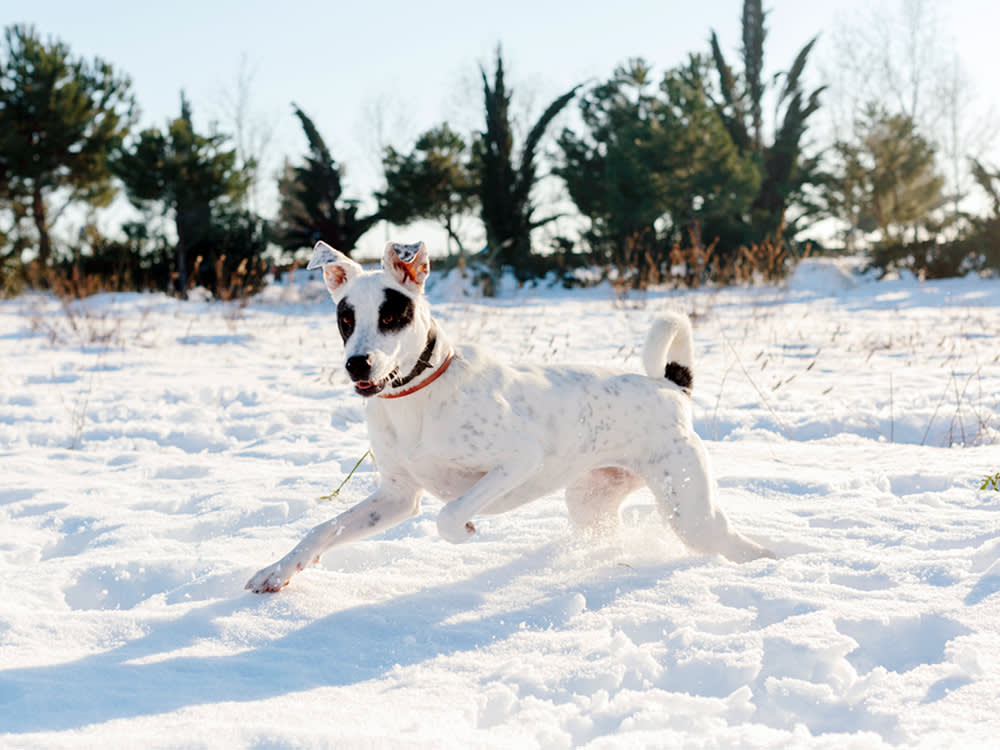
Dogs meet snow in one of two ways. Some, like mine, treat a single flake as a personal insult and stage a full potty strike until the weather cooperates. Others react to the first falling snow the way a kid reacts to a surprise day off, pure, delirious joy, because suddenly the whole yard smells brand new. This article is for the second group, or more precisely, for their exhausted, freezing owners standing at the back door.
Here’s the honest truth about those snow-obsessed dogs: you are not going to win the moment with a better treat. A dog mid-zoomies in fresh powder is having the best time of their life, and no amount of “come on, buddy” is going to compete with that on its own. The thing that actually works is boring and reliable: a recall your dog will answer no matter what, backed by a clear sense of how long is too long out there. Get those two things right and you stop begging and start simply calling your dog in. Let’s build both.
Why some dogs can’t get enough of it
Dogs vary in their taste for winter about as much as people do. Some breeds are practically built for snow, Siberian Huskies, Bernese Mountain Dogs, and other thick-coated dogs with cold-climate histories find it genuinely stimulating and comfortable, thanks to dense double coats made for exactly this weather. Dogs with thinner coats, or breeds never adapted to the cold, tend to dislike it, because staying warm is real work for them.
That same coat difference is your first clue about danger, not just preference. A husky romping in the snow is at far lower risk than a Pug or a thin-coated Pit Bull mix doing the same thing, because the husky is insulated and the short-coated dog isn’t. So the breed that loves the snow least is often the one you need to pull inside soonest, and the breed that loves it most can usually stay out a bit longer, within limits.
Know the clock: the real risks of too much snow time
This is the part that tells you when to call your dog, which matters as much as being able to. The biggest concerns are hypothermia and frostbite, and frostbite tends to hit the exposed, poorly insulated spots first: the nose, the ear tips, and the paw pads. Once it’s below freezing outside, nearly every dog carries some level of risk and time in the snow should be capped, though thin-coated and small dogs cross into the danger zone sooner. As a rough guide, caution rises steeply as you approach and pass the freezing mark, and by the time you’re well below it, even hardy dogs shouldn’t be out indefinitely.
Watch your dog, not just the thermometer. Shivering, lethargy, whining, holding up a paw, or any general sign of discomfort means the fun is over and it’s time to come in.
There’s also a sneakier hazard that has nothing to do with the air temperature. As dogs run around, snow packs between their toes and then melts and refreezes into sharp little ice chips that jab the sensitive skin of the paw. It’s especially common in dogs with long hair around their feet, and it stacks extra pain on top of the cold. If your dog suddenly starts holding up a paw mid-romp, ice between the toes is a likely culprit, and it’s a good reason to keep the hair around their pads trimmed in winter.
Owners tell me their dog ‘just won’t listen’ in the snow, but that’s not really a snow problem, it’s a recall problem that the snow exposes. Recall is recall, in the living room or in a blizzard, and it’s the one cue I’d call non-negotiable, because on a cold day it’s also a safety tool. A dog who comes when called is a dog you can pull out of the cold before shivering ever starts.
Build the recall that actually holds up
A reliable recall is the whole game, so it’s worth training deliberately rather than hoping for the best. Start easy and build:
Begin indoors or in another enclosed space with minimal distractions and your dog’s favorite treats ready. Get their attention with their name or a cue like “come” or “here,” and reward the instant they turn toward you. Take a few steps back and do it again, rewarding every time, then increase the distance with each repetition. Keep sessions short and frequent, because repetition is what cements it.
Only once the recall is rock-solid in easy settings do you raise the stakes, mild distractions, then outdoors, then finally the high-excitement world of a snowy yard. When you first test it in snow, use a long training leash so you can gently guide a reluctant dog in without a chase, and so a blown recall never becomes a reward for ignoring you.
Supporting tactics that tip the odds
Recall does the heavy lifting, but a few habits make it easier. A consistent daily routine of outdoor exercise and exploration sets your dog’s expectations, so coming in isn’t a shock, and that regular activity simply makes for a healthier, calmer dog year-round. A snow-loving dog who’s genuinely gotten their fill of running and sniffing is far more willing to head inside than one who’s been let out cold, so to speak, with pent-up energy.
And when all else fails, make inside irresistible. Set up a warm, cozy spot with plenty of toys and treats, and even a devoted snow hound will start choosing the couch. The goal isn’t to end your dog’s winter joy, it’s to keep it from turning into a vet visit, and to let you close the door before your own toes go numb.
References
Dr. Nair is a veterinarian focused on diet and feeding. She covers everyday nutrition, treats, and the many "can they eat this?" questions owners ask, grounding each answer in what is actually safe and sensible for dogs and cats.
Meet our experts ↗Keep reading
 TrainingYour Dog Isn't Being Stubborn About the Snow. They're Confused.Dr. Amara Solis · 7 min
 TrainingThe Cue That Beats Your Dog to the Chicken BoneDr. Nina Kohl · 8 min
 LivingDon't Teach Your Dog to Swim. Teach Them to Get Out.Dr. Priya Nair · 8 min
 LivingEvery Trail Closed to Dogs Was Closed Because of a Dog OwnerMarcus Webb · 8 min
 TrainingThat Bootie Wobble Isn't Funny. You Just Blindfolded Their Feet.Dr. Nina Kohl · 8 min
 Health & WellnessA Man Shot a Dog for Running at Him. He Was Never Charged.Marcus Webb · 8 min