


Make Your Dog's Peanut Butter at Home, and Skip the Ingredient That Can Kill
Most store peanut butter is fine for dogs. One sweetener in some jars is deadly. Here's a two-ingredient homemade recipe, a frozen treat, and exactly how much to feed.

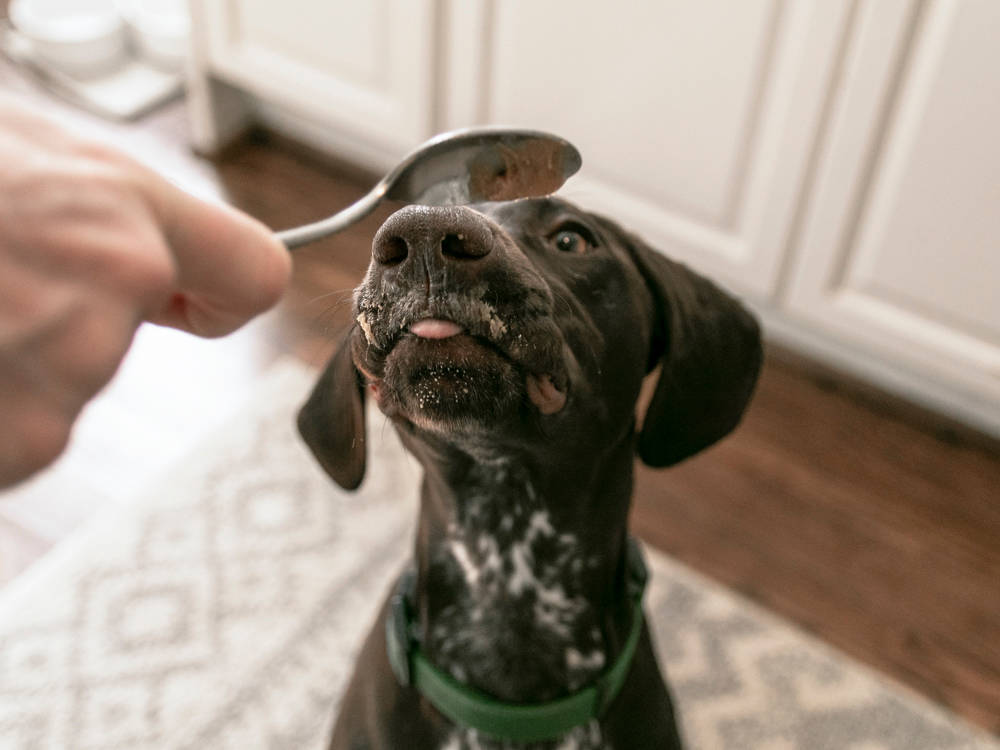
Here is the thing almost no peanut butter article leads with: the jar in your pantry is probably safe, but the wrong jar can kill your dog, and the dangerous ingredient is hiding under a friendly new name. Before any recipe, that is the fact worth burning into memory.
The sweetener is xylitol, and it is increasingly relabeled as “birch sugar” or “wood sugar” on ingredient lists. It is harmless to people, common in sugar-free and keto products, and toxic to dogs in tiny amounts. Once a dog eats it, xylitol tricks the pancreas into dumping insulin, and blood sugar crashes within minutes. According to the FDA and Pet Poison Helpline, as little as 1.37 grams can poison a 30-pound dog, causing weakness, staggering, collapse, and seizures. Peanut butter is the classic hiding spot because we use it to disguise pills, so a pill-time habit can turn into an emergency. Brands that have used xylitol include Go Nuts Co., Krush Nutrition, No Cow, Nuts ‘N More, and P28; formulas change, so the rule is simply to read every label.
The clean fix is to make your dog’s peanut butter yourself, with one ingredient you can see. It is easier than you would guess, and below you will also find a frozen banana version and, just as importantly, how much to actually feed.
Why peanut butter earns a place in the treat jar
Plain peanut butter is a genuinely useful treat, not just a vehicle for pills. A few reasons it is worth keeping around:
- It is rich in protein and the heart-friendly monounsaturated fats that make up most of its fat content, with no cholesterol.
- It carries vitamin E and B vitamins, plus vitamin K, which support skin and coat condition.
- Dry-roasted peanuts actually carry more antioxidants than raw ones. University of Florida researchers found roasting can raise the antioxidant compound p-coumaric acid enough to boost overall antioxidant content by about 22 percent, putting roasted peanuts in the same league as strawberries and blackberries. That is why this recipe calls for roasted, not raw.
The catch is calories. Peanut butter is dense, so it belongs in the treat budget, not the meal.
The 10 percent rule: how much is actually safe
This is the part the original recipe skipped, and it matters more than the recipe itself. Veterinary nutrition guidance is consistent: treats of all kinds, peanut butter included, should make up no more than about 10 percent of a dog’s daily calories. One tablespoon of peanut butter runs roughly 90 to 100 calories, which is a lot for a small dog.
A rough daily ceiling for peanut butter, assuming your dog gets no other treats that day:
- Toy and small dogs (5 to 20 lbs): 1/2 to 1 teaspoon
- Medium dogs (20 to 50 lbs): up to 1 tablespoon
- Large dogs (50 to 90 lbs): 1 to 1 1/2 tablespoons
- Giant breeds (90 lbs and up): up to 2 tablespoons
If your dog is overweight, has pancreatitis risk, or is on a prescription diet, check with your vet before adding any. Smeared thin in a puzzle toy, even a teaspoon goes a long way.
Recipe: two-ingredient homemade peanut butter
If you own a food processor or a strong blender, this is nearly foolproof.
Ingredients
- 1 1/2 cups unsalted, dry-roasted peanuts (no salt, no oil added)
- 1 tsp peanut or safflower oil (optional, only if it is too thick)
Note what is not on the list: no honey, no sugar, no salt, and absolutely no sugar substitutes. Dogs do not need the sweetness, and leaving sweeteners out removes any xylitol risk entirely.
Directions
- Put the peanuts in the food processor or blender.
- Process until the butter reaches the consistency you want.
A quick note on what to expect: peanuts pass through stages. They start as a crushed crumb, become a pie-dough paste, thicken, and then suddenly turn creamy as the oils release. That release takes around three minutes, so do not stop early.
- For dogs who like crunch, chop 1/4 cup of peanuts and fold them in with a spatula.
- Refrigerate in an airtight container and use within about two weeks.
The first batch I ever made, I gave up at the thick-paste stage and ended up with something I could barely spread. Another ninety seconds and it turned to silk. If your machine gets hot, switch it off, let it rest, and keep going. The patience is the whole trick.
Because there are no preservatives, homemade butter separates and spoils faster than a commercial jar. Make small batches and keep it cold.
Frozen peanut butter and banana bites
These chilled treats are a summer staple and a great way to use that fresh butter. Count them against the 10 percent budget too.
Ingredients
- 1 cup homemade peanut butter
- 1/2 mashed ripe banana
- A splash of water
Directions
- Stir the peanut butter and banana together with enough water to loosen the mix.
- Spoon into silicone ice cube trays, which pop out cleanly.
- Freeze for a few hours until solid.
You can fold in dog-safe extras like blueberries or a spoonful of plain canned pumpkin. Skip raisins, grapes, and chocolate, which are all toxic, and keep an eye on portion size, since “it’s just a treat” calories add up fast in a cube.
References
Common questions
How much peanut butter can a dog have?
Treat it like a treat. Peanut butter and all other extras combined should make up no more than about 10 percent of your dog's daily calories. A tablespoon of peanut butter is roughly 90 to 100 calories, so a small dog should get no more than a teaspoon or two, while a large dog can handle a tablespoon. The rest of the diet should be complete, balanced dog food.
Is homemade peanut butter better than store-bought for dogs?
It can be, because you control exactly what goes in: just peanuts, with no added sugar, salt, palm oil, or sweeteners. The trade-off is shelf life. Homemade butter has no preservatives, separates quickly, and should be refrigerated and used within about two weeks. Plain, unsweetened, unsalted commercial peanut butter that contains no xylitol is also a perfectly safe choice.
Not a substitute for your vet. Our guidance is educational. For urgent symptoms, contact a vet or emergency clinic right away. Editorial standards
Sasha Ford is a certified cat behaviour consultant who has worked with shelters, catteries, and private clients across the country. They review all feline behaviour content at The Pet Times, with expertise in multi-cat households, indoor enrichment, and stress-related disorders.
Meet our experts ↗Keep reading
 FoodThe 4-Ingredient Frozen Dog Treat (Check the Label First)Sara Lim · 5 min
 FoodThe Store-Bought Cracker Is Wrecking Your Dog's Snack. This 4-Ingredient Biscuit Fixes It.Dr. Priya Nair · 5 min
 FoodThe Most Dangerous Thing in Homemade Dog Treats Is Hiding on the Peanut Butter LabelDr. Priya Nair · 6 min
 FoodTurmeric Barely Absorbs in Dogs. This Treat Recipe Fixes the Flaw.Dr. Nina Kohl · 5 min
 Food6 Ingredients, One Sitcom's Worth of Time: The Dog Cookie Worth Turning the Oven On ForDr. Mara Chen · 5 min
 FoodSweet Potato Is a Real Dog Superfood. One Rule Makes It Safe.Dr. Priya Nair · 5 min