


The Most Dangerous Thing in Homemade Dog Treats Is Hiding on the Peanut Butter Label
Pumpkin and peanut butter dog cookies are almost impossible to get wrong, with one exception. Here is the recipe, and the label check that has to happen before you bake.

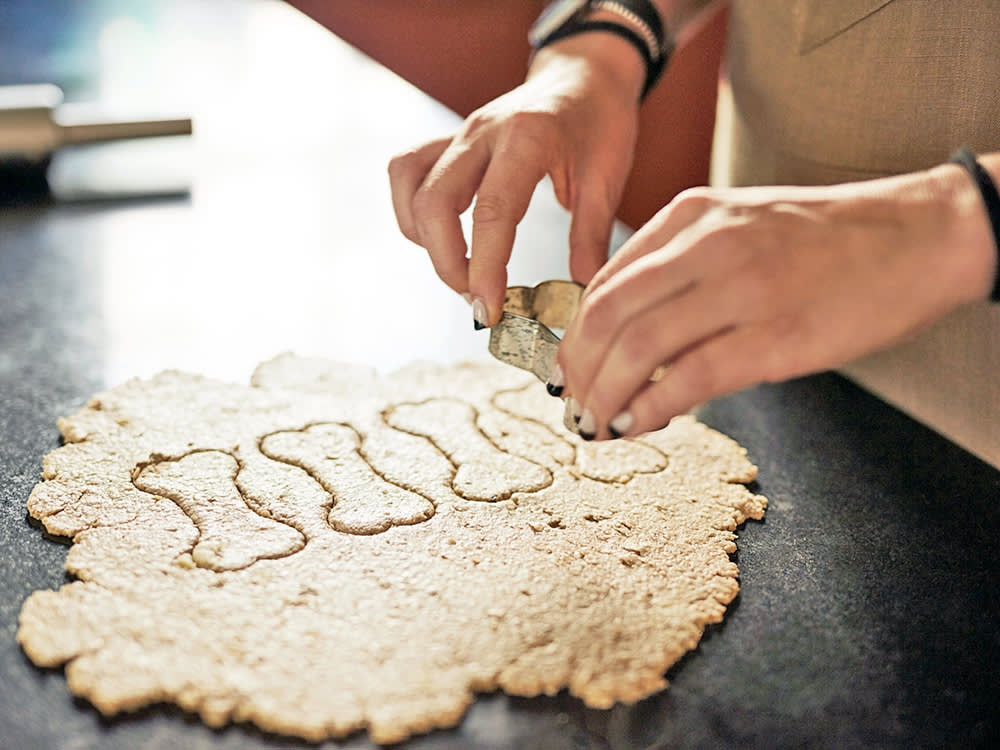
There is almost nothing you can do to ruin a batch of pumpkin and peanut butter dog cookies. The dough is forgiving, the bake time is generous, and your dog is not a food critic. Five ingredients, one bowl, done.
Which is exactly why the one real risk in this recipe gets skipped. It is not the oven or the flour. It is the jar of peanut butter sitting on your counter, and whether the sweetener in it can kill your dog.
Read the jar before you preheat the oven
Xylitol is a sugar substitute that shows up in sugar-free and reduced-sugar products. In dogs it triggers a rapid crash in blood sugar and can cause seizures, liver failure, and death. The FDA has been warning pet owners about it for years, and specifically warns about nut butters, because peanut butter is the single most common way people hand their dog a pill or a treat.
Here is the part that trips people up now: xylitol does not always say xylitol. Labels increasingly list it as birch sugar or wood sugar. Same compound, same danger, friendlier name. If you scan a jar for the word “xylitol,” see nothing, and stop reading, you can walk right past it.
Peanut butter brands that have contained xylitol include Go Nuts, Co., Krush Nutrition, Nuts ‘N More, P28 Foods, and No Cow (formerly D’s Naturals). Formulations change, so brand lists go stale. The habit that does not go stale is reading the whole ingredient panel, every jar, every time, and being extra suspicious of anything marketed as sugar-free, low sugar, keto, or high protein.
There is currently no federal requirement that a xylitol product carry a pet warning. The Paws Off Act (H.R. 5261) would create one, and the ASPCA has been pushing for it, but until something like it passes, the label is doing you no favors. You are the warning label.
People assume a plain-looking jar is a safe jar, and that is where this goes wrong. I would rather a client spend ten seconds reading the ingredient panel than spend a night in my emergency room watching a blood glucose curve.
The peanut butter you want is boring: peanuts, maybe salt, nothing else. Unsalted is better.
Pick the pumpkin that has one ingredient
The second label trap is smaller but real. Canned pure pumpkin and canned pumpkin pie filling sit next to each other on the shelf in nearly identical cans. The filling is sweetened and spiced, and the sugar load makes it a bad idea for a dog. Buy the can whose ingredient list says “pumpkin.”
Why these five ingredients actually earn their place
This is not a recipe padded with things that look wholesome on a blog. Every item is doing a job.
Canned pumpkin (1 cup, unsweetened, pure). Carries fiber, vitamin A, and potassium. The fiber is why vets reach for pumpkin when a dog’s stools are unpredictable, and the vitamin A and potassium do quiet work for immune function and organ function.
Natural peanut butter (½ cup, unsalted, xylitol-free). Protein plus fat, which is where the energy and the coat condition come from.
Whole wheat flour (2 cups). The fiber and the slow-burning carbohydrate. Oat flour swaps in one-for-one if you want a gluten-free version, or if your dog’s stomach is temperamental.
Egg (1). Protein and nutrients that support muscle, and the glue holding the cookie together.
Cinnamon (1 teaspoon, optional). Flavor, and a modest anti-inflammatory effect at this dose.
Every one of those is pulling weight, which is unusual for a treat recipe. And there is no correct month for it. A pumpkin cookie does the same thing for your dog in July that it does in October, whatever the coffee industry has trained you to believe.
The recipe
- Preheat the oven to 350°F (175°C).
- Beat together the pumpkin, peanut butter, and egg in a large bowl until the mixture is smooth and evenly colored.
- Work in the flour gradually, adding the cinnamon along the way if you want it, until the dough comes together and stops clinging to your fingers. Add more flour if it stays tacky.
- Roll it out on a floured counter to roughly ¼ inch, then cut shapes with cutters or slice squares with a knife.
- Bake on a parchment-lined sheet for 20 to 25 minutes, until golden and set firm.
- Cool them all the way through before anyone gets one.
They keep for up to one week in an airtight container at room temperature, two weeks refrigerated, or three months in the freezer.
How many is too many
The rule vets use is that treats should account for no more than about 10 percent of a dog’s daily calories. The rest should come from a complete, balanced food. A homemade cookie is not a nutritionally complete meal, and a dog who fills up on them is a dog eating an unbalanced diet.
The practical version: cut them small. A 1-inch cutter turns one batch into a month of training rewards instead of a week of dessert. If your dog is on a weight plan, subtract the treats from dinner rather than adding them on top.
What’s new since this was written
Two things have shifted, and both are label problems rather than kitchen problems.
The first is the renaming. As xylitol has picked up a bad reputation with pet owners, more products list it as birch sugar or wood sugar instead. It is the same molecule and the same emergency. If you learned to scan for one word, learn all three.
The second is the push for a warning label. The Paws Off Act would require xylitol products to carry a warning about the risk to pets. It has not become law, which means a jar of sugar-free peanut butter can sit on a shelf today with nothing on it to suggest that a spoonful could put a dog in liver failure. Until that changes, the ingredient panel is the only warning you get, and the ten seconds it takes to read it are the most important part of this recipe.
References
- U.S. Food and Drug Administration. “Paws Off! Xylitol Is Toxic to Dogs.” fda.gov/animal-veterinary/animal-health-literacy/paws-xylitol-toxic-dogs
- U.S. Food and Drug Administration. “Paws Off Xylitol; It’s Dangerous for Dogs.” fda.gov/consumers/consumer-updates/paws-xylitol-its-dangerous-dogs
- ASPCA. “The FDA Must Protect Pets From Accidental Poisoning” (Paws Off Act, H.R. 5261). secure.aspca.org/action/usa-paws-off
- MedVet. “Xylitol Poisoning in Dogs: Signs, Treatment, and Identifying Xylitol-Containing Products.” medvet.com/xylitol-poisoning-in-dogs
Common questions
Is cinnamon safe for dogs?
In the small amount this recipe calls for, yes. Cinnamon is not toxic to dogs and offers some anti-inflammatory benefit in moderation. It is optional, so leave it out if your dog has a sensitive stomach.
How many cookies can my dog have?
Treats of any kind should stay under roughly 10 percent of your dog's daily calories. For a small dog that can mean half a cookie; for a large dog, two. Bake them small and you will not have to do much math.
How long do they keep?
Up to one week in an airtight container at room temperature, two weeks in the refrigerator, or three months in the freezer.
Not a substitute for your vet. Our guidance is educational. For urgent symptoms, contact a vet or emergency clinic right away. Editorial standards
Dr. Nair is a veterinarian focused on diet and feeding. She covers everyday nutrition, treats, and the many "can they eat this?" questions owners ask, grounding each answer in what is actually safe and sensible for dogs and cats.
Meet our experts ↗Keep reading
 FoodYour Meatloaf Could Hospitalize Your Dog. This One Won't.Dr. Lena Park · 7 min
 Food5 Reasons to Cook for Your Dog. Just Don't Cook All of It.Dr. Priya Nair · 6 min
 FoodMake Your Dog's Peanut Butter at Home, and Skip the Ingredient That Can KillSasha Ford · 5 min
 FoodDon't Let That Jack-o'-Lantern Rot. Your Dog Wants It.Dr. Mara Chen · 5 min
 Food6 Ingredients, One Sitcom's Worth of Time: The Dog Cookie Worth Turning the Oven On ForDr. Mara Chen · 5 min
 FoodThe One-Bowl Dog Cookie That Sneaks Vegetables Past Your DogDr. Ravi Mehta · 4 min