


Don't Let That Jack-o'-Lantern Rot. Your Dog Wants It.
Fresh pumpkin puree is one of the cheapest, healthiest toppers you can add to your dog's bowl, and your leftover carving pumpkin is the raw material. Here's the no-fuss method.

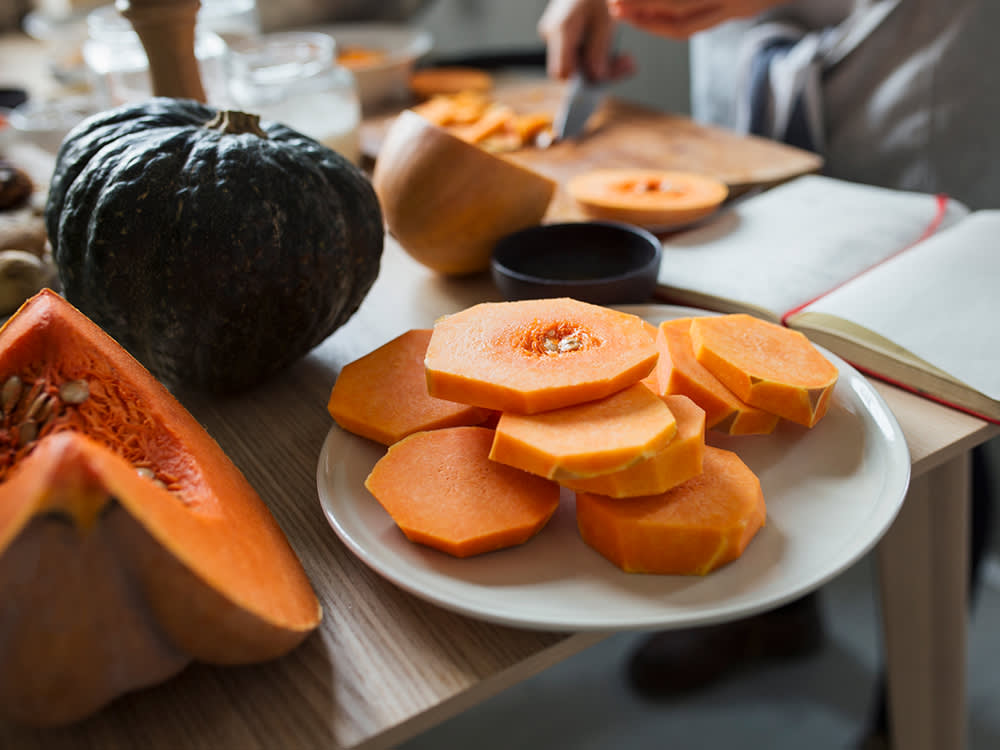
Every November 1st, the same small tragedy plays out on porches across the country: a perfectly good pumpkin, carved with love a few nights earlier, heading straight for the trash. Before you toss yours, know that you are about to throw out one of the easiest and most useful things you can add to your dog’s dinner.
Pumpkin puree costs almost nothing to make, keeps for months in the freezer, and doubles as both a food topper and the base for homemade treats. If your carving pumpkin is still clean and unspoiled, it is raw material, not garbage.
Why pumpkin earns a spot in the bowl
Pumpkin is that rare treat that is genuinely good for your dog rather than just tolerated. It is low in calories but dense with nutrition, and it delivers a solid dose of vitamin A, which supports the antioxidants your dog’s body relies on. It also carries potassium and vitamin C, a pair that helps look after heart function and the immune system.
The fiber is the part most owners come for. A spoonful of plain pumpkin can help firm up a loose stool or, on the flip side, get a backed-up dog moving again. Because it works in both directions, it has become a staple in a lot of dog-owning kitchens.
Pumpkin is one of the few ‘people foods’ I actively encourage owners to keep on hand. It is gentle, it is fiber-rich, and a little goes a long way. Just start small and watch how your individual dog responds, because every gut is a little different.
Fresh is the gold standard, but let’s be realistic. If you do not have a spare afternoon, plain canned pumpkin is a perfectly good stand-in and lets your dog enjoy it year-round. One warning worth repeating: reach for pure canned pumpkin, not pumpkin pie filling. The pie version is loaded with sugar and warming spices, and some products can contain sweeteners like xylitol that are dangerous for dogs.
The simple pumpkin puree recipe
There is barely anything to this, and that is the whole appeal. You need exactly one pumpkin. A smaller baking or “sugar” pumpkin tends to be sweeter and less stringy than a big carving giant, but any pumpkin works as long as it is clean and has not started to rot. This version roasts in the oven, though an electric pressure cooker does the job too.
Ingredients
- 1 pumpkin
Directions
- Heat your oven to 350°F.
- Cut the pumpkin into large wedges.
- Lay the wedges cut-side down, skin facing up, on a baking sheet you’ve lightly oiled.
- Roast for roughly 90 minutes, or until the flesh is fork-tender.
- When the wedges are cool enough to handle, scoop the soft flesh off the skin into a bowl. Mash it by hand or blitz it in a food processor. If it comes out too wet, cook it down over medium heat in a saucepan so the extra moisture evaporates.
- Let it cool, then divide it into freezer bags or small containers and freeze. To use, thaw a portion in the microwave or drop the sealed bag into a bowl of hot (not boiling) water.
How much to give, and how to use it
A dollop of plain puree stirred into meals makes a tasty, nutrient-packed topper. On its own, it can ease mild constipation or diarrhea, but portion size matters and depends on your dog’s weight, so check with your vet before you use it as a digestive fix rather than a treat. As a rough rule, most owners start with a teaspoon for a small dog and a tablespoon or two for a large one, then adjust.
Beyond the bowl, that frozen stash is a head start on baking. Fold it into homemade biscuits or dog cookies and you sneak real nutrition into whatever you hand over as a reward.
What newer guidance adds
Veterinary nutrition advice has grown a little more cautious about treats in general, and the standard framing still holds: treats and toppers, pumpkin included, should stay within about 10 percent of your dog’s daily calories so the balanced part of their diet does the heavy lifting. Pumpkin is low-calorie enough that this is rarely a problem, but it is a useful ceiling to keep in mind if your dog is watching their weight. If loose stools or constipation keep coming back even with pumpkin in the rotation, that is a signal to call your vet rather than simply adding more.
The takeaway has not changed since the first frost-nipped pumpkin met a hungry dog: this is a cheap, wholesome, genuinely useful addition to your dog’s routine, and your leftover jack-o’-lantern is the perfect place to start.
References
- Cornell University College of Veterinary Medicine. “Feeding Your Dog.” vet.cornell.edu.
- U.S. Department of Agriculture, FoodData Central. “Pumpkin, cooked, boiled, drained, without salt.” fdc.nal.usda.gov.
- ASPCA Animal Poison Control Center. “People Foods to Avoid Feeding Your Pets.” aspca.org.
Not a substitute for your vet. Our guidance is educational. For urgent symptoms, contact a vet or emergency clinic right away. Editorial standards
Dr. Chen is a small-animal veterinarian who leads health and safety coverage at The Pet Times. She writes and reviews the bulk of our illness, condition, and safety content, translating clinical guidance into clear, practical advice owners can act on at home.
Meet our experts ↗Keep reading
 FoodThe One-Bowl Dog Cookie That Sneaks Vegetables Past Your DogDr. Ravi Mehta · 4 min
 Food40 Homemade Dog Biscuits, 5 Ingredients, One Rule About Peanut ButterDr. Mara Chen · 5 min
 Food6 Ingredients, One Sitcom's Worth of Time: The Dog Cookie Worth Turning the Oven On ForDr. Mara Chen · 5 min
 FoodSweet Potato Is a Real Dog Superfood. One Rule Makes It Safe.Dr. Priya Nair · 5 min
 FoodThe 4-Ingredient Frozen Dog Treat (Check the Label First)Sara Lim · 5 min
 FoodThe Most Dangerous Thing in Homemade Dog Treats Is Hiding on the Peanut Butter LabelDr. Priya Nair · 6 min