


Turmeric Barely Absorbs in Dogs. This Treat Recipe Fixes the Flaw.
Turmeric's anti-inflammatory reputation is real, but on its own the active compound absorbs terribly. This blueberry and turmeric dog treat is built to solve that, and a pinch of one pantry staple makes it work even better.

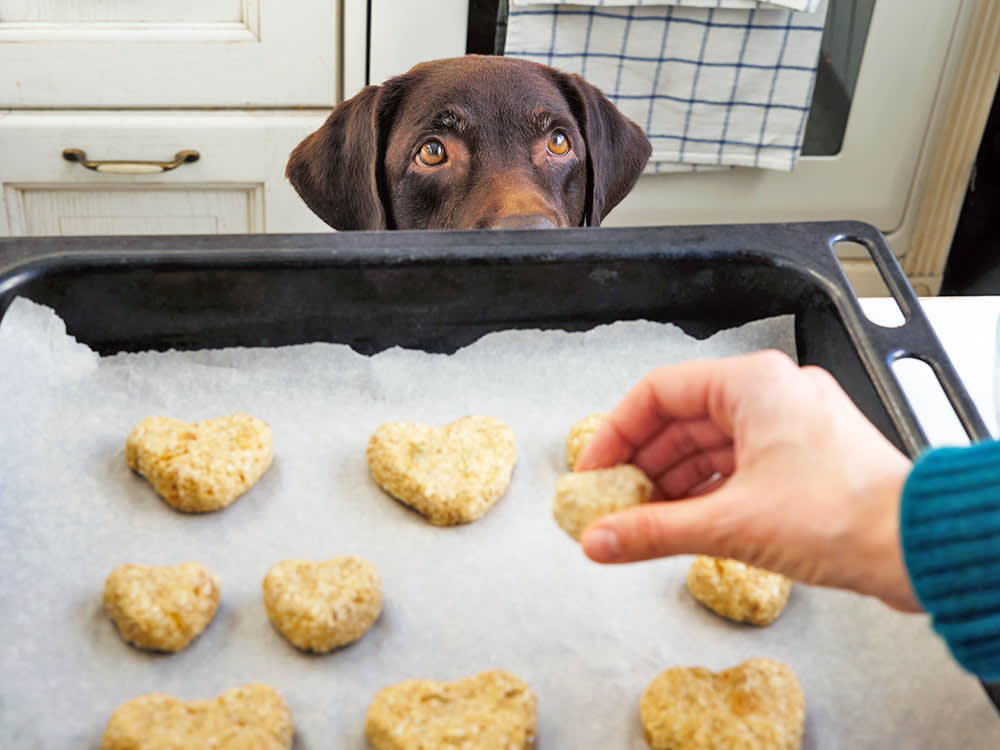
Turmeric has been used as medicine for centuries, and it earned the reputation honestly: the compound behind its gold color, curcumin, has real anti-inflammatory and antioxidant activity, with research pointing to possible benefits for joints, aging eyes, and even mood. So a turmeric dog treat sounds like an easy win. There is just one catch that most recipes ignore, and it is the difference between a treat that does something and a treat that is merely yellow.
The absorption problem nobody mentions
Curcumin is notoriously hard for the body to use. On its own, only around 1 to 2 percent of an oral dose actually makes it into the bloodstream, because the liver breaks it down almost as fast as the gut can take it in. Sprinkle plain turmeric on food and most of it passes straight through.
The good news is that this recipe is quietly built to fight that. Curcumin is fat-soluble, so pairing it with fat helps it absorb, and this treat carries fat from both coconut oil and egg. That is the right instinct. If you want to push absorption further, add a tiny pinch of black pepper to the dough. The piperine in black pepper slows how quickly the body clears curcumin and can raise its absorption dramatically. A pinch is plenty; this is seasoning, not a spice rub.
The mistake I see is people dumping a big scoop of turmeric on kibble and assuming more is better. It absorbs poorly and it can upset a stomach in large amounts. A small dose, cooked with a little fat and a whisper of black pepper, does far more than a heavy hand ever will.
Why the other ingredients belong here
This is not a turmeric-only treat, and that is a feature. Sweet potato brings fiber, vitamin A, and antioxidants that support digestion, vision, and immune function. Oat flour is gluten-free and high in fiber for steady energy. Blueberries pack antioxidants and vitamins C and K, which support cognitive health and help fight inflammation, the same goal as the turmeric, approached from a second direction. Egg adds protein and amino acids, and coconut oil supports skin and coat while doubling as the fat that makes the curcumin usable.
The recipe
Ingredients
- 1 cup mashed sweet potato (cooked, no skin)
- 1½ cups oat flour (or ground rolled oats)
- ½ cup fresh or frozen blueberries
- 1 egg
- 1 teaspoon turmeric powder
- 1 tablespoon coconut oil (melted)
- Optional: a tiny pinch of black pepper (to boost curcumin absorption)
Directions
- Set your oven to 350°F (175°C) and line a baking sheet with parchment.
- Stir the mashed sweet potato together with the egg and melted coconut oil until the mixture is smooth.
- Work in the oat flour and turmeric (plus the pepper pinch, if you’re using it) a little at a time, until a dough comes together.
- Fold the blueberries through gently so they don’t burst.
- Portion out about a tablespoon per treat onto the sheet, pressing each into whatever shape you like.
- Bake 20 to 25 minutes, until the treats are firm and just turning golden.
- Cool them fully before your dog gets the first one.
Keep the treats in a sealed container: 3 to 4 days on the counter, up to 2 weeks refrigerated, or up to 3 months in the freezer.
A few honest cautions
Treats are treats. Even healthy ones should stay under about 10 percent of your dog’s daily calories, with a complete diet doing the heavy lifting. Introduce a new treat in small amounts and watch for stomach upset.
Turmeric specifically deserves a quick word with your vet if your dog takes blood thinners, has gallbladder disease, or has a sensitive stomach, since curcumin can nudge all three. And never reach for a human turmeric supplement as a shortcut: many are dosed far higher than a dog needs and some contain xylitol, which is toxic to dogs. The kitchen-spice amount in this recipe is the safe lane.
References
Common questions
How do I help my dog actually absorb the turmeric?
Curcumin, turmeric's active compound, absorbs very poorly on its own. Pairing it with fat (this recipe uses coconut oil and egg) helps, and adding a tiny pinch of black pepper can increase absorption dramatically because piperine slows how fast the body clears curcumin.
How long do these treats keep?
Store them in an airtight container at room temperature for 3 to 4 days, in the fridge for up to 2 weeks, or freeze for up to 3 months.
Not a substitute for your vet. Our guidance is educational. For urgent symptoms, contact a vet or emergency clinic right away. Editorial standards
Dr. Kohl is a board-certified veterinary dentist with a particular interest in preventive oral care. She reviews all dental health content at The Pet Times and contributes practical guides on home dental routines, professional cleaning, and oral disease prevention.
Meet our experts ↗Keep reading
 Food5 Reasons to Cook for Your Dog. Just Don't Cook All of It.Dr. Priya Nair · 6 min
 Food6 Ingredients, One Sitcom's Worth of Time: The Dog Cookie Worth Turning the Oven On ForDr. Mara Chen · 5 min
 FoodThis 3-Ingredient Dog Treat Is Foolproof. One Wrong Jar Makes It Deadly.Dr. Ravi Mehta · 5 min
 FoodYour Meatloaf Could Hospitalize Your Dog. This One Won't.Dr. Lena Park · 7 min
 FoodThe Chicken Jerky Recipe That Fixes the One Step Most Home Cooks SkipDr. Nina Kohl · 5 min
 Food40 Homemade Dog Biscuits, 5 Ingredients, One Rule About Peanut ButterDr. Mara Chen · 5 min