


This 3-Ingredient Dog Treat Is Foolproof. One Wrong Jar Makes It Deadly.
A celebrity chef's homemade dog treat needs just dates, oats, and peanut butter. It's genuinely great, but the peanut butter aisle hides an ingredient that can kill a dog. Here's how to bake it safely.

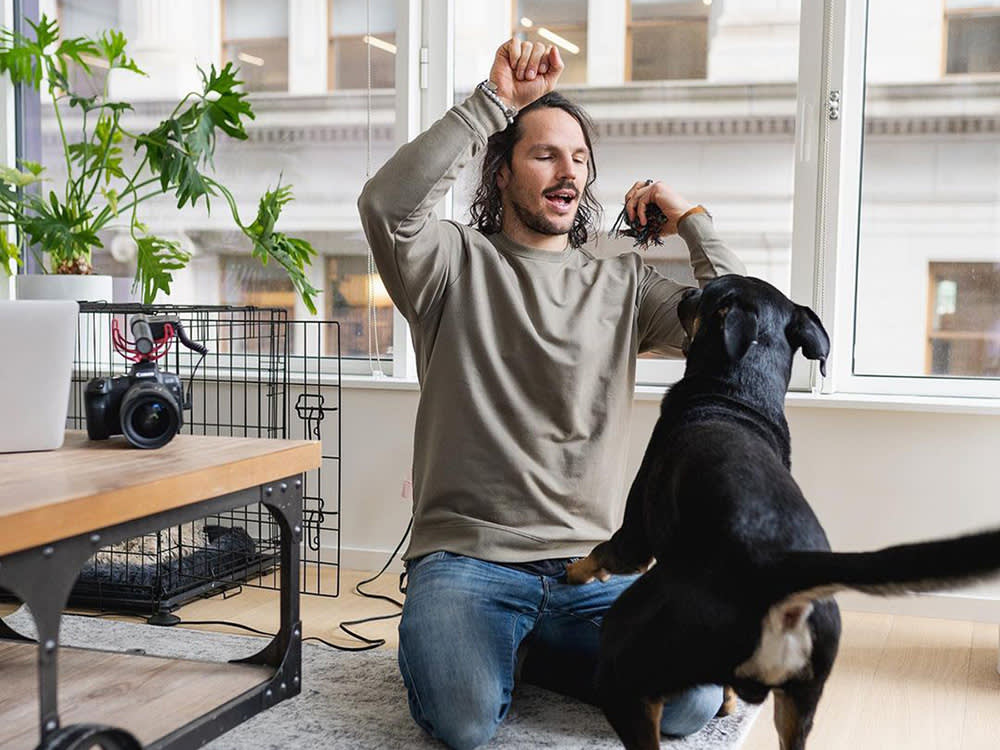
Homemade dog treats have a reputation for being fussier than they’re worth. This recipe, popularized by celebrity chef Dan Churchill, is the opposite. It’s three ingredients, one appliance, and about fifteen minutes: dates, rolled oats, and peanut butter, blended into a dough, rolled, cut, and baked. Dogs go feral for them, and there’s nothing in the base recipe that should worry you.
Except one thing. And it isn’t in the recipe. It’s in your pantry.
The recipe, start to finish
Here’s the whole thing. Preheat the oven to 350°F. In a food processor or high-powered blender, combine 2 cups of pitted, roughly chopped dates, 1½ cups of rolled oats, and ½ cup of peanut butter, and blend until it comes together into a dough. Roll that dough into a long rope about an inch thick, then cut it into pieces about an inch and a half long, roughly gnocchi-sized. Bake for 12 minutes, and let them cool completely before your dog gets one.
That’s it. Two cups of dates does most of the sweetening and binding, the oats give it structure and fiber, and the peanut butter carries the flavor a dog can smell from another room.
Why the base ingredients are fine
None of the three ingredients is a problem in reasonable amounts. Pitted dates are safe for dogs and bring fiber, potassium, and natural sugar. They are calorie-dense, so they’re a treat, not a topping, but they won’t hurt a healthy dog. Rolled oats are gentle, digestible, and a common ingredient in commercial dog food. Peanut butter is a classic for a reason: dogs love it, and it’s a source of protein and healthy fat.
The one caveat on dates is the pit. Make sure every date is truly pitted before it goes in the processor. Date pits are a choking hazard and can cause an intestinal blockage, and they’re hard enough to crack a tooth.
The ingredient that turns a good treat deadly
Here’s the part that actually matters, and it’s the reason this recipe needs a warning label the original didn’t carry.
Some peanut butter contains xylitol, a sugar substitute that is completely safe for people and severely toxic to dogs. It shows up in “sugar-free,” “no sugar added,” “natural,” and protein-forward peanut butters, and on the label it may be listed as xylitol or simply as a “sugar alcohol.” In a dog, even a small amount triggers a rapid, dangerous drop in blood sugar and, at higher doses, liver damage. Signs come on fast: vomiting, weakness, wobbliness, tremors, seizures, and collapse.
People assume the danger in a homemade treat is something exotic, and then they scoop from a jar that’s been in the cupboard for a year. The safest habit is boring: turn the jar around, read the ingredients, and if you see any sugar alcohol, that jar is for you, not the dog. It takes ten seconds and it’s the whole ballgame.
The fix is genuinely that simple. Use a plain peanut butter whose ingredient list is peanuts, maybe salt, and nothing else. Brands that market themselves as sugar-free or high-protein are the ones to scrutinize. If you want zero doubt, make your own by running unsalted peanuts through the food processor for a few minutes until smooth, then use that in the recipe.
If you ever suspect your dog has eaten anything with xylitol, treat it as an emergency and call your veterinarian or the Pet Poison Helpline at 1-800-213-6680 right away. Do not wait for symptoms.
What’s new since this was written
The xylitol problem has gotten harder to spot, not easier, which is exactly why the check matters more now. The sweetener has spread well beyond gum into peanut butters, protein spreads, “keto” foods, drink powders, and some children’s supplements, and manufacturers increasingly label it as “birch sugar,” which is xylitol under a friendlier name. If you’re scanning for the word xylitol only, you can miss it.
Veterinary toxicologists have also gotten firmer on the numbers: the toxic dose is low, and the blood-sugar crash can begin within 15 to 30 minutes of a dog eating it. That’s not a lot of runway. So the modern version of this recipe’s only rule is short. Read the peanut butter label every single time, watch for “sugar alcohol” and “birch sugar” as well as “xylitol,” and when in doubt, grind your own. Everything else about these treats is as easy and safe as it looks.
References
Common questions
Which peanut butter is dangerous for dogs?
Any peanut butter containing xylitol, a sugar substitute often labeled as a 'sugar alcohol' or hidden behind 'natural sweetener' or 'sugar-free.' Xylitol is highly toxic to dogs even in small amounts. Always read the label and choose a plain, unsweetened peanut butter.
How many of these treats can my dog have?
Treats should make up no more than about 10 percent of your dog's daily calories. Because these are made with dates and peanut butter, they are calorie-dense, so one or two small pieces is plenty for most dogs. Ask your vet if your dog is diabetic or overweight.
Not a substitute for your vet. Our guidance is educational. For urgent symptoms, contact a vet or emergency clinic right away. Editorial standards
Dr. Mehta is a board-certified veterinary nutritionist who evaluates pet food formulations, ingredient quality, and the science behind dietary trends. He writes and reviews all nutrition content at The Pet Times, including our food rankings and feeding guides.
Meet our experts ↗Keep reading
 FoodThe Double-Bake Trick Behind a Dog Biscuit That Actually Stays CrunchyDr. Priya Nair · 4 min
 FoodDon't Let That Jack-o'-Lantern Rot. Your Dog Wants It.Dr. Mara Chen · 5 min
 FoodThe One-Bowl Dog Cookie That Sneaks Vegetables Past Your DogDr. Ravi Mehta · 4 min
 Food5 Reasons to Cook for Your Dog. Just Don't Cook All of It.Dr. Priya Nair · 6 min
 FoodThe Store-Bought Cracker Is Wrecking Your Dog's Snack. This 4-Ingredient Biscuit Fixes It.Dr. Priya Nair · 5 min
 Food6 Ingredients, One Sitcom's Worth of Time: The Dog Cookie Worth Turning the Oven On ForDr. Mara Chen · 5 min