


Your Cat Does Not Care About the Lid. 8 Boxes That Actually Fight Odor.
Research says most cats have no preference between covered and uncovered boxes, which means the hood is for your nose, not theirs. Here's what genuinely controls smell, ranked, with eight boxes worth buying.

Affiliate disclosure. This article contains affiliate links. We may earn a small commission if you buy through a link, at no extra cost to you. How we handle recommendations.
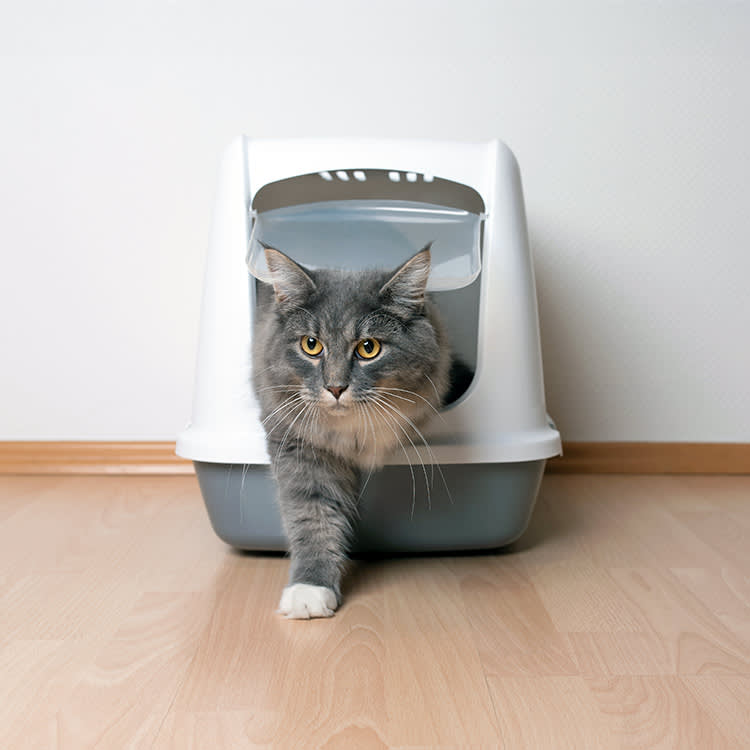
Before you spend $700 on a self-cleaning box, sit with this: in a controlled study of household cats, most of them did not care whether the box had a lid on it. Roughly 15% preferred covered, roughly 15% preferred uncovered, and about 70% used either one equally, as long as both were kept clean.
Which reframes the entire category. The hood, the filter, the flap, the top entry: those are features aimed at your nose and your living room. That is a legitimate thing to buy for. It is just not the same thing as making the box better for your cat, and it is not, on its own, what actually kills the smell.
So here is the order of operations nobody selling you a litter box wants to lead with.
What actually controls odor, in order
1. How often you scoop. Nothing else is close. Urine sitting in a box turns into ammonia, and ammonia is the smell you are trying to buy your way out of. A behaviorist once described a client whose cat was going outside the box, and the cause turned out to be a box cleaned once a week. Imagine flushing your toilet once a week. Scoop daily. Twice if you can.
2. How much litter is in the box. Litter is the thing absorbing the liquid. A shallow layer is saturated instantly. Deeper litter, in a box big enough to hold it, buys you a lot of odor control for the price of more litter.
3. Box size. This is the underrated one. The rule of thumb is at least one and a half times your cat’s body length, nose to base of tail. Most commercial hooded boxes are smaller than that, which is a bad trade: you got a lid, but you lost the litter volume that would have done the actual work.
4. Material. Plastic is porous and scratches, and scratched plastic holds odor over time. Stainless steel does not absorb, does not stain, and does not go permanently funky after two years. It costs more up front and lasts far longer.
5. Design: lids, filters, top entry. Real, but last. A hood contains smell in the immediate area and a charcoal or zeolite filter absorbs some of it. Just know that a lid also concentrates ammonia inside a small space that your cat has to put their face into, which is why a covered box you scoop rarely is worse for the cat than an open box you scoop daily.
6. Number of boxes. One per cat, plus one. Two cats, three boxes. Splitting the same volume of waste across more boxes means less of it per box, which means less smell per box. If your home truly cannot fit three, at least get one per cat.
“Almost every ‘my cat’s box stinks’ problem I see resolves with a bigger box, more litter in it, and a scoop twice a day,” says Dr. Nina Kohl. “The box you buy matters. It matters about a fifth as much as what you do with it.”
And one thing worth naming: a cat who suddenly starts going outside the box is not making a statement about your purchase. That is a medical and setup problem, and it deserves a vet call before it deserves a shopping cart.
The eight boxes worth your money
The source list we started from ran to ten. Two came off: an open-top budget tray that is fine but does nothing for odor beyond having tall sides, and a duplicate high-sided plastic box that a different pick already covers better. What is left are eight boxes that each earn their spot on a different axis.
iPrimio XL Stainless Steel Litter Box with Lid
Stainless steel is the material answer to odor, and this is the accessible version of it. It resists odor, stains, and rust, cleans easily, and unlike plastic it will not slowly absorb three years of smell into micro-scratches. It is large, which means it holds a real depth of litter, and it comes with an open-top enclosure that cuts spray and tracking, plus a scoop.
The tradeoff: it is heavier and more awkward to move around than plastic when you are doing a full dump-and-scrub, and it is pricier than the plastic equivalents.
Who it’s for: anyone who is tired of replacing a plastic box every couple of years and wants to solve the material problem permanently.
Whisker Litter-Robot 4
The reason automatic boxes control odor so well has nothing to do with technology and everything to do with the first item on our list: they scoop constantly, right after use, which is what you would do if you were home all day and slightly unhinged. The Litter-Robot 4 sifts waste into a sealed drawer, uses OdorTrap packs, and its app tracks litter level, use frequency, and your cat’s weight, which is genuinely useful health data. It handles up to four cats.
The tradeoffs: $700, no non-clumping litter, and it is not suitable for cats under three pounds or for homes with more than four cats.
Who it’s for: people who will not reliably scoop twice a day and are honest enough to admit it. That is not an insult, it is the actual value proposition.
PetSafe ScoopFree Crystal Classic
The cheaper automation route. A rake pulls solid waste into a covered compartment, while a disposable crystal litter tray absorbs urine and dehydrates the solids, which is a genuinely different odor mechanism than clumping clay. One tray lasts up to 30 days with a single cat, 15 days with two, and 10 days with three or more. There is a health counter and motion sensor tracking use frequency. It comes in no-cover, top-entry, and front-entry configurations.
The tradeoffs: you are locked into buying their crystal trays, which cost more than a bag of litter, and you cannot swap in the litter your cat already likes. That refill cost is the real price.
Who it’s for: a one-cat home that wants near-zero maintenance for a month at a time.
Modkat XL Litter Box
Top entry is the best mechanical answer to litter scatter, which matters because tracked litter is scented litter distributed across your floor. The Modkat XL is unusually flexible: it configures for either top or front entry, so you are not gambling on your cat’s tolerance. It ships with a scoop and two liners (one per configuration) that last up to three months, and the full-height base means leaks do not reach your floor.
The tradeoffs: expensive, and a top-entry box is a bad idea for a senior cat or any cat with arthritis or mobility limits. Jumping into a box is a young-cat feature.
Who it’s for: a healthy adult cat in a small apartment where the box lives in a shared room.
Frisco Hooded Cat Litter Box
The straightforward, cheap version of “put a lid on it.” A charcoal filter in the lid absorbs odor, the ventilated panel keeps it from becoming a sealed gas chamber, and the top comes off entirely for cleaning. BPA-free, recyclable plastic. At $33 it is roughly one twentieth the price of the robot.
The tradeoffs: some cats genuinely dislike a hood, so it helps that both the top and the door are removable. And it is big, which is good for odor and bad for a tiny bathroom.
Who it’s for: the default pick. If you want a hood and do not want to think about it, this is the one.
Van Ness EZ Clean Enclosed
Jumbo, enclosed, with a flip-top odor door and a zeolite filter. The odor advantage here is mostly the size, and that is not a knock: a bigger box holds more litter, and more litter absorbs more urine. If you have a large cat, or several cats sharing, volume is the whole strategy.
The tradeoffs: the hood is not universally popular with cats, and the footprint will not fit every space.
Who it’s for: a Maine Coon, a large tabby, or a household where three cats are sharing.
Nature’s Miracle Hooded Corner Multi-Cat
The most odor-engineered plastic box on this list. The charcoal filter runs about three months, the plastic itself carries Ionpure antimicrobial protection that inhibits bacteria-driven odor, it resists mold and mildew, and the nonstick surface stops litter from caking onto the sides, which is where a lot of persistent stink lives. The corner shape gets a large box into a space a rectangular box could not use.
The tradeoffs: still bulky despite the corner geometry, and still hooded. Measure first.
Who it’s for: small homes that need a big box in an awkward space.
Tuft & Paw Cove Litter Box
The design-forward one, and the tools are the point. A scoop, dustpan, and brush store inside the box itself, which sounds like a gimmick until you notice that the single biggest predictor of odor is whether you scoop, and the single biggest barrier to scooping is the scoop being somewhere else. Removable litter walls catch spray while keeping the open-top design, the base is anti-slip, and the matte plastic resists odor and litter sticking.
The tradeoffs: $200 for an open-top box, which will always be smellier than an enclosed one, all else equal.
Who it’s for: someone who scoops daily and wants the box to look like furniture rather than equipment.
What newer research adds
The most useful finding in this category is the one that undercuts most of the marketing. When researchers gave household cats a genuine choice between a covered box and an uncovered one, kept both scrupulously clean, and watched what they did, no significant overall preference emerged. A small minority went for the hood, a small minority avoided it, and the large majority used whichever was closer.
The important caveat in that work is that the study boxes were unusually large, specifically so every cat had room. That is the actual lesson hiding in the data. The variable that mattered was not the lid. It was size and cleanliness.
So buy the hood if you want the hood. Buy the robot if you know yourself. But if your box smells and you are shopping for a fix, the cheapest, most effective upgrade available to you is a bigger box, more litter in it, and a scoop that lives right next to it.
References
- Grigg, E.K., Pick, L., and Nibblett, B. “Litter box preference in domestic cats: covered versus uncovered.” Journal of Feline Medicine and Surgery, 2013. https://journals.sagepub.com/doi/10.1177/1098612X12465606
- “Field assessment in single-housed cats of litter box type (covered/uncovered) preferences for defecation.” Journal of Veterinary Behavior, 2019. https://www.sciencedirect.com/science/article/abs/pii/S1558787818301023
- American Association of Feline Practitioners and International Society of Feline Medicine. “Guidelines for Diagnosing and Solving House-Soiling Behavior in Cats.” https://journals.sagepub.com/doi/10.1177/1098612X14539092
- Cornell Feline Health Center. “Feline House Soiling.” https://www.vet.cornell.edu/departments-centers-and-institutes/cornell-feline-health-center/health-information/feline-health-topics/feline-house-soiling
Common questions
Do cats prefer covered or uncovered boxes?
In a 2013 study, most cats showed no preference at all. Roughly 15% preferred covered, 15% preferred uncovered, and about 70% used both equally, provided the boxes were kept clean. The lid is mostly for the human.
How many litter boxes should I have?
One per cat, plus one. Two cats means three boxes. If your home cannot fit that, get at least one per cat.
How big should the box be?
Bigger than the one you own. The general recommendation is at least one and a half times the length of your cat, nose to tail base. Most commercial covered boxes fall short of that.
How often should I clean the box?
Scoop at least once a day, twice if you can. Fully dump, wash, and refill on a regular schedule. Odor is a scooping problem long before it is a product problem.
Sara Lim leads our Product Picks coverage, testing and comparing the things pets and their owners actually use. From everyday essentials to home-and-style finds, she focuses on honest, useful recommendations rather than hype.
Meet our experts ↗Keep reading
 Product PicksThe Prettiest Litter Box Cover Is Useless If Your Cat Boycotts ItSara Lim · 8 min
 Living"Eco-Friendly" Cat Gear Is Mostly a Sticker. 6 Swaps That Aren't.Nina Vasquez · 8 min
 Product PicksThe 'Kitten Litter Box' Is a Trap. Buy for the Cat They'll Become.Dr. Nina Kohl · 8 min
 Living'Pet-Safe' Is a Marketing Word. Read the Label Instead.Dr. Nina Kohl · 7 min
 Product PicksI'm Lazy About Scooping. The Litter Genie Turned Me Into a Neat Freak.Marcus Webb · 6 min
 Product PicksMost Cats Don't Need a Diaper. If Yours Does, Match It to the ProblemSara Lim · 6 min