


When a Kitten Can Eat Dry Food, and the Tradeoff Nobody Mentions
Most guides treat dry food as a milestone to hit on schedule. The real question is whether dry food serves your kitten at all, because the hydration cost it sets up can follow a cat for life. Here's the readiness timeline, plus the honest case for and against kibble.

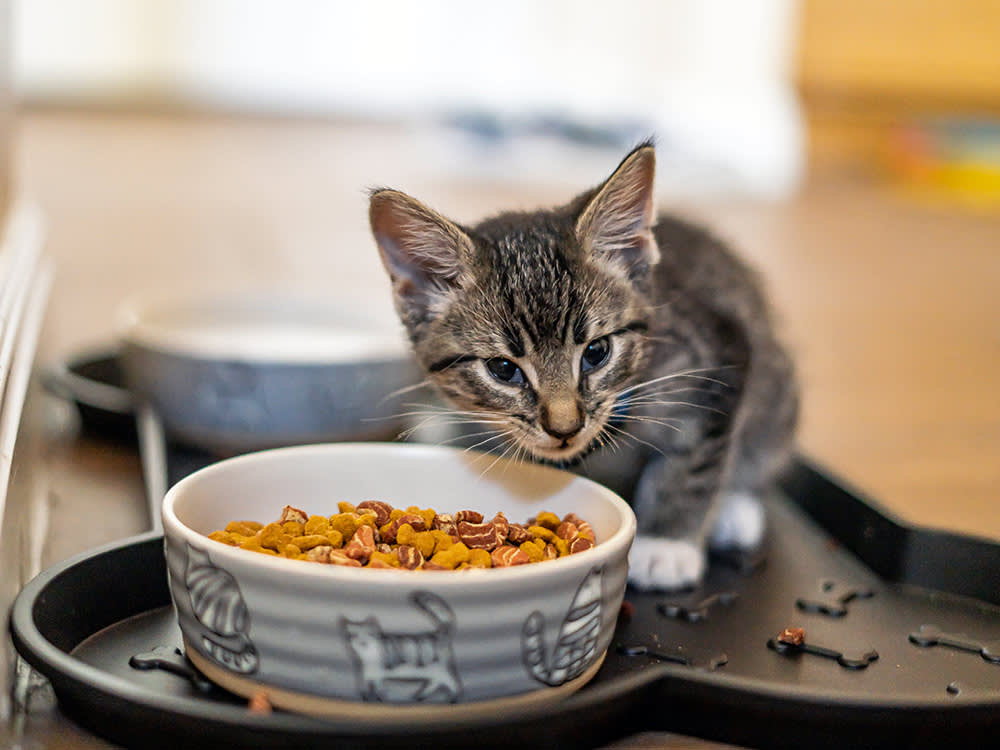
Search “when can a kitten eat dry food” and almost every answer hands you a date, as if dry food were a developmental box to tick like the first vaccine. The age question matters, and we will answer it precisely below. But the framing hides a more important decision. Dry food is not a milestone your kitten graduates to. It is one feeding option with genuine upsides and one significant downside, the hydration cost, that can quietly shape your cat’s health for the next fifteen years. So the better question is not just when, but whether, and in what mix.
First, the gate: teeth, not a calendar
A kitten can physically handle dry food only once two things are true, and both are about the mouth, not the birthday.
It has to be weaned. Mother’s milk gives newborns complete nutrition plus critical immune protection, so kittens should nurse exclusively until about three to four weeks old, then start tapering. Most stop nursing entirely by six to eight weeks, a process called weaning that should happen slowly. Weaning a kitten abruptly or too early can harm both health and behavior. Orphaned kittens with no mother need bottle-fed, kitten-specific formula until they can be gradually moved onto solids the same way.
It has to have the teeth. Kittens are born toothless. The first baby teeth come in around three to four weeks, which is when mushy solids can start alongside nursing. By about six weeks the full set of baby teeth is usually in, and that is when kibble becomes manageable, often soaked soft in warm water at first, with the soaking reduced over a week or two as the kitten adjusts. Offering different flavors and textures of both canned and dry at this age helps prevent picky eating later.
Here is the developmental map worth keeping in your head:
- 3 to 4 weeks: first baby teeth; mushy solids begin; weaning starts.
- ~6 weeks: full set of baby teeth; dry food can be introduced, softened at first.
- ~11 weeks: adult teeth begin coming in.
- ~24 weeks (6 months): adult teeth usually all in.
- Birth to ~12 months: rapid growth; a nutrient-dense diet in abundance is critical.
- ~12 months: adult size reached; switch to adult food and start watching portions, since overeating now leads to weight gain.
A quick way to estimate age and readiness by weight
Kittens grow predictably, which helps when a kitten’s exact age is unknown. The rough rule is about one pound gained per month until around 10 weeks, after which weights vary more. A one-month-old kitten weighs about a pound; a 10-week-old, about two and a half. A kitten should weigh roughly a pound before starting any solids at all.
Breed notes that change the timeline
Most of this applies across the board, but two groups are exceptions. Large breeds like Maine Coons, Savannahs, Norwegian Forest cats, Ragdolls, and Siberians grow for longer and may need a kitten-specific diet until closer to 18 months to finish developing. Flat-faced breeds like Persians and Exotic Shorthairs often have misaligned teeth that make hard kibble difficult to chew, so they should always have canned food available alongside any dry.
The tradeoff nobody puts on the bag: water
Now the part the age-focused guides skip. The single biggest difference between dry and wet food is moisture, and for cats that difference is not trivia, it is destiny.
Cats descend from desert-dwelling ancestors and inherited a famously weak thirst drive. In the wild, a cat gets most of its water from prey, not from a bowl. Dry food runs around 10 percent moisture; wet food is 70 to 80 percent. So a cat raised on kibble alone is often running a mild, chronic water deficit, drinking too little to make up the difference, and that under-hydration is a recognized contributor to the urinary problems and kidney disease that dog cats in middle and old age. Kidney disease is among the leading causes of death in senior cats.
The practical upshot for a kitten owner is forward-looking. Many cats eventually develop a condition (urinary issues, kidney disease, sometimes obesity) that is best managed on canned food. A cat that grew up eating only dry kibble can be maddeningly resistant to wet food exactly when it needs it most. Getting your kitten comfortable with canned food now, even if dry is the daily mainstay, is one of the cheapest insurance policies you can buy for its future.
I’d rather a kitten learn to like both textures while it’s young and flexible than fight a ten-year-old cat with kidney disease who has only ever eaten kibble. Dry food isn’t the enemy. Letting it become the only thing your cat will accept is the mistake.
The honest case for dry food
None of that means kibble is bad. It has real, practical advantages, and for many households a dry or mixed diet is the right call:
- Convenience and cost. Dry food keeps for a long time, a big bag stretches, and it is generally cheaper than canned. It can also sit out safely, so a kitten that needs frequent small meals can graze while you are away.
- Dental friction. Crunching kibble takes effort, and that chewing can scrape some tartar from tooth surfaces, which may reduce certain dental disease, especially paired with tooth brushing. It is not a cure-all; cats also get problems like tooth resorption that have nothing to do with tartar, so kibble alone will not protect every tooth.
- Enrichment. Because dry food does not spoil at room temperature, it is ideal for food puzzles and interactive feeders that give a young, busy kitten mental and physical exercise.
- Staying-power between meals. Kittens have tiny stomachs, and dry food’s density can help them feel full a bit longer, stretching the gap between feedings.
The honest case against relying on it
And the drawbacks, beyond hydration:
- Weight control. Once a cat reaches adult size, its metabolism shifts and overeating shows up as fat fast, especially for inactive indoor cats. Dry food’s low water content fills a cat slowly, so free-fed cats easily overeat it. If you feed dry, measure every serving to the bag’s guidance and stick to it.
- Picky-eating risk. A kitten raised on one flavor and one texture is more likely to refuse anything new later, which is the same trap that makes the eventual switch to wet food so hard.
How to introduce or switch foods without a stomach upset
Whether you are starting kibble or changing brands, go slow. Cats often eat the same food daily and can struggle to digest a sudden change, leading to poor appetite, vomiting, or diarrhea. Mix the familiar food with steadily increasing amounts of the new food over three to five days. For a very young kitten moving from bottle-feeding to solids, mix kitten formula with a little mushy food the same gradual way.
As you raise the proportion of new food, watch the kitten’s enthusiasm and appetite, and watch for adverse reactions. If it eats without gusto, avoids food, or shows vomiting, diarrhea, or hives, take a step back, slow the transition, or try a different food, especially if you suspect an allergy. Loop in your vet if you are worried.
Choosing a dry food that’s actually built for kittens
If you do feed dry, the label matters more than the marketing:
- Demand a growth formula. The food must say it is complete and balanced for daily nutrition and formulated for kittens. Labels reading “growth” or “all life stages” are fine; “adult maintenance” is not, and snacks or treats are never a daily diet. Switch to an adult formula around one year so your cat is not stuck on high-calorie kitten food that drives weight gain.
- Check the protein and the taurine. Growing kittens need a high-quality, animal-based protein source. Industry growth guidelines (AAFCO) set a minimum of about 30 percent protein on a dry-matter basis for kittens, and cats of every age require taurine, an amino acid found only in animal tissue. A taurine deficiency can cause heart disease (dilated cardiomyopathy) and irreversible retinal damage, which is exactly why plant-protein-heavy foods are a poor fit for cats. Organ meats and certain meat byproducts, unappealing as they sound to us, are often excellent sources of what a kitten needs.
- Mind the kibble size. Tiny mouths need tiny kibble. If a kitten cannot chew its food well, it is more prone to indigestion, vomiting, and gas, so pick small kibble or soak larger pieces soft.
Ingredient labels are genuinely hard to read, so ask your vet for specific recommendations rather than guessing from the front of the bag.
The bottom line
Yes, a kitten can eat dry food once it is fully weaned with a complete set of baby teeth, usually around six to eight weeks, softened at first. But treat that as the floor, not the goal. Dry food brings real convenience, cost savings, and dental friction, and it sets up a lifelong hydration deficit that matters more than any of those upsides. The strongest move is rarely “dry only” or “wet only.” It is raising a kitten that happily eats both, on a growth-labeled, taurine-rich diet, so it is set up for whatever its body needs decades from now.
References
- AAFCO: Understanding Pet Food — Nutrient Profiles and “Complete and Balanced”
- Merck Veterinary Manual: Nutritional Requirements of Small Animals (cats, taurine)
- Cornell Feline Health Center: Feeding Your Cat
- FDA: “Complete and Balanced” Pet Food
- Journal of Feline Medicine and Surgery: Assessment of Body Weight for Age Determination in Kittens
Common questions
Is dry or wet food better for a kitten?
Both can be complete and balanced when labeled for growth. Dry food wins on convenience, cost, and dental friction; wet food wins decisively on hydration, which matters because cats are prone to urinary and kidney problems later. Many cats do best on a mix of the two.
What should I look for in a kitten dry food?
A label stating it's complete and balanced for 'growth' or 'all life stages,' a named animal protein, the taurine cats require, and a small kibble size a kitten can actually chew. Adult-only formulas don't meet a growing kitten's needs.
Not a substitute for your vet. Our guidance is educational. For urgent symptoms, contact a vet or emergency clinic right away. Editorial standards
Dr. Solis is a board-certified veterinary dermatologist with over twelve years of clinical experience. She advises on skin conditions, allergies, and grooming practices that affect coat and skin health. All dermatology and allergy content at The Pet Times is reviewed by her team before publication.
Meet our experts ↗Keep reading
 FoodA Kitten Can Eat Wet Food at Four Weeks. That Doesn't Mean They Can Leave.Dr. Amara Solis · 10 min
 FoodYour Kitten Isn't Starving. Weigh Them Every Week.Dr. Priya Nair · 7 min
 First DaysThe Kitten Feeding Rule Flips at 16 WeeksDr. Priya Nair · 8 min
 First DaysTake a Kitten Home Too Early and You'll Pay for It for 15 YearsDr. Lena Park · 10 min
 Health & WellnessA Kitten Sneeze Is Cute Once. Here's the Line It Shouldn't Cross.Dr. Mara Chen · 8 min
 First DaysHow Long You Can Leave a Kitten Alone Comes Down to One ClockDr. Mara Chen · 8 min