


Your Dog's Next Bed Might Be 12 Recycled Soda Bottles. On Purpose.
Tina Nguyen couldn't find a stylish, safe, US-made bed for her rescue beagle, so she built a company that turns soda bottles and factory scraps into dog beds and toys, all sewn in Los Angeles. The story behind Jax & Bones.

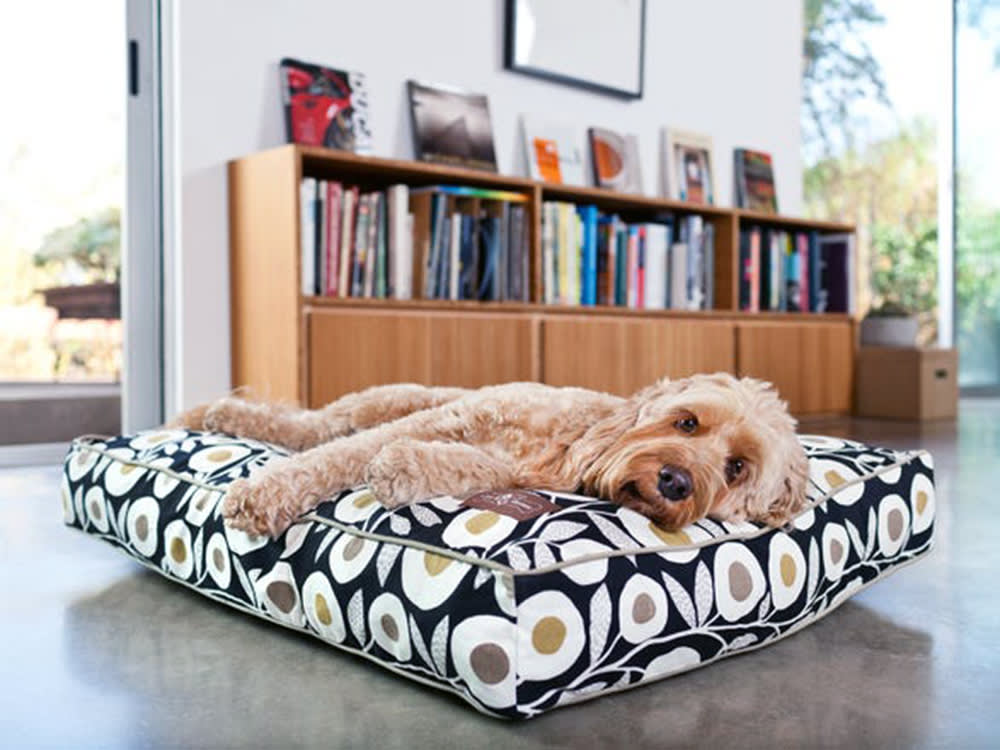
“Sustainable pet brand” is one of those phrases that has been used so loosely it barely means anything anymore. Jax & Bones is a useful antidote, because its sustainability is embarrassingly specific. Somewhere between eight and a dozen recycled plastic soda bottles go into every single dog bed the company makes, and all of it is processed in the United States. That’s not a marketing gesture stapled onto a finished product. It’s the product. And the whole thing started because one woman couldn’t buy the bed she wanted for her dog.
It started with a $50 beagle
The best fifty dollars founder Tina Nguyen ever spent went toward adopting a beagle named Jax while she was in college. He became her closest companion, the dog she calls her soul mutt, and naturally she wanted to give him the healthiest, sturdiest, best-looking gear she could find. The problem was the year: this was 2004, and the pet aisle back then was a wasteland of beige. The beds she found were brown, gave off a chemical smell, and were manufactured overseas. Nguyen, who is health-conscious about her own life, wasn’t willing to hand her dog something she wouldn’t want herself.
So she did the thing that turns a frustrated shopper into a founder. She went looking for safe raw materials and started designing simple products of her own, beginning with a collar and then moving on to pet beds. That personal workaround grew into Jax & Bones, a full catalog of beds, toys, and accessories for dogs built on a single stubborn idea: our animals give us so much, so why hand them anything less than we’d want for ourselves?
Turning factory waste into the product
The circular part of the business came out of a problem most manufacturers just throw away. As Nguyen started sourcing fabric, she noticed how much material the cutting and sewing process left on the floor. The more you produce, the more scrap piles up. Rather than bin it, she worked with a pattern maker to figure out what those offcuts could become, and the answer turned into poop-bag holders and hand-tied rope toys. The beds solved a different waste stream: each one is stuffed using recycled plastic soda bottles, the raw material for the company’s signature fill, all processed domestically.
That obsessiveness runs through the whole catalog. Nguyen inspects every fabric, dye, and raw material closely before it goes near a dog, and by her own account she tests new materials the way a dog might, scratching at them and smelling everything, on the theory that if she’s going to treat pets like family, the standards have to match.
Made in LA, on purpose
The other half of the company’s philosophy is geography. Nguyen is a believer in keeping manufacturing close to where the design happens, because stretching a supply chain overseas both pollutes more and puts distance between her and the quality she’s fussy about. Jax & Bones beds are made in Los Angeles, and while that costs more than offshoring would, it also let her build a team of local craftspeople. For Nguyen, that’s the fuller definition of sustainability: not just recycled materials, but the environment and the people in it together.
Every product line carries a cause
The designs are playful, and the color choices aren’t random. The Good Karma rope toys, for instance, get their bright hues from vegetable dyes, with beets standing in for synthetic reds and pinks. Other lines are built around a mission outright. The Rowdy Rescuers toys are inspired by animal rescue, meant to teach people how many animals need homes and how they can help, and a share of that line’s sales is directed to national animal charities.
Ask Nguyen for the best part of the job and she doesn’t reach for a revenue figure. She lights up over the customer who tells her their dog used to sleep only in the family bed and now happily curls up on a Jax & Bones one. One shopper in Chicago bought roughly a dozen beds, which delighted her twice over once she learned the woman had cats, not dogs. Enough customers have asked for a cat line that Nguyen says she’d want to adopt a cat first, to actually understand what they need before designing for them.
Her ambitions for the brand lean less commercial than you’d expect. She wants to grow the philanthropy and education side, and while new products will keep coming, she’s adamant that each one carry a story or a cause. Her hope for the wider pet industry, now a multi-billion-dollar business she’s watched balloon, is that it doesn’t lose the plot: the point was never the money, it was keeping animals comfortable because of everything they give us.
What’s new since this profile
The company has only leaned harder into its founding premise. Its bed fill now carries a brand name, Sustainafill, and by the company’s own accounting the program diverts roughly 250,000 plastic bottles from landfills each year, with 8 to 12 bottles going into every bed. The giving side has a track record to match: a share of every Good Karma rope toy sale has gone to rescue groups since 2006, joined by the Rowdy Rescuers line in 2018. The beds are still handcrafted in Los Angeles, and the brand is a member of the Pet Sustainability Coalition. In an industry where “eco-friendly” is often a sticker, the numbers behind this one are specific and checkable, which was Nguyen’s whole point from the beginning.
You can explore the current lineup, including the Good Karma and Rowdy Rescuers collections, directly at jaxandbones.com.
References
- “Our Company.” Jax & Bones. https://jaxandbones.com/pages/our-company
- “Jax’s Story.” Jax & Bones. https://jaxandbones.com/pages/jaxs-story
- “ECOBED Good Karma.” Jax & Bones. https://jaxandbones.com/pages/goodkarma
Leila Torres leads our Living coverage, from home life and travel to the products and rescue stories that come with sharing a life with animals. She edits and writes across the section, with a soft spot for pieces about the bond between people and their pets.
Meet our experts ↗Keep reading
 Product PicksThe Most Sustainable Dog Bed Is the One You Never Have to ReplaceMarcus Webb · 6 min
 LivingYour Dog Has Two Beds Because They Have Two Kinds of SleepDr. Ravi Mehta · 7 min
 Product PicksStore-Bought Dog Beds Are a Racket. Crochet One From Scrap Yarn.Leila Torres · 5 min
 LivingA Furniture Designer Got Fed Up With Ugly Dog Beds. So He Fixed ThemMarcus Webb · 6 min
 Product PicksThese Dog Beds Are Handwoven by Indian Artisans, Not Stamped Out in a FactorySasha Ford · 4 min
 Product PicksThis Montana Factory Grinds Up Your Dog's Old Toy and Makes You a New OneSara Lim · 8 min