


The $150,000 'Bodyguard' Dog Fails at the One Thing Buyers Want Most
Svalinn dogs are marketed as military-grade protection for the ultra-rich, starting at $150,000. Dig into how they are bred and raised and a contradiction appears: the buyers want a family pet and a weapon in one animal, and a trainer explains why you cannot have both.

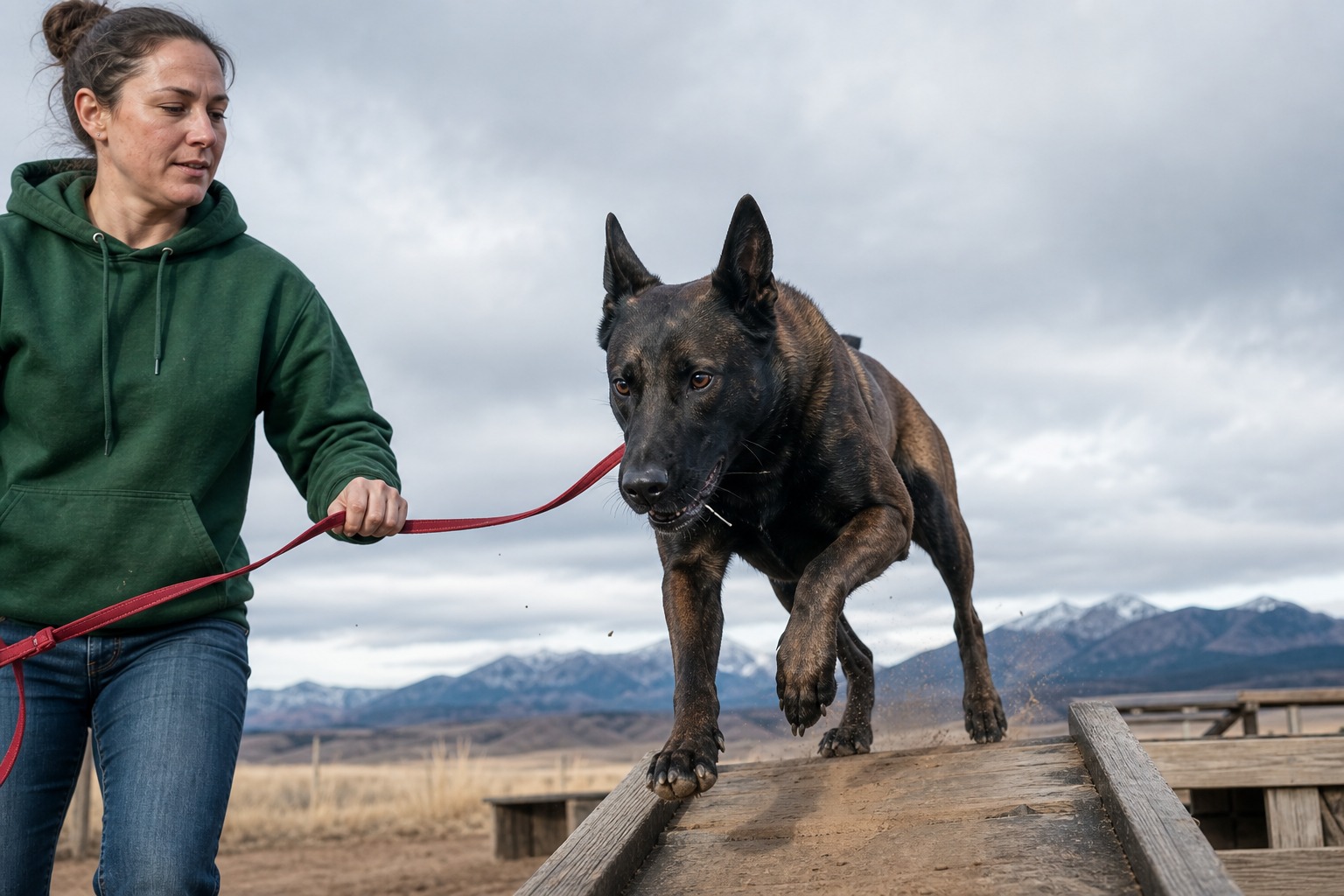
Here is the contradiction at the center of the most expensive dog in America. The people paying $150,000 for a Svalinn want two animals fused into one: a cuddly family pet their kids can pile onto, and a weapon that will, in the breeder’s own words, rip out an attacker’s trachea. Spend any time with how these dogs are made and raised, and it becomes clear those two things cannot live in the same animal. The luxury price tag does not buy you both. It buys you a working dog that struggles to ever fully clock out, sold to households that wanted a pet.
As New York Magazine reported, Svalinns are a fairly new “breed” marketed as offering military-grade protection. The name comes from Norse mythology, a legendary shield that guards the world from the sun’s heat. There is a lot to unpack here: how the company came to exist, why anyone wants these dogs, and what their lives look like before someone pays six figures to take one home. The contradiction runs through all of it.
What Buyers Are Actually Paying For
Given how much the one percent prizes exclusivity, it is no surprise Svalinns come from a single source. The pseudo-breed crossbreeds German Shepherds, Dutch Shepherds, and Belgian Malinois, with a stated aim of producing a loyal companion. The company markets its pups with the slogan “Bred to love. Trained to protect,” which reads a little like a discarded Paul Blart: Mall Cop tagline, and that slogan is the contradiction in miniature.
Svalinns begin training at eight weeks old, and it continues for two to three years before the dogs go up for sale. The company says it sells only about 20 dogs a year and that roughly 350 exist in total. Prospective buyers reportedly undergo significant vetting, though given how few people can stomach the price, it is hard to imagine many get turned away.
Svalinn has bred and trained these dogs since 2005, when founder and CEO Kim Greene started the company in Nairobi. Greene’s business card reportedly reads “Alpha Female,” a nod to the archaic and largely disproven theory of dog dominance. In 2013, Greene and her then-husband relocated to a former equestrian facility outside Livingston, Montana, which New York describes as “one of the remotest parts of the country,” near where many clients live. The magazine writes that they made the move “intent on creating a market for beasts that could rip out an attacker’s trachea yet also function as pets.”
The clients are very rich, the kind whose net worth might leave them anxious about harm at any moment. Greene calls them “high-level people, economically and socially.” Svalinn dogs are especially popular at the Yellowstone Club in Big Sky, Montana, a private resort where Mark Zuckerberg and Bill Gates have vacationed. Naturally, these buyers have specific demands.
“People say, ‘I have a big motorboat. I need to have my dog climb out of the water on a ladder,’” Greene told New York.
It is telling that Greene refers to the dogs as “assets.” The services on offer (a handler visits 45 days after purchase to check on training) sound impressive, but the language stops describing a living being and starts describing a product. As the New York reporter observes, these are buyers paying $150,000 for what the article frames as a “luxury object, like an out-of-tune Steinway.” A pet is not an asset. A weapon is. The vocabulary already gives the game away.
The Rearing Is Designed to Strip the “Pet” Out
If the breeding aims at a weapon, the upbringing finishes the job, and it is grim. New York reports that Greene belongs to the “aversive” camp, deliberately exposing the dogs to the elements as if they were wild animals. Training happens at an on-campus course called the Phoenix, described as an obstacle course “resembling a jungle gym,” with “swinging tires the dogs have to leap through, balance beams narrower than their paws.” The course reportedly changes daily so the dogs keep working their brains, the goal being an animal unfazed by anything new.
That might sound like an elite athlete’s routine, but these are dogs whose lives appear to hold little joy. Greene says she wants a dog that “comes through the door with its shoulders thrust forward,” rather than the “adoring family oaf” who only needs to “wag their tail and be goofy and cute.” Notice what is being rejected there: the exact qualities a family pet is prized for.
The dogs live in what is called “the Pit,” which the reporter describes as “a dirt-floored barn with an odor so intense I feel the urge to run outside.” Greene says she likes to “keep everything as close to nature as possible,” which per the article means “choke collars, no toys or treats, and a diet of beef or raw elk meat served on the bone.” Greene is quoted saying, “If nature takes puppies, it takes puppies,” meaning that if a puppy is abandoned by its mother and at risk of dying, no one steps in.
“If we were a puppy mill, we would sleep with the puppies … We’d give them heat lamps. But you know what? These are protection assets. And if six of them are going to pass, there’s a reason.”
One New York Magazine commenter, who said they had worked in animal welfare for more than 25 years, pushed back hard: “Really? … no puppy mill I’ve ever been in had heat lamps. Nor would I want to sleep in one. They are torture chambers.” The point did not land in Greene’s favor.
Why the Contradiction Dooms the Purchase
Set the ethics aside for a moment and the practical problem remains: these dogs are not even a good fit for the people buying them. We asked Dr. Lena Park, a behavior specialist who works with high-drive working breeds, to walk through why.
The three breeds in a Svalinn’s makeup all carry high prey drives, and a dog bred for off-the-charts drive is, almost by definition, not a relaxed family dog.
“When you breed hard for drive, you are selecting for an animal that is always a little switched on, always scanning,” Dr. Park says. “That is exactly what you want in a working protection dog and exactly what you do not want underfoot with a toddler. You cannot order both off the same menu, because they pull in opposite directions.”
There is also the matter of an off switch that may never fully engage. A dog trained intensively for two to three years is a working dog, not a pet who happens to know some tricks.
“A dog raised in that environment is nice to the people it knows and capable of turning on to do protection work, but the protection wiring does not unplug just because it is now sleeping in a mansion,” Dr. Park adds. “And that raises a real safety question: does the dog have the discernment to decide, on its own, who is actually a threat? If the owner is anxious to begin with, the dog can read the wrong cue and act on it.”
That is the nightmare scenario hiding inside the fantasy. A six-figure dog, cued by a fearful owner, misreading a guest or a neighbor as a threat. The very anxiety that drives the purchase is what makes the dog dangerous in the home.
Does Anyone Need a Dog Like This? No.
Adopting over shopping is the way to go, especially now, with shelters across the United States severely overcrowded and understaffed. There are far too many dogs without homes, facing the daily threat of euthanasia, and breeders not only steer people away from shelters, the worst of them help fill those shelters in the first place.
We are not even asking these mega-rich buyers to adopt and donate the other $149,750, though it might do wonders for their public image. The point is simpler: there are far better, far cheaper ways to bring a great dog into your life, especially if you care more about who a dog is than where it came from.
“Almost nobody shopping for a family dog is shopping for a weapon,” Dr. Park says. “What they actually want is a sweetheart who raises the alarm when the doorbell rings. A shelter mutt will happily supply that for the cost of an adoption fee; it does not require a six-figure asset.”
Dogs are pets. They are not break-glass-in-case-of-emergency handguns or furry pepper spray. If you genuinely want protection and have this kind of money, hire an actual bodyguard. After all, $150,000 makes for a very generous starting salary.
References
Marcus Webb writes about the gear, gadgets, and everyday choices that make life with a pet easier. His coverage runs from product picks to training and the causes worth paying attention to, always with an eye on what actually earns a place in your home.
Meet our experts ↗Keep reading
 LivingYour Rescue Can Win $1,000 for the Shelter That Saved ThemSara Lim · 4 min
 LivingA Drug Raid Opened a Door. Behind It: a Dogfighting Ring and a 9-Foot Alligator Fed on the EvidenceJames Okafor · 5 min
 LivingHundreds of Thousands of Dogs Died Last Year. This Film Blames Us.Marcus Webb · 6 min
 LivingA Vegas Shelter Started Paying People $200 to Foster. That Tells You How Bad It Got.Nina Vasquez · 5 min
 Product PicksSenior Dogs Don't Have a Pity Problem. They Have a Visibility Problem.Nina Vasquez · 7 min
 LivingNobody Meant to Have 100 Dogs. That's How It Always Starts.Nina Vasquez · 5 min