


When ICE Takes the Family, the Dog Is Left in the Yard
As immigration raids escalate, shelters across the country are absorbing a wave of pets whose owners were detained or forced to flee. Here's what's happening, and how ordinary people are stepping in.
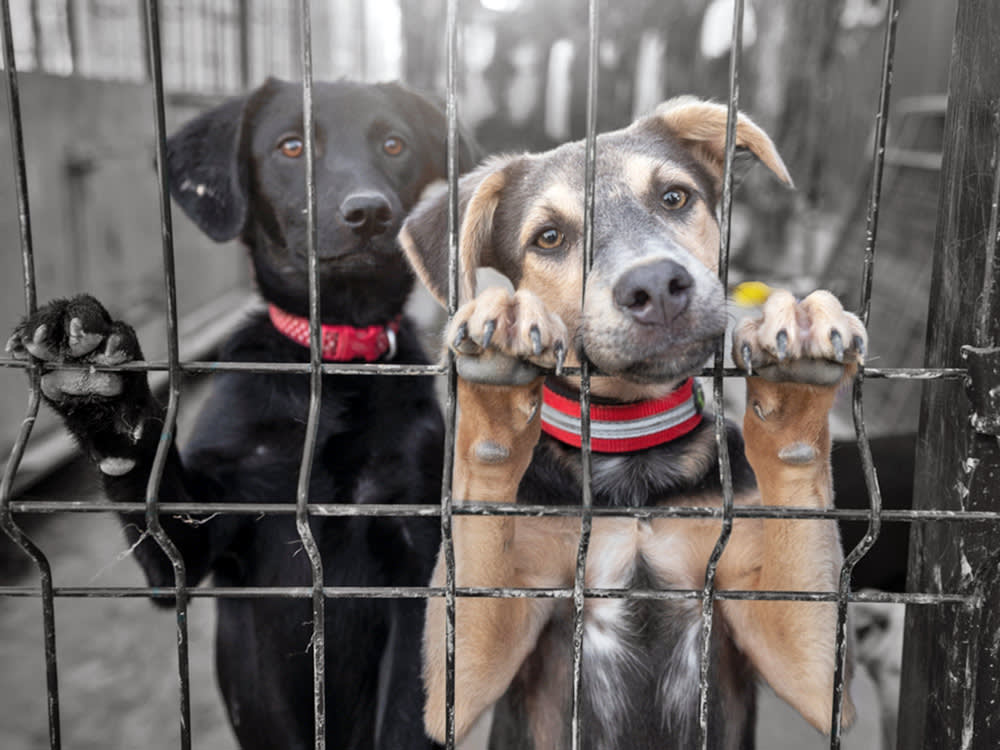
A dog named Mud turned up alone in the yard of an emptied-out home, discovered by a neighbor long after the family that raised him had gone, his body wracked by heartworm, hookworm, and severe skin infections. His people had been deported. No one had come for him because, in the machinery of a raid, no one is assigned to. Mud is one animal. He stands in for thousands.
As immigration enforcement has ramped up across the country, animal rescues are absorbing the fallout in a form few people think about: the pets. When a family is detained or chooses to leave rather than be taken, the dog, the cat, the animals that were unquestionably family members, are often the thing that cannot come along. What happens to them has become a quiet, national emergency running underneath the louder one.
A crisis the shelters did not see coming
In Tampa, the rescue Mercy Full Project has been absorbing more abandoned pets than it has ever handled at once. Its founder, Heydi Acuna, described families reaching out because they simply had nowhere to leave their animals, and a volume of surrenders the organization never anticipated. It was, in her words, a crisis they were not expecting.
The pattern splits into two grim categories. Some animals are surrendered ahead of time by families who decide to leave the country voluntarily and try to do right by their pets on the way out. Others are the ones like Mud, left behind when guardians are detained or deported with no warning. Because immigration authorities are not responsible for property left after a raid, a pet can end up alone in a vacated home, discovered days or weeks later by a neighbor or a landlord.
Acuna described Mud’s condition bluntly: his organs were still failing, and the rescue was running labs and biopsies in a scramble to keep him alive. He is the visible edge of a much larger problem.
Why families cannot just take the pets
It is tempting to ask why people do not simply bring their animals with them. The answer, from those working inside the system, is that leaving with a pet is not something you can do on a moment’s notice. As the director of animal care and control for Los Angeles County explained to reporters, families are not choosing to abandon animals they love. They are running out of options. Leaving the country with a pet requires veterinary exams, a health certificate, and compliance with the destination country’s own rules. You cannot throw a dog in a car and cross a border, or board a plane, on an afternoon’s notice. When the alternative is detention or sudden flight, the pet becomes what one official called collateral damage.
That is the cruel mechanics of it. The love is not in question. The logistics are impossible.
It is happening everywhere, and the shelters were already full
This is not a single-city story. Reporting has traced the same crisis across California, Colorado, Arizona, and New York; anywhere raids sweep through, animals get left behind. Earlier reporting out of Los Angeles documented dog surrenders tripling year over year at one point, tied directly to raids.
The timing could hardly be worse for the organizations catching these animals. Many shelters were already in what they describe as critical overcrowding, strained by rising costs of living and the long tail of pandemic-era adoptions that did not last. As one Los Angeles rescue manager put it, the situation was already bad, and now, on top of everything, a steady stream of requests arrives every single day because people have disappeared or been deported.
The animals didn’t do anything, and neither did their people, in most cases, beyond existing without the right paperwork. What breaks my heart is how solvable the small piece is. We can’t fix immigration policy from a shelter. But we can make sure a dog whose family was taken doesn’t die alone in a yard. That part is within reach.
Ordinary people are building the safety net
There is no formal system to catch these animals. What exists instead is neighbors. Across the country, informal, word-of-mouth networks have formed to place pets whose families are gone. One man in New York adopted a bulldog named Benny after Benny’s family was deported, and framed it the way many volunteers do: when so much feels beyond your control, caring for the animal is a concrete thing you can actually do.
That impulse, small, tangible, immediate, is currently doing the work no agency is set up to do.
How to help, and how to plan
If you want to do something, the most direct lever is space. Adopting from a shelter, any shelter, for any animal, frees up room for the ones arriving in crisis. If adoption is not possible, fostering, volunteering, and donating all ease the pressure on organizations running past capacity.
And if you or people you love are at risk of detention, the hardest but most loving preparation is a plan made in advance. Talk to trusted friends or neighbors now about who would take your animals and how, before an emergency forces a worse improvisation. It is a painful conversation. It is also the difference between a pet handed to someone who loves them and a pet found weeks later in an empty house.
What’s new since this was written
The surge has not eased into 2026, it has spread. In January 2026, St. Paul Animal Services recorded a 38 percent jump in stray, seized, and surrendered cats and dogs compared with the same month a year earlier, a rise that overlapped with intensified enforcement in the Twin Cities area. Nearby, the Animal Humane Society documented pets surrendered specifically because of immigration activity, and new volunteer groups formed expressly to take in animals left behind by detained neighbors.
The through-line from the earliest reporting holds. There is still no official infrastructure for these animals, and the load continues to fall on already-stretched shelters and on volunteers who keep showing up. The most useful things an individual can do have not changed: adopt, foster, donate, and, for anyone at risk, make a written plan for your pets before you need one.
References
- LA Times. Investigation into pets left homeless by ICE raids across Los Angeles, 2025.
- Forbes. Reporting on Los Angeles County animal control and pet surrenders tied to immigration enforcement, 2025.
- MPR News. “The Bond Between is helping pets left behind after their owners were detained by ICE.” January 22, 2026.
- Newsweek. “Leaving the Dogs, Leaving the Cats: Animal Shelters Struggle With Surge in Migrant Drop-Offs,” 2026.
Nina Vasquez writes about life at home with pets and the relationships at the heart of it. Her work covers day-to-day living, people-and-pet stories, and the products that fit into a real household, with a warm, grounded take on everyday pet ownership.
Meet our experts ↗Keep reading
 LivingThe Most Useful Thing You Can Give a Shelter Isn't a Forever Home. It's a Weekend.Leila Torres · 8 min
 LivingBefore Beryl Made Landfall, 94 Shelter Pets Were Already on the Road OutNina Vasquez · 6 min
 LivingBroadway Barks Rehomed 2,000 Animals by Hijacking Actors' One Daily BreakNina Vasquez · 4 min
 LivingThe Pets Who Survived Hurricane Milton Left Before It HitMarcus Webb · 4 min
 LivingDon't Be a Hero. Be a Witness.Leila Torres · 7 min
 LivingHe Flies Infrared Drones Into Disaster Zones to Find the Animals Left BehindJames Okafor · 7 min