


Your Pet Probably Won't Go Viral. Chase This Instead.
Everyone thinks their dog is a star, and honestly, they might be right. But the people who actually build a pet account aren't the ones chasing views. Here's what separates a real following from a flash in the pan, and the one line you should never cross.

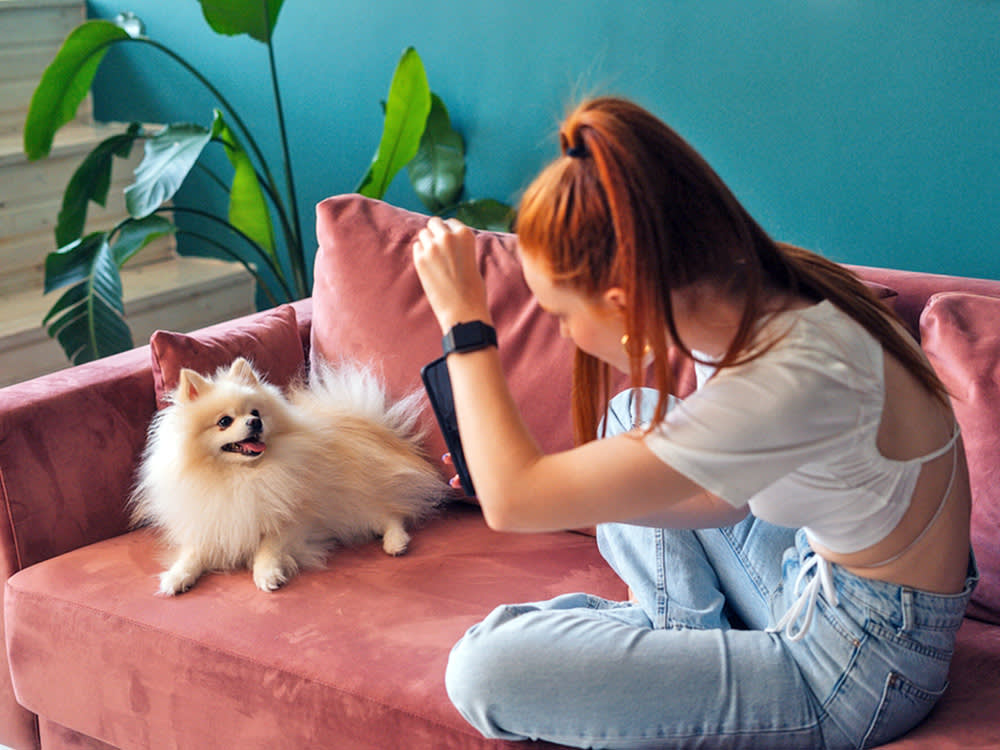
Look at that face. That fur. That absurd little head-tilt. Of course the internet is going to lose it over your pet. And once the internet does, the brand deals and the very satisfying resignation letter to your boss surely follow.
Slow down. The fantasy skips the part that actually determines whether a pet account goes anywhere, and it is not the part you think. The people who build genuine followings, the ones agencies and brands actually want to work with, are almost never the ones white-knuckling their view counts. They are optimizing for something else entirely. Here is what that something is, and the one rule that matters more than all the rest.
Stop watching the numbers
This sounds backward for a piece about growing a following, so start here: chasing virality is the fastest way to make bad content. Viral fame is unpredictable and usually short-lived, and pouring your energy into gaming it starves the thing that actually compounds, which is a voice people come back for.
The counterintuitive truth of the follower game is that a small, engaged audience beats a big, hollow one every time, and the people who buy their way to a big number learn this the hard way. Marketers and audiences have gotten sharp at spotting a high follower count paired with dead engagement, and it reads as exactly what it is. Colleen Wilson, who founded the pet-influencer agency Pets on Q, points out that quality of audience now routinely outweighs raw size in who gets picked for a campaign. She has watched a brand choose a creator with a fraction of another’s followers, at the same price, purely because the smaller account’s audience was real and paying attention.
So when you are starting out, put the analytics down. A video that gets 100 views can feel like failure, but 100 people is a packed room, more people than you would ever address in person without your hands shaking. Keep that in perspective and keep making things. The audience arrives for people who stay in the game, not for people who quit after a slow week.
Be specific, and be yourself
The advice to “be authentic” is a cliché until you realize what it actually instructs you to do: make the content you genuinely want to see. If something about your pet makes you laugh, or scratches some strange private itch, make that. The assumption that you are the only person who would enjoy it is almost always wrong. Human taste is vast enough that your particular flavor of weird has an audience somewhere, and your job is to keep serving it until they find you.
That is also why narrowing down helps rather than hurts. It feels risky to get specific, but a tight niche tends to travel further than a broad one, because specificity and authenticity are basically the same muscle. Wilson’s framing is simple: if you and your pet actually enjoy something, hiking, dressing up, elaborate photo shoots, whatever it is, build around that. Lean into whatever makes your animal a little less ordinary, a funny vocalization, a crooked tail, a ratty beloved toy they haul everywhere. The quirk is not a bug in your content. It is the content.
Keep in mind that platforms behave differently. Something that flies on TikTok may land flat on Instagram, and an audience that is loud in one place may be quiet in another. Success by one metric in one spot does not have to translate everywhere, and it is fine when it doesn’t. Do what works for you and let the rest go.
Show up on a schedule you can actually keep
Consistency is the least glamorous tip and one of the most important. You do not have to post daily. You do have to be reliable. A steady trickle of content keeps an audience engaged in a way that silence broken by an occasional avalanche never will. Going dark for weeks and then dumping a dozen posts to compensate is the content equivalent of crash dieting, and it works about as well.
Pick a rhythm you can sustain and hold to it. Twice a week is a real schedule. So is Monday-Wednesday-Friday. Start slower than you think you should; you can always add. Many creators batch their filming and schedule posts out over the following days, which frees them to step back without going quiet and leaves room to jump on a trend when a good one appears.
The line you don’t cross
Here is the rule that outranks every growth tactic in this piece: never do anything that hurts, scares, or degrades your pet for content. Not for a view, not for a trend, not for anything.
The pet-content world has an ugly underbelly, and the people who work in it professionally will tell you so plainly. There are creators who push animals into things the animals clearly hate, and there have been genuinely cruel trends, staging fake kidnappings, spraying cats in the face and filming the reaction, shrieking at pets to startle them, all played for laughs. It is gross, and it is a betrayal.
Your pet did not sign up for a brand. They trust you, completely and without conditions, and that trust is the whole relationship. A cat who is enjoying the process, rewarded with something they actually love, high-value treats like a lickable Churu tube, is a willing collaborator. A cat being forced is a victim, and no amount of engagement makes that worth it. If your animal is not into it, you stop. Full stop. If you cannot commit to that, you should not be building an account on their back in the first place.
The unglamorous business of it
A few practical truths before you draft that resignation letter.
Gear matters more than beginners expect. A smartphone is completely fine to start, but as you grow and start eyeing brand partnerships, you will need to deliver something more polished, which means investing in lighting and equipment over time. Serious creators end up with a real production setup; it is not vanity, it is the cost of looking professional.
And it is a job, a big one. The fantasy is that you post and it happens. The reality, as Wilson describes it, is relentless: the engaging, the community-building, the constant feeding of the machine. A quick meme might take fifteen minutes, but a polished video can eat hours, especially when your star has, as one creator affectionately put it, a pea brain, and landing a single usable five-second clip can eat an hour of patience and treats. Then comes the editing, the music, the graphics. Plenty of full-time creators describe it as two jobs stacked on top of each other, and many of them guard their weekends fiercely just to unplug from their own accounts.
That is not meant to talk you out of it. It is meant to reset the goal. Because at the end of all of it, the likes and the follows and the maybe-someday brand deals are gravy. What you actually have is a pile of hours spent paying close, delighted attention to your best friend, and a record of the moments that made you laugh. Do that well, and whether your pet ends up with a hundred followers or a million, you have already gotten the good part.
Sasha Ford is a certified cat behaviour consultant who has worked with shelters, catteries, and private clients across the country. They review all feline behaviour content at The Pet Times, with expertise in multi-cat households, indoor enrichment, and stress-related disorders.
Meet our experts ↗Keep reading
 LivingAnyone Can Feed a Cat. Great Pet Sitters Do These Four ThingsNina Vasquez · 6 min
 LivingThe Best Pet Portraits Are the Least Dignified OnesSasha Ford · 4 min
 LivingLibra Season Is the Fairest Time to Be a Pet at the Dog ParkSasha Ford · 5 min
 LivingThey Scheduled a Date Just So the Cat Could Meet the DogLeila Torres · 8 min
 LivingShoot Your Pet Like a Cover Star: 7 Phone-Portrait Rules From a ProSasha Ford · 4 min
 LivingThe Internet's Coziest Corner Is Run by One Woman and a Lot of SheepJordan Ellis · 4 min