


You're Probably Washing Your Dog Too Much
Everyone asks how often to bathe a dog and gets an unhelpful 'it depends.' The honest answer is coat-driven, and the biggest mistake isn't too few baths, it's too many. Plus the groomer's warning most owners never hear.

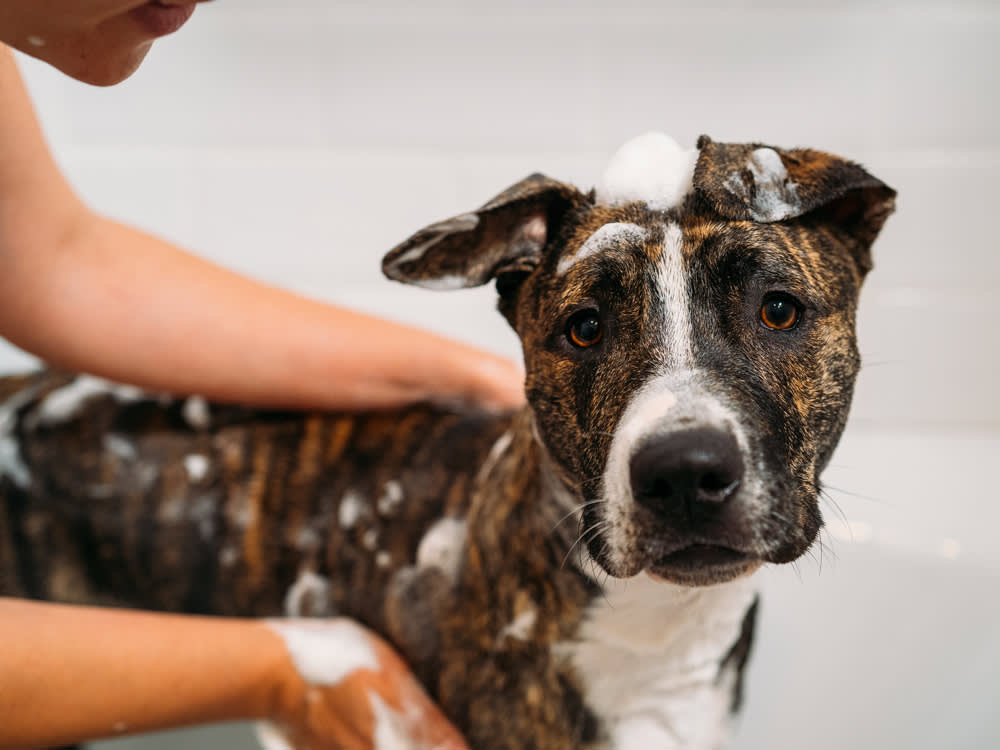
Owners have puzzled over the same thing since dogs first moved indoors: how many days should really pass between baths? The standard answer, a breezy “it depends,” is deeply unsatisfying. So let us give the real one. It does depend, mostly on your dog’s coat, but underneath that is a truth nobody leads with: for most dogs, the common mistake is not bathing too rarely. It is bathing too often. Over-washing is how a perfectly healthy dog ends up itchy, flaky, and miserable, and it is entirely avoidable.
Here is how to actually think about it, plus a warning about the grooming table that a lot of owners have never been told.
Start with the coat, not the calendar
There is no universal number of days between baths, because a silky longhair and a slick shorthair are working with completely different coats. Coat type is the first thing to sort out.
According to the American Kennel Club, long-haired and curly-haired breeds generally need more regular bathing to keep their coats from matting, roughly every four to six weeks, with brushing between baths to keep the coat in order. Hairless breeds like the Chinese Crested are an exception on the other end, often needing weekly baths to care for their exposed skin. And thick or double-coated breeds, such as Labrador Retrievers, are the ones where you can genuinely overdo it, because too-frequent bathing strips the oils those coats depend on.
Lifestyle then adjusts the baseline. A dog who regularly rolls in mud will need more baths, though a short-coated dog can often just be wiped down at home between real washes. A dog who mostly lounges indoors can stretch the interval further. Puppies benefit from being introduced to the process gently and early so they grow up comfortable with it. And a dog with a diagnosed skin condition may need frequent medicated baths on a completely different schedule, in which case your vet’s instructions override every general rule here.
Why more baths can backfire
The reason over-bathing matters is not just wasted effort. A dog’s skin and coat rely on natural oils to stay healthy and to keep the skin barrier working. Wash too frequently, or with a shampoo not formulated for dogs, and you strip those oils away faster than the skin can replace them. The result is skin that turns itchy, dry, flaky, and sensitive, sometimes the very “my dog is so itchy” problem the owner was trying to bathe away. Human shampoo is a common culprit here, since it is balanced for human skin, not canine. When you are unsure whether it is bath day, the safer default is usually to wait.
The anal-gland warning worth knowing
Here is the piece most owners never hear, and it is worth stating plainly: you should not have your dog’s anal glands routinely expressed at the groomer. It used to be a common add-on, but routinely squeezing those glands is now considered outdated and can actually damage the surrounding muscle over time, creating problems rather than preventing them. Dogs generally empty these glands naturally when they poop. And a scooting dog does not automatically have an anal-gland issue; sometimes it is simply an itchy rear. If scooting is persistent, that is a conversation for your vet, not a standing order at the grooming salon.
“The single most common skin case I see from over-eager bathing is a dog whose barrier has been scrubbed raw,” says Dr. Nina Kohl. “Owners are trying to help, and instead they have stripped the coat’s own protection. For most healthy dogs, bathing less often, with a product made for dogs, fixes the itch they were bathing to solve. And please skip the routine anal-gland squeeze. Leave that alone unless there is a real reason.”
Doing it right at home
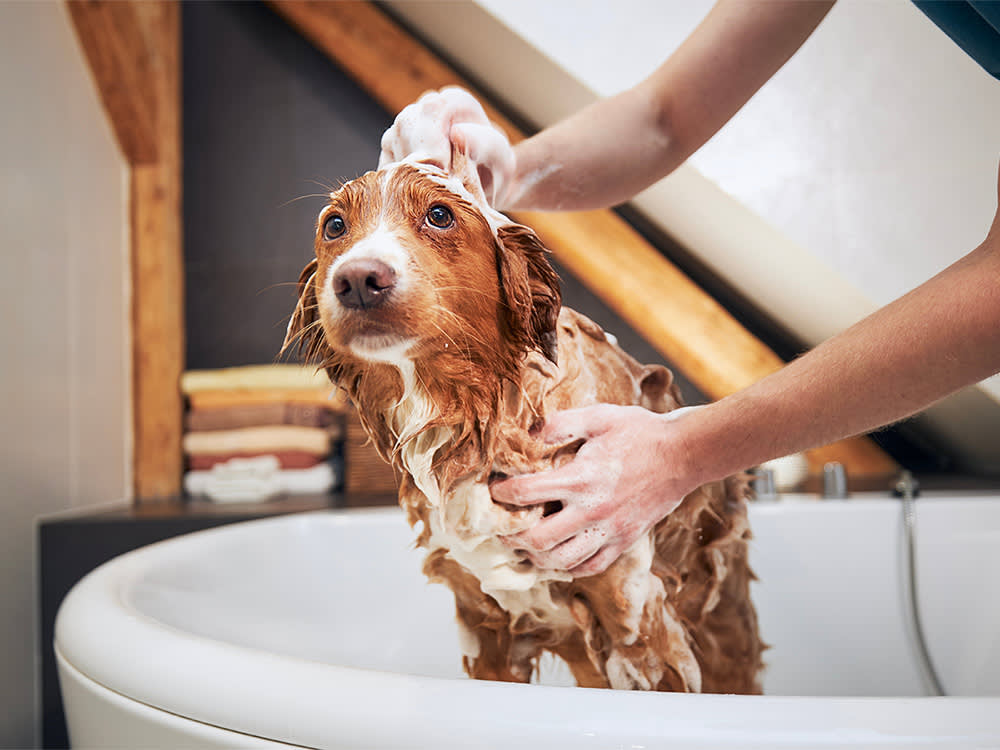
Plenty of bathing can happen in your own tub, and a few habits make it go well. Condition after shampooing, since it helps protect the coat. Get a good slicker brush whose long, densely set metal pins reach down into the undercoat and lift out mats. And mind the order of operations: brush first with the slicker, then bathe, then condition, then let your dog dry fully before brushing again.
That last point is not fussy, it is protective. Never brush a wet coat, because a slicker brush’s pins can scratch skin when there is no dry buffer between the pins and the skin. Once your dog is dry, brushing is safe and effective again. You can leave the occasional specialized touch-up, like a careful ear cleaning or a nail trim, to a professional if you are not comfortable doing it yourself.
The simplest rule of all
For all the coat-type nuance, day-to-day dog cleanliness is not complicated. If your dog goes to the park and comes home caked in mud, they get a bath, both for their comfort and your furniture’s sake. If they smell or look dirty, wash them. If they do not, you can usually wait. Trust your senses, respect the coat, and err toward fewer baths rather than more.
References
- “How Often Should You Bathe Your Dog?” American Kennel Club.
- “Anal Sac Disease in Dogs.” Merck Veterinary Manual.
Common questions
Can I bathe my dog too much?
Yes. Washing too often, or with a product not made for dogs, can leave the skin itchy, flaky, dry, and irritated because it strips the natural oils that protect the coat and skin barrier. When in doubt, bathe less rather than more.
What if my dog hates baths?
Go slow and make it rewarding. Treats, a calm voice, a non-slip mat, and an extendable shower hose all help, and keeping early bath experiences short and positive builds tolerance over time.
Not a substitute for your vet. Our guidance is educational. For urgent symptoms, contact a vet or emergency clinic right away. Editorial standards
Sasha Ford is a certified cat behaviour consultant who has worked with shelters, catteries, and private clients across the country. They review all feline behaviour content at The Pet Times, with expertise in multi-cat households, indoor enrichment, and stress-related disorders.
Meet our experts ↗Keep reading
 Product PicksWhy Your Dog Still Smells After a Bath, and the Shampoos That Fix ItDr. Lena Park · 8 min
 Product PicksMost 'Eco' Dog Grooming Is Marketing. These 9 Actually DeliverSasha Ford · 7 min
 Product PicksThe Puppy Shampoo Paradox: "Gentle" and "Scented" Don't Belong on One BottleDr. Amara Solis · 12 min
 Health & WellnessYou'll Never Stop the Shedding. You Can Stop Finding the Hair.Sasha Ford · 7 min
 Product PicksYour Dog Doesn't Want a Signature Scent. Here's When DedCool's Perfume Is Fine Anyway.Sasha Ford · 4 min
 Health & WellnessThe Best-Selling Dog Brush in America Is the Wrong One for Your DogSasha Ford · 7 min