


Why Your Dog Still Smells After a Bath, and the Shampoos That Fix It
Odor that comes back fast isn't a shampoo failure, it's usually a skin-barrier or pH problem, and over-bathing makes it worse. Here's the science of canine odor and five deodorizing shampoos that work with your dog's skin instead of against it.

Affiliate disclosure. This article contains affiliate links. We may earn a small commission if you buy through a link, at no extra cost to you. How we handle recommendations.
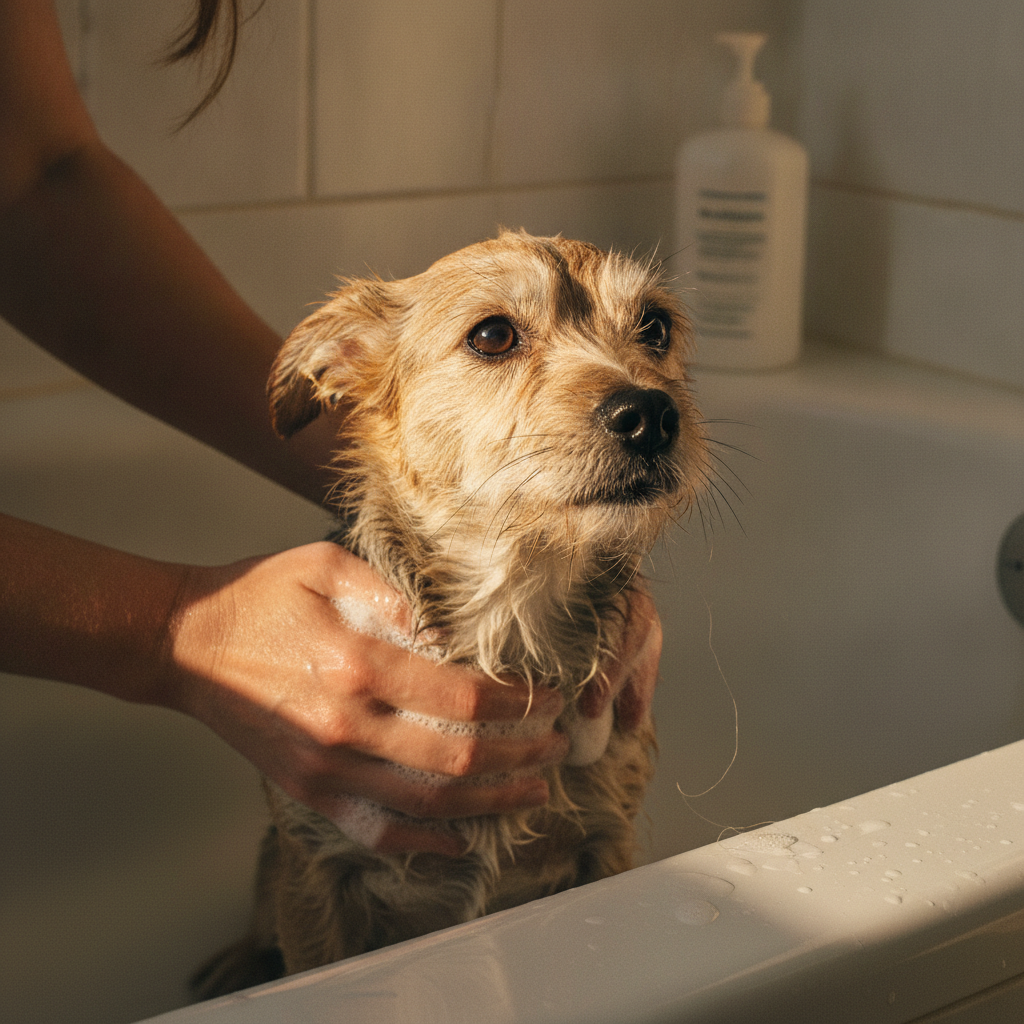
Here is a frustration almost every dog owner knows: you bathe the dog, the house smells like a meadow for a glorious day, and then the funk creeps back. The instinct is to blame the shampoo and buy a stronger one. Usually that is the wrong move. Odor that returns quickly is rarely a shampoo failure. It is a signal, either that you are washing too often, that the smell is coming from somewhere a shampoo can’t reach, or that your dog’s skin chemistry is working against you.
Deodorizing shampoos are useful, and the good ones below genuinely neutralize odor instead of burying it under perfume. But a shampoo can only do its job if you understand what it is actually fixing. So before the picks, the part most roundups skip: why your dog smells, and why the answer is almost never “scrub harder.”
The smell is usually not where you think
A clean, healthy dog has a mild, neutral smell. Strong or persistent odor usually starts in one of a handful of places, and most of them are out of a shampoo’s reach.
The coat itself traps environmental smells, wet-dog mustiness, mud, whatever they rolled in, and that is exactly what a deodorizing shampoo handles well. But chronic odor more often comes from the ears (a yeasty, sweetish smell), the skin folds of wrinkly breeds, the mouth (dental disease has a distinct reek), or the anal glands (a sharp, fishy odor a bath won’t touch). If your freshly washed dog smells within a day, the shampoo isn’t failing. The source is somewhere a bottle of shampoo never reaches, and that is a vet conversation, not a shopping one.
The acid mantle: why over-bathing makes odor worse
This is the piece that changes how you should bathe. Your dog’s skin is protected by a thin film called the acid mantle, which keeps bacteria and yeast in check. On dogs it sits at roughly pH 6.2 to 7.5, noticeably more neutral than human skin, which runs about pH 5.2 to 6.2. That difference is the whole reason you cannot use your own shampoo on your dog: a human formula is tuned to a more acidic mantle and disrupts a dog’s on contact.
It is also why bathing too often makes a smelly dog smellier. Every wash temporarily strips the mantle. For the next 24 to 48 hours the skin is under-protected, and it responds by ramping up oil production, which feeds the very bacteria and yeast that produce odor. Bathe a dog weekly to fight a smell and you can lock yourself into a cycle: strip, rebound, strip, rebound. For most dogs, once every two to four weeks is plenty. The goal of a good deodorizing shampoo isn’t to wash more, it is to clean effectively while leaving that protective layer as intact as possible.
“Owners come in convinced they need a more powerful shampoo, when the fix is usually to bathe less and protect the skin barrier more,” says Dr. Amara Solis, a veterinary dermatology consultant for The Pet Times. “A pH-appropriate, soap-free formula used every few weeks beats a harsh one used every Sunday, every time.”
Match the wash to the problem
Not all dog smells are the same problem, and they don’t take the same solution.
Everyday funk (oily coat, wet-dog smell, general dirt) is the sweet spot for the deodorizing shampoos below. Pick one that neutralizes odor at the source and is gentle enough for routine use.
Skunk is a chemistry problem, not a dirt problem, and shampoo alone will not fix it (more on that next).
Allergy- or yeast-driven odor (itchy, greasy, with a distinctive smell that returns fast) needs a moisturizing or medicated approach and often a vet. A drying deodorizer can make it worse.
Odor from ears, mouth, folds, or glands is medical. No shampoo on this list, or any list, will solve it. See your vet.
The skunk exception: read this before you reach for shampoo
If your dog meets a skunk, skip the deodorizing shampoo entirely at first. Skunk spray gets its staying power from sulfur compounds called thiols, which don’t dissolve in water and won’t break down under ordinary shampoo, which is exactly why the smell laughs at a normal bath, and why tomato juice (an old myth) does nothing: there isn’t enough of the active compound to neutralize the thiols.
The only thing that works is changing the thiols chemically. Mix one quart of 3 percent hydrogen peroxide, a quarter cup of baking soda, and one to two teaspoons of dish soap in an open container, the peroxide oxidizes the thiols, the baking soda neutralizes and absorbs, and the soap cuts the oil so the mix can reach the odor. Use it immediately (it can’t be stored, it fizzes and loses potency), work it into the dry coat, keep it well away from the eyes, leave it about five minutes, and rinse thoroughly. Then follow with one of the gentle dog shampoos below to restore the coat. Spot-test light-colored dogs first, since peroxide can lighten fur.
The five deodorizing shampoos worth buying
For ordinary, everyday odor, these five neutralize smell rather than masking it, and each is gentle enough to respect the acid mantle when used every few weeks.
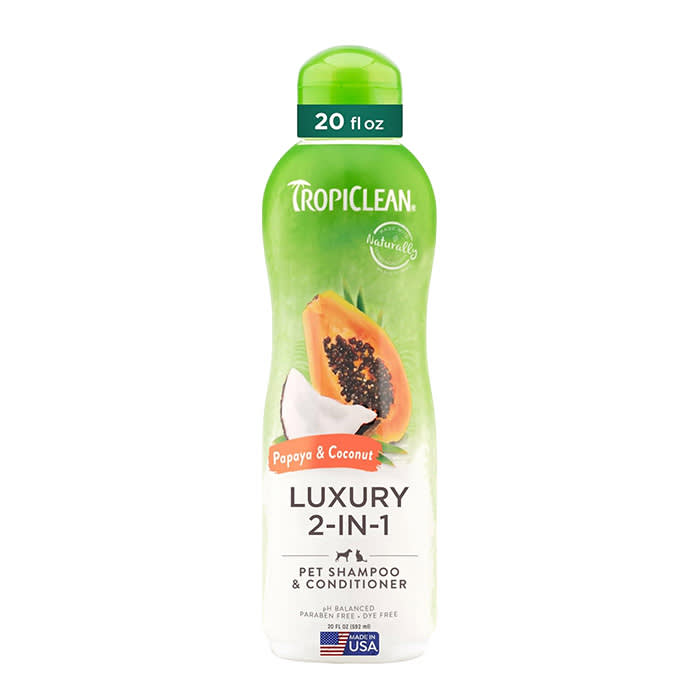
TropiClean Deodorizing Shampoo
TropiClean’s deodorizing formula removes odor at the source using natural ingredients, aloe, papaya, kiwi, and coconut, that lift dirt and neutralize odor molecules instead of perfuming over them. It is soap-free, safe alongside flea-and-tick treatments, and leaves a light, clean scent rather than a heavy fragrance. It works especially well on long-haired and double-coated dogs.
The limits are honest ones: it is a gentle formula, so very stubborn odors (or skunk) may need a second pass or the peroxide treatment above, and the fresh scent fades faster than synthetic-fragrance shampoos, which is the point. Best for routine, everyday freshening on most coats.
“TropiClean lathered up nicely on our Sheltie, rinsed easily, no heavy perfume, just clean. Coat dried soft and fluffy.” —Amazon reviewer
Arm & Hammer Super Deodorizing Shampoo
Arm & Hammer’s dog shampoo leans on baking soda, the same odor-neutralizing chemistry it is famous for, to break down odor-causing acids, while aloe vera and cucumber extract calm the skin. It is sulfate-free, pH-balanced for dogs and puppies, budget-friendly, and easy to find in stores.
A couple of dogs find the initial scent strong, and very dry or sensitive skin may want a gentler option, but for strong deodorizing on a budget it is hard to beat. Thick coats need a thorough rinse. Best for owners who want real odor control without spending much.
“The bottle size is amazing for the price. My dog’s fur felt soft and looked shiny, and I noticed less itching and dryness.” —Amazon reviewer
DOUXO S3 PYO Skin & Coat
DOUXO’s Skin & Coat line takes a dermatological approach, formulated to support the skin’s microbiome while it cleans. It targets the excess sebum and buildup that trap odor and rebalances moisture, so it tackles smell closer to the source for oily or allergy-prone dogs without stripping the barrier.
It costs more than over-the-counter options, isn’t as widely stocked, and needs consistent use to show its benefit, but for sensitive, odor-prone skin it is the gentlest pick here. Best for dogs whose odor rides along with greasy or reactive skin.
“My lab smells so much better and it was easy on her skin and coat. It’s never looked better.” —Amazon reviewer
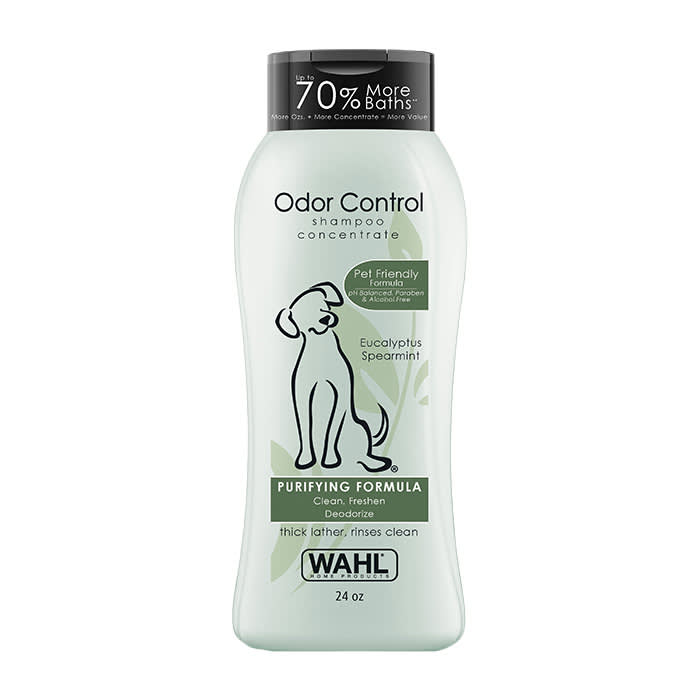
Wahl Odor-Control Shampoo
Wahl’s plant-based formula uses eucalyptus and spearmint to neutralize odor, and it is concentrated, so a small amount lathers a lot of dog, which makes it economical for households washing several dogs or bathing often. It is PEG-80-free, alcohol-free, paraben-free, and rinses clean without residue.
The essential oils can irritate especially sensitive dogs, and the strong mint scent is not for everyone, patch-test a touchy dog first. Thick coats need extra rinsing. Best for multi-dog homes that want value and easy rinse-out.
“Gentle yet effective, leaves my pet’s fur and skin clean and soft. Lathers nicely and feels like good value.” —Amazon reviewer
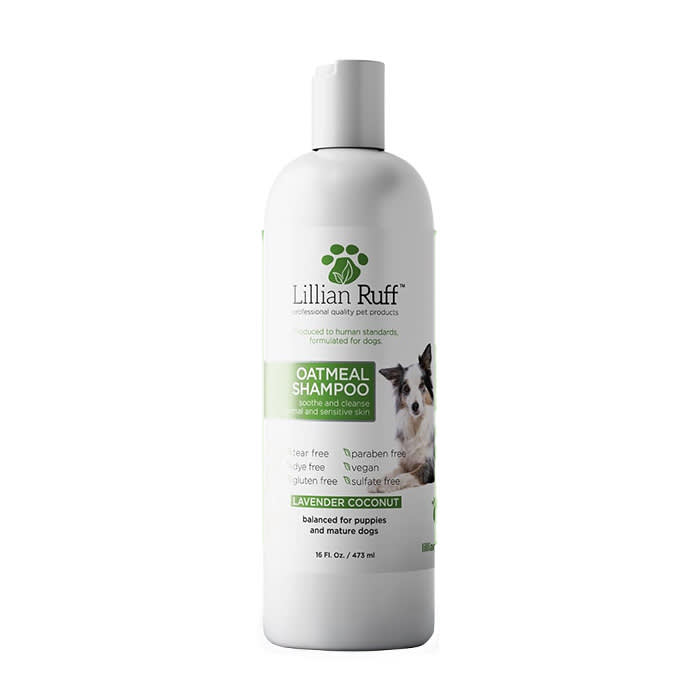
Lillian Ruff Deodorizing Oatmeal Shampoo
Lillian Ruff’s oatmeal formula pairs colloidal oatmeal with lavender and coconut oils to calm skin and hold moisture while neutralizing odor. Its gentle surfactants clean without stripping, and it doubles as a light conditioner, so coats come out soft and easier to brush, useful for itchy or flaky dogs.
It is pricier than store brands, can leave residue if under-rinsed, and is not meant for medical odor like a yeast infection (that is a vet’s job). Best for dry, sensitive, or itch-prone skin that still needs deodorizing.
“My dog’s hot spots faded, the itching stopped, and her coat came out shiny and soft, smelling great. Worth the price.” —Amazon reviewer
When to stop bathing and call the vet
Reach for the phone, not another bottle, if any of these show up: odor that returns within a day or two of a proper bath, a yeasty or sour smell from the ears, a fishy smell that won’t wash off (likely anal glands), bad breath that signals dental disease, or red, greasy, itchy, or smelly skin that keeps coming back. Those are medical odors, and the kindest, fastest fix is a diagnosis. The right shampoo keeps a healthy dog fresh. It was never meant to cover for a problem under the skin.
References
- Antiseptol. “The pH Factor: Insights for Human and Pet Shampoo Formulation.” antiseptol.com
- Vet Help Direct. “Why Shouldn’t I Use a Human Shampoo on My Dog?” vethelpdirect.com
- Penn State Extension. “Sprayed by a Skunk.” extension.psu.edu
- The Nature Conservancy. “How to Remove Skunk Scent (And No, It’s Not Tomato Juice).” blog.nature.org
Common questions
Why does my dog smell again so soon after a bath?
Two common reasons. First, you may be over-bathing: washing too often strips the skin's protective acid mantle, and in the 24 to 48 hours that follow, the skin can produce more oil and odor to compensate. Second, the smell may not be coming from the coat at all. Persistent odor often traces to the ears, skin folds, mouth, or anal glands, and no shampoo reaches those. If a fresh-bathed dog smells within a day or two, look past the shampoo.
Why can't I use human shampoo on my dog?
Skin pH. A dog's skin sits at roughly pH 6.2 to 7.5, more neutral than human skin at about 5.2 to 6.2. Human shampoo is formulated for the more acidic human acid mantle, so on a dog it disrupts that protective film, leaving skin drier, itchier, and more prone to the bacterial and yeast overgrowth that actually causes odor. Use a pH-appropriate dog shampoo, never a human one.
How often should I bathe a smelly dog?
For most dogs, once every two to four weeks at most, unless a vet directs otherwise for a skin condition. More frequent bathing usually backfires by stripping natural oils and triggering rebound odor. Between baths, spot-clean paws and folds, wipe the coat with a damp cloth, and keep ears and bedding clean, that does more for everyday freshness than another full wash.
Will a deodorizing shampoo get rid of skunk smell?
No. Skunk odor comes from sulfur compounds called thiols that don't dissolve in water and aren't broken down by ordinary shampoo. You have to chemically change them with an oxidizing mix: one quart of 3 percent hydrogen peroxide, a quarter cup of baking soda, and one to two teaspoons of dish soap, mixed fresh, worked in for about five minutes, then rinsed. Follow with a gentle dog shampoo. Tomato juice does not work.
Dr. Park is a board-certified emergency and critical care specialist. She reviews our health and safety content for clinical accuracy and contributes guides on recognising urgent conditions. Her focus is helping owners act quickly and correctly when it matters most.
Meet our experts ↗Keep reading
 Product PicksThe At-Home Grooming Kit a Celebrity Dog Groomer Actually UsesSasha Ford · 5 min
 Health & WellnessThe Best-Selling Dog Brush in America Is the Wrong One for Your DogSasha Ford · 7 min
 Product PicksPick a Golden Retriever Shampoo by What Their Skin Is Actually DoingDr. Nina Kohl · 9 min
 Health & WellnessYou'll Never Stop the Shedding. You Can Stop Finding the Hair.Sasha Ford · 7 min
 Product PicksYour Dog Doesn't Want a Signature Scent. Here's When DedCool's Perfume Is Fine Anyway.Sasha Ford · 4 min
 Health & WellnessYou're Probably Washing Your Dog Too MuchSasha Ford · 6 min