


Your Dog Sleeps 14 Hours a Day. That's Not Lazy, It's Wiring.
A dog snoozing half the day is usually doing exactly what a dog should. Here's how much sleep is normal by age, and the changes that actually warrant a vet visit.

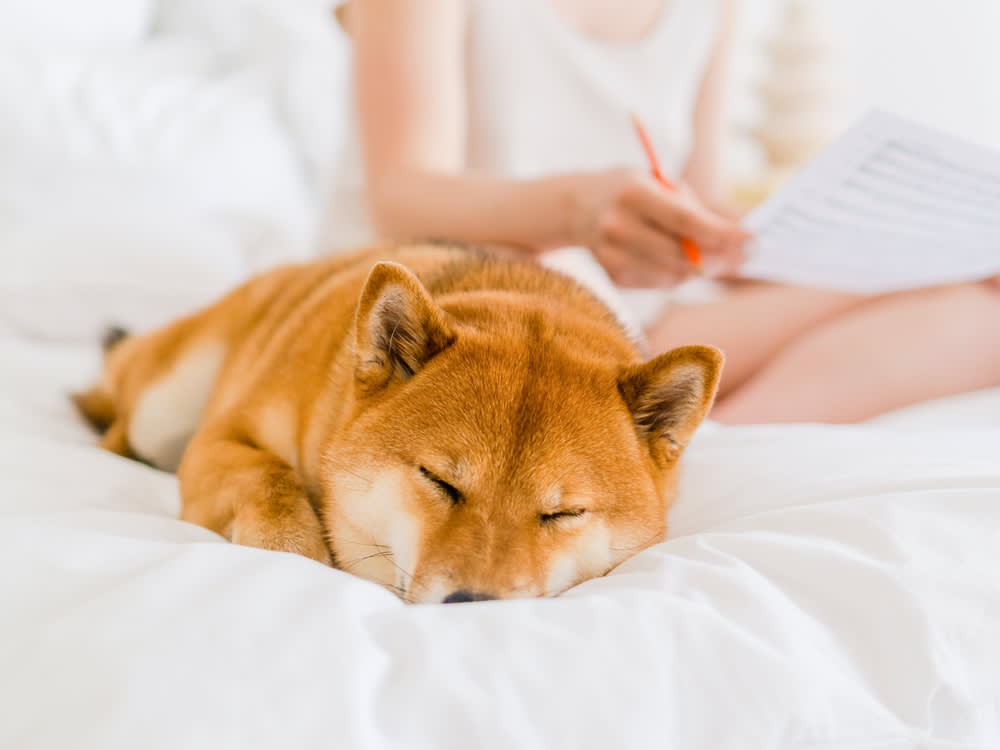
If you’ve ever felt a flicker of guilt watching your dog sleep through another perfectly good afternoon, you can let it go. A dog who spends a big chunk of the day asleep is, in the vast majority of cases, doing precisely what a healthy dog is built to do. The number that surprises most first-time dog parents is just how high the healthy total runs, and the more useful skill isn’t counting hours, it’s knowing which changes in sleep are normal and which ones are a flag.
So let’s put the reassuring number first, then get into the parts that actually matter: how sleep shifts across a dog’s life, why dogs need so much of it, and the specific signs that turn “my dog naps a lot” into “I should call the vet.”
The short answer, by age
The average adult dog sleeps somewhere between 12 and 14 hours a day, blending overnight sleep with naps scattered through the daylight hours. Set against a human schedule that can look almost comically indulgent, but for a dog it’s baseline healthy.
Age moves that number in predictable ways:
- Puppies run the highest, sleeping roughly 18 to 20 hours a day up until about 12 weeks, because growing bodies and rapidly wiring brains burn through energy fast.
- Adults settle into that 12-to-14-hour band, and most adult dogs will spend at least half the day asleep in some form.
- Seniors climb back up. As body and mind tire more quickly, older dogs sleep more, and, interestingly, the extra sleep comes from taking more naps rather than longer ones.
Size, breed, activity level, and overall health all nudge the total, so there’s a healthy range rather than a single correct figure. If your dog is sleeping dramatically more or less than usual, that’s the cue to talk to your vet, because a real shift can point to an underlying condition.
How sleep changes as dogs age, per the research
A study on canine sleep patterns looked at how age and feeding frequency shaped the way dogs actually sleep. Researchers grouped dogs into three age bands, roughly 1.5 to 4.5 years, 7 to 9 years, and 11 to 14 years, and fed them either once or twice a day.
Two findings stand out. First, the older and middle-aged groups clocked more daytime rest than the young adults, but not because any single nap ran longer. They simply took more of them. At night, the older dogs also logged more sleep overall, because they turned in with a longer continuous stretch, woke up later, and roused fewer times before morning.
Feeding schedule mattered too, across every age. Dogs fed twice daily took fewer daytime naps, but those naps lasted longer. They also fell asleep earlier at night, though they woke earlier as well, trimming their total overnight sleep. It’s a neat illustration of how much a dog’s routine, not just their age, shapes their rest.
Why dogs need so much sleep in the first place
Like us, dogs sleep to stay healthy, but the shape of their sleep is different from ours, and that difference is the reason the totals run high.
Human sleep is tidy: awake through the day, one long consolidated block at night, cycling through REM and non-REM stages that repair tissue and shore up the immune system. During REM specifically, brain activity ramps up in ways that support learning, memory, and the neural housekeeping the body relies on to function well.
Dogs run a more fragmented pattern, short naps sprinkled across the day plus a long overnight sleep, and those stretches are punctuated by frequent wake-ups to scan the environment for anything new or worth reacting to. Dogs also drop into REM faster than we do, which is why you’ll catch them twitching, paddling, and “running” mid-dream. One theory holds that this near-constant state of light readiness costs them deep, restorative REM time, so they compensate by simply sleeping more overall. In other words, a dog isn’t oversleeping. They’re making up for rest that keeps getting interrupted by their own vigilance.
When a lot of sleep becomes a warning sign
Here’s the distinction that matters most, and it’s about change, not quantity. Your dog spending half the day asleep is normal. Your dog going from a typical 12-to-14-hour sleeper to a 20-hour lump, seemingly overnight, is not.
Call your vet when the change lands suddenly rather than creeping in, and especially when your dog’s waking hours shift alongside it, if any of these show up:
- Your dog is difficult to wake, or seems groggy and disoriented when they do
- They won’t get up for things they normally love, like meals, walks, or play
- The heavy sleeping arrives suddenly rather than creeping in gradually over months
Many illnesses drain a dog’s energy, and excessive sleep is one of the ways that shows up. A healthy dog should be easy to rouse and genuinely eager to do their favorite things once they’re up. When that changes fast, the sleep is a symptom, and it’s worth ruling out a medical cause.
Owners get anxious about the number of hours, but I care far more about the trend line. A dog who’s always been a champion napper and still bounces up for dinner is fine. A dog whose sleep changed in a week, or who won’t wake for a walk they used to love, is the one I want to see.
The other problem: a dog who can’t sleep
Not every sleep issue is too much rest. Some dogs struggle to get enough, and the causes are worth knowing, because a chronically under-slept dog can become whiny, sluggish, irritable, or uninterested in play. An occasional cranky, off day is normal. A persistent pattern is not.
Pain, illness, or injury. Arthritis is a common culprit, since an achy dog can’t get comfortable enough to stay still. Prescribed pain relief, gentle bodywork, or better bedding can help. Sleep apnea, seen more often in flat-faced and overweight dogs, jolts a dog awake when the airway blocks, and repeated interruptions leave them perpetually tired. A vet should rule out medical causes before you look anywhere else.
Too little exercise. Under-exercised dogs bank up energy and frustration with nowhere to put it, which breeds restlessness, agitation, and trouble winding down. Matching exercise to your dog’s age and energy level is one of the simplest levers you have. A properly tired dog is a sleeping dog.
Anxiety. This is a leading driver of canine sleep trouble, and the triggers are wide-ranging: new surroundings, separation from a person or animal companion, changes in the household, fear, loud sounds like fireworks or thunderstorms, forced socialization, or past trauma. A dog left alone during the day, precisely when they’d normally nap, may instead pace, whine, and watch the window as stress hormones climb, never fully relaxing. If anxiety is at the root, a qualified trainer or behaviorist can help you build a plan.
Severe, ongoing sleep disruption can escalate into more serious signs, excessive whining, disorientation during simple tasks, edginess that tips into aggression, or withdrawing and disengaging from things they used to enjoy. Whether the change comes on suddenly or builds slowly, anything that worries you deserves a conversation with your vet to rule out an underlying medical issue.
What about sleep aids?
If your dog is genuinely struggling to sleep, talk to your vet before reaching for any sleep aid. The reason is simple: a supplement doesn’t fix the actual problem. A dog who’s up at night from pain, or from a sudden need to pee, needs the underlying issue addressed, not a sedative layered on top. Older dogs can develop neurological or cognitive changes that scramble their sleep, and sorting those out often takes some trial and error with your vet’s guidance, whether the answer ends up being a prescription or an over-the-counter option they recommend.
The bottom line is genuinely comforting: a dog who naps through the day and sleeps soundly at night is usually a dog who’s well-exercised, well-fed, and completely at ease in their home. That much sleep isn’t a sign something’s wrong. It’s often the clearest sign everything’s right.
References
- Adams, G. J., and Johnson, K. G. “The Cyclic Interaction between Daytime Behavior and the Sleep Behavior of Laboratory Dogs.” Applied Animal Behaviour Science. https://www.sciencedirect.com/science/article/abs/pii/016815919390090H
- Zanghi, B. M., et al. “Characterizing Behavioral Sleep Using Actigraphy in Adult Dogs of Various Ages Fed Once or Twice Daily.” Journal of Veterinary Behavior, 2013. https://www.sciencedirect.com/science/article/abs/pii/S1558787813000038
- Bódizs, R., et al. “Sleep in the dog: comparative, behavioral and translational relevance.” Current Opinion in Behavioral Sciences, 2020. https://www.sciencedirect.com/science/article/abs/pii/S2352154620300668
Common questions
Is it OK if my dog sleeps all day?
Generally yes. If your dog is alert, active, eating normally, and eager for walks and meals when awake, a lot of daytime sleep is healthy. The concern is an abrupt change, not the raw hour count.
When should I worry about my dog sleeping too much?
See your vet if the change is sudden, if your dog is hard to wake, or if they won't get up for things they normally love, like food or walks. Those can signal an underlying illness rather than ordinary rest.
Can I help my dog sleep on a better schedule?
Yes. Consistent times for meals, walks, and play help regulate a dog's clock, and a calm, comfortable, low-stress sleeping spot supports better quality rest.
Not a substitute for your vet. Our guidance is educational. For urgent symptoms, contact a vet or emergency clinic right away. Editorial standards
Dr. Park is a board-certified emergency and critical care specialist. She reviews our health and safety content for clinical accuracy and contributes guides on recognising urgent conditions. Her focus is helping owners act quickly and correctly when it matters most.
Meet our experts ↗Keep reading
 First DaysStop Counting Your Puppy's Sleep Hours. Watch for the Change.Dr. Amara Solis · 8 min
 Health & WellnessYour 'Hyper' Dog Might Just Be Exhausted. 7 Signs You're Reading It Wrong.Dr. Lena Park · 6 min
 Health & WellnessYour Old Dog Staring at the Wall Is Veterinary Medicine's Most Missed DiagnosisDr. Nina Kohl · 8 min
 Health & WellnessYour Dog Owns the Dark. Here's the Price They Paid for It.Dr. Ravi Mehta · 8 min
 Health & WellnessYour Dog Becomes an Adult Three Separate TimesDr. Ravi Mehta · 9 min
 Health & WellnessA Longer Walk Won't Fix This. 7 Signs Your Dog Is Under-Exercised.Dr. Amara Solis · 9 min