


Eco Dog Toys Are the Last Holdout. These $16 Handmade Ones Show Why.
You can buy a greener leash, bowl, or bed without much trouble. Toys are where sustainable pet shopping still falls apart, and a tiny Brooklyn maker explains the math.

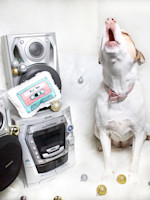
Trying to shop sustainably as a dog owner is an exercise in humility. Dogs need a lot of stuff, and if yours is a chewer, a puller, or a serial destroyer, you go through that stuff fast. For most categories, the eco-conscious version has finally caught up. You can find a recycled-material leash, a non-plastic bowl, a bed made from responsible fibers, and increasingly you can find them at a price that doesn’t require a second mortgage. There’s one glaring exception, and it’s the category dogs care about most: toys.
For reasons that are hard to defend, dog toys have stayed expensive, plastic-heavy, and, frankly, ugly. You’re buying a literal chew object and somehow paying a premium for something built from petroleum and destined for a landfill. That gap between “everything else got greener” and “toys didn’t” is the whole story here, and it’s worth understanding before you decide whether a genuinely sustainable toy is worth its higher sticker.
What “actually sustainable” looks like up close
A useful case study is Dirt + Dog Hair, a Brooklyn-based, woman-owned small business founded in March 2021 that makes handmade dog toys. Their tarot collection is the eye-catcher: a set of three, one Major Arcana card apiece, reimagined in plush and fur. At $16 apiece, they are not the cheap option, and that’s exactly the point worth examining, because the price is doing real work.
Start with how they’re made. Every toy is sewn by hand, which takes the entire factory model, and the waste and emissions that come standard with it, out of the equation. The materials break down to roughly 90 percent vegan-dyed cotton and 10 percent plastic, and that 10 percent is just the squeaker. Customers who want to go fully plastic-free, or simply squeak-free, can request the squeaker be left out. The company sources its fabrics and manufacturing from recycled or local resources, which is close to unheard of in the dog-toy space, where “sustainable” is too often a sticker slapped on the same imported plastic.
This is what should reframe the price for you. Sixteen dollars for a chew toy sounds steep until you line it up against what it’s replacing: a handmade, low-waste, mostly-plastic-free object from a transparent maker, versus a mass-produced plastic toy that costs less because its environmental cost is paid somewhere you don’t see.
The honest limitation
Sustainability doesn’t rewrite the laws of dog ownership, and no responsible roundup should pretend otherwise. Handmade cotton toys are wonderful for normal players and gentle chewers, and they’re a poor match for a committed destroyer. The reality is that a truly determined shredder will end even a lovely, well-made toy, and that’s not a knock on the craftsmanship, it’s physics. If you have a dog who treats every toy as a target, keep the handmade pieces for supervised, gentler play and give your demolition specialist something built for the job. Watching one toy get sent to an early grave while its siblings survive for years in a less-murderous dog’s toy box is a pretty good illustration of matching the toy to the chewer.
The bigger point about greenwashing
The thing that makes small makers like this valuable isn’t just the toys, it’s that their transparency gives you a yardstick. Much of what’s marketed as “eco-friendly” in the pet aisle is greenwashing, the same way “vegan leather” is usually just plastic under a nicer name. When a company will tell you the exact material breakdown, where things are sourced, and how they’re made, you can actually evaluate the claim. When a big brand offers only a leaf-green logo and the word “natural,” you can’t. That’s the real utility of shopping small and asking questions: it trains your eye for the difference between a sustainable product and a sustainable-sounding one.
What’s new since this was written
Sustainable pet gear has kept maturing, and toys are slowly, finally joining the categories that offer real choices, with more small makers using natural rubber, hemp, recycled fibers, and refurbished or “second-life” toy programs. Regulators and watchdogs have also gotten sharper about vague environmental claims, which raises the bar for what a brand can legally imply, so the “natural” sticker means a little less than it used to and the detailed sourcing disclosure means a little more. The practical advice hasn’t changed: buy from makers who show their work, match the toy to how your dog actually plays, and treat any green claim without specifics as marketing until proven otherwise.
Nina Vasquez writes about life at home with pets and the relationships at the heart of it. Her work covers day-to-day living, people-and-pet stories, and the products that fit into a real household, with a warm, grounded take on everyday pet ownership.
Meet our experts ↗Keep reading
 LivingThis Pet Brand Gives Away Every Dollar of Profit. On Purpose.Nina Vasquez · 5 min
 LivingHow to Spot a Genuinely Low-Waste Pet Brand, Using Boba&Vespa as the TestLeila Torres · 5 min
 Product PicksThe Escape-Proof Collar Shelters Swear By Comes From a Town of 400Nina Vasquez · 5 min
 LivingYour Dog's Trash Is Mostly Two Things. Everything Else Is a Rounding Error.Nina Vasquez · 8 min
 Product PicksThis Pet Brand Recycled 500,000 Water Bottles Into Dog Beds, and Made Them CuteNina Vasquez · 6 min
 Product PicksThese Dog Treats Are Made From Juice Scraps and Bugs. Your Dog Will Beg for Them Anyway.Leila Torres · 5 min