


These Dog Treats Are Made From Juice Scraps and Bugs. Your Dog Will Beg for Them Anyway.
Pulp Habits turns leftover vegetable pulp and black soldier fly protein into a treat that's genuinely low-waste, allergen-friendly, and, apparently, human-edible. A look at whether upcycled snacks are the real deal.

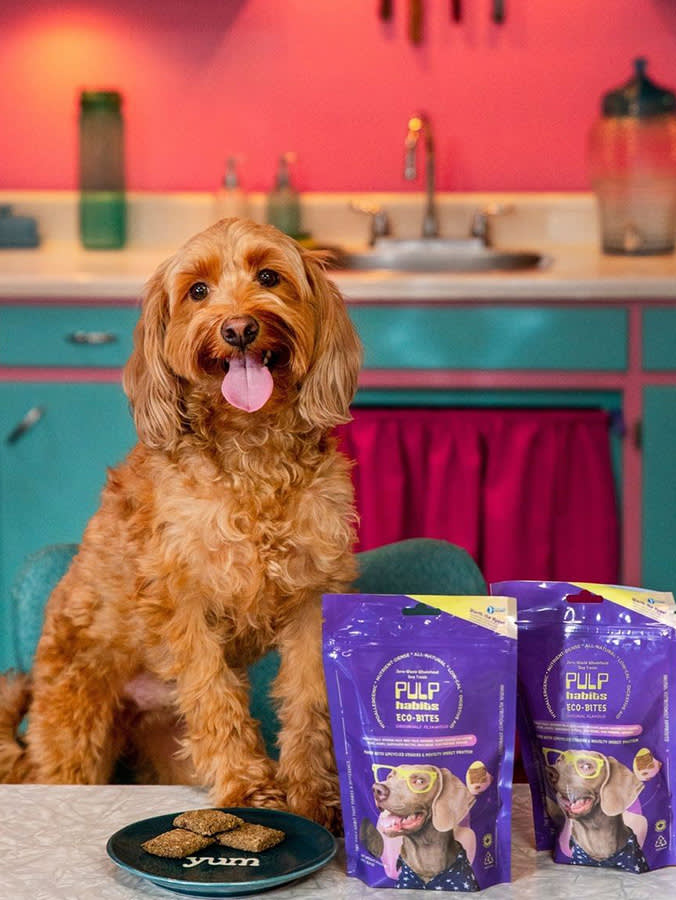
Buying dog treats used to be a two-part question: will my dog eat them, and are they full of junk? A third question has quietly muscled its way onto the list for a lot of owners, is this any good for the planet? It’s a fair thing to want, and it’s also where most “eco” pet products get vague and hand-wavy fast. So it’s worth looking closely at one that actually shows its work. Pulp Habits, a Toronto whole-food treat brand, makes a snack called Eco Bites out of two ingredients most people would never think to feed a dog: leftover vegetable pulp and insect protein. The surprising part is how much sense it makes once you understand what’s in the bag.
What’s actually in an Eco Bite
Eco Bites are chewy squares built from upcycled vegetable pulp and a novel, sustainable insect protein, rich in fiber and antioxidants along with a spread of vitamins and minerals. Ninety percent of what goes into them comes from local Toronto suppliers, and the recipe skips the top canine allergens that show up in so many commercial treats. According to the brand, the squares are even fully edible for humans, though we’ll let you be the one to test that claim.
Two things set them apart, and each is worth unpacking, because together they explain why this isn’t just greenwashing in a pouch.
The first idea: rescuing food that was headed for the trash
Pulp Habits was founded in January 2023 with a pointed mission, to keep nutritious, edible food out of the garbage. The numbers behind that mission are genuinely staggering. The United Nations estimates that more than 1.3 billion tons of edible food get thrown out worldwide every year, and within Canada, produce alone makes up a full 45 percent of what’s wasted. That is a mountain of perfectly good fruit and vegetables.
Here’s where the treats come in. The company teams up with nearby cold-pressed juice makers and takes the beet, carrot, and spinach pulp left behind after juicing, the fibrous material that would otherwise be tossed, and turns it into dog snacks. The nutrients that would have rotted in a landfill end up feeding your dog instead.
The broader trend gives the idea real weight. As shoppers increasingly factor climate into what they buy, food makers have leaned into less wasteful production, and the upcycled-food economy is a big piece of that. Whole Foods even named “Pulp With Purpose” the number-two food trend for 2023. A coalition of experts from universities, government, and conservation nonprofits eventually convened to formally define upcycled food: food built from ingredients that would otherwise never have reached a human plate, produced through traceable supply chains, and delivering a net benefit to the environment. That matters more than it sounds, because wasted food accounts for something like eight percent of the world’s greenhouse gas emissions, the reason the nonprofit Project Drawdown ranks cutting food waste among the most effective climate solutions we have.
The second idea: protein from bugs, not livestock
The other standout ingredient is black soldier fly larvae, an insect protein so nutrient-dense it can stand in for meat, poultry, or fish. It brings all 10 essential amino acids along with calcium and phosphorus, giving the treats a real nutritional boost rather than just an eco talking point.
The environmental logic is straightforward. Raising animal protein fuels deforestation, soil erosion, water pollution, and greenhouse gas emissions, and pet diets are a meaningful slice of overall meat consumption. Insect protein sidesteps most of that. It hasn’t caught on in human food yet, but dogs, being dogs, are perfectly happy to crunch bug protein when it’s baked into something tasty. A meat-free treat is one small, painless way to shrink a household’s footprint.
“Owners sometimes flinch at the word ‘insect,’ but from a nutrition standpoint black soldier fly larvae is an excellent, complete protein, and it’s often gentler on dogs with common food sensitivities,” says Dr. Mara Chen. “As with any new treat, introduce it gradually and keep treats to about ten percent of daily calories. But the ingredient itself is one I’m glad to see getting mainstream.”
Are they worth it?
If you’re the kind of owner already reading treat labels for allergens and thinking about your household’s footprint, Eco Bites hit an unusual number of marks at once: low-waste sourcing, a complete and allergen-friendly protein, and a locally made supply chain you can actually trace. They aren’t the cheapest treat on the shelf, and the insect-protein concept asks for a small leap of faith. But it’s a leap the science supports, and your dog, who has no opinions about food trends, will just think you brought home something delicious.
What’s new since this was written
Pulp Habits has stuck around, which is worth noting for a young direct-to-consumer brand. The company is still operating through its own site, pulphabits.com, and has expanded past the original Eco Bites into targeted formulas, including skin-and-coat and digestion-focused treats built on the same upcycled, low-waste foundation. It has also broadened shipping to reach customers in both Canada and the United States, so the treats are more accessible than they were at launch.
As a small house brand, Pulp Habits isn’t sold through Amazon, so the most reliable place to buy is the company’s own store. It’s a real product from a still-active brand, not a discontinued experiment.
Where to buy
- Pulp Habits Eco Bites — direct from the brand, which ships to Canada and the US.
Not a substitute for your vet. Our guidance is educational. For urgent symptoms, contact a vet or emergency clinic right away. Editorial standards
Leila Torres leads our Living coverage, from home life and travel to the products and rescue stories that come with sharing a life with animals. She edits and writes across the section, with a soft spot for pieces about the bond between people and their pets.
Meet our experts ↗Keep reading
 FoodBugs Are Officially Dog Food Now. Are Cricket Treats Worth It?Dr. Priya Nair · 6 min
 Product PicksYour Dog's Next Bed Might Be 12 Recycled Soda Bottles. On Purpose.Leila Torres · 6 min
 Living'Recycled' Is Doing a Lot of Work on That Label. 8 Pieces That Earn It.Leila Torres · 6 min
 Product PicksThis Pet Brand Recycled 500,000 Water Bottles Into Dog Beds, and Made Them CuteNina Vasquez · 6 min
 Product PicksThis Montana Factory Grinds Up Your Dog's Old Toy and Makes You a New OneSara Lim · 8 min
 LivingThe Poop-Bag Label You Trust Is Probably Lying. Here's the One That Isn'tTom Hadley · 6 min