


The Poop-Bag Label You Trust Is Probably Lying. Here's the One That Isn't
"Compostable" and "biodegradable" dog-waste bags almost never break down the way the word implies, and regulators are finally cracking down on the claim. What to actually buy, and why recycled beats bioplastic.

Affiliate disclosure. This article contains affiliate links. We may earn a small commission if you buy through a link, at no extra cost to you. How we handle recommendations.
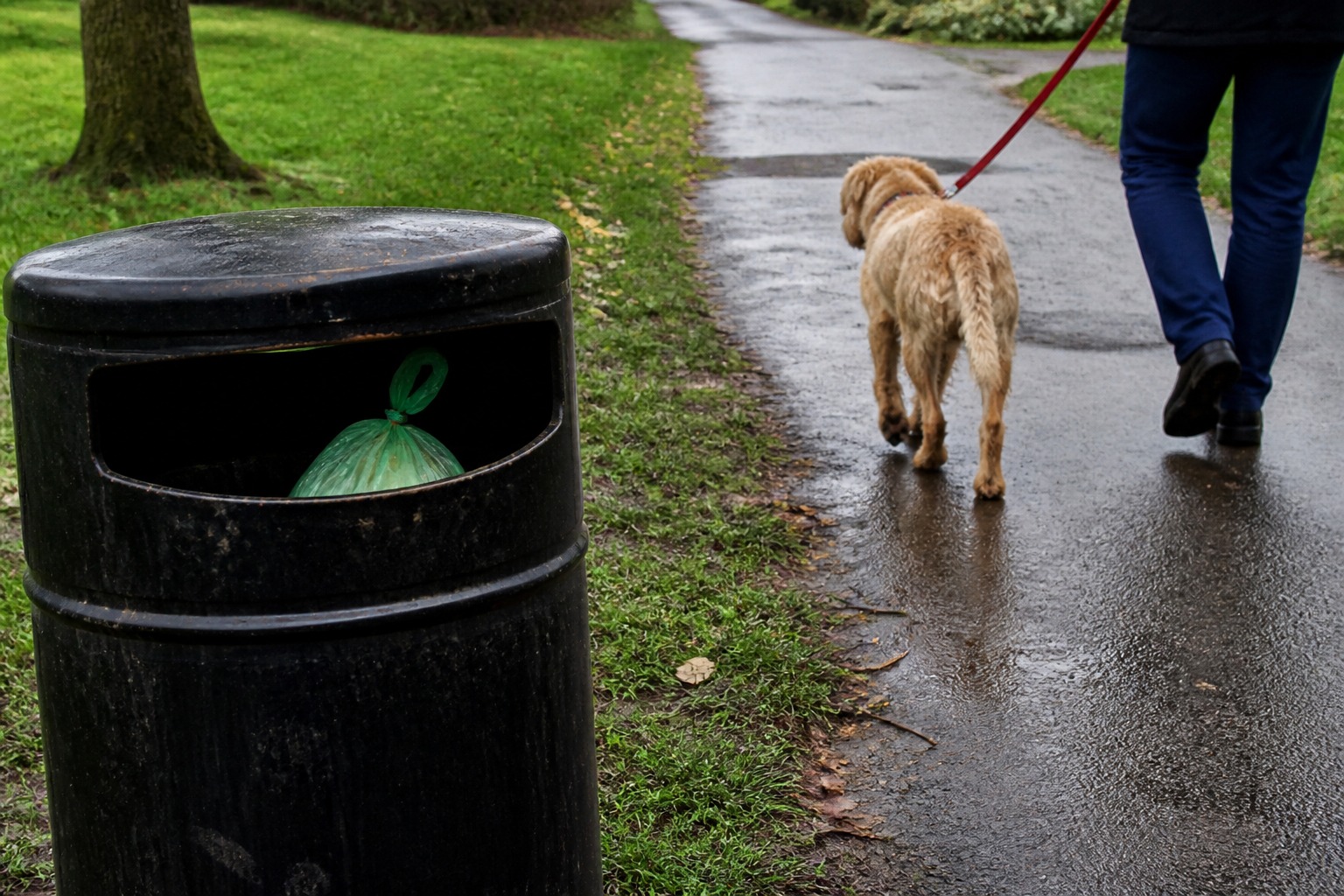
If you switched to “compostable” poop bags to do right by the planet, here is the deflating news up front, before any of the chemistry: that bag is almost certainly going to a landfill, where it will behave a lot like the plastic bag you were trying to avoid. The word on the box did not describe what happens to the bag. It described a laboratory condition that your bag will essentially never meet. And that gap between the label and the landfill has gotten the attention of lawmakers, who are now writing the word “compostable” out of packaging that cannot back it up.
This is not a story about which brand is greenest. It is about a single decision, recycled plastic versus bioplastic, and why the counterintuitive answer is the recycled one. To get it right, we talked with Monique Figueiredo, founder of CompostableLA, a compost pickup service serving many Los Angeles neighborhoods, who spends her days sorting exactly this kind of claim from reality.
First, the vocabulary trick being played on you
Three words get slapped on green-tinted poop bags, and all three are slipperier than they look.
“Bioplastic” simply means a plastic made or derived from biological material, plants and fibers rather than petroleum. It sounds like it should melt back into the earth. It does not. “The mistake people make is assuming ‘made from plants’ means ‘returns to plants,’” Figueiredo says. “Bioplastic is chemically a different substance from the plant it started as, and it does not break down the way a banana peel does.” Being born from corn does not make something behave like corn.
“Biodegradable” is the emptiest of the three. It only promises that a material will, eventually, decay into other components. Those components include water and, less charmingly, microplastics and methane. A biodegradable bag can spend decades fragmenting into ever-smaller shards of plastic and technically satisfy the word on its label the entire time.
“Compostable” is the one that sounds airtight, and it comes with the fine print that undoes it. A genuinely compostable bag can be digested by microbes without leaving toxic residue, but only under narrow, specific conditions, the sustained high heat and managed moisture of an industrial composting facility. Drop that same bag in a landfill, or a backyard pile, or a curbside bin that never reaches a certified composter, and it just sits there. “Compostable is a promise with an asterisk,” Figueiredo says. “The asterisk is a facility almost none of these bags ever reach.”
Why the facility never takes it anyway
Even setting the bags aside, there is a deeper reason pet waste ends up in the trash: the composting industry does not want the poop inside the bag. Figueiredo’s service, like most, refuses cat litter and pet feces outright, and that is the norm, not the exception.
The reason is pathogens. Dog feces can be composted in principle, but only if it is handled separately from food-waste streams, held hotter and longer to kill what is in it, and then used only on non-food-producing gardens. Cat waste is a firmer no, because it can carry Toxoplasma gondii, a parasite that infects humans and animals and survives standard composting. So facilities take the sensible route and tell you to bin it. Which means that the moment your dog goes, the destination is already fixed, landfill, regardless of what the bag around it claims.
The methane math that flips the “green” ranking
Stack the two “eco” options against each other and the supposed virtue collapses:
- A biodegradable bag in a landfill spends decades breaking into microplastics and releases methane as it goes.
- A compostable bag in a landfill, deprived of the industrial conditions it needs, fails to break down at all and, being organic matter, also throws off methane.
Methane is the villain of that sentence twice. In the oxygen-starved environment of a landfill, organic material generates methane, a greenhouse gas far more warming than carbon dioxide. So the plant-based bag you paid extra for can end up doing more climate damage than a conventional one, while also, as Figueiredo points out, carrying the hidden footprint of the virgin material it was manufactured from in the first place.
The bag that actually holds up: recycled
The answer that survives scrutiny is the least glamorous one on the shelf: recycled-plastic poop bags. Their logic is circular in the good sense. They are made from plastic that already exists and was already bound for disposal, so no new material is created to serve a single-use purpose, and unlike bioplastics they do not generate methane as they sit. “I would rather reuse plastic that is already in the system than manufacture a brand-new ‘plant’ bag that ends up in the same hole in the ground, only with a bigger carbon bill attached,” Figueiredo says.
For specific picks, she uses Green Polly, made from 90 percent post-consumer recycled plastic, strong, standard-sized, and easy to find online. For heavier hauls, she reaches for Hippo Sak recycled bags made from ocean-bound plastic. Neither is a magic bag. Both are honest ones.
The new reason the labels are about to change
The most current development is that Figueiredo’s argument is being written into law. Several states have passed “truth in labeling” statutes aimed squarely at greenwashed compostability claims. California’s AB 1201, signed in 2021, bars a product from being sold as “compostable,” “biodegradable,” “degradable,” or “decomposable” unless it actually meets recognized standards (the ASTM D6400 and D6868 specifications) and qualifies under the USDA’s organic-input rules; violations can draw penalties of up to $2,500 apiece. After industry pushback the strictest requirements were pushed to take effect June 30, 2027, and comparable laws are moving in Washington, Colorado, and Maryland. The regulatory tide is turning against exactly the vague “eco” language this article warns about, which is a decent sign you were right to distrust it.
The bottom line has not moved: single-use is single-use. Assume any bag, however green its font, is headed for a landfill, buy the recycled one because at least it reuses what already exists, and put your real energy into the habit that matters most, picking up every single time. If you want to go further than the bag, look into a home dog-waste digester that breaks waste down on-site instead of shipping it off. Everything else is packaging.
References
- California Legislature. “AB-1201 Solid Waste: Products: Labeling: Compostability and Biodegradability.” leginfo.legislature.ca.gov
- “California Extends Compostable Labeling Law.” Resource Recycling. resource-recycling.com
- U.S. Federal Trade Commission. “Green Guides.” ftc.gov
- Centers for Disease Control and Prevention. “About Toxoplasmosis.” cdc.gov
Tom Hadley writes about training and behavior, helping owners understand what their pets are trying to tell them. His work covers everyday manners, decoding common behaviors, and the small changes at home that make dogs and cats easier to live with.
Meet our experts ↗Keep reading
 Product PicksThis Montana Factory Grinds Up Your Dog's Old Toy and Makes You a New OneSara Lim · 8 min
 Product PicksThe Escape-Proof Collar Shelters Swear By Comes From a Town of 400Nina Vasquez · 5 min
 LivingYour Dog's Trash Is Mostly Two Things. Everything Else Is a Rounding Error.Nina Vasquez · 8 min
 Product PicksMost Faux Fur Is Just New Plastic in a Nicer Shape. This Dog Bed Isn't.Sara Lim · 6 min
 Product PicksEco Dog Toys Are the Last Holdout. These $16 Handmade Ones Show Why.Nina Vasquez · 4 min
 LivingThe 'Compostable' Poop Bag Is Often Greenwashing. Smarter Eco Swaps for Your DogNina Vasquez · 4 min