


Most Faux Fur Is Just New Plastic in a Nicer Shape. This Dog Bed Isn't.
The luxury dog bed market runs on virgin polyester dressed up as chinchilla. One brand's bestselling beds are made from 100 percent recycled polyester instead, which is a much bigger deal than it sounds.

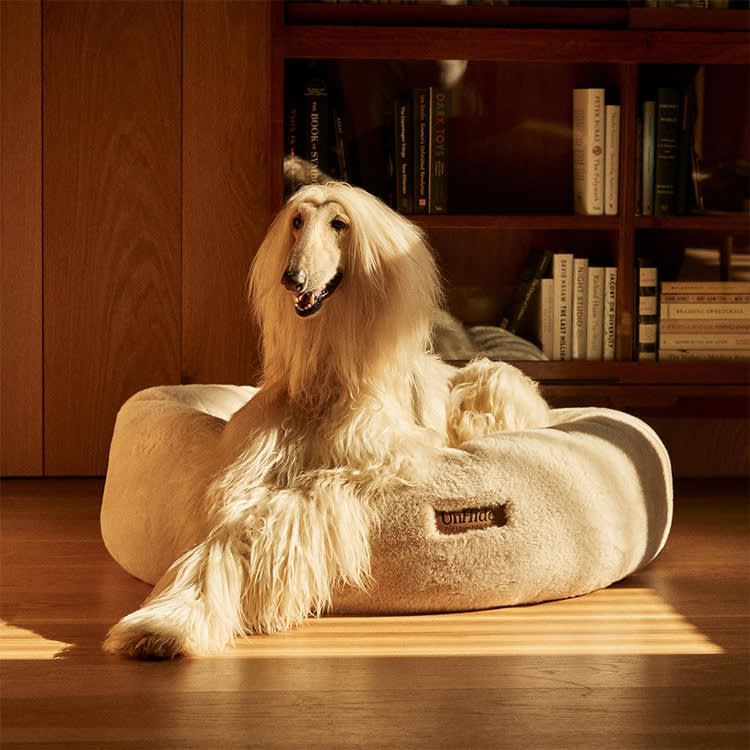
Pick up almost any plush dog bed and read the label, and you will find polyester. That is not a secret, and it is not automatically a problem. Polyester is warm, it is washable, and it holds a pile better than anything natural at the price.
The problem is the word missing from the label. Almost all of that polyester is virgin polyester, which means it was made, from petroleum, on purpose, to be a dog bed. In a world already drowning in plastic, “we made brand-new plastic so your dog could nap on it” is a strange thing to be quiet about.
Which is why UnHide’s beds are worth talking about, and why the interesting fact about them is not how soft they are.
The honest version of the claim
UnHide calls its material “faux chinchilla,” and the marketing is doing what marketing does. But the physical thing is genuinely unusual: fleece-like fibers packed densely enough that you would half-believe it was real fur, except that it is polyester, and it is 100 percent recycled.
Here is where the brand deserves credit for not overselling. The recycled content does not run across the whole catalog. The human wearables are not recycled, and neither are the Lil’ Marsh blankets or the pillows. Where it does apply is the two lines that carry the business: the Marshmallow blankets and the Floof dog beds, which together account for more than 50 percent of total sales.
That is a better sustainability story than most, precisely because it is specific. A brand that says “we’re eco-friendly” is telling you nothing. A brand that says “these two products, which are most of what we sell, are 100 percent recycled polyester, and these others are not yet” is telling you something you can check.
Why recycled polyester actually matters for a dog bed
It is easy to be cynical about recycled-plastic claims, and often you should be. So here is the narrow, defensible case.
A dog bed is a large object made almost entirely of fiber. The fill and the cover together represent a meaningful chunk of plastic, and a dog bed is not a lifetime purchase; it gets destroyed, outgrown, or worn out and replaced. Multiply by the number of dogs. The category is a genuine volume problem.
Recycled polyester does not solve that. Nothing about a synthetic bed is truly circular, and recycled polyester still sheds microfibers in the wash like any other synthetic. What it does is avoid pulling new petroleum into a product that had a perfectly good feedstock sitting in a recycling stream. That is a modest, real improvement, and it is the kind of improvement worth rewarding with a purchase, because the alternative is rewarding nothing.
The honest framing is: this is not a green product. It is a less bad one, in a category where less bad is currently the ceiling.
The bed itself
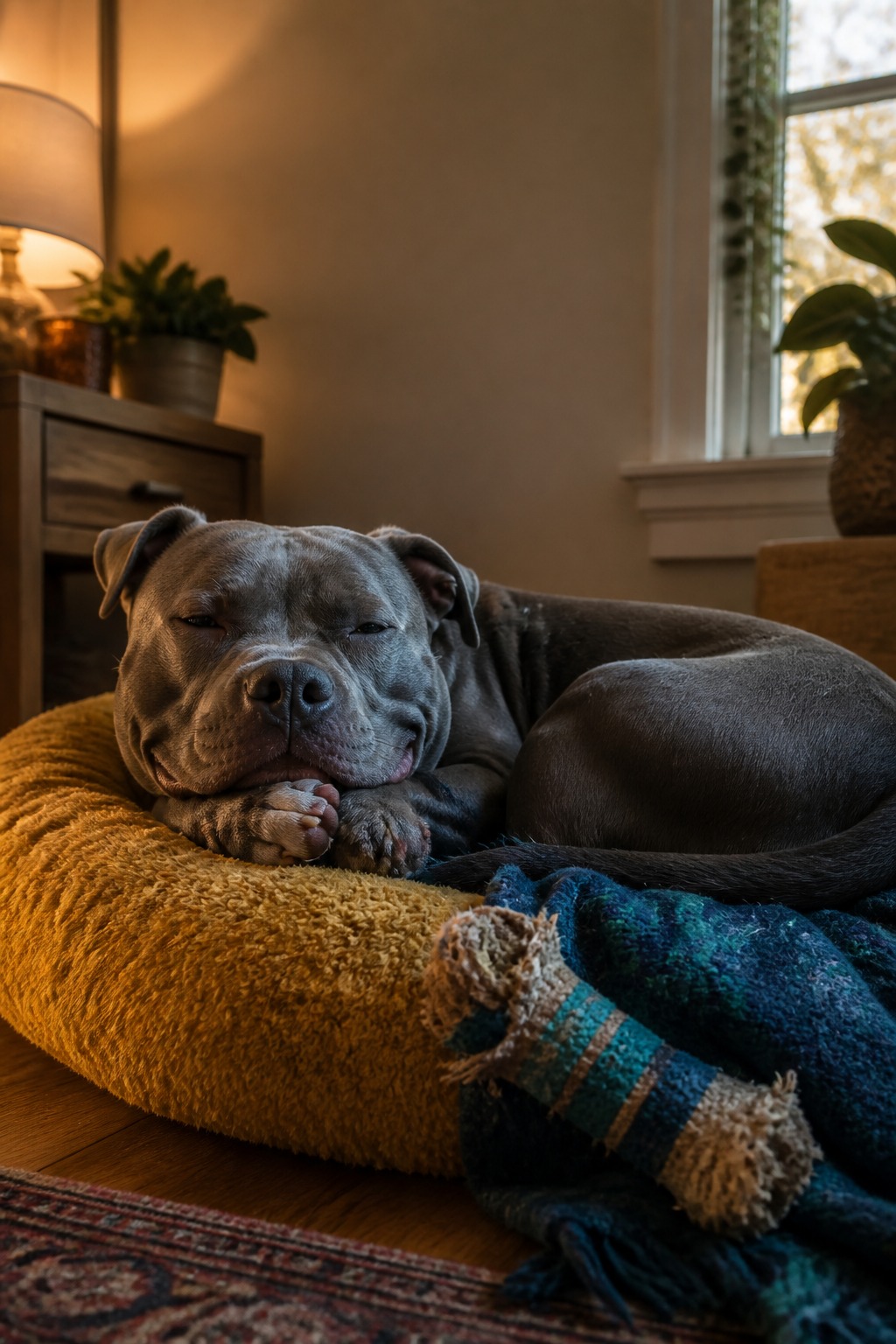
It is plush. Genuinely, absurdly plush.
The Floof has raised sides, which matters more than it sounds like it should. Dogs are bolsterists by nature: they want something to lay a head against and an edge to burrow into, and a flat pad gives them neither. The raised rim is doing real work for a dog who sleeps curled.
The faux-fur cover comes off, goes in the machine, and survives the dryer, which is the specification that decides whether a bed lasts a year or three. Any bed you cannot wash is a bed you will eventually throw away for reasons that have nothing to do with the bed.
It comes in three sizes (small, medium, and large) and three colors, and it runs from $139 to $199. You can add a Lil’ Marsh blanket for $45.
Who it is right for: curl-and-burrow sleepers, dogs who get cold, and people who do not want their living room to look like a pet store exploded in it.
Who it is wrong for: serious destructive chewers. Nothing about a dense faux-fur bed is engineered to survive a dog who dismantles things for sport, and a bed like this is an expensive way to find that out. And if your dog runs hot, a deep plush pile is the wrong thermal choice; a raised cot with airflow is a better one.
The rescue partnership, and how to read one
UnHide partners with Maeday, a Los Angeles rescue that pulls hundreds of dogs (and cats) out of shelters and off the streets each year. Maeday’s dogs model the products in UnHide’s photography, and, running through the end of the year, every Maeday adoption goes home with a Floof bed included free.
It is worth being clear-eyed about what a partnership like this is and is not. Featuring rescue dogs in a photoshoot is not a donation; it is casting, and it happens to be good casting. The bed-with-every-adoption piece is the substantive part, because a free bed is a real cost the brand absorbs and a real barrier removed for a new adopter, who is at that exact moment discovering how much everything else costs.
If you want a quick test for any “we support a rescue” claim: ask whether the support survives the marketing. A brand that gives product to adopters is doing something whether or not anyone is watching. A brand that only puts rescue dogs in its ads is doing photography.
What’s new since this was written
The regulatory ground under claims like this has shifted, and it works in your favor as a shopper.
The Federal Trade Commission’s Green Guides govern how companies may make environmental claims, and the FTC has been explicit that vague, unqualified language like “eco-friendly,” “sustainable,” or “green” is deceptive unless the company can substantiate it. Recycled-content claims specifically must be qualified: if only part of a product is recycled, the company has to say which part and how much.
That is exactly the standard UnHide’s disclosure already meets, and it is a useful lens for everything else in the pet aisle. When you see a bed advertised as “sustainable” with no number and no scope attached to the word, you are looking at a claim that would struggle to survive scrutiny. When you see “100 percent recycled polyester cover and fill,” you are looking at something a regulator could check.
Ask for the number. The brands doing the work will have one.
References
- Federal Trade Commission. “Green Guides: Guides for the Use of Environmental Marketing Claims (16 CFR Part 260).” https://www.ftc.gov/legal-library/browse/rules/green-guides
- Textile Exchange. “Preferred Fiber & Materials Market Report” (recycled polyester share and definitions). https://textileexchange.org/
- De Falco, F. et al. “Microfiber release to water, via laundering, and to air, via everyday use: a comparison.” Environmental Science & Technology, 2020. https://doi.org/10.1021/acs.est.9b06892
Sara Lim leads our Product Picks coverage, testing and comparing the things pets and their owners actually use. From everyday essentials to home-and-style finds, she focuses on honest, useful recommendations rather than hype.
Meet our experts ↗Keep reading
 Product PicksShe Left 12 Years in Finance to Make Dog Beds That Don't Look Like Dog BedsLeila Torres · 5 min
 Product PicksThe Prettiest Dog Bed of the Terrazzo Era Was Really an ElegyNina Vasquez · 5 min
 LivingThis Pet Brand Gives Away Every Dollar of Profit. On Purpose.Nina Vasquez · 5 min
 Product PicksStore-Bought Dog Beds Are a Racket. Crochet One From Scrap Yarn.Leila Torres · 5 min
 LivingA Furniture Designer Got Fed Up With Ugly Dog Beds. So He Fixed ThemMarcus Webb · 6 min
 Product PicksThese Dog Beds Are Handwoven by Indian Artisans, Not Stamped Out in a FactorySasha Ford · 4 min