


The Joro Spider's Scary Reputation Is Three Exaggerations Stacked Up
Giant, venomous, flying: every word in the Joro spider's terrifying billing comes with an asterisk. Here's what's actually true, and why your dog and cat are fine.

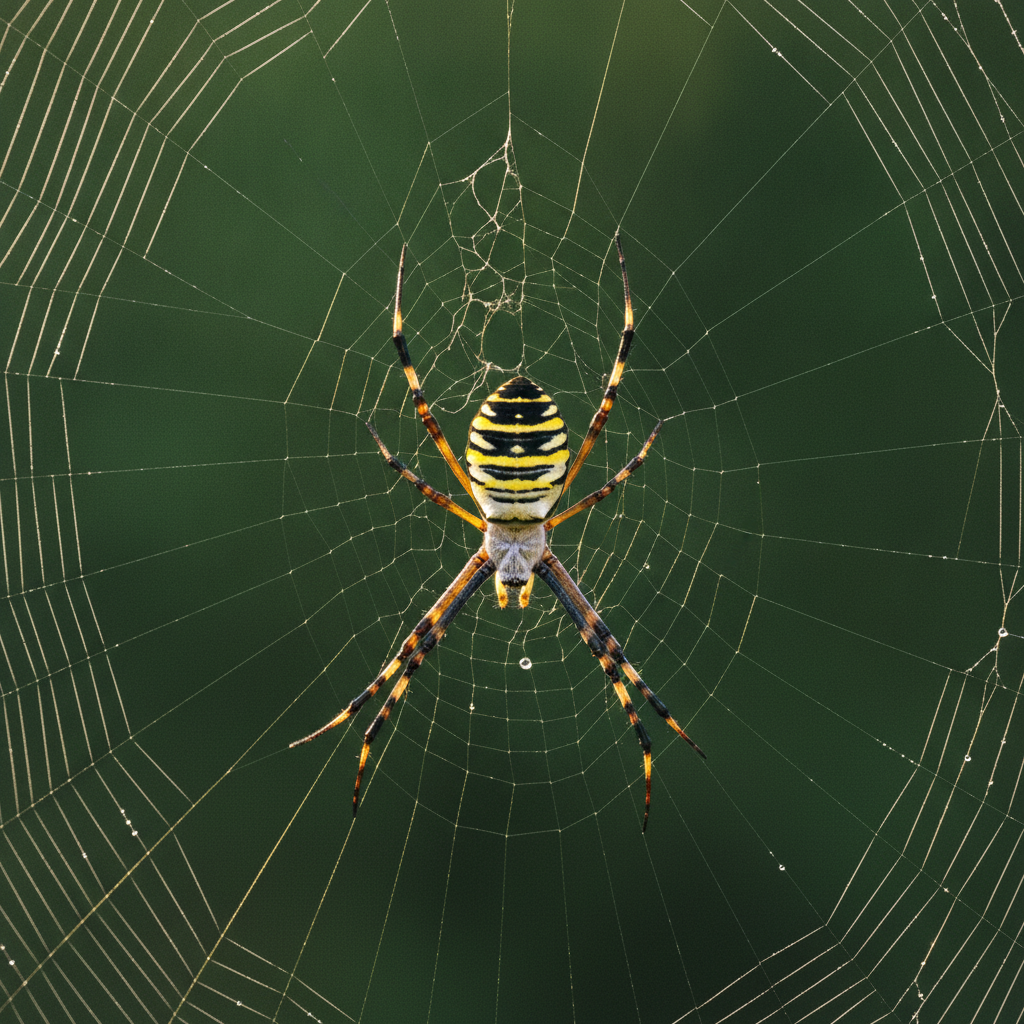
“Giant, venomous, flying spider invades the East Coast” is a perfect headline, in the sense that every single alarming word in it is technically defensible and practically misleading. Pull the three claims apart one at a time and the Joro spider deflates into something closer to a shy, oversized garden spider that wants nothing to do with you or your dog. The genuinely interesting story isn’t the threat to your pet, which is close to zero. It’s what these spiders are quietly doing to the ecosystems they move into.
So let’s take the reputation apart piece by piece, then get to the part that actually matters.
”Giant”: real, but smaller than the photos suggest
Joro spiders are large, and females are the showy ones, with bright yellow-and-blue-black bodies and long legs. But the “palm-sized” claim only works if you stretch their legs to an impossible span. The body is far smaller than the viral photos imply. Big for a backyard spider, yes. Tarantula-scale, no.
”Flying”: only the babies, and only sort of
Joros have no wings and cannot fly. What they do is balloon: spiderlings release strands of silk and drift on the breeze to disperse. This is how the species spreads across territory, but it’s a one-time juvenile behavior. The dramatic adult female you’d actually notice in a web is staying put. Nothing palm-sized is gliding past your head.
”Venomous”: true of nearly every spider, and irrelevant to your pet
Yes, Joros are venomous. So are most spiders; venom is how they subdue the small insects they eat. The question that matters is whether that venom can hurt a dog or cat, and the answer is no.
“These spiders aren’t out hunting people or pets, and there’s no evidence they’re dangerous to either,” said David Coyle, an invasive-species expert at Clemson University, in comments to NBC 24. He has handled them repeatedly: “I have held Joro spiders dozens of times. My kids have held them. They’re typically very docile.”
A Joro bite is reported to feel like somewhere between a mosquito bite and a bee sting, and in many cases the fangs don’t even break human skin. For a pet, the realistic worst case isn’t envenomation, it’s a dog who shoves its snout through a web and gets a defensive nip.
“The only Joro scenario I’d flag for a dog owner is the same one I’d flag for any insect bite,” said Dr. Lena Park, a veterinarian who consults for The Pet Times. “Watch the bite site for swelling, hives, or any trouble breathing. Allergic reactions to a Joro specifically haven’t been reported in animals, but a curious dog pawing at webs all summer is the realistic situation, not poisoning.”
As University of Connecticut master gardener coordinator Gail Reynolds put it, if a dog “went and put his snout through the web, it might land on him and feel threatened and bite him, but it would be the same as if a human did that.” Mildly annoying. Not an emergency.
The shyness is almost comical
If you’re still nervous, this should settle it. University of Georgia scientist Andrew Davis ran an experiment puffing air at spiders to gauge their stress response. Native spiders froze for about 96 seconds. Joros froze for over an hour. They are, by spider standards, deeply timid.
“Based on my research, they’re really shy,” Davis told National Geographic. “If you leave them alone, they’ll leave you alone, and you can both go about your business.”
The real story: where they’re going, and what they’re displacing
This is where the Joro stops being a punchline and gets genuinely consequential. The spiders established themselves in Georgia more than a decade ago, and they are spreading north fast. By recent counts, populations or sightings have reached the Carolinas, Tennessee, Alabama, and farther up the coast into Maryland, Virginia, Pennsylvania (including the Philadelphia area), and as far as the Boston region. Their tolerance for cold suggests the Northeast is well within range.
The ecological footprint is the part scientists are watching. In Atlanta-area forests at the front line of the invasion, researchers counted Joros climbing from 444 individuals in 2022 to 1,713 in 2024, while seven species of native orb-weaving spiders each declined by roughly 40 percent per year over the same window. A spider that’s harmless to your dog can still be reshaping the local web of insects, native spiders, and the birds that eat them.
There’s a wrinkle that complicates the instinct to stomp them: Joros also eat other invasive pests, including the spotted lanternfly, and may themselves become food for native predators. In Georgia, they haven’t yet shown clearly negative ecosystem effects. For that reason, and because they’re easily confused with harmless native species, experts are not recommending you kill Joros on sight.
What this means for you
Practically nothing changes for your pet. Don’t let your dog body-slam spider webs, check any bite the way you’d check a bee sting, and otherwise let the spiders be. The scariest thing about the Joro is its press, not its bite. Dogs, cats, humans, and one very nervous arachnid are simply going to coexist.
References
- National Geographic. “Are ‘Giant, Flying’ Joro Spiders Really Taking Over the U.S.?” https://www.nationalgeographic.com/animals/article/joro-spiders-flying-giant-united-states
- Davis, Andrew K., and Amitesh V. Anerao. “Startle Responses of Jorō Spiders (Trichonephila clavata) to Artificial Disturbance.” Arthropoda, 2023. https://www.mdpi.com/2813-3323/1/2/9
- “Explosive Growth of the Jorō Spider and Concurrent Decline of Native Orbweaving Spiders in Atlanta, Georgia Forests.” Insects, 2025. https://pmc.ncbi.nlm.nih.gov/articles/PMC12112690/
- University of Georgia Integrated Pest Management. “Joro Watch.” https://ipm.uga.edu/
- WebMD. “Joro Spiders: What to Know.” https://www.webmd.com/a-to-z-guides/joro-spiders-what-to-know
Not a substitute for your vet. Our guidance is educational. For urgent symptoms, contact a vet or emergency clinic right away. Editorial standards
Sara Lim leads our Product Picks coverage, testing and comparing the things pets and their owners actually use. From everyday essentials to home-and-style finds, she focuses on honest, useful recommendations rather than hype.
Meet our experts ↗Keep reading
 LivingThe Cruelest Thing in Your Makeup Bag Is Still Perfectly LegalLeila Torres · 5 min
 FoodSalmonella Pulled These Freeze-Dried Chicken Treats. Check Your Pantry for the Lot Numbers.Dr. Mara Chen · 3 min
 Health & Wellness'Just a Quick Walk' Can Give Your Dog Heatstroke. Here's the Playbook.Dr. Priya Nair · 9 min
 LivingYour Dog Runs. Your Cat Hides. Searching for Them the Same Way Is Why You Lose Them.Marcus Webb · 8 min
 Health & WellnessSkipping Heartworm Meds in Winter Is a Bet You'll LoseDr. Ravi Mehta · 8 min
 FoodSalmonella and Listeria in Darwin's Raw Pet Food: The Exact Lots to TossDr. Amara Solis · 4 min