


Your Dog Runs. Your Cat Hides. Searching for Them the Same Way Is Why You Lose Them.
A missing dog and a missing cat need opposite strategies, and the instinct almost everyone follows, chasing, is the one that fails. A field-tested playbook for getting a lost pet home.

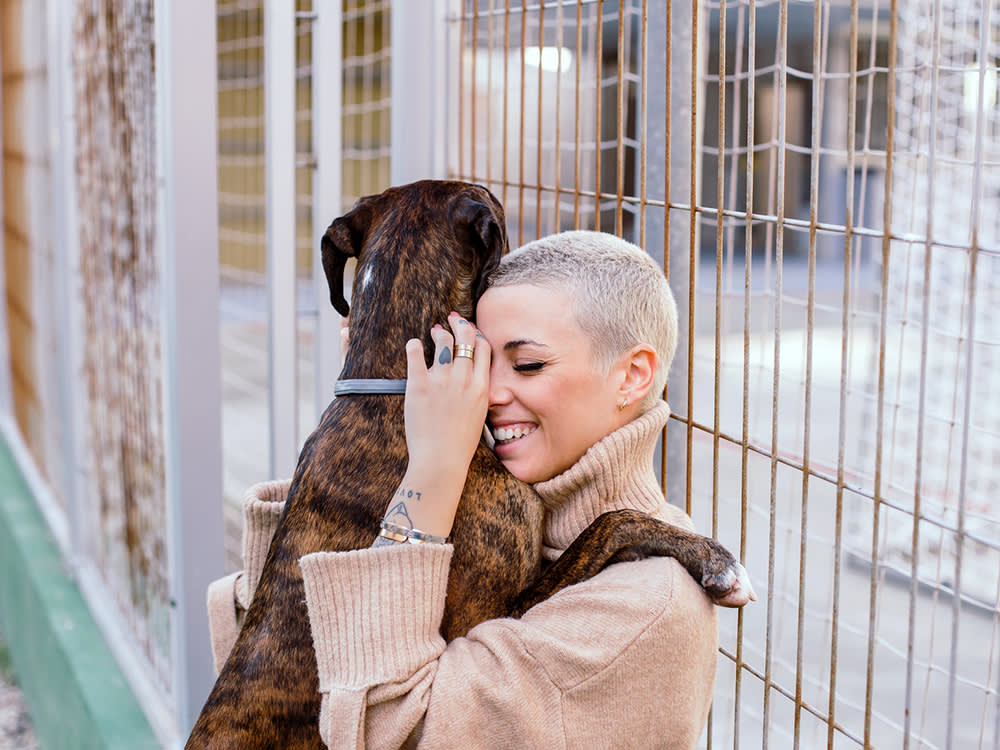
There is no reliable count of how many pets go missing every year, but American Humane has long estimated the number in the United States at roughly 10 million. Almost every one of those searches involves the same instinct at the critical moment, and that instinct is usually wrong. When you finally spot your escaped pet, everything in you says run toward them. Don’t. Chasing is the single most common way people accidentally drive their own animal farther away.
The searches that actually work start from a different premise: dogs and cats get lost in opposite ways, and you have to search for them accordingly. Get that fork right and everything downstream gets easier.
Dogs run. Cats hide. Plan for the one you have.
A loose dog is a moving target. Frightened, over-stimulated, and built to cover ground, a dog can crisscross a several-mile territory in a day and keep drifting from home with each sighting. Finding a dog is therefore a visibility problem. You are trying to generate leads across a wide area faster than the dog can travel, which means the search has to be, in the words of the recovery pros, massive and a little obnoxious.
A missing cat is the reverse. A spooked cat almost never bolts for the horizon; it goes to ground, wedged silent and terrified under a deck or in a neighbor’s shed, often astonishingly close to home. Finding a cat is a search problem, not a marketing one. You are doing a slow, thorough sweep of your own property and the ones immediately around it, ideally after dark when it’s quiet, backed up by tools that work while you sleep: motion-triggered wildlife cameras and humane traps baited with strong-smelling food.
Confuse the two, blanketing the county with flyers for a cat that’s under the porch, or quietly searching bushes for a dog that’s now three miles away, and you burn the hours that matter most.
The thing nobody tells you: stop chasing
The counterintuitive core of dog recovery is calming signals, an approach built on the work of Norwegian trainer Turid Rugaas. When a loose dog is in flight mode, a person running at them reads as a predator, and they run harder. The move that works is the opposite of instinct: get low, turn slightly away, sit or even lie down, and let curiosity pull the dog to you.
“Everything in your body wants to sprint at your dog the second you see them, and that’s exactly the impulse you have to override,” says Dr. Amara Solis. “A dog in panic isn’t recognizing you as their person yet, they’re just seeing something rushing at them. Sit down, look away, toss a treat, and become boring and safe. Nine times out of ten, letting the dog close the distance is what actually closes it.”
There’s a viral-worthy example that recovery volunteers love: an Australian Shepherd loose for a week, finally spotted asleep on a stranger’s porch. Instead of lunging, her owner lowered herself to the ground facing away from the dog, laid out a favorite toy and some treats, and then stretched out flat on the pavement. The dog crept forward, sniffed the air, and then bolted, straight into her arms. The hard part was doing nothing.
Big, dumb signs beat tidy flyers
For a lost dog, the highest-leverage tactic is not the standard 8-by-11 flyer, it’s oversized, high-contrast signs, poster-sized, held or staked at the busiest nearby intersection, showing a photo and one or two identifiers in enormous type: “HUSKY, RED COLLAR.” This works because of inattentional blindness, the well-documented fact that people don’t perceive what they aren’t primed to notice. A wall of small flyers gets tuned out. A giant sign, especially one a volunteer is physically holding, breaks through, and there are cases of a lost dog being reported within twenty minutes of the signs going up. A related trick: write the same identifiers in neon marker across your car’s back window and drive the area.
The prevention that quietly does the most work
Here’s where the numbers make the case for boring preparation. A large study of shelter intakes found that only about 22 percent of lost dogs were reclaimed by their families, but for microchipped dogs that jumped to more than 52 percent. For cats the gap is even starker: roughly 2 percent of stray cats got home, versus nearly 38 percent of microchipped ones. A chip more than doubles a dog’s odds and multiplies a cat’s many times over.
The catch is registration. Only around 60 percent of microchips are actually registered with current contact information, and the top reason a chipped pet doesn’t get home is a disconnected or wrong phone number in the database. So the highest-value ten minutes you can spend today is not buying gear, it’s logging into your chip registry and confirming your number is right. Pair the chip with a collar and visible ID tag, keep a current clear photo on your phone, and secure the gates and fences that most escapes start with.
One more thing: watch for the vultures
A public “lost pet, reward” post attracts scammers. Be wary of anyone who “has” your pet but demands money before showing proof, or who describes your animal only in the generic terms already on your flyer. Ask for a photo, or a detail you deliberately left out of the post, before you agree to anything.
None of this requires heroics. It requires doing the counterintuitive thing at the one moment that counts, matching the search to the animal, and having done the dull prep before you ever needed it.
References
- Lord, L.K. et al. “Search methods that people use to find owners of lost pets” and microchip reclaim data, JAVMA. avma.org
- American Veterinary Medical Association. “Check the Chip Day: keep microchip registration up to date.” avma.org
- PawBoost. “Lost & Found Pet Database.” pawboost.com
- Pet FBI. “Free Lost and Found Pet Reports.” petfbi.org
Marcus Webb writes about the gear, gadgets, and everyday choices that make life with a pet easier. His coverage runs from product picks to training and the causes worth paying attention to, always with an eye on what actually earns a place in your home.
Meet our experts ↗Keep reading
 Living'Pet-Safe' Is a Marketing Word. Read the Label Instead.Dr. Nina Kohl · 7 min
 Health & WellnessThe Container Sold as 'Pet-Proof' Is Killing CatsMarcus Webb · 6 min
 Health & WellnessThe Pet Detective Is Real. So Is the Whole Industry Pretending to Be One.Marcus Webb · 9 min
 LivingSagittarius Season Explains Why Your Dog Loses It Over an Open WindowSasha Ford · 5 min
 Living7 Genuinely Pet-Safe Houseplants — and the Toxic Twins to AvoidLeila Torres · 6 min
 Health & WellnessMost 'Toxic' Plants Just Make Your Cat Drool. Two Genera Actually Kill.Dr. Nina Kohl · 9 min