


A Flat Face Isn't the Only Warning Sign: What a 14-Breed Breathing Study Means
A study of 898 dogs found that breeds like the Pekingese and Japanese Chin struggle to breathe as much as Pugs, and that tail length and neck thickness matter too. Here is the breed-by-breed risk picture and what it changes for owners.

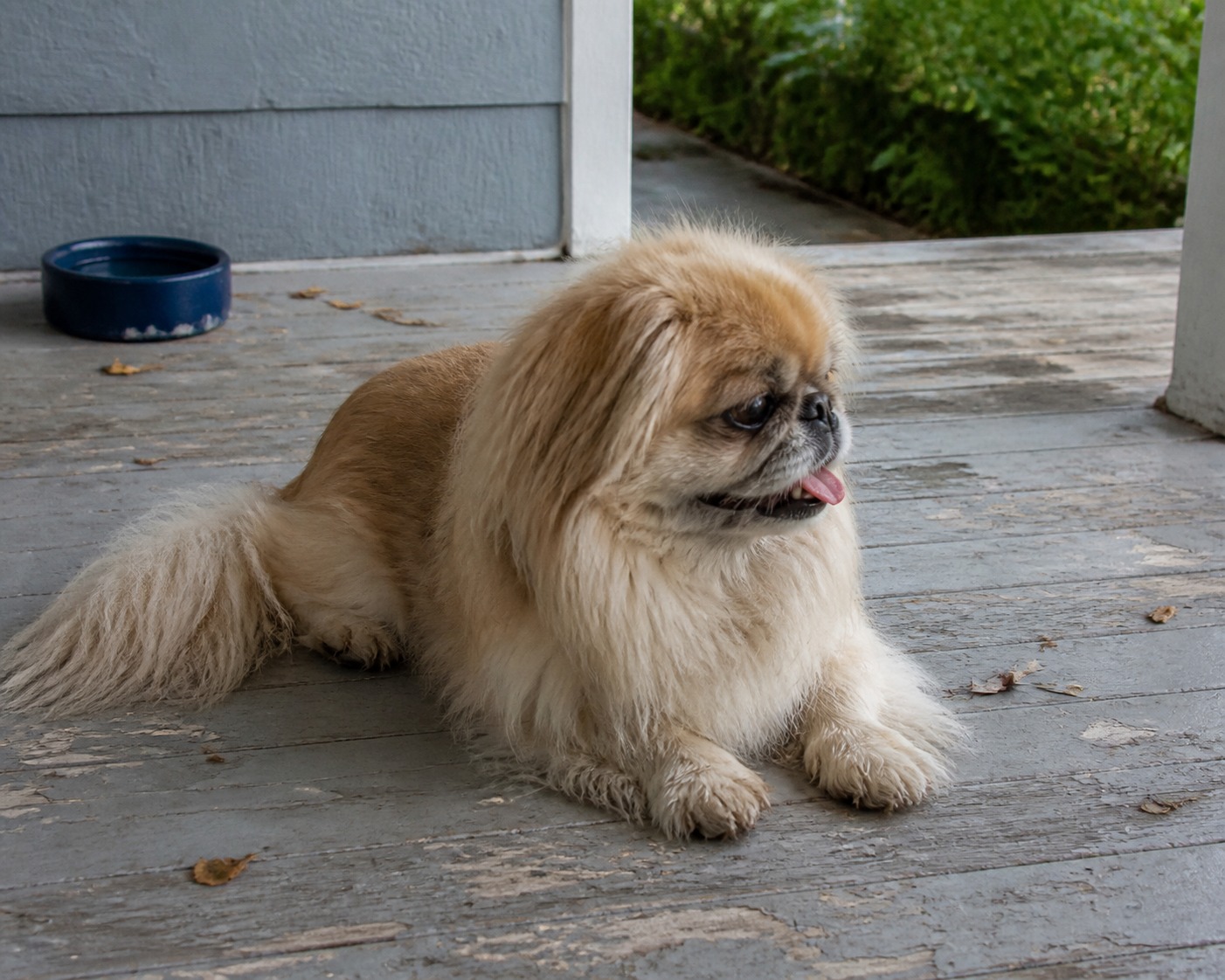
If you own a flat-faced dog, you have probably been told the danger is the muzzle: the shorter the face, the worse the breathing. A large new study says that rule of thumb is too simple, in two directions at once. Some famous flat-faced breeds suffer less than expected, some lesser-known ones suffer far more, and the shape of a dog’s tail and neck turns out to predict breathing trouble alongside the face. For owners, the practical takeaway is that you cannot read a dog’s airway risk off its breed name or even its resting face alone.
The condition at the center of all this is Brachycephalic Obstructive Airway Syndrome, or BOAS, the cluster of problems that comes when a flat face and short muzzle crowd the airway. It shows up as noisy breathing, poor exercise tolerance, overheating, and disrupted sleep, and at the severe end it is a genuine welfare problem.
What the study did
The research, published in PLOS One, set out to measure BOAS in flat-faced breeds that rarely get studied, rather than the usual three. A UK-based team examined 898 dogs across 14 breeds between September 2021 and April 2024, all of them over a year old, assessed at the Queen’s Veterinary School hospital, at dog shows, and at breed health-testing days. Each dog got a standardized breathing exam that included three minutes of exercise, with researchers scoring noisy breathing and respiratory distress before and after the run on a 0-to-3 scale. A score above 2 counted as significant BOAS.
The breed-by-breed picture
The headline finding is that two breeds most people never associate with breathing problems performed as badly as Pugs and French Bulldogs. Here is how the 14 breeds sorted out:
| Risk level | Breeds | What the data showed |
|---|---|---|
| High (on par with Pugs and Frenchies) | Pekingese, Japanese Chin | ~90% of Pekingese and ~83% of Japanese Chins showed some degree of BOAS |
| Significant | Griffon Bruxellois, Boston Terrier, King Charles Spaniel, Dogue de Bordeaux, Shih Tzu | About half of sampled dogs showed symptoms |
| Milder | Staffordshire Bull Terrier, Cavalier King Charles Spaniel, Chihuahua, Boxer, Affenpinscher | Lower rates, but not risk-free |
| No significant BOAS in this sample | Pomeranian, Maltese | None detected, though fewer of these dogs were tested, so the result is less certain |
That Pomeranian and Maltese result deserves the asterisk the study gives it: the sample for those two breeds was smaller, so “none detected here” is not the same as “safe.”
The part that should change how owners think
The most useful thing in the study is not the ranking, it is the finding that a flat face is only part of the story. Several breeds had lower BOAS rates than the researchers predicted from their skulls alone, and other anatomy mattered independently:
- Tail length: Shih Tzus and Staffordshire Bull Terriers with shorter tails were more likely to have BOAS. A screw or stub tail can be an outward marker of the same skeletal changes that affect the airway.
- Neck thickness: Boston Terriers and Staffordshire Bull Terriers with thicker necks carried higher risk.
Overall, the team found that extreme flat faces, narrow nostrils, and high body fat all push risk up, but the exact picture shifts breed to breed. For an owner, that means the assessment to trust is a hands-on, exercise-based breathing check by a vet, not a glance at the muzzle and a sigh of relief because your dog “seems fine lying down.”
Muzzle length is the strongest single predictor — shorter face, higher risk — yet the study’s exceptions are the interesting part. Some breeds carry problems you do not see in the others, and some escape problems the rest share. The lesson for owners is to have the dog in front of you assessed, not to assume the breed average applies to your dog.
It is worth saying plainly that BOAS exists on a spectrum. A dog at the mild end may live comfortably with simple management; a dog at the severe end can have its quality of life seriously compromised, and that is where the welfare conversation gets pointed.
What an owner can actually do
The study’s authors are clear that the durable fix is upstream, in more careful and ethical breeding and in buyers understanding what they are choosing. But there is plenty within an owner’s control right now:
- Get a real breathing assessment. Ask your vet for an exercise-based exam rather than judging by resting breathing. Many vets now use a standardized BOAS grading scheme.
- Keep weight down. Body fat was one of the few modifiable factors that raised risk. A lean dog moves air more easily.
- Manage heat and exertion. Flat-faced dogs overheat fast; avoid midday exercise in summer and watch for labored breathing.
- Take noisy breathing seriously. Snoring, snorting, and rasping at rest are not “just the breed being cute.” They are signs of a partly blocked airway, and surgery to widen the nostrils or trim the soft palate genuinely helps the dogs who need it.
- If you are choosing a puppy, ask to see the parents move and breathe, and look at nostril width and overall face length, not just whether the puppy is adorable.
By widening the lens to less-studied dogs, this study does the field a favor, and it hands owners a sharper question than “is my dog a Frenchie?” The better question is “how well does this specific dog actually breathe?”
References
- Williams, D. L., et al. “A Cross-Sectional Study Into the Prevalence and Conformational Risk Factors of BOAS Across Fourteen Brachycephalic Dog Breeds.” PLOS One, vol. 21, 18 Feb. 2026, doi:10.1371/journal.pone.0340604.
- O’Neill, D. G., et al. “Unravelling the Health Status of Brachycephalic Dogs in the UK.” Scientific Reports, 2020 (RVC VetCompass).
- The Kennel Club and University of Cambridge. “Respiratory Function Grading Scheme.”
Not a substitute for your vet. Our guidance is educational. For urgent symptoms, contact a vet or emergency clinic right away. Editorial standards
Dr. Mehta is a board-certified veterinary nutritionist who evaluates pet food formulations, ingredient quality, and the science behind dietary trends. He writes and reviews all nutrition content at The Pet Times, including our food rankings and feeding guides.
Meet our experts ↗Keep reading
 Health & WellnessDog Losing Hair? One Question Splits It Into Two Different ProblemsDr. Mara Chen · 8 min
 Health & WellnessSomething's Wriggling in the Poop. A Straight-Talk Guide to the 5 Worms Puppies Get.Dr. Lena Park · 7 min
 Health & WellnessYour Dog's Gas Is Mostly Swallowed Air. Fix That FirstDr. Amara Solis · 8 min
 Health & WellnessHot Spots Are Wounds Your Dog Builds Themselves. Stop the Machine.Dr. Nina Kohl · 9 min
 Health & WellnessThe Biggest Dog Cancer Study Ever Run Found Something Better Than a CureDr. Ravi Mehta · 10 min
 Health & WellnessA Quiet Dog Is Fine. A Newly Quiet Dog Is a Symptom.Dr. Ravi Mehta · 7 min