


You Can't Eyeball a Healthy Dog. Owners Get the Most Important Sign Wrong.
Vets find about 59 percent of dogs are above ideal weight. Owners think it's 37 percent. That gap is why 'he looks fine to me' is not a health check. Run this nose-to-tail exam with your hands instead.

Ask a room of dog owners whether their dog is a healthy weight and nearly all of them will say yes. Ask a room of vets to assess those same dogs and the answer comes back very differently.
In the Association for Pet Obesity Prevention’s 2025 survey, owners classified about 37 percent of dogs as above their ideal weight: 29 percent overweight, 8 percent obese. Veterinary prevalence surveys have put the real figure closer to 59 percent, with some assessments higher still.
That gap is the whole problem with “he looks fine to me.” The single most consequential thing about your dog’s health, the one that raises their risk of arthritis, ligament tears, diabetes, heart disease, and a shorter life, is the one that your eyes are demonstrably bad at judging. Dogs with appropriate body fat live longer, healthier lives, and roughly half of us cannot tell whether ours qualify.
So stop eyeballing. Run an exam.
What follows is a five-minute, nose-to-tail check you can do on the living room floor. It does not replace a vet, and only a vet can rule out the subtle stuff. What it does is make you the person most likely to notice, early, that something changed.
Start with your hands, not your eyes
1. The shape
Stand over your dog and look down. You want to see a ribcage, then a narrowing at the waist, then a widening again at the hips. Something like a guitar.
Then look from the side. The belly should sweep upward from the chest toward the back legs. That upward line is the tuck, and losing it is one of the earliest visible signs of weight gain.
2. The rib test
This is the one that matters, because it is the one that does not lie.
Lay flat hands on both sides of your dog’s chest and run them back. You should feel the ribs easily, under a thin layer of fat, without pressing. If you have to push to find them, there is too much padding. If they are sharply visible without touching, on most breeds, your dog is too thin.
Body-condition scoring exists precisely because scales alone do not tell you enough, and because the human eye adjusts to whatever it sees every day. Your dog got heavier gradually, alongside you, in the same room.
Nobody comes in believing their dog is overweight. They come in believing their dog is big-boned, or fluffy, or ‘always been like that.’ Then I put their hands on the ribs and the conversation changes in about four seconds.
Then work down the dog
3. The face
You are looking for three dry, quiet openings. Clear eyes, clean ears, a nose with nothing running out of it. No redness, no swelling, no crust, no gunk. Vets treat that trio as a decent proxy for general health precisely because it is so easy to check.
The corollary is blunt: oozing is never good. Fluid coming out of a place that should be dry is a reason to call.
4. The coat
A glossy coat is not vanity, it is a readout. It reflects stress, gaps in nutrition, and hormonal or endocrine disorders. Skin disease shows up here too: atopic dermatitis and food allergies leave behind thinning hair, angry pink skin, and open sores.
Part the coat in several places and look for bald spots, excessive dandruff, dryness, and matting. Adjust for breed: a wire-haired terrier is not supposed to shine like a Lab.
While your hands are in there, feel for lumps and bumps, and note any unusual odors. Pay particular attention to anything that seems to be growing quickly.
5. The teeth
This is the section people skip, and it is the one hiding the most disease.
Three things to check: bad breath, redness at the gumline, and yellow or brown buildup, which is tartar. Look at all the teeth, not just the ones at the front, because the trouble tends to live in the back.
Here is the part that should worry you: many dogs with advanced dental disease give no obvious sign. They keep eating normally, with no visible swelling, no apparent pain, and no discharge from the mouth, while running severe gum inflammation or infected tooth roots. Catching it early also means shorter anesthesia and fewer extractions when it does get treated.
6. The way they move
Watch your dog walk, trot, and turn. They should bear weight evenly, be able to back up without hesitation, and not favor one side.
At rest, look for a straight stance, a level back, and legs that mirror each other and tuck under the body the way they should. A healthy dog drops into a square sit without sliding a hip out, and lies down flat without propping themselves at an angle. Breed shapes vary. Changes from your dog’s own normal do not get a pass.
Pain is often quiet. Look for a tail held down or tucked, ears lowered and flattened to the sides of the skull, tension around the eyes or lips, difficulty keeping the eyes open, and panting while at rest.
7. Energy and engagement
A healthy dog holds a steady energy level for whatever their own daily routine involves. The question is never “is my dog energetic enough.” It is whether the level dropped sharply, and recently, against what is normal for them.
A dog who does not want to get up, or who pants, coughs, limps, or vocalizes during and after play, is worth a phone call. So is the older dog who is winding down slowly, which almost everybody chalks up to age and which is often arthritis or something metabolic. Both of those have treatments, and neither of them gets better while you wait.
Engagement counts too. A well dog is curious: they track sounds, follow smells, and still want to greet people and other dogs. When that curiosity switches off, the list of possible causes is long and serious, running from failing organs to arthritis to the beginnings of canine cognitive decline.
8. What comes in and what goes out
A healthy dog does not suddenly reject dinner. Getting fussy about one flavor is ordinary. A real drop in appetite is not, and neither is a shift in how much water they are drinking. Both point in the same two directions: something wrong inside an organ, or something wrong in the mouth.
Digestion should be predictable against your dog’s own baseline. What matters is change: a shift in frequency, stool that is very dry or hard to pass, constipation, and above all diarrhea or blood. You want a firm, consistent stool.
Urination too. Suddenly urinating much more or much less can point to a urinary tract infection or worse. And a house-trained dog who abruptly starts having accidents indoors is not being spiteful; they are giving you a medical symptom.
The thing that makes all of this work
Every item above compares your dog against your dog. That means the check is close to useless the first time and increasingly valuable every time after, because you are building the baseline that makes deviation visible.
So write it down. Normal appetite. Normal water. Normal energy. Normal stool. Normal sleeping spot. Five lines in your phone. Any significant and prolonged deviation from that normal is your cue to call, and “he’s just being weird lately” is not a diagnosis.
What newer research adds
The 2025 APOP survey did not just measure how many dogs are heavy. It measured the gap between what owners see and what is there, and the gap is the finding.
Owner-reported figures moved slightly in the wrong direction between 2024 and 2025, with fewer dogs reported at ideal weight. But the more useful number is the mismatch: owners report roughly 37 percent of dogs as above ideal weight, while veterinary assessment puts it near 59 percent. Somewhere around a fifth of American dogs are carrying weight their owner has not registered.
Vets also report that weight conversations rarely translate into a plan. Which means the thing that changes your dog’s outcome is not another warning about obesity. It is the eight seconds it takes to put your hands on their ribs, and the willingness to believe what you feel over what you see.
Book the annual visit. Most pet owners see their own doctor yearly and skip their dog’s, and dogs age faster than we do, so a great deal can change in twelve months. The sooner something is found, the better it goes.
References
- Association for Pet Obesity Prevention. “2025 Pet Obesity and Nutrition Survey Results.” petobesityprevention.org/2025
- Association for Pet Obesity Prevention. “2024 Pet Obesity Survey Results.” petobesityprevention.org/2024-survey
- Association for Pet Obesity Prevention. “U.S. Pet Obesity Prevalence Survey.” petobesityprevention.org
- WSAVA Global Nutrition Committee. “Body Condition Score Charts.” wsava.org/global-guidelines/global-nutrition-guidelines/
- American Veterinary Medical Association. “Pet Obesity and Preventive Care.” avma.org
Common questions
Does this replace an annual vet visit?
No. Only a vet can rule out the subtle problems, and pets age faster than we do, so a lot changes in a year. This check tells you when not to wait for the annual.
Should I be able to see my dog's ribs?
Usually not, and it depends on the breed. You should be able to feel them easily with a light touch, with a little fat over the top. Visible ribs on most breeds means underweight.
My dog seems fine but is sleeping in a new spot. Does that matter?
It might. A dog who always slept on the bed and suddenly sleeps on the floor may be telling you that jumping hurts. Any significant, prolonged deviation from normal is worth investigating.
Not a substitute for your vet. Our guidance is educational. For urgent symptoms, contact a vet or emergency clinic right away. Editorial standards
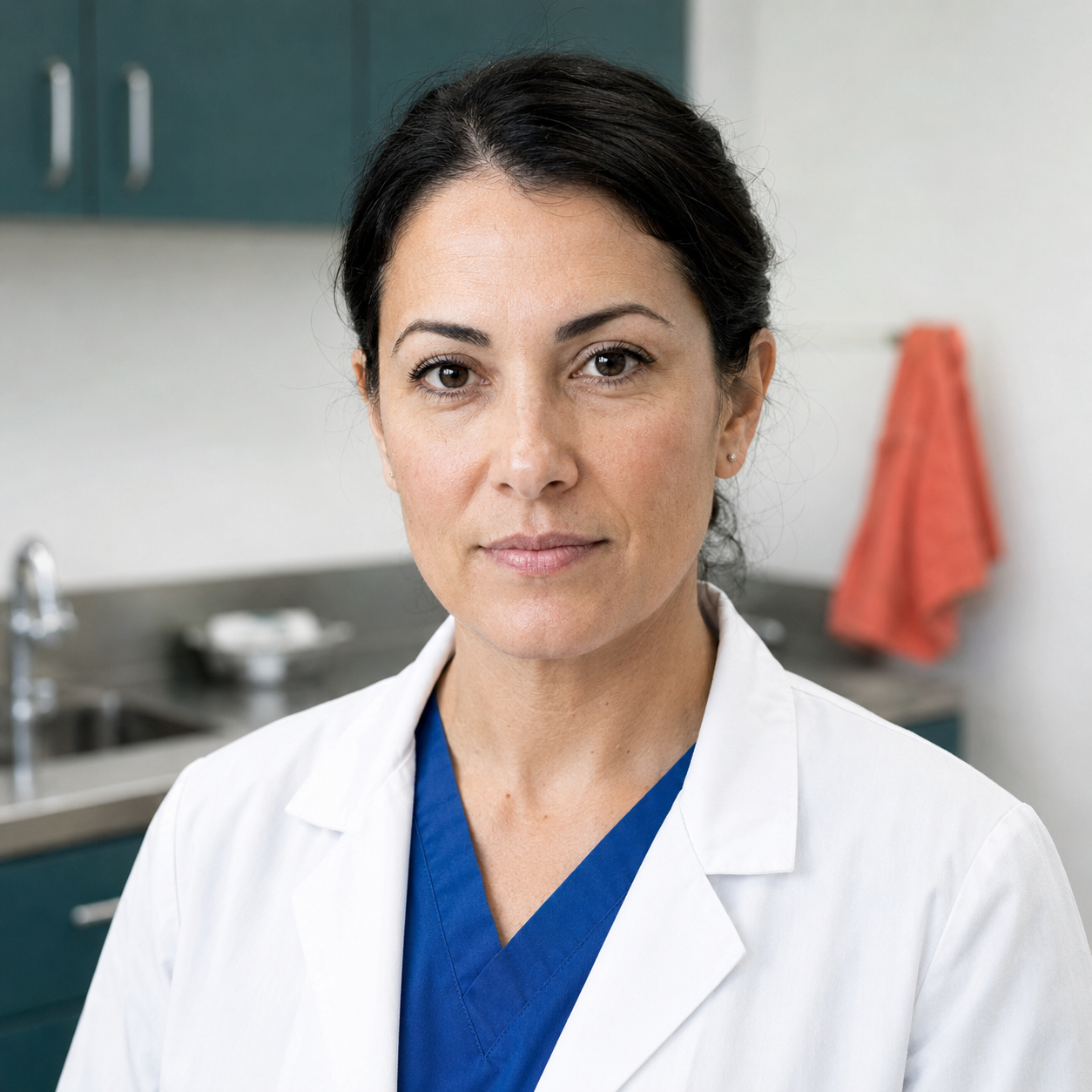
Dr. Chen is a small-animal veterinarian who leads health and safety coverage at The Pet Times. She writes and reviews the bulk of our illness, condition, and safety content, translating clinical guidance into clear, practical advice owners can act on at home.
Meet our experts ↗Keep reading
 FoodHoneydew Is Mostly Sugar Water. That's the Catch for DogsDr. Priya Nair · 5 min
 FoodYour Dog Has No Idea When He's Full. That's Not a Flaw, It's the DesignDr. Ravi Mehta · 6 min
 FoodHome-Cooked Dog Food Can Run $3 a Day. The Real Price Is Your Sundays.Dr. Amara Solis · 9 min
 FoodYour Dog Has a Sweet Tooth. That's Exactly the Problem.Dr. Nina Kohl · 7 min
 FoodThe Xylitol in Raspberries Sounds Scary. The Math Says Feed Them AnywayDr. Mara Chen · 6 min
 Product PicksTikTok's Favorite Dog Feeder Is a Bamboo Speed Bag. The Science Backs It Up.Dr. Nina Kohl · 6 min