


The Fireworks Aren't the Real Danger to Your Dog. The Open Gate Is.
More pets bolt and go missing around July 4th than any other time of year. Almost every reunion, or failed one, is decided by prep you do before the first boom: a locked-down safe room, a collar that can't slip, and a microchip that's actually current.

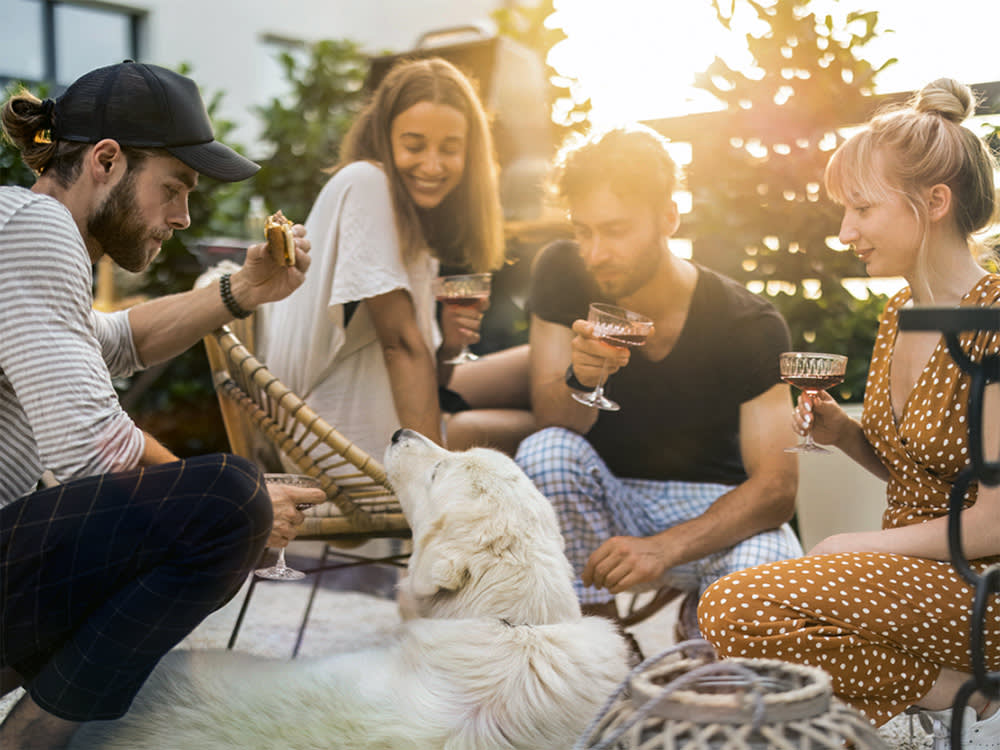
Here is the part people get backwards about the Fourth of July. The fireworks themselves rarely hurt a pet directly. What hurts pets is what the fireworks make them do: panic, and run. A terrified dog will scale a fence they have never touched, bolt through a screen door, or twist out of a collar in the half-second a gate swings open. That is why shelters fill up every July 5th. The holiday is not really a noise problem. It is an escape problem, and escape is something you can plan against.
So treat tonight as a security job. Your goal is to make bolting impossible and identification bulletproof before the first shell goes off, then keep your pet calm enough that they never test the perimeter in the first place. Here is how to do all three.
First, understand what you are up against
The scale is genuinely startling. Shelter Animals Count, which aggregates intake data from thousands of U.S. shelters, has confirmed a sharp spike in stray-dog intake in the days right after July 4th, with the fifth being the single worst day. Older estimates put the jump in lost pets at around 30 percent between July 4th and 6th, and only about one in seven of those animals ever makes it home. Roughly a fifth of pets that go missing at any time of year disappear right after being spooked by a loud noise, and up to half of all dogs show real fear of loud sounds to begin with.
Read those numbers together and the takeaway is simple: the average lost-pet story on the Fourth is not a freak accident. It is a scared animal plus one weak point in your setup. Close the weak points and you have done the most important work of the night.
Build a safe room and let them hide
Unless your plans are limited to a fenced yard with a couple of friends, your pet is better off inside, and dogs who fear loud sounds should stay in without exception. Pick the most sound-buffered room you have. An interior space with no windows beats one with windows every time, because it blocks both the booms and the flashes.
If your dog likes their crate, use it, and drape a blanket over the top so it feels like a den. Pull the blinds, put on steady white noise or calm music to blur the bangs, and lock every door and window so there is no route out even if your pet gets frantic. Then tire them out earlier in the day with a long walk or hard play session. A pet who is pleasantly exhausted settles far more easily than one with energy to burn, and that matters most in the window when you step away.
A frightened animal doesn’t make a plan, it just moves, and it will find the one gap you forgot about. The families who get through the Fourth without a scare are almost always the ones who set the room up hours early, before anyone is anxious. Calm is something you build in the afternoon, not something you improvise at nine at night.
Stack your calming tools
If your pet startles easily, layer a few soothing tools rather than relying on any single one. Chewing and licking are genuinely self-soothing for dogs, so a stuffed chew, a peanut-butter-filled rubber toy frozen solid, or a food puzzle can pull their focus away from the noise for a long stretch. A snug pressure wrap works for some dogs by applying gentle, constant contact, a little like swaddling. Vet-formulated calming supplements help others. For pets with a real noise phobia, this is a conversation to have with your veterinarian well ahead of the holiday, because there are safe, effective anti-anxiety medications that work far better when you are not scrambling for them the afternoon of.
One caution: if your dog guards food or special objects, give them their chew somewhere separate, like a closed room or crate, especially if guests are around.
Make identification impossible to fail
Some households will bring the pet along no matter what advice they read, so plan for that too. If your dog is at the party, clip their leash to your waist so both hands stay free and they can’t drift toward the gate. But the real safety net is identification, and it has two layers that back each other up.
The first is a physical ID tag on a collar that fits snugly, because a loose collar is exactly what a panicking dog slips out of. The second is a microchip, which is the only ID that can’t fall off. A chip only works if its registry entry lists your current phone number, so check that this week, not next month. The payoff is large: according to the American Veterinary Medical Association, microchipped dogs are reunited with their families about 52 percent of the time and microchipped cats about 38 percent, several times the rate for unchipped animals. A cat who has never worn a collar is exactly the pet a chip is built for.
Don’t let the barbecue undo everything
The grill is its own set of hazards, and a begging dog is a determined one. With a nose vastly more sensitive than ours, that barbecue chicken is almost irresistible to them, but cooked bones and corn cobs can splinter or lodge in the gut and sometimes require surgery to remove. Chocolate, alcohol, grapes, and onions are outright toxic. Keep the number for the ASPCA Animal Poison Control Center saved in your phone before you need it.
Then look past the food. A dog who licks everything is at risk from products that seem harmless. Inhaling lighter-fluid fumes can trigger aspiration pneumonia. Swallowing sunscreen can bring on lethargy, vomiting, and loose stool. A DEET-based repellent can set off neurological signs, and the citronella burned in some candles can suppress central nervous system activity. Unexploded or spent fireworks are their own danger, since many contain toxic metals. None of this means canceling the cookout. It means keeping the licker away from the cooler of chemicals the same way you keep them off the burger platter.
What’s new since this advice first circulated
The headline number has actually gotten firmer, not softer. Shelter Animals Count now publishes hard intake data showing the post-Fourth stray spike in real shelters, rather than the rough estimates that used to get passed around, and July 5th consistently lands as the worst single day of the year for dogs turning up as strays.
The other shift is in what vets recommend for the truly noise-phobic. The old default was to tough it out with a snug room and a chew toy. Today, more veterinarians favor a proactive plan for these dogs, sometimes a short-acting anti-anxiety medication given before the fireworks rather than after the panic starts, paired with longer-term desensitization work in the off-season. If your dog falls apart every Fourth, that is worth raising at a regular visit, well before the calendar turns to summer.
None of this asks you to skip the holiday. It asks you to spend twenty minutes this week on the boring stuff, the microchip entry, the collar fit, the safe room, so the only thing your pet misses on the Fourth is the noise.
References
Dr. Kohl is a board-certified veterinary dentist with a particular interest in preventive oral care. She reviews all dental health content at The Pet Times and contributes practical guides on home dental routines, professional cleaning, and oral disease prevention.
Meet our experts ↗Keep reading
 LivingSagittarius Season Explains Why Your Dog Loses It Over an Open WindowSasha Ford · 5 min
 Health & WellnessThe Container Sold as 'Pet-Proof' Is Killing CatsMarcus Webb · 6 min
 Living'Pet-Safe' Is a Marketing Word. Read the Label Instead.Dr. Nina Kohl · 7 min
 Product PicksYour 'Non-Toxic' Houseplant Can Still Land Your Pet at the VetSasha Ford · 6 min
 Living7 Genuinely Pet-Safe Houseplants — and the Toxic Twins to AvoidLeila Torres · 6 min
 LivingBefore You Bring Your Dog to the Cookout, Answer 8 Honest QuestionsTom Hadley · 9 min