


That Backyard Cat Probably Isn't Feral. The Difference Decides What You Can Do
The word 'feral' gets thrown at any cat living outdoors, and it quietly sets the wrong expectations. A behaviorist's definition, the socialization window that actually governs the outcome, and how to help without pushing a cat past its limit.

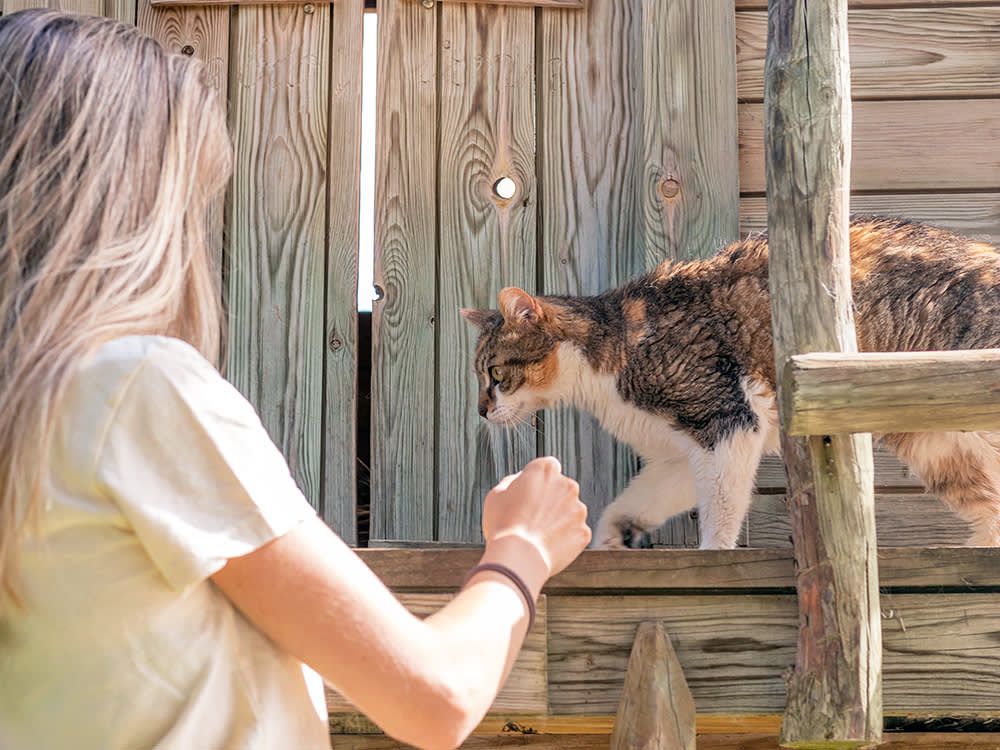
The word “feral” does a lot of quiet damage. People use it for any cat living outdoors, and in doing so they hand themselves the wrong script: either “this cat is wild and hopeless” or “I can bring this poor thing inside and it will curl up on the couch by Friday.” Both are usually wrong, and both come from misusing one word. Get the definition right and everything downstream changes, what you can realistically expect, how fast to move, and whether you should try to bring the cat in at all. So before deciding what to do about the cat in the yard, it is worth figuring out what kind of cat it actually is.
”Feral” is not a synonym for “outdoors”
To a behaviorist, feral has a specific meaning, and it is stricter than everyday use. A feral cat is one who never got meaningful socialization with humans, typically missing it as a young kitten, and as a result has no interest in being near people at all. A truly feral cat generally cannot be touched or petted and often cannot even share a room with a person calmly. This is not stubbornness or a bad mood; it is a cat who reads humans as part of the threatening, unknown world.
What that kind of fear looks like in the extreme is startling. Behaviorists who have worked disaster response describe feral cats at emergency shelters climbing straight up thirty-foot steel beams to escape, or punching through ceiling tiles to get away from people. That is feral. By contrast, a cat who runs to the back door at mealtime, suns themselves on the patio, and will occasionally accept a cuddle is not feral, no matter how independent they seem. They are a socialized cat living outside, and the distinction is everything.
Most of the “feral” cats people worry about are really strays: cats who were socialized to humans at some point and are now living outdoors. Both feral and socialized outdoor cats are still domesticated as a species, meaning both carry the genetic potential to be tame. But a stray has already crossed the bridge to trusting people once, and a feral cat has never set foot on it.
The label people reach for changes how they treat the cat, and usually for the worse. Call a shy stray ‘feral’ and you write the cat off. Call a truly feral cat ‘just nervous’ and you push contact it cannot handle. I ask people to describe what the cat actually does around them, and nine times out of ten the answer tells us the cat is far more reachable than the word suggested.
Age is the factor that decides the odds
If there is one thing that predicts whether an outdoor cat can be brought inside and socialized, it is age. Kittens have a socialization window, roughly two to nine weeks old, when gentle, frequent handling shapes them into confident, people-friendly adults. Bring a kitten inside within or close to that window and full domestication is likely. Conventional wisdom holds that once a kitten passes about 16 weeks without human socialization, the easy window has closed; it is not impossible after that, but it gets much harder to predict whether the cat can be socialized, to what degree, and how long it will take.
Adults are a genuinely different story. Some undersocialized adult cats do progress, from unreachable, to food-friendly, to semi-feral, to something like domesticated, given enormous patience. But even in the success stories, a former adult feral cat rarely becomes a lap cat. That level of closeness rests on a deep trust and a desire for human contact that adult ferals seldom develop. Two things follow from this. First, a good outcome is real but has to be defined honestly. Second, the same effort applied to a kitten and to an adult will not yield the same result, and knowing that up front prevents a lot of heartbreak.
There are hopeful exceptions worth holding onto. Behaviorists tell of untouchable adult cats who, after a year of being fed regularly outdoors, one day decided petting was acceptable and moved inside on their own terms. And a client cat who arrived even wilder than the adopters bargained for became, after months of patient work, what one consultant called the sweetest love-bug. The point is not that it never happens. It is that it cannot be rushed or assumed.
What “helping” actually looks like
If there is a cat in your yard you cannot touch and whose ear is not tipped, the tipped ear being the universal sign a cat has already been trapped and sterilized, the most useful thing you can do is contact a local trap-neuter-return group. The goal of TNR is to trap the cat, spay or neuter them, vaccinate, microchip, and ear-tip them, then return them to where they were found. There is a neighborhood benefit too: a sterilized cat holding a territory tends to keep other unsterilized cats from moving in.
If the cat is friendly enough to touch, you can consider taking them in, but do it responsibly. The cat needs a vet exam first and should be scanned for a microchip in case they are simply someone’s lost pet, and it is worth posting signs and checking lost-cat boards before assuming ownership.
While all this plays out, the kindest approach is also the most counterintuitive: go easy on affection. Provide a safe, warm space, fresh water, and regular food, but do not try to pet a cat while they eat, and never make food or water conditional on letting you touch them. People think they are building a positive association; often they are forcing an interaction that crosses the cat’s comfort line and sets trust back. The way you actually earn a cat’s trust is by proving you will respect their boundaries, which mostly means letting them come to you.
Go slow, and let the cat write the ending
A shed, garage, or covered porch makes a good transitional space for a cat you hope to bring inside, somewhere sheltered but not yet fully indoors. Start by simply letting the cat get used to your presence, and over time gauge whether they will tolerate closer contact. Wand toys and strings that let a cat engage from a safe distance are useful here, and it is worth waiting until a cat is comfortable with you before moving them inside, because anything that scares them can undo weeks of progress in a moment.
The thread running through every expert’s advice is that there is no rushing this, and that a happy ending does not have to look a particular way. Not every outdoor cat is destined to sleep on your pillow, and a cat who never becomes an indoor lap cat but has a warm bed, a full belly, and people who respect them is living a genuinely good life. Sometimes the most caring thing is to give a cat the safety and space to make their own choices, and to honor whatever they choose. That is true whether the answer is a spot on the couch or a warm shed with the door left open.
References
- Alliance for Contraception in Cats & Dogs. “Feral and Community Cats.” https://www.acc-d.org/
- American Society for the Prevention of Cruelty to Animals. “Feral Cats FAQ.” https://www.aspca.org/
- Casey, Rachel A., et al. “Reducing Fear of Novel and Aversive Events in a Kitten Socialisation Program.” Journal of Feline Medicine and Surgery. https://journals.sagepub.com/home/jfm
- Alley Cat Allies. “Trap-Neuter-Return: The Humane Approach.” https://www.alleycat.org/
Common questions
What is the difference between a feral cat and a stray?
A feral cat is one who never had meaningful socialization with people, usually as a kitten, and wants nothing to do with humans. A stray is a cat who was socialized at some point but is now living outdoors. The stray can often be reintegrated; the truly feral adult almost never becomes a lap cat.
Can a feral cat become a house cat?
Sometimes, and it depends heavily on age and the individual cat. Kittens socialized early can become fully domesticated. An adult who was never socialized may, with patience, learn to tolerate and even accept a person, but expecting them to become a cuddly indoor cat usually sets everyone up for disappointment.
What is the socialization window for kittens?
The prime window is roughly two to nine weeks of age. Kittens handled gently and often during that period tend to become confident, people-friendly adults. After about 16 weeks without human contact, socialization becomes much harder and less predictable.
There's a cat in my yard I can't touch. What should I do?
If the cat has no tipped ear, contact a local trap-neuter-return group so the cat can be trapped, sterilized, vaccinated, microchipped, ear-tipped, and returned. Meanwhile provide food, water, and shelter, and let the cat set the pace on any contact.
Dr. Kohl is a board-certified veterinary dentist with a particular interest in preventive oral care. She reviews all dental health content at The Pet Times and contributes practical guides on home dental routines, professional cleaning, and oral disease prevention.
Meet our experts ↗Keep reading
 LivingYour Cat Notices the Empty Spot. Whether to Call It Grief Is the Hard PartDr. Nina Kohl · 6 min
 LivingHer Cats Kept Sneaking Into the Drawings. Then They Took Over.Leila Torres · 6 min
 LivingHe Fostered Six Kittens. Two Died in His Hands. He Kept Fostering.Dr. Amara Solis · 8 min
 LivingHe's Rehomed 40 Kittens. Behind the Cute Videos Is a SystemJames Okafor · 7 min
 LivingThe 'Dog Guy' Is Quietly Becoming a Cat GuyNina Vasquez · 4 min
 LivingA Grumpy 14-Year-Old Cat Nobody Would Have Adopted Started a MovementLeila Torres · 6 min