


He's Rehomed 40 Kittens. Behind the Cute Videos Is a System
The Insta-famous foster dad is known for adorable kitten clips. Underneath them is a hard-won, repeatable method for raising and placing kittens that's more practical than most pamphlets.

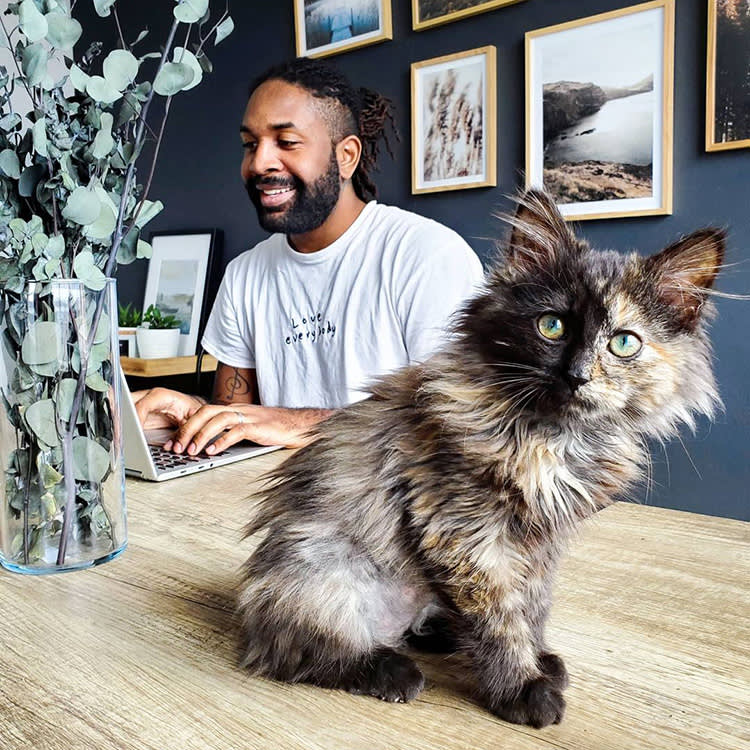
The videos are the hook. A six-foot-four guy with locks and tattoos, sitting on the floor while a pile of kittens climbs him, usually filmed by his schoolteacher wife. But scroll past the cuteness on Abdul Hawramani’s account, and what you actually find is a system. Over three years and roughly 40 kittens, all placed in homes, the DC-based foster dad behind Abdul’s Cats has worked out a repeatable method for turning scared, unsocialized litters into adoptable companions. The charm is real. The process underneath it is the part worth copying.
So we reorganized what he told us the way he would probably teach it: as a working playbook, not a feel-good profile.
The method, in the order it matters
Start later than you think
The most common first-timer mistake is adopting too young.
“If it’s your first experience, wait until they’re three to four months old,” Hawramani says. By that age, he explains, a kitten is litter-trained, settled on wet food, and sturdy enough that a first-timer is not managing fragility on top of everything else.
That advice lines up with what feline veterinarians recommend: kittens learn critical social and litter behaviors from their mother and littermates in the early weeks, and a kitten that leaves too soon is harder, not easier, for a beginner to raise.
Budget for how much they eat
Kittens are small and astonishingly expensive to fuel.
His second prerequisite is blunter: a budget. Kittens are tiny furnaces, and with four in the house he burns through roughly a dozen cans of food every day.
And that is just food. If a rescue has not already covered it, a new kitten may need vaccinations now and spaying or neutering later, so the first-year cost is real. Hawramani feeds wet food specifically because young kittens get more hydration and nutrition from it, a sound default for animals that age.
Socialize on the kitten’s clock, not yours
The videos make it look effortless. The reality is patience, sometimes weeks of it.
“It’s a patience thing,” he says of the early, scared-of-everything phase. His method is scent first, food second: he simply sits in the room until his presence stops being news, and for a kitten glued to the underside of the bed, he inches the food bowl toward himself day by day, adding a gentle stroke while they eat, until human contact and good things are the same event.
For kittens from different litters meeting for the first time, he separates them for about a week so they can adjust to each other’s smells before any face-to-face contact. Expect hissing; it is normal, not failure.
Set up the home before they arrive
Two rules do most of the work here. First, make peace with scratched furniture, and pre-empt it with scratchers placed against anything you want to protect. Second, the litter-box math that surprises most new owners:
His box math is simple: always one more litter box than there are kittens, so four kittens means five boxes. Kittens are fastidious, and a dirty box is the fastest way to teach them bad habits.
Cats are fastidious, and an under-supplied or under-cleaned box is the fastest route to accidents. Plan for ventilation, too; a houseful of kittens means open windows and air flow.
Put in the hours, then stay in touch
Raising kittens is less hard work than relentless work.
Play is a daily multi-hour commitment, and he is honest that the fun curve bends: hour one is a joy, hour four is a job. The dedication matters most when the kittens are smallest, when checking that everyone is eating, drinking, and thriving is a constant background task.
And the part that closes the loop: he keeps in contact with every adopter, texting and calling to answer questions and collecting the photos that show how big the kittens have gotten. The follow-through is what makes the placements stick.
How a guy who “never had pets” ended up here
Hawramani did not grow up with animals. “I wouldn’t say I wasn’t a cat person,” he says of his life before fostering. “I just never had any pets.” That changed when he met his wife, her fosters, and her adult cat Bambi, a foster fail who patiently teaches each new litter the ropes, litter box included. The gratification of raising the kittens hooked him fast.
There was a personal payoff he did not expect. “I have anxiety, I’m kind of an introvert,” he says. The cats, he found, worked on him quietly: the more time he spent in the kitten room, the lighter his own mood ran. It is a small, honest illustration of something research increasingly supports: the bond with an animal can be genuinely good for a person’s mental health.
Why the videos matter beyond the views
There is a reason Hawramani’s account resonates the way it does, and it is not only the kittens.
“I don’t really see anybody who looks like me. I’m Muslim, I’m six-four, I have tattoos, I have locks, and I’m just playing with these kittens,” he says. The messages that stick with him are the ones thanking him for breaking the stereotype, and better still, the ones that begin, because of you, I fostered.
People of color, and Black Americans in particular, are underrepresented in the public face of animal rescue. By simply being visible doing the work, Hawramani widens the picture of who fosters look like, and his inbox suggests it is nudging real people to start. If his system gets even a few more first-timers through their first scared, hissing litter and out the other side, the cute videos will have done something far more useful than go viral.
References
- American Association of Feline Practitioners. “Life Stage Definitions and Kitten Care Guidelines.” catvets.com, https://catvets.com/guidelines/practice-guidelines/life-stage.
- ASPCA. “Foster a Pet.” aspca.org, https://www.aspca.org/adopt-pet/foster-pet.
- Alley Cat Allies. “Socializing Kittens.” alleycat.org, https://www.alleycat.org/resources/how-to-socialize-kittens/.
- Human Animal Bond Research Institute. “The Health Benefits of Companion Animals.” habri.org, https://habri.org/research.
James Okafor covers rescue, adoption, and the causes shaping animal welfare. His work follows the people and organisations working to give more pets a home, and the issues owners and advocates care about most.
Meet our experts ↗Keep reading
 LivingCarrie Bradshaw's Kitten Was a Foster. Then Sarah Jessica Parker Kept Him.Jordan Ellis · 5 min
 LivingA Whole City Spent 20 Days Hunting for a Hardware-Store Cat. It Worked.Marcus Webb · 6 min
 LivingYour Cat Notices the Empty Spot. Whether to Call It Grief Is the Hard PartDr. Nina Kohl · 6 min
 LivingThat Backyard Cat Probably Isn't Feral. The Difference Decides What You Can DoDr. Nina Kohl · 7 min
 LivingThe 'Dog Guy' Is Quietly Becoming a Cat GuyNina Vasquez · 4 min
 LivingNobody Gives Up a Cat They Love on a Whim. Here Are the 5 Real Reasons, and the Fixes.Dr. Amara Solis · 6 min