


Who Cares for Your Cat If You Die First? Inside the Homes Built to Answer
The senior-cat crisis is not really about old age. It is about cats who outlive the person who loved them. Feline retirement homes and guardian programs exist so that is a plan, not a tragedy.

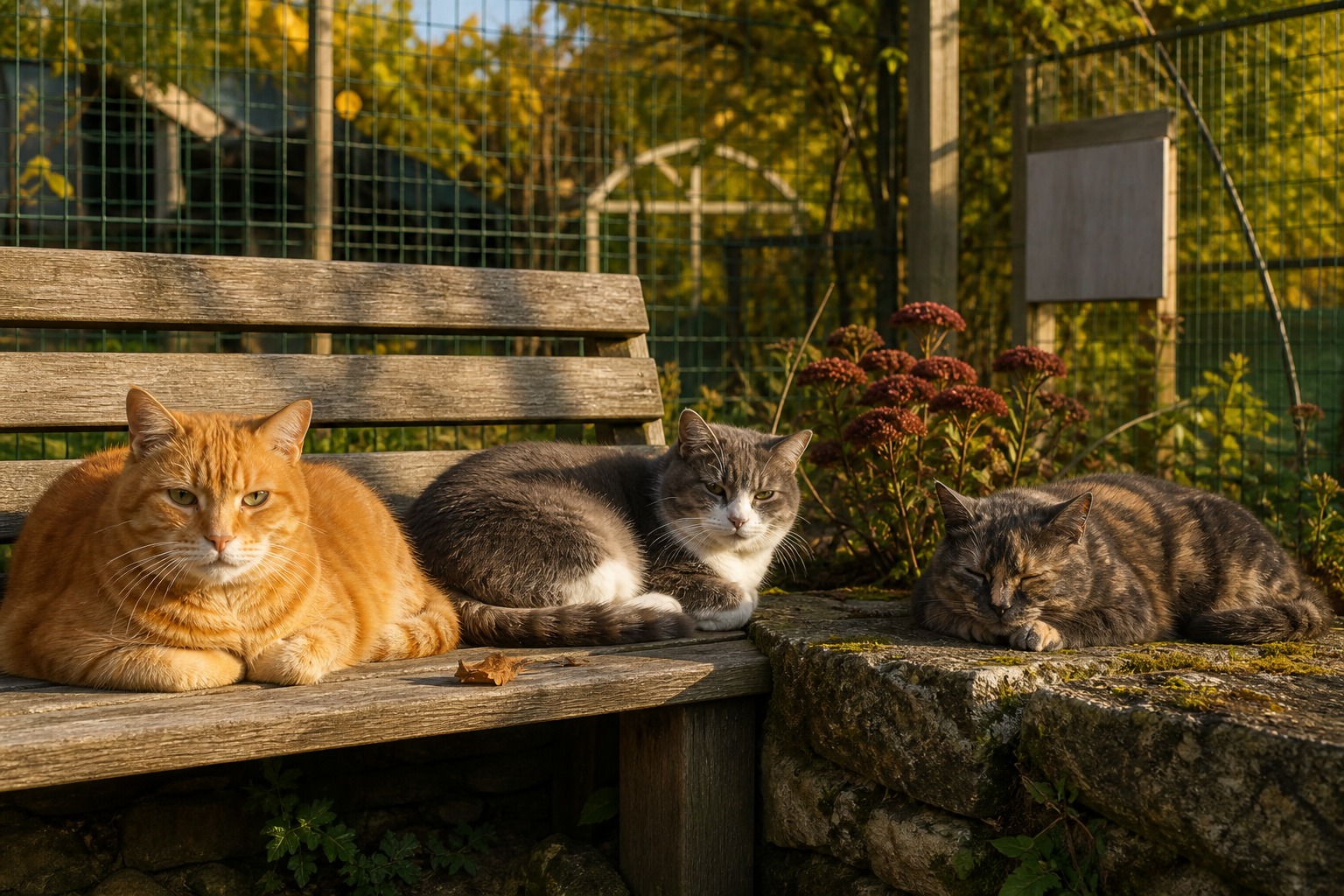
Ask most people how a healthy, loved older cat ends up in a shelter and they picture neglect. The real answer is quieter and more common: the person who cared for that cat their whole life died, or got too sick to continue, and there was no plan for what came next. Roughly 3.2 million cats entered the U.S. shelter system in 2023, and a meaningful share of the seniors among them arrived through exactly that door.
That reframing matters, because it changes the solution. If the problem were simply “old cats are unwanted,” the fix would be more adopters. But the problem is a gap in planning, and the most important work these feline retirement homes do is not rehoming grieving cats after the fact. It is helping people arrange care before the crisis, so a cat never has to lose everything at once. So we will start there, with the planning, and then look at how the homes themselves actually run.
The plan you can make now: guardian programs
The single most useful thing a senior-cat rescue offers is not a cage; it is peace of mind before anything goes wrong.
Hearts That Purr, in Tucson, Arizona, runs a Feline Guardian Program that lets you register your cat in advance. If your cat outlives you, care is already arranged, no scramble, no shelter intake, no gap where the cat sits at risk. To qualify, you make an annual donation and include a financial gift in your will to cover your cat’s future care. Moggie’s Retirement Village in the U.K. offers the same kind of advance registration for owners facing death or illness that feels inevitable, if not imminent.
“The kindest thing you can do for an older cat is decide, while you are well, who takes over if you cannot,” says Dr. Amara Solis, a Pet Times veterinarian. “A cat who loses their person and has a plan already in place is spared the part that hurts them most, which is landing in a strange, loud place with no idea whether anyone is coming.”
This is the part of the story that does not require you to adopt anyone. A named caretaker in your will, a pet trust, or enrollment in a guardian program turns “my cat could end up in a cage” into “my cat is covered.” It is the highest-leverage move in this whole piece.
What a feline retirement home actually is
For cats who do arrive after a loss, these homes exist to be a home, not a holding facility. Feline retirement homes are nonprofit rescues devoted specifically to the long-term and end-of-life care of senior cats, built for exactly the cats other systems struggle to place. Once a rarity, they are appearing across North America and the U.K.
Hearts That Purr cares for 31 elderly cats across a 6,000-square-foot ranch home and guest house on eight acres, taking in as many as it can from the local community and shelters, and it never charges a set intake fee. Founder Jeanmarie Schiller-McGinnis describes a space full of windows, cat towers, rugs, and furniture, with different areas for different groups so everyone can coexist peacefully. New catios give residents safe fresh-air enrichment. She opened it in 2013 after years on her local shelter’s board and has since helped more than 200 cats, estimating annual care at roughly $1,000 per cat, run by a volunteer network and a single staff member.
“If someone has resources to donate, we ask for something to help,” Schiller-McGinnis says. “Otherwise, it is about helping the human as much as the cat, so we do not have a set intake fee.”
Not every home runs the same way
The models vary more than you would expect. Some operate like human retirement communities, accepting cats from perfectly healthy owners in exchange for a large one-time donation or ongoing payments scaled to the cat’s needs. Others are folded into larger, traditional shelters.
Moggie’s Retirement Village at Shropshire Cat Rescue is one of the latter. It houses 22 cats in a secure garden of six cottages surrounding a central building called Moggie’s Mansion. “They come in for various reasons,” says trustee and volunteer Susie Phillips, “but the most common is owners passing away, becoming terminally ill, or going into a care home.”
The intake is deliberately gentle. New arrivals stay secured in a cottage for a week or two to adjust to the rhythm of people and the presence of so many other cats. Once settled, they roam the village freely and claim a favorite sleeping spot. If a cat cannot settle into village life, the rescue works to find it a home as an only cat, which is no small task given how many older cats carry chronic medical needs.
The money is significant. Veterinary bills alone at Moggie’s can run between 3,000 and 7,000 pounds a month, yet Shropshire Cat Rescue does not charge for its services. It is funded entirely by its charity shop in Shrewsbury plus donations and sponsorship schemes. “Some people leave a donation and some write us into their will,” says shelter manager Marion Micklewright. “By some miracle, probably social media, the generous public and our supporters are there to make sure the cats get whatever they need, whenever they need it.” Supporters can sponsor the whole village, individual cats, the nursery, or the main shelter.
The foster route: “fospice” for cats who want a lap, not a village
Not every cat wants to live in a house full of other cats, however lovely the house. Hearts That Purr built a foster program for these solo types, pairing them with elderly cat lovers who do not currently have a cat. The organization checks in monthly, covers all the bills, handles vet transport, and pays for food and litter, and if the cat outlives its new person, it finds another foster.
This is where a small but growing movement fits in. Animal-welfare groups increasingly promote what is often called fospice, foster hospice, where a volunteer gives a terminal or very old animal a real home for whatever time is left while the rescue covers the medical costs. It answers the most common objection to adopting a senior cat, the fear of expense and heartbreak, by removing the financial risk and reframing the short timeline as the point rather than the drawback.
Why seniors get overlooked, and why that is worth fighting
Older cats are adopted at markedly lower rates than kittens, and they often wait far longer in a shelter, sometimes for months after a younger cat in the next cage has already gone home. That is the grim math these homes are pushing against.
“Not everyone wants to give up their pet,” Micklewright says. “Some have no choice. We have made many people very happy by keeping in touch with emails and photos of their cats enjoying the garden. Others are so stressed about what will happen to their cat that they take real comfort knowing we are here.”
For every cat these charities take in, thousands more still need help, which is why it matters that people at least consider an older cat. Yes, seniors have more life behind them than ahead, and they may need more vet visits, so get the pet insurance. But as Schiller-McGinnis points out, there is no guarantee a young cat will live a long, trouble-free life either, and a senior cat leaves a lasting mark. Any cat you could love that deeply is not one you would want to see die alone in a cage.
If you cannot take on an elderly cat yourself, you can still help: make a plan for your own cat now, donate to Hearts That Purr, Shropshire Cat Rescue, or your local feline retirement home, or ask a nearby rescue whether it runs a fospice program. Because no cat should be euthanized or left in pain and isolation simply for being old, needing a little extra care, or losing the person who loved them.
References
- “Pet Statistics: Shelter Intake and Surrender.” ASPCA. https://www.aspca.org/helping-shelters-people-pets/us-animal-shelter-statistics
- “Four Reasons to Give Senior Cats a Lifesaving Chance.” ASPCA. https://www.aspca.org/blog/four-reasons-give-senior-cats-lifesaving-chance
- “Providing for Your Pet’s Future Without You.” The Humane Society of the United States. https://www.humanesociety.org/resources/providing-your-pets-future-without-you
Leila Torres leads our Living coverage, from home life and travel to the products and rescue stories that come with sharing a life with animals. She edits and writes across the section, with a soft spot for pieces about the bond between people and their pets.
Meet our experts ↗Keep reading
 Health & WellnessThe Cutest Cat Breeds Are Often the Sickest. The Look Is the Problem.Dr. Amara Solis · 8 min
 LivingThe Only Part of TNR People Fight About Is the Part That WorksLeila Torres · 7 min
 LivingThe Viral Cat Essay's Real Failure Was Confusing a Feeling With a ChoiceDr. Mara Chen · 8 min
 LivingHe Fostered Six Kittens. Two Died in His Hands. He Kept Fostering.Dr. Amara Solis · 8 min
 Health & WellnessGetting Your Cat Fixed Can Cost $0 or $500Dr. Priya Nair · 6 min
 LivingOne Woman, a 2002 Camry, and Brooklyn's Cats Nobody Else Will SaveJames Okafor · 6 min