


The Cutest Cat Breeds Are Often the Sickest. The Look Is the Problem.
The flat face, the folded ear, the tailless rump, the pointed coat: the features that make eight popular purebred cats so recognizable are frequently the same features that make them ill. A breed-by-breed look at what's baked in.
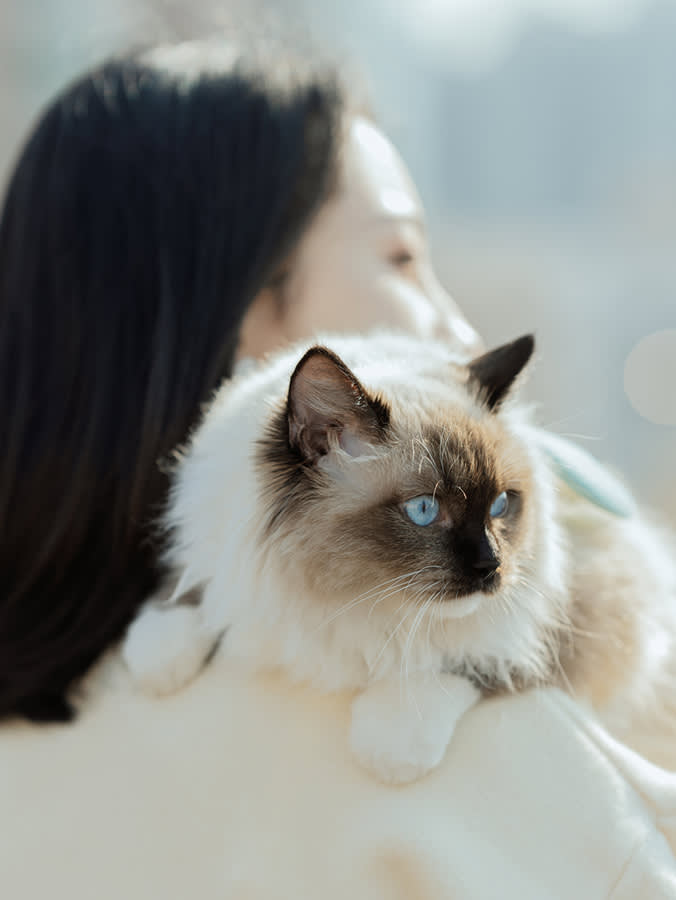
We tend to talk about a cat’s breed and a cat’s health as two separate subjects, as if the adorable smushed face is one thing and the breathing trouble is another. For a lot of the most popular purebred cats, they are the same thing. The trait we find cute, the flat face, the round eyes, the folded ears, the tailless rear, is often the trait causing the problem. It was selected for on purpose, from a small gene pool, and the illness came along with it.
That is the uncomfortable idea worth sitting with before you fall for a specific look. Below, eight breeds where the signature feature and the health risk are hard to separate, and why a shelter cat is worth a serious look first.
People assume a breed’s health problems are bad luck you might dodge. With a lot of these cats, the problem is the design. You are not hoping to avoid the flat face’s complications, you are choosing them when you choose the face.
Persians: the flat face is the whole issue
The Persian is one of America’s most beloved cats and one of its most predictably unwell. In the largest study of the breed ever done, the Royal Veterinary College’s VetCompass programme reviewed the records of thousands of UK Persians and found that close to two-thirds carried at least one diagnosed health condition. The most common were haircoat disorders, dental disease, overgrown nails, and eye discharge, and researchers tied many of them directly to the long coat and flat face the breed is bred for.
That flat face is the crux. Persians are brachycephalic, meaning the skull is shortened, and the same structure shows up in Himalayans, Exotic Shorthairs, and pugs. It can bring brachycephalic airway syndrome, where an elongated soft palate, pinched nostrils, and a narrowed windpipe make eating and breathing genuinely hard. Many Persians also inherit polycystic kidney disease (PKD), a condition in which cysts grow on the kidneys and slowly destroy them.
Exotic Shorthairs: a Persian’s problems in a shorter coat
Exotic Shorthairs exist because breeders wanted the Persian’s face without the grooming. They got it, and they got the health profile too. The same round, snub-nosed skull brings the same predisposition to PKD, progressive retinal atrophy, heart disease, and the breathing problems that come with a squashed airway. Shorter fur, identical liabilities.
With the flat-faced pair, the illness at least follows from a face you can see. The next two breeds are more unsettling, because the defining feature is a skeletal defect.
Scottish Folds: the famous ears come from a cartilage defect
This is the one that should give buyers the longest pause, because there is no “healthy” version of it. The Scottish Fold’s adorable folded ears exist because of a genetic defect in cartilage, and that defect does not stay in the ears. It is a dominant trait, which means every Scottish Fold has it, and it produces osteochondrodysplasia, sometimes called Scottish Fold Disease, a painful degenerative condition that fuses and deforms the joints of the tail, ankles, and knees. Affected cats can become reluctant to jump or walk, and in bad cases lose the ability to move comfortably at all. The cuteness and the disease are, quite literally, the same gene.
Manx: no tail, and sometimes no working spine
The Manx’s missing or stubby tail is the result of generations of breeding for taillessness, and it comes with its own eponymous condition: Manx Syndrome. It primarily affects the spinal cord and can cause spina bifida, where the vertebral arches fail to form properly. Cats with it may walk abnormally or, in more serious cases, face incontinence or loss of feeling in the hind legs. Severely affected kittens sometimes do not survive.
The breeds whose risks you can’t see
The last group looks perfectly healthy. Their inherited troubles hide inside, in the eyes, the heart, and the gut.
Bengals: the wild look, the fragile eyes and heart
Bengals are clever, loud, and stunning, with a coat that reads like a tiny leopard’s. Their inherited troubles cluster in the eyes and heart. They are prone to cataracts and to progressive retinal atrophy (PRA), an untreatable degeneration of the retina that ends in blindness. They also carry a raised risk of hypertrophic cardiomyopathy (HCM), a thickening of the heart muscle that, per Cornell’s Feline Health Center, can lead to lethargy, labored breathing, congestive heart failure, and dangerous arrhythmias.
Ragdolls: built like a plush toy, wired for heart trouble
Ragdolls are enormous, silky, blue-eyed, and famously floppy. They are also especially susceptible to HCM, tied to a mutation in the MYBPC3 gene, the same defect that dogs the Maine Coon. Their risks do not stop at the heart. Like Persians, they can inherit PKD, which has no cure. They are also prone to obesity, to blood clots, and to cryptococcosis, a fungal infection with nasal, neurological, skin, and systemic forms; the nasal type is the most common, bringing chronic sneezing, discharge, and breathing trouble, while a version that reaches the central nervous system can cause blindness and seizures.
Siamese: the talkative breed with a cancer streak
The sleek, vocal Siamese, with its dark points and pale body, carries a higher risk of certain cancers. It is notably prone to mediastinal lymphoma, which tends to strike young cats who are feline-leukemia positive, and to intestinal tumors: according to VCA Animal Hospitals, the Siamese is roughly twice as likely as other cats to develop intestinal cancer, with adenocarcinoma rates running several times higher than the feline average. Siamese may also face PRA, asthma, hip dysplasia, arthritis, and pica, the urge to chew and swallow non-food items like fabric and packaging.
Maine Coons: the gentle giant’s heart
The Maine Coon rounds out the list because its size and sweetness hide a well-documented cardiac risk. Like the Ragdoll, it carries a MYBPC3 mutation associated with hypertrophic cardiomyopathy, the most common heart disease in cats. Not every Maine Coon will develop it, but the breed’s predisposition is exactly why responsible breeders screen for the mutation and why owners should ask about heart testing and watch for early signs like reduced energy or faster breathing.
The list keeps going
These eight are not the whole story. Sphynx, Himalayans, Burmese, Norwegian Forest Cats, Cornish and Devon Rexes, and British Shorthairs all carry their own well-known predispositions. The pattern repeats: a distinctive look, a narrow gene pool, a bill that comes due later.
What’s new since this was written
The debate is starting to move from advice into law. The Netherlands announced that as of January 1, 2026, it will be illegal to keep hairless cats or cats with folded ears, extending a breeding ban that has been in place there since 2014 to ownership itself, with fines around €1,500 for violations. Cats born before the cutoff and microchipped are grandfathered in. It is the first national rule of its kind aimed at “harmful external characteristics,” and regulators pointed to exactly the problems above: the folded-ear gene’s link to crippling joint disease, and the hairless breeds’ trouble regulating temperature and protecting their skin.
Whether more countries follow is an open question, but the direction of the science is not really in dispute anymore: features bred for looks, at the cost of a cat’s comfort, are increasingly being treated as a welfare problem rather than a style.
If your heart is set on a breed
A so-called responsible breeder is certainly better than a kitten mill, but no amount of care undoes a narrow gene pool. If a particular breed has your heart, start with a breed-specific rescue, which pairs you with cats who need homes and often comes with a clearer health history. And before any of that, visit your local shelter, where cats of every type are waiting and where “mixed breed” usually means a wider, healthier gene pool by default.
References
- Persian cats at high risk of health problems, study shows — RVC VetCompass
- Hypertrophic Cardiomyopathy — Cornell Feline Health Center
- Osteochondrodysplasia in Scottish Fold cats — International Cat Care
- Dutch ban new ownership of Sphynx and Scottish Fold cats — DutchNews.nl
- Polycystic Kidney Disease in cats — VCA Animal Hospitals
Not a substitute for your vet. Our guidance is educational. For urgent symptoms, contact a vet or emergency clinic right away. Editorial standards
Dr. Solis is a board-certified veterinary dermatologist with over twelve years of clinical experience. She advises on skin conditions, allergies, and grooming practices that affect coat and skin health. All dermatology and allergy content at The Pet Times is reviewed by her team before publication.
Meet our experts ↗Keep reading
 Health & WellnessThe Vet Said Amputate. Almost Every Owner Says the Same Thing Afterward.Dr. Mara Chen · 12 min
 Health & WellnessGetting Your Cat Fixed Can Cost $0 or $500Dr. Priya Nair · 6 min
 LivingKitten Season Never Ends Anymore. Blame the Vet Bill, Not the Weather.Leila Torres · 8 min
 LivingA Five-Month-Old Kitten Turned On a Faucet, Blocked a Drain, and Closed a Cat CafeSara Lim · 6 min
 Health & Wellness7 Ways to Help the Stray Cats on Your Street Survive WinterDr. Priya Nair · 7 min
 LivingYou Can't Out-Spray Cat Pee. Here's the Only Thing That Actually Works.Dr. Mara Chen · 9 min