


Feline Asthma Is a Daily Practice, Not a Death Sentence
The diagnosis sounds frightening and the word incurable lands hard. But the cats who do well are not the ones with milder disease. They are the ones whose owners built a calm daily routine around it.
Affiliate disclosure. This article contains affiliate links. We may earn a small commission if you buy through a link, at no extra cost to you. How we handle recommendations.
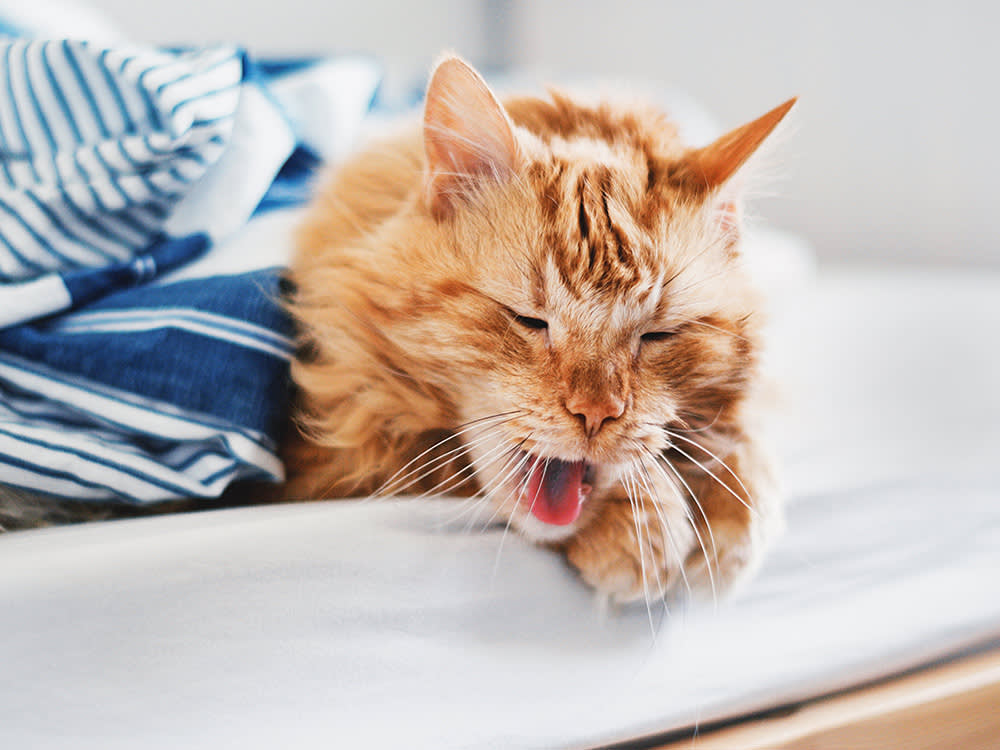
The cough is almost always mistaken for a hairball first. A cat crouches low, stretches their neck out, and makes that dry hacking sound, and the natural assumption is that something is about to come up. When nothing does, and it happens again the next day, and the day after that with no hairball to show for it, that is the moment that matters. That repeating, hairball-that-never-arrives cough is one of the most common ways feline asthma announces itself.
An asthma diagnosis can be scary, especially when your vet uses the word incurable. But here is the reframing worth holding onto from the first appointment: incurable is not the same as unmanageable, and the cats who thrive with asthma are not the ones who happened to get a mild case. They are the ones whose owners turned treatment into a calm, boring daily habit. The medicine matters, but the routine is what saves the life.
What is actually happening in an attack
Feline asthma is thought to affect one to five percent of cats in the United States, which makes it the most commonly diagnosed feline respiratory illness. Any age of cat can develop it, but most cases show up between two and eight years old.
As in people, asthma in cats is a disease of inflamed airways. The bronchi swell, the airways spasm and narrow, and excess mucus builds up, so each breath pulls in less oxygen than it should. When that tips over into an attack, you may see coughing, wheezing, open-mouth breathing, and rapid or labored breathing.
Not every cat with asthma has an obvious cough, which is exactly why you should raise any breathing change with your vet rather than waiting for a textbook symptom. Catching it early and managing it well is what prevents the permanent damage, the tissue scarring and emphysema, that we cannot undo later.
The unsettling thing about attacks is how suddenly they arrive. A cat can be batting a catnip toy or dozing in a sun puddle one minute and slip into real respiratory distress the next, looking perfectly healthy in every other way.
When it is an emergency. Open-mouth breathing in a cat is not normal and is not the same as a dog panting. If your cat is breathing with an open mouth, breathing very fast at rest, showing blue or gray gums, or clearly struggling, that is an emergency. Go to a vet or emergency clinic now. A rescue inhaler, if your vet has prescribed one, can be given on the way.
Getting to a real diagnosis
Because the signs of asthma overlap with several other conditions, a good diagnosis is partly a process of ruling things out.
The first job when we suspect asthma is excluding the mimics. Bloodwork, urinalysis, and a fecal test help us clear those. Chest X-rays are useful too, because some cats show a pattern in the lungs that is characteristic of inflammatory cells building up, or of airways so constricted the lungs look overinflated.
If those tests are inconclusive, a definitive answer may require a brief anesthetic for an airway wash, where sterile saline is flushed into the airway and suctioned back out so the cells can be examined. Two things make your vet’s job much easier: tell them about any recent change in the cat’s environment, and if you can safely capture it, bring a phone video of your cat mid-episode. A clip of the actual cough is worth more than any description.
The centerpiece: living with the inhaler
Most of what determines how well a cat does happens at home, one quiet session at a time, so this is the part worth getting right.
Two drug classes do the work, the same ones used in human asthma. Corticosteroids reduce the underlying inflammation and are the foundation of long-term control. Bronchodilators widen the airways fast and are used as a rescue during an acute attack, not as a daily controller. Inhaled corticosteroids, most commonly fluticasone, are often preferred as the first line because the drug acts locally in the lungs rather than throughout the body, which means far fewer of the side effects that come with long-term oral steroids. A randomized trial comparing inhaled fluticasone to oral prednisolone found inhaled therapy could control airway inflammation while sparing the cat that systemic steroid exposure. Some cats still need a combination of oral and inhaled medication, and your vet will tailor it.
Here is the practical piece the old advice skips: you do not spray a human inhaler at a cat’s face. The inhaler snaps onto a cat-sized aerosol chamber, the best known being the AeroKat, with a soft mask that seals over the nose and mouth. You puff the dose into the chamber, then let the cat take several normal breaths. The better chambers have a small flow indicator that moves as the cat breathes, so you can actually count the breaths and know the dose went in. The whole thing takes seconds once your cat is comfortable.
And comfort is trainable. The single biggest real-world hurdle in feline asthma is not the medicine, it is getting a cat to accept a mask every day for years. A 2024 veterinary behavior report documented using positive-reinforcement training to build a cat’s tolerance of the inhaler and improve long-term adherence. The takeaway for you is encouraging and evidence-backed: if your cat resists the mask, do not force it. Introduce the empty chamber first, pair it with treats and short, calm sessions, and let acceptance grow over days. A cat who associates the mask with chicken instead of restraint is a cat whose treatment you can actually sustain.
Immunotherapy, for the right cat
For some cats, especially those whose asthma is clearly allergy-driven, allergy immunotherapy (allergy shots) can reduce the body’s overreaction to specific triggers. This is not a home experiment. It is directed by a veterinary dermatologist after intradermal skin testing, and it works alongside, not instead of, the core plan.
Attack-proofing the home

Medication controls the disease; reducing triggers controls the attacks. This is the half of management entirely in your hands.
Genetics likely set the stage for which cats develop asthma, but allergens and stress trigger and worsen the attacks themselves. Common culprits include tobacco, fireplace, and cigarette smoke, mold, pollen from trees and flowers, dust mites, cleaning solutions, dusty cat litter, aerosol sprays, and grass. Yes, indoor cats get seasonal allergies too.
Stress is the other big lever. Some cats who have never shown a breathing problem at home will have an episode at the vet purely from the stress of being there. Triggers can be as small as the vacuum cleaner or as large as a move to a new home.
To cut down on attacks:
- Keep your cat away from all smoke, and stop spraying perfumes, air fresheners, and hairspray anywhere near them.
- Switch to a low- or no-dust litter, and skip heavily scented formulas.
- Run an air purifier with a HEPA filter to pull airborne allergens out of the rooms your cat uses most. A HEPA air purifier is one of the most useful single upgrades for an asthmatic cat’s home.
- During pollen season, keep windows closed and run the air conditioning.
- Ask your vet about ruling out food allergies as a contributor.
With steady treatment and a calmer home, a cat with asthma can expect a full and active life. Plenty of them do their best years long after the diagnosis.
References
- Barchilon, Michael, and Carol R. Reinero. “Breathe Easy: Inhalational Therapy for Feline Inflammatory Airway Disease.” Journal of Feline Medicine and Surgery, 2023. https://journals.sagepub.com/doi/10.1177/1098612X231193054
- “Treatment of Naturally Occurring Asthma with Inhaled Fluticasone or Oral Prednisolone: A Randomized Pilot Trial.” Journal of Veterinary Internal Medicine, 2020. https://pmc.ncbi.nlm.nih.gov/articles/PMC7747657/
- “Feline Asthma.” Cornell Feline Health Center, Cornell University College of Veterinary Medicine. https://www.vet.cornell.edu/departments-centers-and-institutes/cornell-feline-health-center/health-information/feline-health-topics/feline-asthma
- “Using Positive Reinforcement to Increase Inhaler Tolerance and Medicine Adherence in a Domestic Short Hair Cat with Asthma.” Journal of Veterinary Behavior, 2024. https://doi.org/10.1016/j.jveb.2024.05.005
Common questions
How do you give a cat an inhaler?
You do not spray it straight into their face. The human inhaler attaches to a cat-sized aerosol chamber, such as the AeroKat, with a soft mask that fits over the nose and mouth. You puff the medication into the chamber and let the cat take several normal breaths from it, which takes only a few seconds once they are used to it.
What triggers an asthma attack in cats?
Common triggers include tobacco and fireplace smoke, dust, mold, pollen, dusty litter, aerosol sprays, cleaning products, and stress. Even indoor cats can react to seasonal allergens. Reducing these in the home is a core part of management, not an optional extra.
Not a substitute for your vet. Our guidance is educational. For urgent symptoms, contact a vet or emergency clinic right away. Editorial standards
Dr. Solis is a board-certified veterinary dermatologist with over twelve years of clinical experience. She advises on skin conditions, allergies, and grooming practices that affect coat and skin health. All dermatology and allergy content at The Pet Times is reviewed by her team before publication.
Meet our experts ↗Keep reading
 Health & WellnessMost Cat Colds Are Harmless. Learn the One Kind That Isn't.Dr. Mara Chen · 7 min
 Health & WellnessCats Get Their Own 'Parvo.' The Cat Version Is Often Deadlier.Dr. Mara Chen · 6 min
 Health & WellnessA Cat's Nervous System Sends Three Kinds of Signal. How to Read ThemDr. Ravi Mehta · 10 min
 Health & WellnessA Thirsty Cat Is Often a Sick Cat. Here's the Number to WatchDr. Priya Nair · 7 min
 Health & WellnessGrain-Free Isn't Your Cat's Heart Risk. A Missing Amino Acid Is.Dr. Mara Chen · 8 min
 Health & Wellness"Twitchy Cat Syndrome" Looks Terrifying. The Research Says Most Cats Recover.Dr. Lena Park · 7 min