


A Thirsty Cat Is Often a Sick Cat. Here's the Number to Watch
Suddenly your cat lives at the water bowl. Excess thirst is one of the earliest visible signs of kidney disease, diabetes, and thyroid trouble, and it's catchable early. A vet explains what's normal and what isn't.

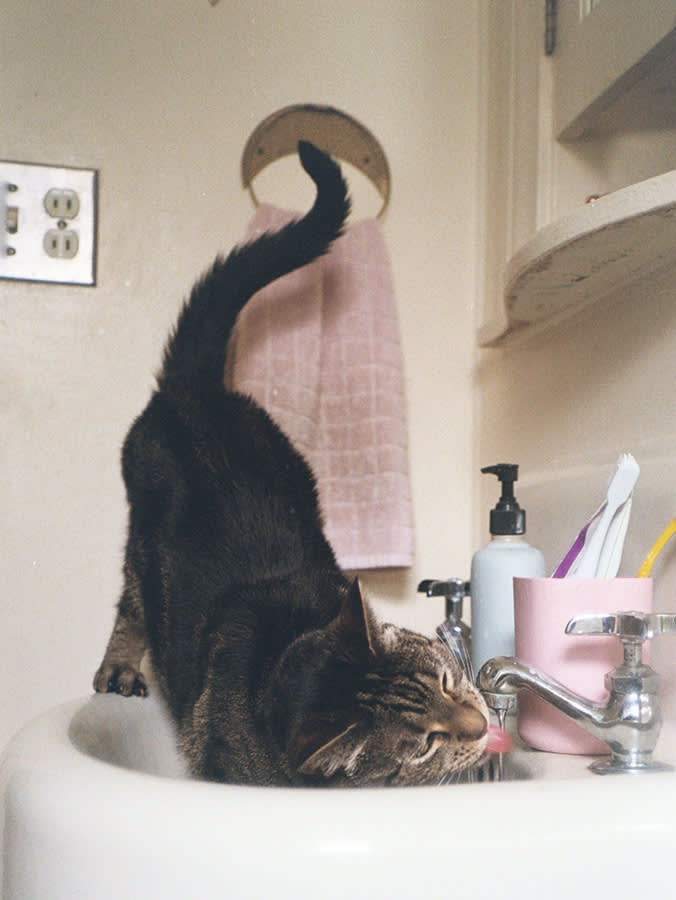
A cat that suddenly camps out at the water bowl is easy to shrug off. Maybe it is hot out. Maybe they just like the new fountain. But of all the subtle changes a cat can show, a real jump in thirst is one of the most useful, because it is frequently the earliest visible sign of serious disease, and it shows up while there is still time to act. Learning to read it is one of the highest-value things a cat owner can do.
The medical word for excessive drinking is polydipsia, and it rarely travels alone. Catching it early, and knowing the rough number that separates normal from too much, can mean diagnosing a disease months before it announces itself in uglier ways.
The number to know
Water intake varies with age, weight, diet, activity, and weather, but there is a workable baseline. An adult cat should take in about 45 milliliters of water per kilogram of body weight per day. For an average 10-pound cat, roughly 4.5 kilograms, that comes to about 205 milliliters daily, a little under a cup.
And remember water comes in more than one form. Canned food is about 75 percent water, so a cat eating wet food will drink noticeably less from the bowl than one on dry kibble. That is normal, not a red flag.
Intake becomes excessive above about 60 milliliters per kilogram per day, or more than roughly 270 milliliters (nine ounces) for an average resting adult cat. That is your rough ceiling.
You don’t need to measure every sip
Excess drinking almost always comes with excess peeing, which is why vets talk about the two together as PU/PD (polyuria/polydipsia). A cat drinking more simply pees more; it makes sense.
You can spot the pattern without a measuring cup. A cat with PU/PD may hang around the water dish, empty it more often, or drink from odd places like the toilet. They tend to visit the litter box more and produce bigger clumps, and some will start peeing outside the box, which is often their way of flagging that something is wrong.
What drives excessive thirst
Some causes are harmless and short-lived. A cat may drink more in hot weather or while bouncing back from a bout of vomiting or diarrhea, and that should settle in a day or so. Switching from wet food to dry can raise intake for a while as the cat adjusts, but it should not be excessive or come with other symptoms.
The concerning version is increased drinking alongside increased urination, lethargy, vomiting, poor appetite, or weight loss. The common culprits behind true polydipsia:
Kidney disease. The kidneys manage the body’s water balance and clear waste. When they fail, they can no longer concentrate urine, so they pour out large volumes of dilute urine even when the cat is dehydrated, and the cat drinks more to keep up. This is the single most common cause in older cats.
Diabetes mellitus. Too much glucose in the blood spills into the urine, and that glucose drags water along with it, driving up both urination and thirst.
Hyperthyroidism. Excess thyroid hormone speeds metabolism and increases water loss through the kidneys, often pushing thirst up with it.
Less common causes include urinary tract infection, liver disease, high salt intake, hypercalcemia (high blood calcium), adrenal gland disease, pyometra (a uterine infection in unspayed females), and certain medications such as some heart drugs.
What to do about it
If you notice your cat drinking and peeing more, go to the vet. The good news is that the common causes are usually sorted out with two simple tests. Bloodwork shows blood sugar, organ function, and thyroid levels. A urinalysis checks whether the urine is properly concentrated and screens for bacteria or glucose.
Your vet may add further testing, like a fructosamine level if diabetes is suspected but not confirmed, a urine culture, or imaging such as X-rays or ultrasound. Treatment then depends on the diagnosis, and can range from a short course of antibiotics to a lifelong plan of prescription food and daily medication.
Once one of these diseases has developed, there is not much you can safely do at home without veterinary guidance, but there is plenty you can do to lower the risk in the first place. Always keep fresh water available and never restrict it, especially if your cat seems thirsty. Feed an appropriate diet and support regular exercise to keep your cat at a healthy weight, since obesity raises diabetes risk. Keep the litter box clean to cut UTI risk. And keep up with regular checkups so problems get caught early.
Thirst is one of the few windows a cat gives us into a disease before it’s advanced, so I’d rather see a cat for a false alarm than miss the real thing. If you think your cat is drinking more, a blood panel and a urine sample can tell us a great deal, and often catch kidney disease or diabetes early enough to change how the whole thing plays out.
What newer research adds
The most important shift for owners of thirsty cats is in early kidney detection. A blood test called SDMA is now a routine part of feline wellness panels, and it flags kidney disease far earlier than the old standard. Creatinine, the traditional marker, typically does not climb until about 75 percent of kidney function is already gone. SDMA can rise when only 25 to 40 percent of function is lost, which is a huge head start on a disease where early management genuinely extends good years.
The current guidance from feline-focused vets is to screen for it on a schedule: healthy adult cats yearly, and senior cats (over 7) every six months, even when they seem fine, because early kidney disease often shows no outward signs at all and a physical exam can look completely normal. So if your cat has started drinking more and your vet reaches for an SDMA test, that is exactly the right move. And if your cat is a healthy senior, asking for that twice-yearly screen is one of the best preventive things you can do, catching trouble while there is still the most to gain.
References
- International Renal Interest Society (IRIS). “Staging of CKD in Cats.” iris-kidney.com.
- Cornell Feline Health Center. “Chronic Kidney Disease in Cats.” Cornell University College of Veterinary Medicine.
- Hall, J.A., et al. “Serum concentrations of symmetric dimethylarginine and creatinine in cats with kidney disease.” Journal of Veterinary Internal Medicine, vol. 28, 2014.
- American Association of Feline Practitioners. “Diabetes Mellitus in Cats.” catvets.com.
Common questions
Is it a problem if my cat drinks from the faucet or toilet?
On its own, a faucet preference is often just personality; many cats like moving water. It becomes a concern when it comes with a clear increase in total intake, more urination, or other signs like weight loss or lethargy.
When should I worry about my cat drinking a lot?
When increased drinking pairs with increased urination, lethargy, vomiting, poor appetite, or weight loss. That combination warrants a vet visit and simple blood and urine tests.
Not a substitute for your vet. Our guidance is educational. For urgent symptoms, contact a vet or emergency clinic right away. Editorial standards
Dr. Nair is a veterinarian focused on diet and feeding. She covers everyday nutrition, treats, and the many "can they eat this?" questions owners ask, grounding each answer in what is actually safe and sensible for dogs and cats.
Meet our experts ↗Keep reading
 Health & WellnessCoffee-Ground Ears? Your Cat Has Company, and It SpreadsDr. Priya Nair · 7 min
 Health & WellnessYour Cat's Litter Box Is a Daily Health Report. Learn to Read It.Dr. Nina Kohl · 8 min
 Health & WellnessYour Cat Hasn't Pooped in Days. Here's the Line Between 'Wait' and 'Vet Now'Dr. Mara Chen · 9 min
 Health & WellnessYour Cat's Heart Murmur Isn't a Diagnosis. It's a Clue.Dr. Mara Chen · 8 min
 Health & WellnessThose Cheeks Aren't Chub. They're Armor, and They Tell You Your Cat Is Unneutered.Dr. Lena Park · 7 min
 Health & WellnessYour Cat Isn't Hiding That It's Sick. You Just Never Learned Its 'Normal.'Dr. Mara Chen · 6 min