


Why the Dog Pee Smell Keeps Coming Back (and the One Thing That Kills It)
Scrubbing harder isn't the answer. The reason dog urine odor lingers is a crystal your household cleaners can't touch, and here's how to actually destroy it, surface by surface.

Affiliate disclosure. This article contains affiliate links. We may earn a small commission if you buy through a link, at no extra cost to you. How we handle recommendations.
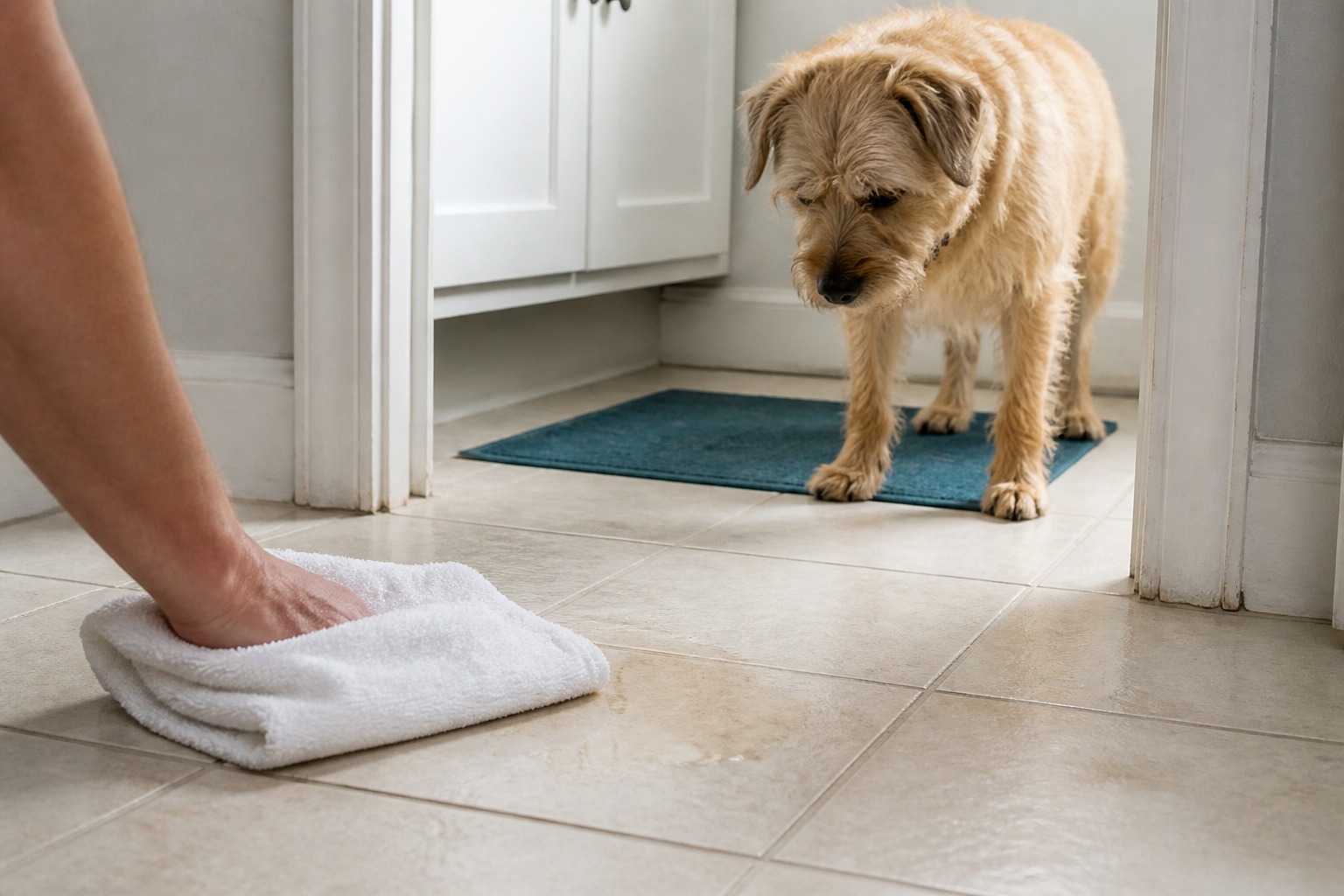
You blotted it, you scrubbed it, you emptied half a box of baking soda on it, and three humid days later the dog pee smell is back like it never left. That is not a failure of effort. It is chemistry, and once you understand the chemistry, the whole frustrating cycle finally makes sense.
The culprit is uric acid. Dog urine is loaded with it, and as it dries it forms crystals that ordinary water-based cleaners simply cannot dissolve. You can rinse away the surface smell, but the crystals stay locked in the fibers, and every time the air gets humid they reactivate and release that ammonia reek all over again. The single thing that actually breaks them down is an enzymatic cleaner. Everything else in this guide is about doing that right and matching your method to the surface.
Why the smell won’t quit
Before you fix it, know what you are fighting. A few things keep dog pee smell alive long after you thought you cleaned it:
- Uric acid crystals. The main villain. They resist water-based solutions and keep off-gassing odor, especially in humidity.
- You only cleaned the surface. Carpet, rugs, and upholstery are porous and wick urine down into the padding or foam beneath. Even hardwood absorbs moisture if it is not properly sealed, trapping the smell under your feet.
- Ammonia cleaners. They backfire twice: ammonia smells like urine, so it does not truly deodorize, and it can actually signal “bathroom here” to your dog and invite repeat accidents.
- Humidity and poor airflow. Damp air wakes up old stains, and stagnant rooms trap the odor instead of clearing it.
- Repeat marking. If your dog can still smell a past accident, they will re-hit the same spot, and older, deep-set stains get harder to remove each time.
- A health problem. Urinary tract infections, incontinence, and kidney issues can all make urine stronger and more persistent, so a suddenly extra-pungent dog is worth a vet visit.
Home remedies, and their limits
You do not always need to run to the store first. A few kitchen staples help, as long as you know what they can and cannot do.
Blot immediately. The instant you spot an accident, press paper towels or throwaway rags down to pull up every bit of liquid you can, pushing straight down instead of wiping so you do not spread it. Toss the towels straight into an outdoor bin.
Baking soda. A genuinely good, non-toxic odor neutralizer. Sprinkle it over the spot, work it into carpet or upholstery fibers, and let it sit overnight before vacuuming it up.
Vinegar, with caveats. White vinegar neutralizes some odor and has mild antibacterial properties, but it does not break down uric acid crystals and can damage hardwood finishes and natural stone like marble or granite. If you use it on a surface that can handle it, mix one part vinegar to one part water, let it sit about five minutes, blot dry, and ventilate. Treat it as a first step, not the finish.
Lemon juice. Smells nice, shares vinegar’s flaws: no power over uric acid, acidic enough to harm some surfaces, and it can leave a sticky residue. If you insist, cut it with twice as much water as juice, and a spoonful of baking soda gives it a small boost. It is not your best option.
A wet vac for deep stains. For an old or deep carpet stain, a wet vacuum with cold water and an enzymatic cleaner added is your friend. Let the area dry completely with airflow going.
One hard rule: keep the heat off. Steam cleaners and hot water can bond the proteins in urine to the fibers and set the stain permanently, so always work cold.
The real fix: enzymatic cleaners
Enzyme-based cleaners are the only category that breaks down the uric acid crystals baking soda, vinegar, and lemon juice cannot touch. The enzymes digest the odor compounds instead of masking them, which is why they work when nothing else does. The trick is to use enough and let it stay wet long enough to do its job, following the label. A few reliable options:
- Skout’s Honor Pet Stain and Odor Remover is plant-based and non-toxic, safe around pets and people, and works on carpets, rugs, furniture, bedding, and any water-safe surface.
- Angry Orange Pet Odor Eliminator tackles carpet, tile, upholstery, and car interiors, smells like fresh orange peel, and can be sprayed straight onto stains.
- Nature’s Miracle Urine Destroyer Plus is a strong enzymatic option for carpets, hardwood, furniture, and fabrics. Check the label first, since it is not suited to certain porous materials like stone and ceramic.
A pro move to pair with them: an inexpensive UV blacklight finds the invisible dried spots you have been missing, so you treat the actual source instead of guessing.
Match the method to the surface
Different materials need different handling, so always confirm your product is rated for the surface before you spray.
Carpet and rugs. Blot, then work in an enzymatic cleaner per its label, keep the room ventilated, and let it dry completely.
Couches and bedding. Blot up as much as possible, then use an enzyme cleaner to break down the odor compounds, following the label.
Hardwood floors. Blot fast so liquid does not sink into the wood. Clean with a water-and-white-vinegar mix or a hardwood-safe enzymatic cleaner that will not harm the finish, dry thoroughly, and, if the surface needs it, restore it with a wood polish that is safe for pets.
Tile and vinyl. Wipe up the mess, clean with warm water plus a pet-safe or enzyme-based solution, then rinse and dry well so moisture does not seep into grout lines or edges.
Cars. Blot immediately, work an enzyme cleaner deep into the upholstery or carpet, then dry it fully, cracking the windows or running a fan.
Grass. Better outside than in, but it builds up. Rinse the spot down with a hose, then reach for an outdoor-rated pet-safe enzymatic cleaner. When a smell really digs in, a gentle deodorizer such as baking soda or garden lime helps.
Concrete and cement. Rinse with water to dilute, spray a pet-safe enzymatic cleaner formulated for porous surfaces, let it sit the recommended time, rinse thoroughly, and dry completely.
Keep it from coming back
Winning once is not the same as winning. To stop repeats, clean thoroughly enough that your dog is not drawn back to re-mark, and keep air moving; fans, open windows, and air purifiers all help, and dehumidifying the air keeps dormant stains from reactivating.
Then get ahead of future accidents. Lock in a predictable potty schedule with lots of trips outdoors, keep the house tidy, and stay current on vet checkups so any medical driver of frequent or extra-pungent accidents gets caught early. If indoor accidents persist, pee pads (changed often, with the soiled ones taken straight out) can help, and a trainer can get a stalled potty routine back on track.
For the long haul, a clean, well-ventilated home is the whole ballgame. Keep a regular cleaning rhythm, deploy an air purifier or two in your problem areas, and if it fits the budget, a professional cleaner who knows which products are pet-safe and where your trouble spots are can be a genuine reset.
References
- ASPCA. “Cleaning Pet Stains and Odors.” aspca.org
- American Kennel Club. “How to Get Dog Pee Smell and Stains Out of Carpet.” akc.org
- Cornell University College of Veterinary Medicine. “Feline and Canine Lower Urinary Tract Disease.” vet.cornell.edu
Nina Vasquez writes about life at home with pets and the relationships at the heart of it. Her work covers day-to-day living, people-and-pet stories, and the products that fit into a real household, with a warm, grounded take on everyday pet ownership.
Meet our experts ↗Keep reading
 Product PicksHer Fleece Sparks $1,000 Bidding Wars. The Dog Version Is $165.Sara Lim · 5 min
 LivingYour Dog's Trash Is Mostly Two Things. Everything Else Is a Rounding Error.Nina Vasquez · 8 min
 Living'Pet-Safe' Is a Marketing Word. Read the Label Instead.Dr. Nina Kohl · 7 min
 Product PicksThe Ugliest Dog Sweater Still Has to Fit. 9 That Actually Do.Leila Torres · 6 min
 LivingWhat a Month of Spoiling My Rescue Pit Bull Costs on $75KNina Vasquez · 9 min
 Living'Recycled' Is Doing a Lot of Work on That Label. 8 Pieces That Earn It.Leila Torres · 6 min