


A Plant-Based Diet for Your Dog: The Right Question Isn't 'Can They?'
Early studies suggest dogs can stay healthy without meat, but that finding hides the part that actually decides the outcome: who formulates the food, who monitors the dog, and whether peas are running the recipe.

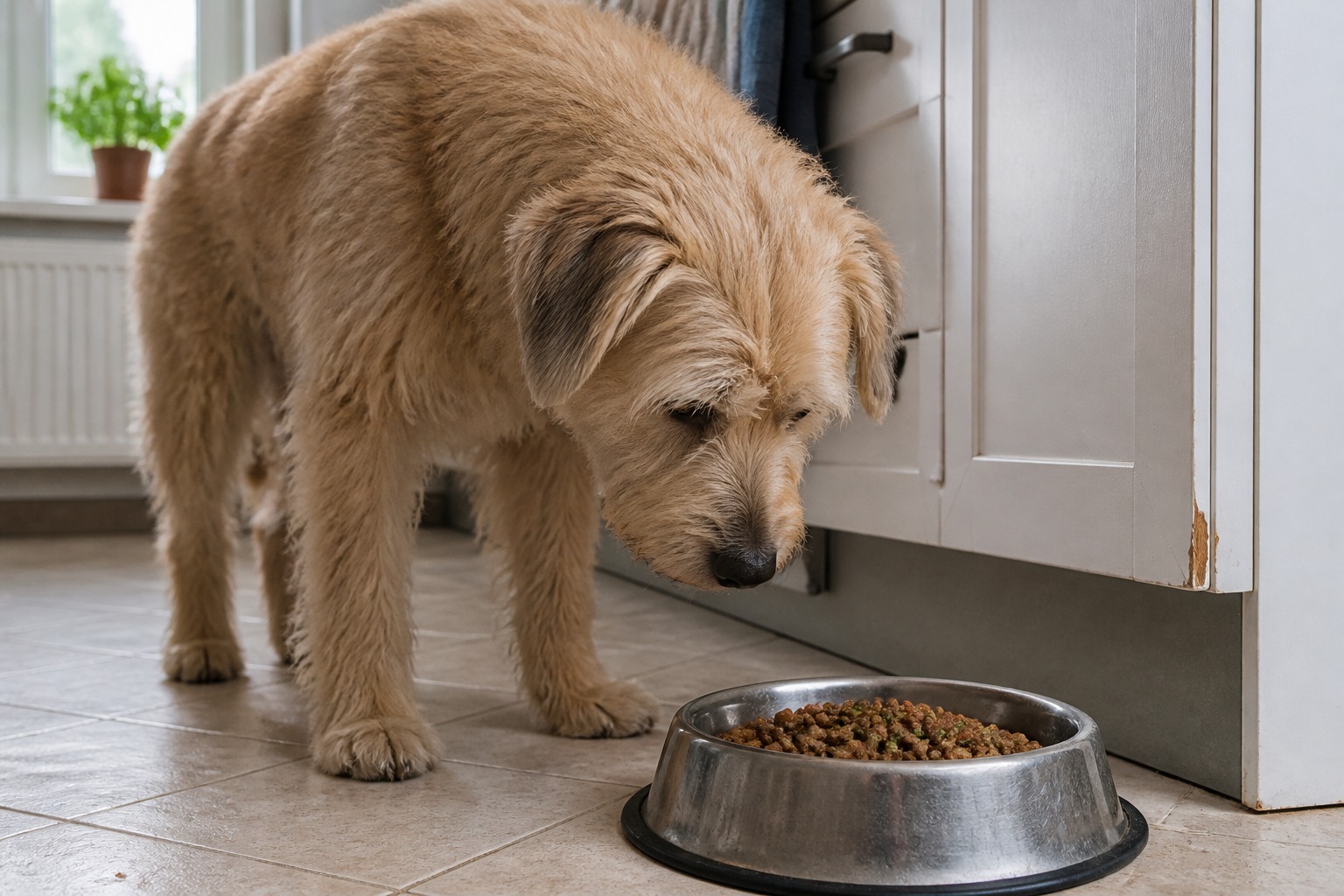
The internet has decided the question about plant-based dog food is “can they survive it,” and it has mostly answered yes. That is the wrong question, and the yes is doing a lot of quiet work. A dog can survive on a well-built plant-based diet the way a person can survive on a carefully planned vegan one. The interesting and important variable is not the dog’s biology. It is whether the food is genuinely complete, whether anyone is checking, and whether the recipe leans on the one ingredient category that has veterinary cardiologists worried. Get those three things right and the meat question almost fades. Get them wrong and it would not matter if the bowl were full of steak.
So this piece is organized around what actually determines the outcome, not around a yes-or-no verdict. Start with why anyone considers it, then move to the part that decides everything.
Why the question comes up at all
The honest driver, for most people, is the environment, and the case is real even if it is slippery to measure. Much pet food is made from animal by-products, which muddies any tidy accounting. Even so, one analysis estimated that emissions from U.S. dry cat and dog food amount to roughly 25 to 30 percent of the emissions tied to feeding U.S. people, and wet food can generate something like eight times the emissions of dry. Run that math on a large, wet-fed dog and their carbon footprint starts to look like a person’s. For an owner already eating plant-forward for the planet, wanting the dog to come along is not vanity. It is consistency.
There is an ethical thread too, and it is worth naming plainly: some people simply do not want to fund industrial meat production, and that value does not evaporate at the dog bowl. Where it gets complicated is that the animal whose welfare is at stake in the bowl is the dog, and the dog’s health has to win any tie.
The part that decides everything: formulation and monitoring
Here is the finding that gets quoted and the caveat that gets dropped. A 2023 study from Cold Spring Harbor Laboratory, one of the more comprehensive on the topic, followed dogs on a plant-based diet at zero, six, and 12 months, tracking blood counts, blood chemistry, cardiac biomarkers, and other vitals. The dogs held their health across the year. That echoed a 2022 study in which owners reported no adverse outcomes on plant-based feeding.
But “well-formulated” is carrying the whole result. The margin for error in a meat-free canine diet is narrow, and the failures that show up in the literature almost all trace to diets that were incomplete or, especially, homemade, rather than to the removal of meat as such.
A commercial, properly formulated plant-based food and a bag of lentils you portioned out yourself are not the same experiment. One has been balanced to a standard and tested. The other is a hope. If someone wants to try this, my first question isn’t about ethics, it’s who is designing the recipe and how often we’re pulling bloodwork.
That is the whole ballgame. If you are going to try a plant-based diet, two non-negotiables come before anything else: use a diet formulated to a recognized complete-and-balanced standard by someone who understands canine nutrition, and commit to regular veterinary checks and bloodwork so problems surface early instead of at a crisis. Homemade meat-free diets raise the difficulty sharply and should not be attempted without a board-certified veterinary nutritionist.
Carnivore or omnivore, and why “able to” isn’t “ideal”
Much of the shouting online comes down to one question: what kind of eater is a dog? Cats are obligate carnivores; they must get certain nutrients from animal tissue. Dogs are not. They are omnivores, built to pull usable nutrition out of animal and plant foods alike, and over thousands of years alongside humans they even evolved improved starch digestion.
But “able to” is not the same as “ideally suited to.” A dog’s digestive tract is short and quite acidic, efficient at pulling protein and fat from animal tissue, where a human’s is longer and more alkaline. A person can meet protein needs from a lentil comfortably; a dog is wired to take in a lot of animal protein and fat. From that angle, fruits, berries, and vegetables can absolutely have a place in the bowl, but a cautious reading puts them as a supporting cast rather than the foundation, at least until longer-term evidence catches up.
Protein is the floor you cannot dip below
Whatever route you take, protein is non-negotiable, and what really matters underneath it are amino acids, the building blocks protein is made of. Dogs require 10 essential amino acids from their food, and a plant-based diet has to deliver all of them, not just hit a protein percentage. Essential fatty acids matter too, particularly for skin and coat.
There is a hard number to anchor on. Under the nutrient profiles set by the Association of American Feed Control Officials, a complete diet for an adult dog must contain at least 18 percent protein, and any food you choose should clear that minimum. High-protein plant ingredients like lentils, beans, and other legumes are how plant-based formulas get there, which leads straight to the catch.
The legume catch: DCM and the pea problem
Those same legumes sit at the center of the most serious open question in dog nutrition right now. Since 2018, the FDA has been investigating a link between certain diets and dilated cardiomyopathy (DCM), a heart-muscle disease, appearing in dogs without a genetic predisposition to it. As of the agency’s last tally, 1,382 dogs with DCM had been reported. More than 90 percent of the implicated products were grain-free, and roughly 93 percent contained peas and/or lentils.
Two things about this are widely misunderstood. First, no single ingredient has been proven to cause DCM; the pattern is a correlation with legume-heavy, grain-free formulas, not a smoking gun. Second, and more important, the FDA pausing its public updates was read by many owners as “case closed.” It is not. Veterinary nutritionists have documented diet-associated DCM cases as recently as 2024, including in dogs fed these diets for years, and dogs caught early often improve after a diet change. The reasonable stance, echoed by veterinary cardiologists, is caution with any diet built around peas and lentils until the science is clearer.
For a plant-based feeder this is a real tension, because legumes are the obvious plant protein. It is navigable, with a formula that does not lean on peas as its primary ingredient and with a vet in the loop, but it is not a footnote to wave away.
Even committed vegans wrestle with this
It says something that the debate is fraught even among people who eat no meat themselves. Plenty of lifelong vegans still feed their dogs meat, especially older dogs already thriving on what they eat. When a 14-year-old dog is healthy and steady, the instinct to leave a working diet alone is hard to argue with. A person’s ethics can guide their own plate while the dog’s health, not the owner’s values, stays the deciding vote for the dog’s.
You do not have to go all the way
The most underrated option here is the middle. Because dogs are omnivores, there are real benefits to adding more plants to the bowl without ever attempting a full switch, and this path sidesteps most of the risk above.
Blueberries, turmeric, and leafy greens are commonly cited for helping manage inflammation. Omega-3 fatty acids from marine algae oil, kelp, flaxseed, and chia can support cardiovascular health without the contaminant load sometimes found in fish. Folded into an otherwise complete, meat-inclusive diet, these are low-stakes upgrades. You get a greener bowl and a smaller footprint without betting the dog’s health on a delicate full-replacement formula.
The bottom line
Dogs can be healthy on a plant-based diet; early evidence is genuinely encouraging. But that headline hides the real decision. What keeps a meat-free dog well is not their biology, it is a properly formulated complete diet, regular vet monitoring, adequate protein and amino acids, and a wary eye on peas and lentils. If reducing meat matters to you, the safest and easiest version is to add more dog-safe plants to a complete diet rather than remove meat entirely, and to make any bigger change with a veterinarian or veterinary nutritionist beside you the whole way.
References
- Knight A, et al. Vegan versus meat-based dog food: health outcomes in dogs. (2022 owner-reported study.)
- FDA: Investigation into Potential Link between Certain Diets and Canine Dilated Cardiomyopathy.
- Freeman LM. Diet-associated dilated cardiomyopathy: the cause is not yet known but it hasn’t gone away. Tufts Petfoodology, 2023.
- AAFCO Dog and Cat Food Nutrient Profiles.
- Role of Diet as a Predisposing Factor for Dilated Cardiomyopathy in Dogs: A Narrative Review. Veterinary Sciences, 2025.
Common questions
Are dogs carnivores or omnivores?
Omnivores, but adapted ones. Unlike cats, which are obligate carnivores, dogs can digest and use nutrients from both plants and meat. Their digestive tract is still short and acidic, built to handle animal protein efficiently, so plants can be part of the bowl without necessarily being the whole foundation.
Are peas and lentils safe in dog food?
In small amounts, yes, but a diet built around peas and lentils is the specific pattern the FDA has flagged in its investigation of diet-associated heart disease. Legumes as a minor ingredient are fine; legumes as the main protein source are the part to be cautious about.
Not a substitute for your vet. Our guidance is educational. For urgent symptoms, contact a vet or emergency clinic right away. Editorial standards
Dr. Mehta is a board-certified veterinary nutritionist who evaluates pet food formulations, ingredient quality, and the science behind dietary trends. He writes and reviews all nutrition content at The Pet Times, including our food rankings and feeding guides.
Meet our experts ↗Keep reading
 FoodThe People Foods That Actually Do Something for Your DogDr. Amara Solis · 7 min
 FoodBARK Made Food for Your Dog's Breed. Does Your Dog's Breed Need It?Dr. Lena Park · 5 min
 FoodFiber for Dogs Isn't One Thing. That's Why It Backfires.Dr. Priya Nair · 7 min
 Health & WellnessBlue Ridge Beef Keeps Getting Recalled. Here's How to Read a Raw-Food RecallDr. Mara Chen · 4 min
 FoodCan Dogs Eat Black Pepper? Why It's Safe to Skip the ShakerDr. Ravi Mehta · 5 min
 Health & WellnessYour Dog's Farts Are Trying to Tell You SomethingDr. Priya Nair · 6 min