


Black on Your Dog's Gums: The One Question That Tells You Whether to Worry
Most black gum pigment is harmless and was there from birth. The thing that separates a non-issue from a vet visit isn't the color itself, it's whether the spot is new and changing.


Here is the shortcut that does most of the work: black on a dog’s gums is usually about when it showed up, not what color it is. A black patch your dog has had since puppyhood is almost always just pigment, the same freckling that shows up on skin. A black spot that is new, growing, raised, or bleeding is the one that earns a vet visit. Color alone rarely decides it. Change does.
That reframe matters because the internet tends to hand you a long, scary list of “causes” and let you spiral. The useful version is a triage. Run two questions, and most worry resolves before you’ve finished reading.
The two-question triage
Question 1: Was it always there, or is it new? Pigment your dog was born with, or that filled in during the first few months of life, is the most common explanation by far and needs nothing from you. If you genuinely can’t remember, that usually means it’s been there a while and you only just looked closely, which itself is reassuring. A spot you are certain appeared recently moves up the priority list.
Question 2: Is anything else wrong with it or around it? A flat, evenly colored spot with healthy pink tissue around it is reassuring. A spot that is raised, changing shape or size, bleeding, or surrounded by red, swollen, or ulcerated gums is not. And if your dog also shows whole-body signs, trouble breathing, lethargy, loss of appetite, or collapse, the gums are the least of it; that’s a same-day vet call.
If both answers point to “old and otherwise normal,” relax. If either points to “new and changing” or “other symptoms,” read on and book the appointment.
The reassuring causes (old, stable, otherwise normal)
Normal pigmentation
For many dogs, black on the gums or tongue is simply how they’re built. During fetal development, pigment cells migrate to random spots, leaving freckle-like marks in the mouth and on the body. Because the migration is random, even genetically identical clones end up with different patterns, which is a nice reminder that this is biology, not a warning sign.
Breed
Some breeds are known for dark gums or tongues, and it’s completely normal in them: Chow Chows and Shar-Peis most famously, but also Akitas, Pomeranians, Thai Ridgebacks, German Shepherds, Huskies, and even Golden and Labrador Retrievers. It can also turn up at random in any breed. If your dog is one of these and has had dark gums for as long as you’ve known them, that’s the expected picture.
The causes that need a vet (especially if new or changing)
Melanoma
This is the reason “new, raised, or bleeding” matters. Oral melanoma is an aggressive pigmented cancer, and the mouth is one of its common sites in dogs. A pigmented spot that appears suddenly, grows, changes shape, or bleeds should be examined promptly. Catching it early genuinely changes the options.
Other oral tumors
Beyond melanoma, the mouth can grow squamous cell carcinoma and fibrosarcoma (both cancerous), as well as benign growths like fibromas and epulides. Most of these show up as swelling rather than flat color, and they may look red or bleed. Nearly all require a biopsy to identify, which is why a vet, not a web search, makes the call.
Periodontal disease
Gum disease usually doesn’t turn gums black; it turns them red and swollen, prone to bleeding, often with bad breath, drooling, tooth chattering, loose or missing teeth, or reluctance to chew. If the “black” you’re seeing comes packaged with those signs, the issue is dental, and it’s treatable, but it needs attention.
Cyanosis (a true emergency)
If the gums look bluish or darker because the whole mouth has lost its healthy pink, that can be cyanosis, low blood oxygen. This never comes alone. It rides with labored breathing, severe lethargy, or collapse, and it is an emergency. Go now.
A color chart worth memorizing
Because “what color should gums be” comes up constantly, here is the practical reference, including the at-home test vets use:
| What you see | What it usually means | What to do |
|---|---|---|
| Bubblegum pink (or pink with stable black freckling/patches) | Normal and well-oxygenated | Routine care |
| Pale pink or white | Possible anemia, blood loss, or shock | Urgent vet visit |
| Bright or brick red | Possible gingivitis, overheating, or toxin exposure | Vet visit |
| Bluish or grayish across the mouth | Cyanosis, low oxygen | Emergency, go now |
| Yellowish | Possible jaundice/liver issue | Urgent vet visit |
| A single new dark spot that’s raised, growing, or bleeding | Possible tumor | Prompt vet exam |
The capillary refill test: press a finger gently on a pink area of gum until it blanches white, then release. The pink should rush back in under two seconds. Slower than that suggests a circulation problem. (On naturally black gums this is hard to judge, so use the inner lip or any pink patch you can find.) This one trick lets you check perfusion at home and is worth practicing on a healthy day so you know your dog’s normal.
Keeping gums healthy (and easier to read)
Healthy gums make abnormal changes easier to spot, so prevention does double duty.
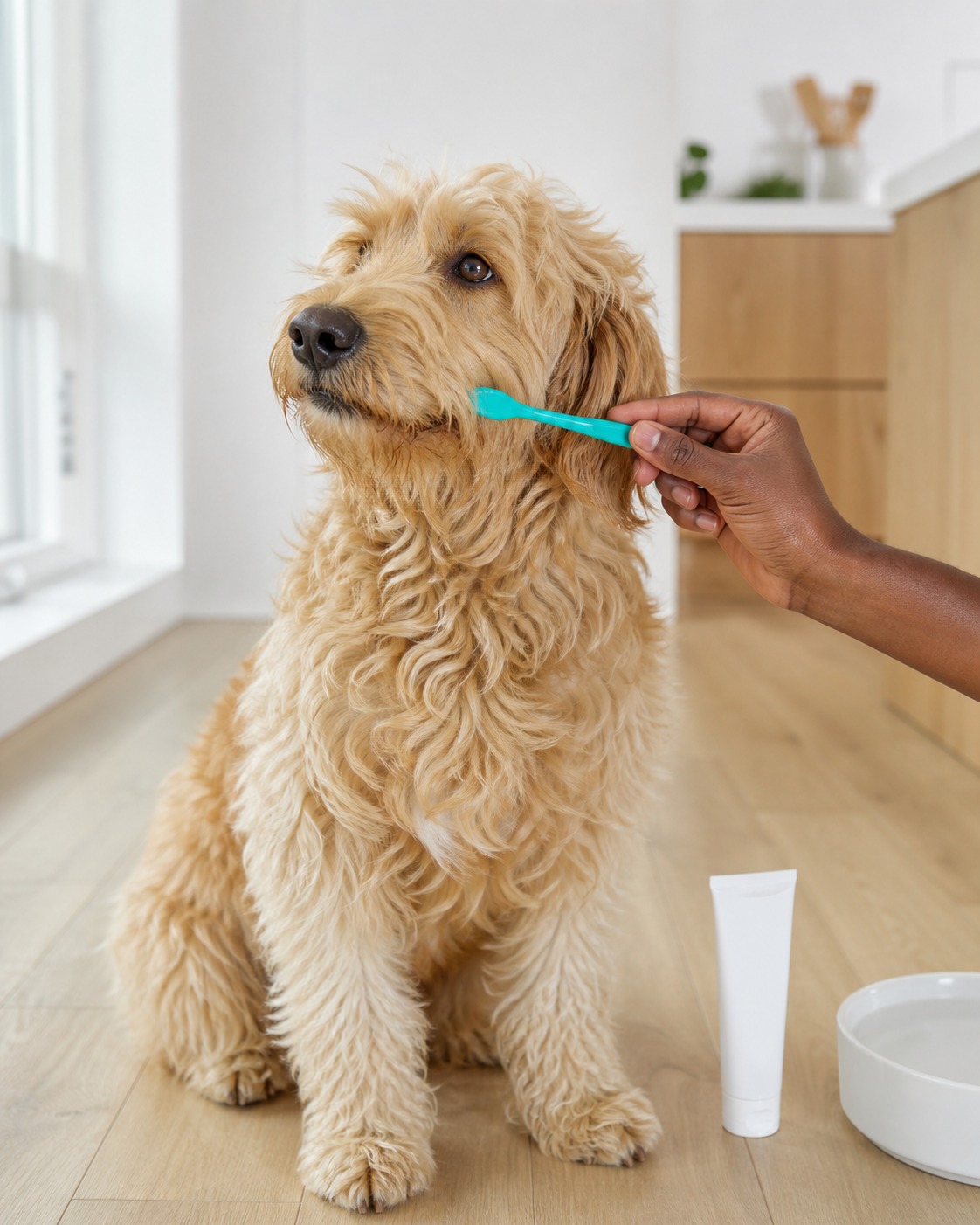
Brush, ideally daily. Use dog toothpaste (never human paste, the xylitol and fluoride are toxic). Go slow with a dog who’s never been brushed: let them lick the paste, reward letting the brush near the mouth, build from there with praise. Consistency beats intensity.
Skip the rock-hard chews. Ice, real bones, antlers, and very hard nylon can crack or wear down teeth, and a fractured tooth inflames and infects the gum around it. Choose firmer rubber chews that flex slightly under a fingernail.
Keep up checkups and dental cleanings. Routine visits let your vet track gum and tooth changes over time and recommend cleanings, dental X-rays, or extractions before a small problem becomes a painful one.
The bottom line holds: black gums are normal for a lot of dogs and need nothing. What you’re actually watching for is change, a new spot, a growing one, bleeding, swelling, or a shift in the whole mouth’s color, alongside any sign your dog feels unwell. Learn your dog’s normal mouth on a healthy day, and the worrying version becomes obvious the moment it appears.
References
- Mulherin, B. “Oral Tumors in Small Animals.” Merck Veterinary Manual, Nov. 2024, msdvetmanual.com.
- “Melanoma and Melanocytic Tumors in Dogs.” The National Canine Cancer Foundation, wearethecure.org.
- Conroy, J., et al. “The Development of Cutaneous and Oral Pigmentation in Labrador Retriever Fetuses (Canis familiaris).” Journal of Investigative Dermatology, vol. 54, no. 4, 1970, pp. 304-315.
- “Periodontal Disease in Dogs.” VCA Animal Hospitals, vcahospitals.com/know-your-pet/periodontal-disease-in-dogs.
Not a substitute for your vet. Our guidance is educational. For urgent symptoms, contact a vet or emergency clinic right away. Editorial standards
Dr. Nair is a veterinarian focused on diet and feeding. She covers everyday nutrition, treats, and the many "can they eat this?" questions owners ask, grounding each answer in what is actually safe and sensible for dogs and cats.
Meet our experts ↗Keep reading
 Health & WellnessRead the Smell: What Your Dog's Bad Breath Is Actually DiagnosingDr. Lena Park · 6 min
 Health & WellnessYour Dog's Gum Disease Has One Reversible Stage. Miss It and There's No Undo.Dr. Ravi Mehta · 5 min
 Health & WellnessEvery Dog Bone Fails in One of Two Ways. Learn Both and You'll Never Buy Wrong Again.Dr. Ravi Mehta · 7 min
 Product PicksMost Dog 'Dental' Products Just Hide the Smell. These 9 Actually Fight Plaque.Dr. Priya Nair · 7 min
 Health & WellnessPuppy Breath Doesn't Go Bad. It Goes on Schedule.Dr. Mara Chen · 6 min
 Health & WellnessThat $100 Sonic Scaler in Your Feed Sells a False Sense of a Clean MouthDr. Priya Nair · 7 min