


Your Dog Isn't Judging Their Character. They're Reading Yours
The saying claims dogs sense who's good and who's bad. The science says something subtler and more useful: dogs are brilliant at reading your body and chemistry, and mostly borrowing their opinion of a stranger from you.
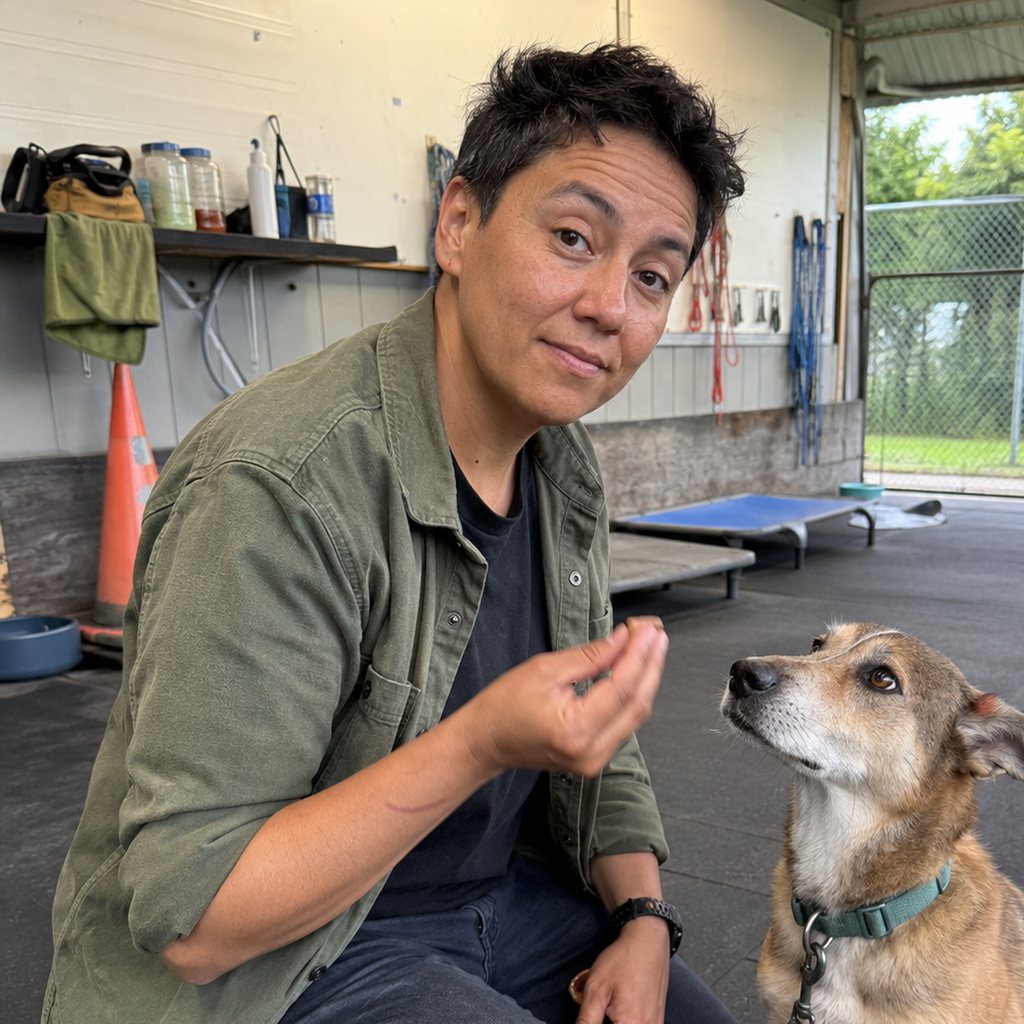
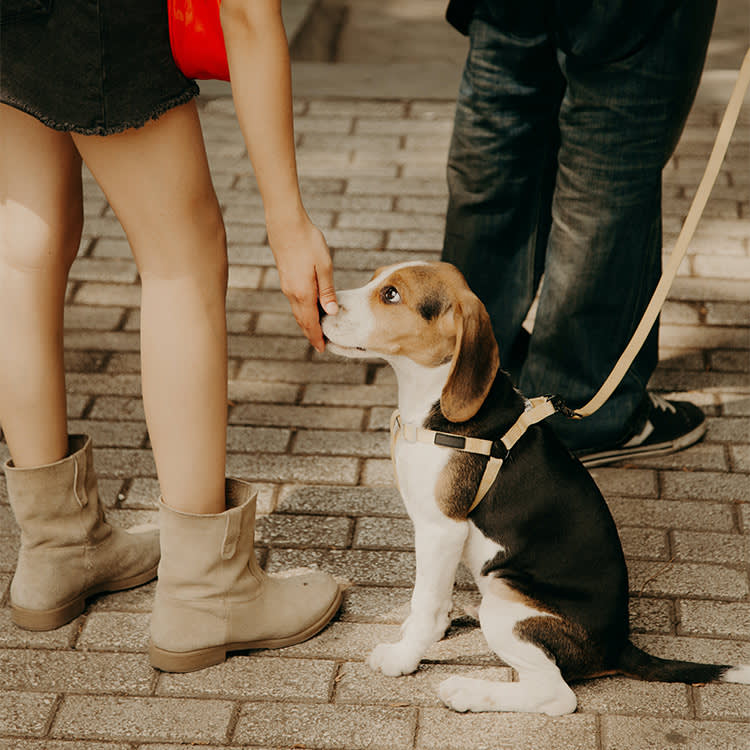
You have heard the rule, maybe said it yourself: if your dog doesn’t like someone, you shouldn’t either. It’s a satisfying idea, the loyal dog as a furry lie detector, sniffing out the bad guy your manners are too polite to call out. And there are real stories that seem to confirm it, including one I’ll tell you in a moment.
But the popular version gets the mechanism backwards, and the truth is more interesting than the myth. Your dog is not running a morality scan on the people you meet. Your dog is doing something far more impressive and far more literal: reading observable behavior, sometimes reading the actual chemistry of a person’s body, and, above all, reading you. The headline isn’t “dogs judge their character.” It’s “dogs read yours, and theirs, with startling precision.” Once you understand that, your dog’s reactions become genuinely useful, just not in the way the saying promises.
The story that looks like proof
Years ago I moved to a small town and was eager to meet people. The first time I stopped on the street to talk to a neighbor, my dog stiffened. The man approached gently, but she backed away and refused to engage. It was embarrassing, like a small social failure I’d somehow caused.
When I mentioned it to the family I was renting from, they weren’t surprised. Everyone in town, they said, knew he was mean, and they shared a history of violence toward his ex-wife, his children, and others. He had seemed perfectly friendly to me in those few minutes. My dog, apparently, had not been fooled.
It’s a tidy anecdote, and I believed the obvious reading of it for a long time: my dog sensed his character. But anecdotes are where this belief lives, and they have a way of selecting themselves. I remember the time my dog was “right.” I don’t count the dozens of lovely people she also stiffened at, or the genuinely unpleasant people she happily flopped over for. To find out what dogs are actually doing, you have to leave the stories and look at what happens when researchers test the claim on purpose.
What the famous study really showed, and what happened next
The most-cited piece of evidence comes from a 2015 study by Japanese researchers. A dog watched its owner struggle to open a container while two strangers sat alongside. In one version, the owner asked a stranger for help and got it; in another, the owner asked and was pointedly refused; a control group involved no request. Afterward, both strangers offered the dog a treat.
The result that made headlines: after watching someone refuse to help their owner, dogs were less likely to take that person’s treat. Dogs, the coverage said, were making social and emotional evaluations of people regardless of personal gain, the same pattern seen in young children and capuchin monkeys. It was reported as science confirming the saying.
Here’s the part the original coverage didn’t include, because it hadn’t happened yet. That study drew methodological criticism, notably that it didn’t fully control for where the experimenters were positioned, meaning a dog’s choice might reflect a simple location preference rather than a moral judgment. And crucially, later researchers tried to reproduce the effect and couldn’t. A 2022 study testing both dogs and wolves found they failed to form reputations of humans after watching them be generous or selfish. A 2025 study looking at dogs of different ages reached the same conclusion: no evidence that dogs build a reputation of a person from observing how they treat others.
“The honest state of the evidence is that dogs reliably reading a stranger’s character just doesn’t replicate well,” says Dr. Mara Chen, a veterinarian who writes for Pet Times. “The researchers in the newer work offered a lovely explanation, too. Pet dogs live a charmed social life, surrounded by friendly humans who reward persistence, so they tend to approach new people optimistically rather than auditing them. That’s not a dog failing a test. That’s a dog being a dog.”
So the strongest claim, that dogs judge moral character, is the one standing on the weakest ground. What’s left is the part that holds up beautifully.
What dogs are genuinely, measurably great at
Dogs are extraordinary readers of observable information, and this is where their reputation as mind-readers is earned.
They are experts in human body language. Dogs track our gaze, follow a pointed finger (a skill that stumps even chimpanzees), and respond to tone, posture, and the speed of our movements. To a dog, a person who makes hard, direct eye contact, looms over them, reaches fast, or radiates tension is showing threat signals, regardless of that person’s actual intentions. A nervous houseguest who “loves dogs” and lunges in to pet may read, to your dog, exactly like a threat. The dog isn’t wrong about the behavior; it’s just behavior, not biography.
And then there is the sense we can’t share. A 2022 study at Queen’s University Belfast found that dogs could distinguish the breath and sweat of a stressed person from that same person’s calm baseline with roughly 94 percent accuracy. The physiological stress response, the cortisol and adrenaline surge, the change in heart rate and respiration, alters the way we smell, and dogs detect it. A 2024 follow-up went further: when dogs were exposed to the odor of human stress, they became measurably more pessimistic in a decision-making task. Stress is, quite literally, in the air to a dog.
Put those together and “my dog sensed something about him” gets a grounded explanation. A tense, angry, or threatening person often moves differently and smells different, and your dog catches both. That’s perception, not clairvoyance, and it’s arguably more remarkable than the myth.
The biggest signal of all: you
Here is the factor the saying leaves out entirely, and it may be the most powerful one. Dogs are exquisitely tuned to their own person’s emotional state, a phenomenon researchers call emotional contagion: the dog’s arousal tends to mirror yours.
So when you meet someone who makes you subtly uneasy, your body changes before you consciously decide anything, your posture tightens, your voice shifts, your own stress chemistry rises, the chemistry a dog can smell at 94 percent accuracy. Your dog catches all of it and stiffens too. From the outside it looks like the dog independently sized up the stranger. Often the dog is simply reading the verdict you already reached without realizing it.
That reframes my small-town story neatly. Maybe my dog smelled or saw something in the man. Or maybe I picked up a flicker of something off about him, my body quietly tensed, and my dog, reading me, mirrored it back. The two of us reached the same wary conclusion, and I gave the dog all the credit.
How to actually use your dog’s reactions
None of this means your dog’s wariness is meaningless. It means you should read it correctly, as high-quality information about behavior and comfort rather than a moral X-ray.
- Treat a wary reaction as a prompt, not a proof. Your dog has flagged that something, the person’s body language, movements, scent, or your own mood, is off. That’s worth noticing. It is not evidence the person is dangerous or dishonest.
- Check yourself first. Before crediting your dog with insight, ask whether you feel tense. You may be the sensor your dog is reading.
- Watch the human’s behavior. Hard staring, looming, fast hands, and crowding a dog all trigger defensive responses in even friendly people. The dog may be reacting to manners, not menace.
- Don’t punish the wariness. A dog that’s allowed to retreat and observe at its own pace stays a useful, honest signaler. A dog forced into every interaction stops telling you anything real.
The bottom line
Dogs are not the moral oracles the old saying makes them out to be. The research meant to prove they judge character has largely failed to replicate, and the newer picture is both humbler and more impressive: dogs are world-class readers of human body language and the actual chemistry of human stress, and they lean heavily on their own person’s emotional cues when deciding how to treat a stranger. So if your dog doesn’t like someone, don’t take it as a character reference. Take it as a tip that something about that person’s behavior, or about how you feel, is worth a second look, and let your dog go on being the brilliant observer they actually are.
Sensitive topics note: this article discusses domestic violence in passing. If you or someone you know needs support, help is available; ask and I can point you to resources.
References
- Chijiiwa, Hitomi, et al. “Dogs Avoid People Who Behave Negatively to Their Owner: Third-Party Affective Evaluation.” Animal Behaviour, vol. 106, 2015, pp. 123–127. https://doi.org/10.1016/j.anbehav.2015.05.018
- Jim, Hoi-Lam, et al. “Wolves and Dogs Fail to Form Reputations of Humans After Indirect and Direct Experience in a Food-Giving Situation.” PLOS ONE, 2022. https://www.ncbi.nlm.nih.gov/pmc/articles/PMC9385025/
- “Do Dogs Form Reputations of Humans? No Effect of Age After Indirect and Direct Experience in a Food-Giving Situation.” Animal Cognition, 2025. https://link.springer.com/article/10.1007/s10071-025-01967-w
- Wilson, Clara, et al. “Dogs Can Discriminate Between Human Baseline and Psychological Stress Condition Odours.” PLOS ONE, vol. 17, no. 9, 2022. https://journals.plos.org/plosone/article?id=10.1371/journal.pone.0274143
- “Dogs Can Smell Human Stress and Make Decisions Accordingly.” NPR, 23 July 2024. https://www.npr.org/2024/07/23/nx-s1-5049543/dogs-stress-smell-study-emotions-decisions
Common questions
Can dogs really judge a person's character?
Not in the moral sense the saying implies. There's little solid evidence that dogs evaluate whether a stranger is a good or bad person. What dogs are genuinely excellent at is reading observable signals, body language, tone, and even the chemical smell of human stress, and reading their own owner's reaction. So a dog's wariness usually reflects how a person moves and how you feel about them, not a verdict on their soul.
Did the study showing dogs avoid 'unhelpful' people hold up?
Only partly. A 2015 study found dogs avoided treats from someone who refused to help their owner, which was widely reported as dogs judging character. But it had methodological criticisms, and later work, including a 2022 study of dogs and wolves and a 2025 study, failed to find that dogs form reputations of humans this way. The original result is now considered shaky rather than settled.
Can dogs smell when a person is stressed or afraid?
Yes, and this is well supported. A 2022 Queen's University Belfast study found dogs could distinguish the breath and sweat of stressed people from their calm baseline with about 94 percent accuracy. A 2024 follow-up showed that smelling human stress odor even nudged dogs toward more pessimistic choices. Dogs are reading real chemistry, which can look like 'sensing' something about a person.
Why does my dog dislike someone I trust?
Usually because that person's behavior, body language, or scent is triggering caution, or because the dog is picking up on stress chemistry, not because the dog has detected hidden villainy. Hard eye contact, looming posture, fast movements, or even the person's own nervousness around dogs can all read as threatening. It's worth noticing, but treat it as data about behavior and comfort, not a character reference.
Should I trust my dog's reaction to a stranger?
Treat it as one useful input, not a verdict. Your dog is an excellent detector of how someone is acting and how you are feeling, both of which are worth paying attention to. But dogs also mirror your emotions and react to surface cues, so a wary reaction is a prompt to stay observant, not proof that the person is dangerous or dishonest.
Jordan Ellis is a certified professional dog trainer with a decade of experience working with rescue organisations and private clients. They specialise in anxiety, reactivity, and positive reinforcement methods, and review all training and behaviour content at The Pet Times.
Meet our experts ↗Keep reading
 TrainingAre You Hovering Over Your Dog? The Line Between Caring and Smothering.Dr. Lena Park · 7 min
 TrainingThe Butt Scratch Obsession: Your Dog Literally Can't ReachDr. Priya Nair · 4 min
 TrainingYour Dog Isn't Ignoring You. They Hear Things You Physically Can't.Dr. Lena Park · 8 min
 TrainingTell Your Dog to 'Create,' and They Actually CanJordan Ellis · 6 min
 TrainingThe 'Guilty Dog' Face Is Real. Guilt Has Nothing to Do With ItDr. Ravi Mehta · 6 min
 Health & WellnessA Quiet Dog Is Fine. A Newly Quiet Dog Is a Symptom.Dr. Ravi Mehta · 7 min