


Hibiscus Is One of the Safer Plants for Dogs. The Real Risk Is Its Lookalike
The ASPCA lists hibiscus as non-toxic to dogs, so why does it have a scary reputation? The danger isn't the hibiscus itself. It's the toxic plant that shares its nickname.

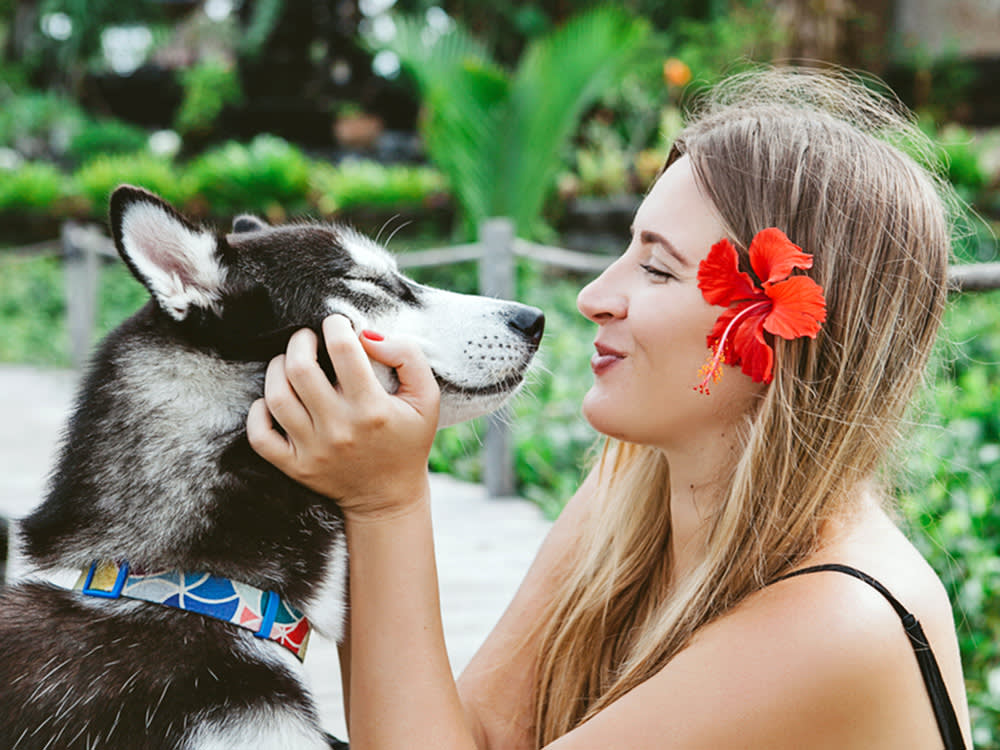
Hibiscus has a reputation problem, and it is mostly undeserved. If you grow it for those big tropical blooms and you have a dog who treats the garden like a salad bar, you have probably read a warning somewhere and worried. Here is the reassurance most of those warnings bury: the ASPCA lists hibiscus as non-toxic to dogs. It belongs on the short list of common ornamentals you do not have to panic about.
So why the scary reputation? Because hibiscus has a naming problem that is far more dangerous than the plant itself. The single most useful thing you can learn about hibiscus and dogs is not a symptom list. It is how to tell true hibiscus apart from a toxic plant that wears the same nickname.
The lookalike that actually matters
“Rose of Sharon” is where dog owners get into trouble, because it is a common name pointing at two completely different plants.
One is Hibiscus syriacus, a hardy flowering hibiscus shrub that the ASPCA lists as non-toxic to dogs, cats, and horses. This is the rose of Sharon most people mean, the tall, late-summer-blooming hedge plant.
The other is Hypericum calycinum, also sold as “rose of Sharon” in some regions, and also known as St. John’s wort or Klamath weed. This one is not hibiscus at all. It contains hypericin, a compound that can cause contact dermatitis and photosensitivity, meaning sun-triggered skin reactions, in both dogs and people.
When two plants share a nickname and one is safe while the other isn’t, the name stops being useful information. I’d rather a dog owner know the Latin name of the shrub in their yard than memorize a list of symptoms. Identify the plant first. Everything else follows from that.
So the practical risk with “hibiscus” is rarely the hibiscus. It is buying or inheriting a plant labeled rose of Sharon and not knowing which rose of Sharon it is.
Why true hibiscus can still cause a mild stomachache
Calling hibiscus non-toxic does not mean a dog can eat unlimited amounts with zero consequences. Hibiscus contains no compound known to be genuinely poisonous to dogs, but plant matter is still plant matter. A dog who eats a large amount of any flower can get mild to moderate gastrointestinal upset, which here usually means nausea, drooling, vomiting, or loose stool that resolves within 12 to 24 hours.
Worth correcting, because so many articles repeat it: the claim that Hibiscus syriacus (rose of Sharon) is the “most dangerous” hibiscus is anecdotal and contradicts the ASPCA’s own classification of that plant as non-toxic. There is no reliable evidence that one true-hibiscus variety is meaningfully more poisonous than another. The honest summary is that any hibiscus can cause a temporary belly ache if a dog overdoes it, and none of the true varieties rises to the level of a real toxin.
What to do if your dog eats hibiscus
There is no need to panic, but do not ignore it either. Note which part of the plant your dog got into and roughly how much. Check whether the plant was recently treated with fertilizer or pesticide, since those chemicals can cause problems that have nothing to do with the hibiscus.
Then watch. Mild GI signs, drooling, nausea, vomiting, ordinary or occasionally bloody diarrhea, are the usual extent of it, and they are more likely the more your dog ate. If symptoms appear, or if you are unsure what your dog actually ingested, call your veterinarian or the ASPCA Animal Poison Control Center at (888) 426-4435. Treatment, when it is needed at all, is supportive and outpatient: medication for nausea or diarrhea, and fluids if your dog is dehydrated. Caught early, recovery is quick.
A quick field guide to “is this safe?”
Hibiscus is a good reminder that the smart habit is not memorizing which plants are toxic, but verifying every plant before you trust it. A few genuinely dog-safe flowers worth knowing:
- Echinacea (Echinacea purpurea), the purple coneflower, hardy and pollinator-friendly.
- Sunflowers (Helianthus spp.), cheerful, common in bouquets, and safe to be around.
- Asters (Callistephus chinensis), bright bloomers from summer into fall.
And the ones that genuinely earn the worry that hibiscus does not:
- Mums (Chrysanthemum spp.) contain pyrethrins and other toxic compounds; symptoms include drooling, vomiting, diarrhea, incoordination, and skin irritation.
- Persian cyclamen (Cyclamen persicum) contains saponins; large amounts can cause abnormal heart rhythm and seizures.
- Azaleas (Rhododendron spp.) contain grayanotoxin, a neurotoxin; any part can cause vomiting, weakness, tremors, seizures, and dangerous heart rhythms. Azalea ingestion is a get-to-the-vet situation, not a wait-and-see one.
The bottom line
Hibiscus is not the villain its reputation suggests. True hibiscus is non-toxic to dogs, and the worst a healthy dog is likely to get from it is a passing stomachache. The genuine hazard is linguistic: the “rose of Sharon” nickname covers both a safe hibiscus and a toxic St. John’s wort, so the one thing you should actually do is confirm the species of the plant in your yard. Identify first, and hibiscus moves from your worry list to your safe list, where it belongs.
References
- ASPCA. “Toxic and Non-Toxic Plants: Rose of Sharon (Hibiscus syriacus).” https://www.aspca.org/pet-care/animal-poison-control/toxic-and-non-toxic-plants/rose-sharon
- ASPCA. “Toxic and Non-Toxic Plants: Hibiscus.” https://www.aspca.org/pet-care/animal-poison-control/toxic-and-non-toxic-plants/hibiscus
- ASPCA Animal Poison Control Center. https://www.aspca.org/pet-care/animal-poison-control
- North Carolina Extension Gardener Plant Toolbox. “Hibiscus syriacus.” https://plants.ces.ncsu.edu/plants/hibiscus-syriacus/
- Merck Veterinary Manual. “Houseplants and Ornamentals Toxic to Animals.” https://www.merckvetmanual.com/toxicology/poisonous-plants/houseplants-and-ornamentals-toxic-to-animals
Common questions
Is rose of Sharon safe for my dog?
It depends entirely on which 'rose of Sharon' you have. Hibiscus syriacus, the hibiscus shrub commonly called rose of Sharon, is listed as non-toxic to dogs by the ASPCA. But the same nickname is sometimes used for Hypericum calycinum, St. John's wort, which contains hypericin and can cause skin reactions and photosensitivity. Identify the actual species before you trust the name.
What happens if my dog eats hibiscus flowers?
Usually nothing serious. Some dogs develop mild, short-lived stomach upset, nausea, vomiting, or loose stool, that typically passes within a day. There is no nutritional reason to feed hibiscus flowers to a dog, so there is no upside to encouraging it.
Can I use a hibiscus shampoo on my dog?
Yes, as long as it is formulated specifically for canine skin. Never use human shampoo on a dog, and check with your vet first if your dog has skin issues.
Not a substitute for your vet. Our guidance is educational. For urgent symptoms, contact a vet or emergency clinic right away. Editorial standards
Dr. Chen is a small-animal veterinarian who leads health and safety coverage at The Pet Times. She writes and reviews the bulk of our illness, condition, and safety content, translating clinical guidance into clear, practical advice owners can act on at home.
Meet our experts ↗Keep reading
 Health & WellnessAn ER Vet on the Beloved Car Ritual They'll Never Allow Their Own DogDr. Ravi Mehta · 6 min
 TrainingYou Can't Bribe a Snow-Drunk Dog Inside. One Command Actually Works.Dr. Priya Nair · 7 min
 Health & WellnessAlmost Everything Your Dog Catches Stays With the Dog. Here's the Short List That Doesn't.Dr. Ravi Mehta · 6 min
 TrainingThe Myths About 'Aggressive' Dogs Are Getting Good Dogs KilledDr. Amara Solis · 8 min
 Health & WellnessHeartworm Treatment Is a Brutal, $3,000 Ordeal. Prevention Is a Chewable.Dr. Lena Park · 6 min
 Health & WellnessThe Onion Danger to Your Dog Is the Wait, Not the BiteDr. Mara Chen · 6 min