


Your Dog Isn't Throwing a Tantrum. That Word Is Hiding the Real Problem
The viral 'dog tantrum' videos are cute, but calling it a tantrum tells you nothing about why your dog is melting down, and can lead you to respond in the exact wrong way. What the behavior really is, and how to answer it.

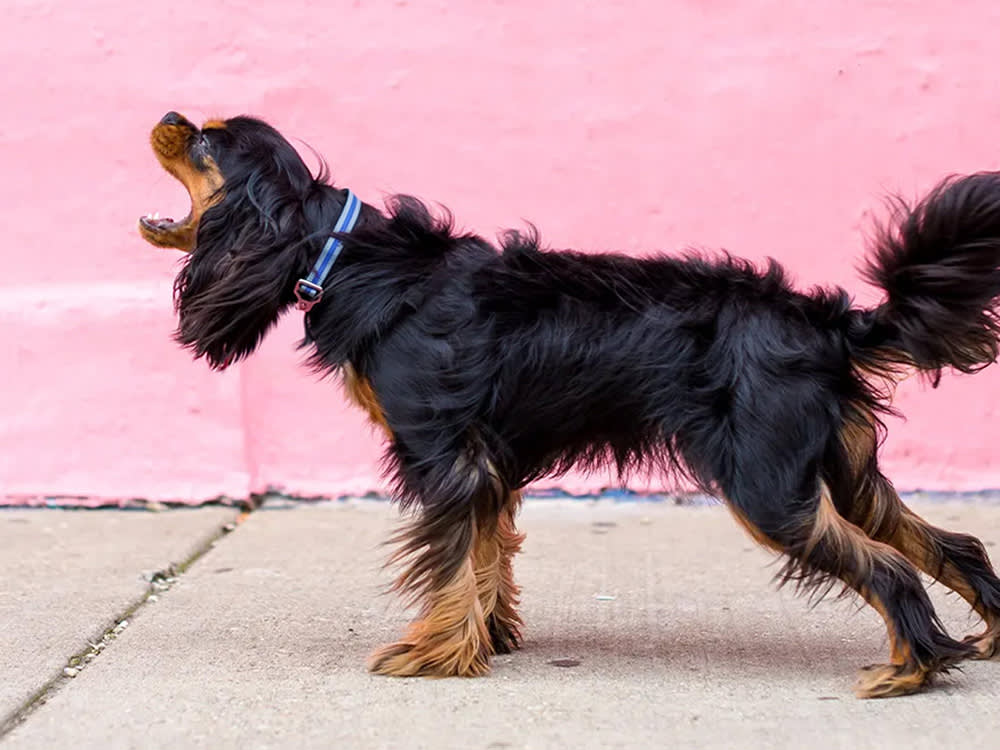
The internet loves a dog tantrum. A husky bellowing over a washed blanket, a small dog stomping because the walk is ending, a doodle throwing side-eye at a paw wipe, and a comment section agreeing that dogs are just toddlers in fur. It is genuinely funny. It is also a slightly dangerous way to think, because the word “tantrum” does something sneaky: it makes you feel like you understand what is happening when you do not. A tantrum, in the human sense, implies a willful little performance. Slap that label on your dog and you stop asking the one question that actually helps, which is why. This piece is about trading the cute word for a useful one, and what changes when you do.
Why “tantrum” is the wrong word
Trainers and veterinary behaviorists tend to wince at “tantrum,” and their reason is practical, not pedantic. The word smuggles in the idea that the dog is scheming, that they grasp the social stakes and are working you the way a child mid-meltdown works a parent, and that kind of calculation is a fair read on a toddler but not on a dog. Just as important, the word is a dead end. Slap “tantrum” on a behavior and you have named it without explaining it, even though the thing underneath could be any of several very different problems. Many professionals prefer to call these episodes “reactions,” precisely because that word forces the follow-up: a reaction to what?
That reframing is the whole game. A dog acting out is not being theatrical for its own sake; it is doing the only thing available to flag that something in its world is off, leaning on behavior because it has no words to hand you instead.
The word ‘tantrum’ quietly closes the case, and I want it kept open. The second an owner decides their dog is ‘just being dramatic,’ they stop looking for the trigger, and the trigger is the only thing that helps us. I would rather people treat a meltdown like a puzzle than a performance. Ask what the dog is trying to say, and the behavior usually starts to make sense.
What it actually looks like
A canine reaction, tantrum if you must, can take a lot of forms, and it helps to sort them by what the dog is actually doing. Some are loud and outward: barking, whining, howling, or lunging. Some are pushy and physical: jumping, pawing, scratching, or muzzle punching, that insistent bump with the nose. And some run the other way into a shutdown, the dog who plants their feet and refuses to move, lies down, or flips onto their back and checks out. Under any of these you will often see the body language of stress: panting, dilated pupils, tense muscles, lip licking, and yawning that has nothing to do with being tired.
None of these signs means “tantrum” on its own, a dog yawns for many reasons. What matters is when they cluster and when they are unusual for your dog. Every behavior a dog offers has a purpose, so the useful move is to notice the pattern and ask what job it is doing. Sometimes these episodes are one-offs tied to a single disappointment, like the dog who happily rides to the park and then, the second the leash comes out to head home, drops into a boneless heap on the grass and will not budge. Sometimes they repeat, and repetition is the signal that something deeper deserves attention.
The five things usually driving it
Dogs do not melt down for one reason, and matching your response to the actual cause is the entire point of dropping the “tantrum” label. It is worth running through the drivers roughly in order of what you least want to miss:
- Pain or illness. Start here, because it is the one people overlook most. What looks like sulking or acting out can be a dog telling you they physically do not feel well; a hurting dog is often more anxious, irritable, and restless, and no amount of training addresses a sore joint or an upset gut.
- Fear or anxiety. A noise, a person, another animal, or your absence has frightened them, and the outburst is their attempt to signal that discomfort.
- Frustration. The dog wants something they cannot have right now, a toy, a treat, the squirrel across the street, and cannot get to it.
- Boredom. Their days are short on exercise, company, or mental challenge, like a dog cooped up without a real walk who lets you hear about it by evening.
- Learned attention-seeking. If whining, pawing, or barking earned your attention before, the dog has learned it works and will run the play again. Even scolding can count as a reward if attention was the goal.
Reading which one is at work means looking at context: what changed today, what is happening around the dog at that exact moment, what could have lit the fuse?
Normal, until the pattern says otherwise
Here is the reassuring part. These outbursts are, on the whole, normal, and experts see them constantly. A dog who is used to a good daily run and gets skipped one day may fairly grumble about it later; a dog who expects a pup cup at the drive-thru may protest when none appears. The thing to watch is not the occasional episode but the frequency and the trigger.
Consistency is the warning sign. If a dog reliably reacts to one specific situation with these behaviors, there is more to it, and it is worth investigating with a vet or behavior professional. A dog who always melts down when separated from their people may have separation anxiety; a dog who always reacts to thunder or fireworks may have noise phobia. The dog who “throws a fit” every time another dog appears on a walk is the textbook case: what reads as drama is almost always fear or over-arousal at the sight of the other dog, and the moment it is named as leash reactivity it stops being a discipline problem and becomes a training one with a known path forward. Read as “my dog is being difficult,” it goes unaddressed. Read as “my dog is afraid on leash,” it becomes a plan.
How to respond in the moment, and after
Your reaction shapes whether the behavior fades or sticks, so it is worth getting right. In the heat of it, walk the dog somewhere low-key where they can come down, and hold off on fussing over them until they have leveled out, so your attention does not become the payoff that teaches the outburst to return. Skip punishment, here and as a rule: over time it just layers on fear, and it never shows the dog what you would rather they do. Your own steadiness does a lot of the work, since a worked-up dog reads a worked-up owner and climbs higher.
Once the storm passes, the real work is diagnosing the cause. If you cannot tell what is going on, start with a vet visit to rule out pain or illness, then move to a certified trainer, behaviorist, or veterinary behaviorist. The fix is rarely one thing. It usually braids together a few threads: getting the whole household fluent in reading the dog’s body language, engineering the environment so known triggers come up less, pouring in genuine enrichment, rewarding the behavior you want with positive reinforcement, and, where a vet judges it appropriate, calming aids or anti-anxiety medication. Which threads matter depends on the driver. Fear responds to either dialing the trigger down through training or steering around it for now, giving the crowded dog park a miss, riding out fireworks in a quiet room. Frustration, boredom, and attention-seeking respond to a predictable rhythm to the day that gets ahead of the dog’s need to move, socialize, and use their brain before the need boils over.
What newer research adds
Behavior science increasingly treats what owners call tantrums as a window into frustration and impulse control, both of which researchers now study directly in dogs. Work on the “cognitive bias” of frustrated dogs and on individual differences in self-control supports the practical takeaway here: these outbursts are emotional states with causes, not deliberate manipulation, and they respond to management and training rather than to correction. That is a hopeful finding, because it means the meltdown you are watching is information you can act on.
The one line worth keeping from every professional who works on this: the worst response is to do nothing. Dogs generally do not simply grow out of these patterns, so a reaction that keeps repeating is an invitation to figure out the cause, not to wait it out.
The bottom line
Your dog is not staging a tantrum; they are reacting to something, and the word “tantrum” hides exactly what you need to know. Swap it for “what is my dog reacting to,” watch for the cluster of behaviors and stress signals, and match your response to the real driver, pain, fear, frustration, boredom, or learned attention-seeking. Stay calm, skip the punishment, rule out pain first, and bring in a professional when a reaction becomes a pattern. The meltdown is a message. Answer the message, not the drama.
References
- Todd, Zazie. “Wag: The Science of Making Your Dog Happy.” Greystone Books, 2020. https://www.companionanimalpsychology.com/
- McPeake, Kevin J., et al. “The Canine Frustration Questionnaire.” Frontiers in Veterinary Science, 2019. https://www.frontiersin.org/journals/veterinary-science
- American College of Veterinary Behaviorists. “What Is a Veterinary Behaviorist?” https://www.dacvb.org/
- American Veterinary Society of Animal Behavior. “Position Statement on Positive Reinforcement Training.” https://avsab.org/
Common questions
Do dogs really throw temper tantrums?
Not in the human sense. Dogs can show behaviors that look like a tantrum, but the word implies a level of intent and social calculation that fits people, not dogs. Behavior professionals prefer to call these reactions, because that word pushes you to ask what the dog is reacting to.
What does a dog 'tantrum' look like?
Barking or whining, pacing, jumping, pawing, scratching, muzzle punching (bumping you with the nose), freezing and refusing to move, lunging, howling, lying down, or rolling onto their back, often alongside stress signs like panting, dilated pupils, tense muscles, lip licking, and yawning.
Why is my dog acting out?
Common reasons include pain or illness, fear or anxiety, frustration (they want something they can't have), boredom, and learned attention-seeking. The behavior is communication, so the job is to figure out which one is driving it, ruling out pain first.
How should I respond to a dog having a meltdown?
Calmly bring them to a quiet, safe spot to settle, avoid interacting until they're calm so you don't accidentally reward the behavior, and never punish it, which adds fear. Then work out the underlying cause, seeing a vet first if pain is possible.
Dr. Kohl is a board-certified veterinary dentist with a particular interest in preventive oral care. She reviews all dental health content at The Pet Times and contributes practical guides on home dental routines, professional cleaning, and oral disease prevention.
Meet our experts ↗Keep reading
 TrainingAlmost Every Dog Has a 'Behavior Problem.' That's the Good News.Dr. Mara Chen · 6 min
 TrainingYour 'Stubborn' Dog Is Actually Terrified. Here's What to Do.Dr. Nina Kohl · 10 min
 TrainingYour Dog Isn't Aggressive at the Door. He's Scared, and the Door Makes It Worse.Dr. Mara Chen · 4 min
 TrainingYou Didn't Make Your Puppy Shy. Biology Did, Before They Were Born.Dr. Amara Solis · 5 min
 TrainingWhen Your Dog Turns to Stone on a Walk, Don't Pull. Read It.Dr. Amara Solis · 6 min
 TrainingNever Punish a Dog for Showing Teeth. It's the Warning You Want.Dr. Nina Kohl · 8 min