


Your 'Stubborn' Dog Is Actually Terrified. Here's What to Do.
Cowering, lunging, freezing, and 'ignoring' you often trace back to one thing: fear. Learn to spot it, understand where it comes from, and help your dog feel safe.

Affiliate disclosure. This article contains affiliate links. We may earn a small commission if you buy through a link, at no extra cost to you. How we handle recommendations.
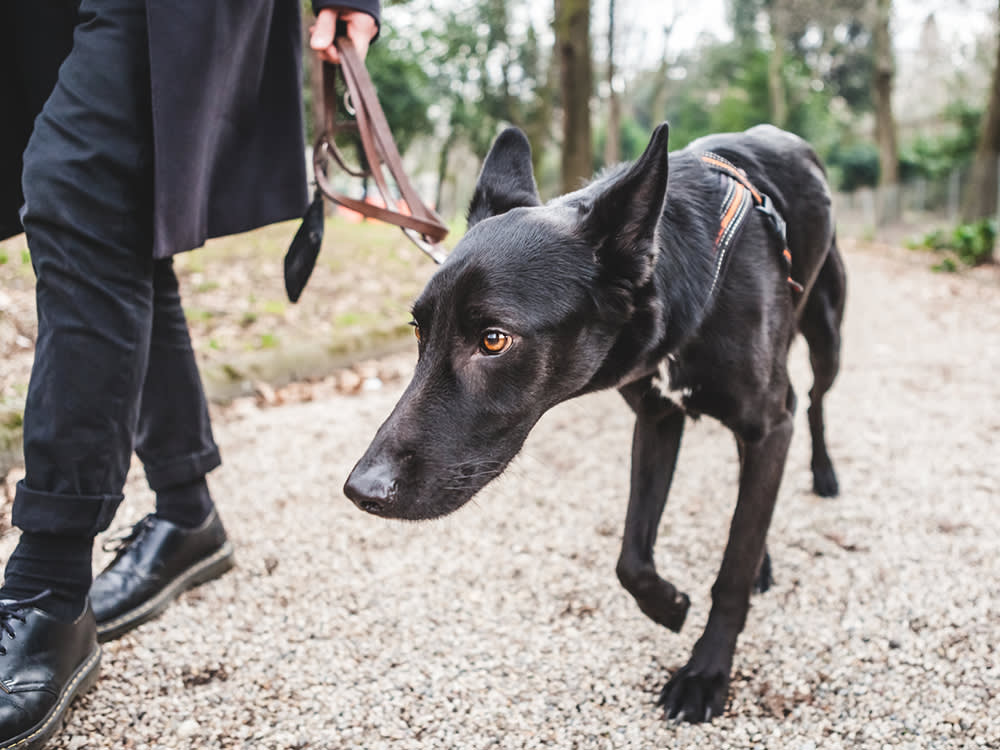
The dog who “won’t” come down the basement stairs. The one who “hates” the mail carrier. The rescue who spends a month wedged in a corner. The dog who “just gets stubborn” at the vet’s door. Owners describe these dogs with words like stubborn, dominant, spiteful, or dramatic. Almost always, the real word is scared.
That mislabeling is the whole problem, because fear-based behavior does not fix itself and it does not respond to the tools people reach for when they think a dog is being difficult. It gets worse when it is ignored and worse still when it is punished. So before we talk about how to help a fearful dog, we have to talk about seeing the fear in the first place, and then unlearning the myths that keep owners stuck.
Fear rarely shows up looking like fear
People call a trainer because their dog barks at guests or shreds the couch, not because their dog is frightened. But strip those complaints down and you often find fear underneath. The early signals are quiet and easy to write off as “just dog stuff”: ears pulled back, a tucked tail, turning or leaning away, lip-licking, yawning, a hard time settling. Ignored, those signals escalate to panting, dilated pupils, “whale eye” where the whites show as the dog tracks a threat sideways, trembling, and a racing heart. Push a frightened dog far enough and avoidance flips into a growl, a snap, or a bite, which is the point at which most people finally seek help, and also the point at which the problem is hardest to undo.
No single sign proves a dog is afraid. A tucked tail on its own means very little. What tells you it is fear is the cluster, the body language, the physical changes, and the context all pointing the same direction at once. Learn to read the quiet early signals and you can help your dog long before it ever feels the need to bite.
The takeaway: catch fear at the lip-lick, not the lunge.
Why dogs become fearful
There is no single cause, which is exactly why there is no single fix. A few threads run through most cases.
Genetics. Fearfulness is heritable. Classic breeding experiments showed you can select for it, and fearful dogs often have relatives with the same tendency. That does not doom a dog, but it does mean some dogs arrive wired to spook more easily.
Missed socialization. There is a sensitive window in puppyhood, roughly three to twelve weeks, when a puppy learns that novelty is safe. A pup who does not meet a variety of people, places, surfaces, animals, and sounds during that window can grow up treating the ordinary world as a series of threats. This is the most common and most preventable driver of adult fearfulness.
Pain or illness. Fear that appears suddenly in an adult or senior dog deserves a medical workup before anything else. A dog who hurts learns to fear whatever triggers the hurt, being touched, jumped on, leashed, or handled, and older dogs can develop new phobias as their sight, hearing, or cognition changes.
A bad experience. Sometimes fear does trace to a specific event, a car that hit them, a stack of boards that crashed down. But this is less common than people assume, and it leads directly into the biggest set of misunderstandings.
The myths that keep fearful dogs stuck
Almost everyone gets at least one of these wrong. Believing them slows a dog’s recovery, and some make it worse.
“They’ll grow out of it.” They will not. Fear left unaddressed tends to deepen, not fade.
“Someone must have abused them.” The classic evidence people cite is a dog who is only afraid of men. But men tend to be larger, deeper-voiced, and broader, which reads as more imposing to a dog, and undersocialized dogs are commonly more wary of men without any abuse in their history. Fear of the new is a far more frequent cause than fear from trauma.
“They should be corrected for it.” Punishing a frightened dog stacks a bad experience on top of the thing it already fears. That strengthens the fear and the behavior you were trying to stop. It is the single most counterproductive thing you can do.
“There’s a pill that fixes this.” Medication has a real place, always under a veterinarian, as one part of a plan. But no drug erases fear on its own.
“They’re being stubborn or trying to dominate.” A dog frozen at the top of the basement stairs is not staging a power play any more than a kid frozen on the high dive is being defiant. Filing fear under “stubbornness” or “dominance” leads to exactly the wrong response.
“Comforting them rewards the fear.” This one is worth killing outright. You cannot reinforce an emotion the way you reinforce a trick. Reassuring a scared dog in a calm, steady voice does not make it more afraid, and refusing to comfort a distressed dog mostly teaches it that you are not there when it needs you. The nuance: be a calm presence, not a nervous one. Soothe without radiating your own anxiety.
So how do you actually help?
Helping a fearful dog is less about a single technique and more about stacking several things that work together. In rough order:
Rule out pain first. Start with a thorough vet exam. If a medical problem is feeding the fear, no amount of training will get ahead of it.
Manage the environment so the fear can’t keep rehearsing. Every time a dog gets frightened, the pattern gets a little stronger, so your first job is prevention: block the triggers you can. That might mean stopping strangers from reaching for your dog, closing the blinds so the dog cannot see the sidewalk, or crating the dog in a quiet room before the power tools come out. Management is tedious and it pays off enormously. For a dog who has bitten, preventing the situations that provoke it is not optional, it protects people and the dog alike.
Never force an approach. Dragging a dog toward the thing that scares it confirms that the thing is worth being scared of. Let the dog choose whether to approach or retreat, and let retreat always be an option.
Build confidence on purpose. Confidence and fear cannot occupy the same dog at the same moment, so anything that lets a dog succeed chips away at the fear. Teach simple cues and tricks, use food-puzzle toys so the dog “earns” its meals, and play, since a dog relaxed enough to play is a dog gaining ground. Success breeds calm, and calm makes room for more success.
Desensitize and counter-condition, together. This pair is the core treatment. Desensitization means exposing the dog to a trigger at an intensity so low it does not spark fear, farther away, quieter, slower, smaller, and raising the intensity only as the dog stays comfortable. Counter-conditioning means pairing that trigger with something the dog loves, so that seeing the scary thing reliably predicts a great treat. Done together over weeks or months, the dog’s gut reaction to the trigger slowly flips from dread to anticipation. The cardinal rule is to work at the dog’s pace and never jump to a harder level until the current one is genuinely easy. This is completely different from “flooding” a dog by overwhelming it, which backfires.
Give it a good foundation. Solid nutrition, regular exercise, and a predictable daily routine all lower a dog’s baseline stress. Gentle add-ons like massage, calming wraps, and, for some dogs, a veterinarian-guided medication can support the behavior work, though none replace it.
How much will your dog improve?
Almost every fearful dog gets better. How much depends on several factors you can and cannot control. The human is the biggest variable, your patience, consistency, and willingness to go slow matter more than almost anything. Milder or more recent fears resolve more readily than deep, long-standing ones, and a strong genetic component makes for a longer road. Some dogs become confident, social, go-with-the-flow companions. Others improve a lot but stay on the cautious side, with a few situations that will always be too much and are simply avoided. Both outcomes are wins. The goal is a dog who enjoys its life, not a dog remade into a personality it was never going to have.
Owners who do this work almost universally say the same thing afterward: it is harder and slower than they expected, and it teaches them to read their dog better than they ever thought possible.
Keep these in your back pocket
- Expect the timeline to be long, and let it be.
- Put in the work, because a fearful dog rarely turns the corner without it.
- Rule out and treat any medical cause before anything else.
- Keep your dog out of the situations you know set off the fear.
- Never push your dog toward something that frightens it.
- Skip punishment entirely; it only deepens the fear.
- Lead with calm, warmth, and kindness rather than correction.
- Stay flexible, and combine tools instead of hunting for one cure.
- Make peace with the idea that some dogs stay cautious for life.
- Love the dog in front of you, exactly as they are.
What newer research adds: check for pain, and know when to call a specialist
Two shifts in how experts think about fear are worth knowing. First, veterinary behavior researchers now believe pain is involved in far more behavior problems than anyone used to assume. A widely cited 2020 review estimated that a conservative one-third of dogs referred for behavior complaints had an underlying painful condition, with the figure reaching as high as nearly 80 percent in some caseloads, often from musculoskeletal, digestive, or skin problems that are easy to miss. The practical lesson reinforces the advice above: a real veterinary exam is not a formality before behavior work, it is frequently where the answer hides.
Second, help has become more specialized. If your dog’s fear is severe, or if it has ever snapped or bitten, a board-certified veterinary behaviorist (a veterinarian with advanced training in behavior, credentialed through the American College of Veterinary Behaviorists) can build a plan that combines behavior modification with medication when appropriate. Anti-anxiety medications used alongside training, not instead of it, have become a mainstream, evidence-supported tool for the dogs who need them. Asking for that help is not giving up. It is giving your dog the best shot.
Further reading
- Wilde, Nicole. Help for Your Fearful Dog. Available on Amazon
- McConnell, Patricia B. The Cautious Canine: How to Help Dogs Conquer Their Fears. Available on Amazon
- McConnell, Patricia B. For the Love of a Dog: Understanding Emotion in You and Your Best Friend. Available on Amazon
- Jacobs, Debbie. A Guide to Living With and Training a Fearful Dog. Available on Amazon
References
- Mills, Daniel S., et al. “Pain and Problem Behavior in Cats and Dogs.” Animals, vol. 10, no. 2, 2020, p. 318. https://doi.org/10.3390/ani10020318
- American College of Veterinary Behaviorists. “What Is a Veterinary Behaviorist?” https://www.dacvb.org
Dr. Kohl is a board-certified veterinary dentist with a particular interest in preventive oral care. She reviews all dental health content at The Pet Times and contributes practical guides on home dental routines, professional cleaning, and oral disease prevention.
Meet our experts ↗Keep reading
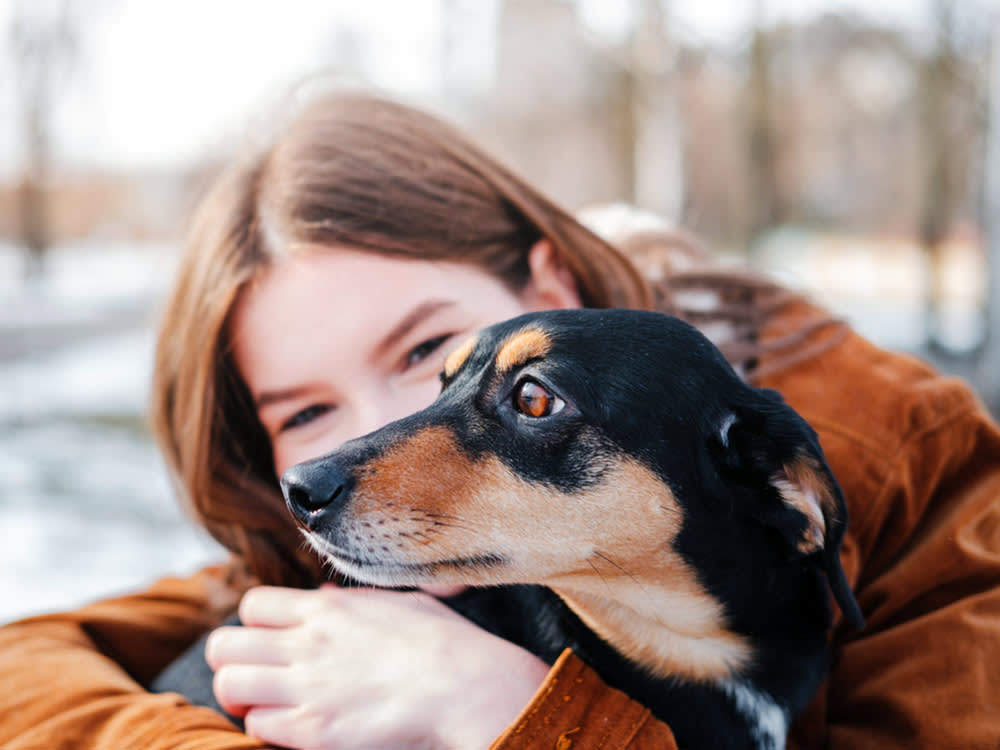 TrainingYour Dog Doesn't Need a Bad Memory to Be Terrified of the VacuumDr. Priya Nair · 9 min
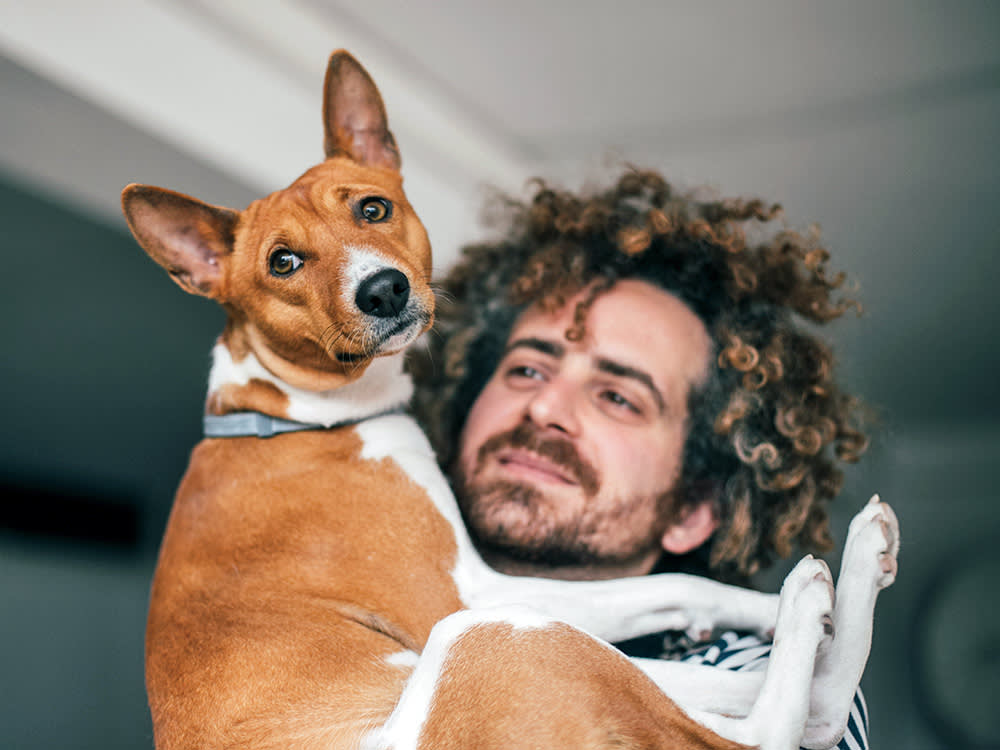 TrainingYour Dog Isn't Being Difficult. They Might Be Wired Differently.Dr. Nina Kohl · 8 min
 TrainingYour Dog Isn't Aggressive at the Door. He's Scared, and the Door Makes It Worse.Dr. Mara Chen · 4 min
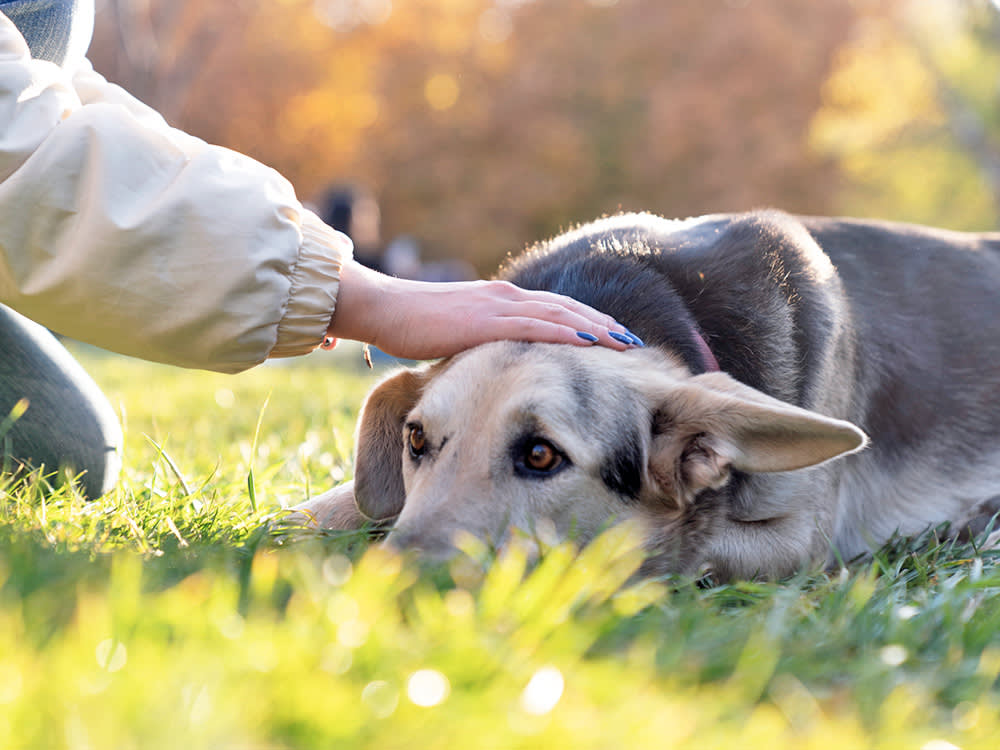 TrainingYour Dog Growls When You Pet Them. Don't Punish It, Read It.Dr. Mara Chen · 7 min
 TrainingYour Dog Isn't Being Rude to Strangers. They're Scared.Dr. Lena Park · 7 min
 TrainingExcited Isn't the Same as Happy. 8 Signs Your Dog Is Over Threshold.Dr. Nina Kohl · 8 min