


You Didn't Make Your Puppy Shy. Biology Did, Before They Were Born.
If your puppy hides behind your legs while the others romp, you probably feel like you failed a test. You didn't. A lot of a dog's shyness is written by genes and the womb, and knowing that changes how you help.
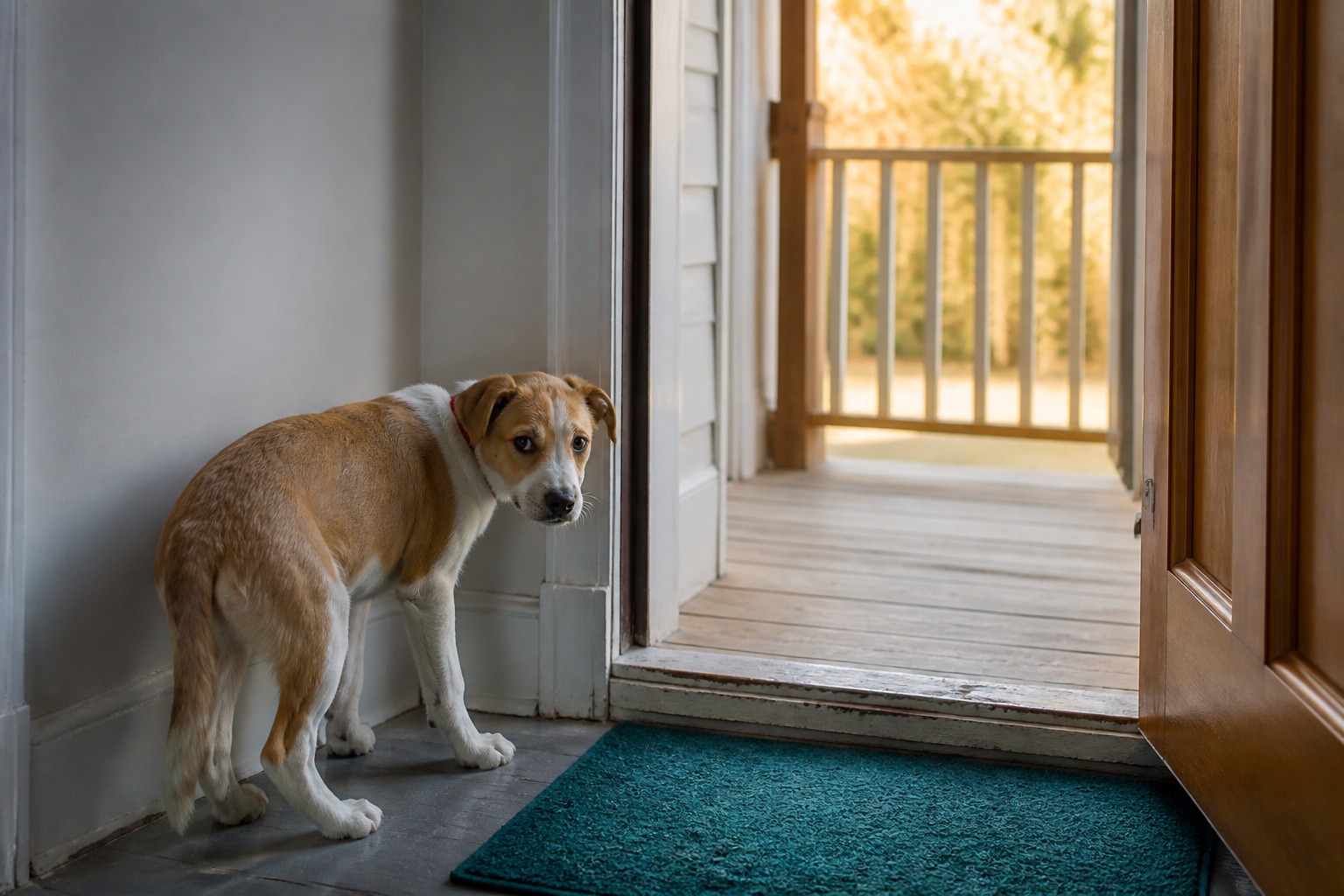
Your puppy is barely out of the whelping box, you have done nothing but be gentle and encouraging, and yet there they are, glued to your ankles while the other pups tumble around like they own the place. It is easy to read that as a report card on your parenting. It almost never is.
Here is the reframe worth holding onto: much of a dog’s shyness was set before you ever met them, shaped by genetics and by their experience inside the womb. That is not a grim verdict. It is actually freeing, because it means you can stop blaming yourself, and it changes the goal from “fix this” to “support this.” A cautious dog can live a full, happy life. Let’s look at where the caution comes from, and then at what it means for you.
Shyness is heritable, like a temperament dial
Anyone who has siblings, or follows a famously large family, knows that kids raised in the same house can turn out wildly different. Puppies are the same. Littermates aren’t clones; even identical twins carry small DNA differences, and the whole point of sexual reproduction is to shuffle the deck. Each parent hands over one strand of DNA, they combine in a unique way every time, and out comes an individual with their own blueprint.
That blueprint covers behavior, not just looks. We accept that dogs come in flat-nosed and long-muzzled; temperament varies by the same logic. Personality research going back decades has identified something called the “shy–bold continuum,” a trait that turns out to be remarkably stable across species, documented in primates, cattle, people, and dogs alike. Where a given individual falls on that spectrum is meaningfully heritable.
And crucially, neither end is “better.” Boldness and caution each pay off in different situations. In one well-known example, a primatologist studying rhesus monkeys found that shy males could actually out-reproduce bold ones in certain conditions, because they waited longer to leave home and arrived at a new group bigger and better able to hold their ground. You can imagine the same trade-off in the ancestors of dogs: sometimes it paid to be the bold one who approached the human camp first, and sometimes it paid to be the wary one who steered clear of the lions.
The womb did some of the shaping too
Genes are only part of it. A growing body of research points to the prenatal environment as a real influence on adult temperament, an environment we used to ignore entirely, because “early development” was assumed to begin at birth.
A mother’s state, it turns out, reaches her puppies before they’re born. Her sleep rhythms help calibrate their own sense of day and night. What she prefers to eat shapes what they will. Serious food deprivation in a pregnant dog can even predispose her pups to metabolic problems as adults.
Most relevant to a shy puppy is the effect of maternal stress. A mother experiencing extreme anxiety during pregnancy raises the odds that her offspring will be anxious and fearful too, and there’s a plausible mechanism. Elevated cortisol, the body’s chief stress hormone, in the mother appears to leave the developing pup with fewer cortisol receptors. With fewer receptors, the pup’s brain is slow to register rising stress in its own body, until the system is suddenly flooded and the brain slams into full alarm, panicking over things that would barely register for a steadier dog.
Even littermates get different womb experiences
The uterus isn’t one uniform place, either. Small differences in the nutrients each fetus receives have long been tied to big differences in size and health within a single litter. It’s why genetically identical twins usually have distinct personalities: same genes, different prenatal experience, and the experience leaves its mark.
There’s an even stranger mechanism at work, called androgenization. Female puppies positioned in the uterine horns between several male siblings get “bathed” in androgen, a precursor to testosterone, produced by those males. Females who develop in that neighborhood can behave differently as adults than females who didn’t. In other words, even the seating chart before birth can nudge a dog’s eventual personality.
Add it up and you get two pups from the same litter, raised in the same home, who respond to the same world in different ways, because different genetic blueprints met different experiences before they were ever born.
What this actually means for you
So your shy puppy will probably always run a little more cautious than the outgoing ones. That’s the honest part. Here’s the encouraging part: “predisposed” is not “doomed,” and the right response is support, not a crusade to make your dog into someone else.
The most damaging thing I see with a naturally shy puppy is an owner who treats the shyness as a problem to be corrected, and floods the dog with scary situations to ‘toughen them up.’ That backfires almost every time. What actually helps is the opposite, letting a cautious dog approach the world at their own pace, paying them for brave choices, and never forcing the encounter. You’re not trying to rebuild the dog. You’re helping the dog you have feel safe enough to be their best version of themselves.
Manage the environment, keep experiences positive and optional, build confidence in small doses, and loop in a trainer or veterinary behaviorist if fear is limiting your dog’s life. What you can’t do is undo the wiring, and you shouldn’t want to. Much of who your dog is arrived with them. Your job is to give that dog a life that fits.
What newer research adds
Large-scale surveys of pet dogs have reinforced how common canine fearfulness and anxiety actually are, and how much of it has a heritable, breed-linked component rather than stemming from anything an owner did. That research is a useful gut-check for guilt-ridden owners: a fearful temperament is frequently part of the package a dog is born with. It also underscores why early, gentle socialization and, where needed, professional behavioral support matter so much, they work with a dog’s biology instead of pretending the biology isn’t there.
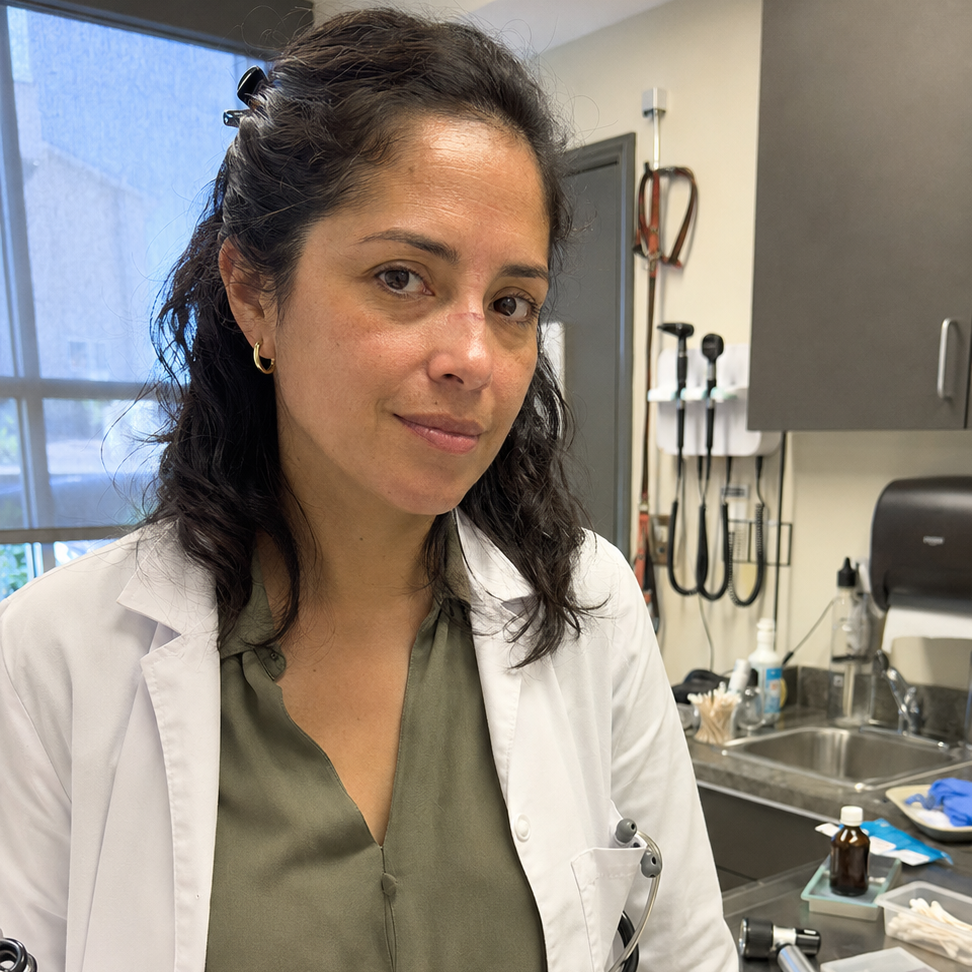
Dr. Solis is a board-certified veterinary dermatologist with over twelve years of clinical experience. She advises on skin conditions, allergies, and grooming practices that affect coat and skin health. All dermatology and allergy content at The Pet Times is reviewed by her team before publication.
Meet our experts ↗Keep reading
 TrainingYour Dog Isn't Reading Your Face. They're Reading Your Hand on the Leash.Dr. Lena Park · 8 min
 TrainingStop Handing Your Dog a Boring Kong. Stuff It Like This.Dr. Amara Solis · 7 min
 TrainingYou Didn't Cause Your Dog's Leash Reactivity. Here's How to Manage ItDr. Amara Solis · 7 min
 TrainingYou Don't Win Over a Scared Dog. You Become Safe and Boring.Dr. Lena Park · 9 min
 TrainingThe Dog Park Isn't for Every Dog. 9 Signs Yours Would Rather Be Anywhere Else.Dr. Amara Solis · 6 min
 TrainingYour Dog Isn't Misbehaving. They're Scared.Dr. Lena Park · 8 min